
TL;DR
The right Sales Prospecting Tools can help B2B teams find qualified buyers, identify buying intent, automate outreach, and turn prospects into meetings. This guide compares 26 platforms, from data and engagement tools like ZoomInfo, Apollo.io, and Salesloft to AI-powered options like Kwin. Kwin stands out for identifying and scoring website visitors, automating personalised follow-ups, and handing sales-ready leads to your team.
A pricing page visit can be the strongest buying signal on a website, yet most sales teams never know who is behind it.
Prospects visit pricing pages, explore services, read case studies, and leave without filling out a form. Analytics capture the activity, but sales reps get no name, no context, and no clear reason to follow up.
That is where Sales Prospecting Tools come in. Depending on the sales process, teams may need verified contact data, buyer intent, Website Visitor Identification, sales engagement, or AI-powered outreach to turn hidden interest into real conversations. Some sales prospecting tools even run the outreach for you.
But choosing the right platform is not simple. The market includes contact databases, intent tools, enrichment platforms, sequencers, and AI SDRs, each built for different prospecting needs.
In this guide, we compare 26 leading tools, explain what each does best, where it fits, and how to choose based on data quality, identification, automation, compliance, and pricing.
By the end, you will know which tools fit your sales motion and which capabilities can help turn more prospects into conversations.
What Are Sales Prospecting Tools?
Sales prospecting tools are software platforms that help B2B teams find, qualify, and engage potential buyers faster. They replace hours of manual research with verified data, buying signals, and automated outreach.
Prospecting covers three core jobs: identify buyers who match your ideal customer profile (ICP), qualify them based on fit and intent, and start a relevant conversation.
Most sales prospecting software supports one or more of these core capabilities:
- Contact and company data: Verified emails, direct dials, firmographics, and technographics for target accounts.
- Buying signals: Intent data that shows research behavior suggesting an account is in-market, along with job changes and funding news.
- Deanonymization: Website visitor identification that reveals the companies and people behind anonymous website traffic.
- Outreach automation: Email, phone, and LinkedIn sequences that run on a schedule with less manual effort.
- CRM sync: Enriched records and prospect activity pushed directly into your system of record.
A CRM stores the relationships you already have. Sales prospecting tools help fill it with new, qualified prospects, keeping your pipeline moving.
Also Read: Lead Generation vs Prospecting: Key Differences
Why B2B Teams Need Sales Prospecting Tools
More selling time does not always mean more selling. Salesforce's State of Sales research found that 67% of sales reps don't expect to hit their quota, while reps spend 72% of their day on non-selling work. The right prospecting software helps win some of that time back.
1. Find ICP-Fit Accounts Faster
Advanced filters narrow the market by industry, headcount, revenue, location, and tech stack in seconds. Instead of spending hours building lists, reps can start with accounts that already match their ICP.
2. Work From Verified Contact Data
Bad emails and dead numbers waste outreach and can hurt sender reputation. Good tools verify emails and direct dials before outreach, helping reps reach the right decision-makers with confidence.
3. Act on Buying Signals at the Right Moment
Intent data, job changes, funding rounds, and website visits can reveal who is actively researching. Reaching out at that moment makes the conversation more relevant instead of intrusive.
4. Beat Competitors on Speed-to-Lead
Buying interest can fade quickly. Real-time alerts or automated actions help reps respond as soon as a high-intent prospect appears, before another sales team gets there.
5. Personalise Outreach Without Hours of Research
Prospect data, company news, roles, and website activity give every message a clear reason to exist. AI can then turn that context into personalised outreach in seconds.
6. Scale Pipeline Without Scaling Headcount
Automation handles list building, enrichment, and follow-ups that would otherwise consume SDR time. Teams can focus more of their effort on qualified conversations while reducing the work behind each meeting.
7. Keep Your CRM Clean and Complete
B2B data changes constantly as people switch roles and companies. Enrichment and CRM sync update missing or outdated records, keeping lead routing and reporting more reliable.
8. Prove Pipeline ROI
Built-in analytics connect signals, sequences, and channels to meetings and pipelines. Instead of tracking activity alone, teams can see which prospecting efforts are actually creating opportunities.
Types of Sales Prospecting Tools
Not every tool solves the same prospecting problem. Knowing the difference between each category helps teams choose the right stack without paying for overlapping capabilities.
- Contact Data and Sales Intelligence Platforms: Large B2B databases with verified contact and company records, often with intent data. ZoomInfo, Apollo.io, Cognism, and Lusha support data-driven cold outbound.
- Website Visitor Identification and Intent Tools: Reveal which companies are researching your business and, with person-level identification, who is behind the visit. Kwin identifies individual visitors. Learn more in our guide on how to identify who visits your website.
- Social Selling Tools: Help reps research prospects, map relationships, and engage through professional networks. LinkedIn Sales Navigator leads this category and is often paired with a separate contact data provider.
- Email Finders and Verification Tools: Find professional email addresses and verify deliverability before outreach. Hunter.io and Snov.io are common choices for founders and lean teams running cold email.
- Sales Engagement and Outreach Platforms: Run multi-step cadences across email, phone, and LinkedIn at scale. Outreach, Salesloft, Lemlist, and Instantly fit here, though most still require a separate data source.
- Data Enrichment and Workflow Tools: Fill gaps in existing records and support custom research workflows. Clay, Crunchbase, and HubSpot Breeze Intelligence help RevOps teams keep data fresh and targeting focused.
- AI Sales Agents (AI SDRs and AI Business Developers): Go beyond supplying data by researching prospects, writing outreach, and following up automatically. Kwin and Artisan fit this category but source and work their leads differently.
- CRM-Native Prospecting Tools: Build prospecting directly into the CRM. HubSpot Sales Hub combines a free CRM with sequences, lead scoring, and AI prospecting features on paid tiers.
Also Read: 20 Best Sales Intelligence Software for B2B Teams
How We Evaluated the Best Sales Prospecting Tools
We reviewed dozens of lead prospecting tools and selected 26 that can support a real B2B pipeline. Each platform was evaluated on the factors revenue teams care about most:
- Data quality and match rate: How accurate the records are and how many target accounts or visitors the tool can identify.
- Identification level: Whether it reveals only the company or the specific person behind the activity.
- Buying signals: The depth of intent data, trigger events, and behavioral insights available.
- Outreach automation: Whether the platform can act on prospects or simply pass them to the sales team.
- Integrations: Native connections with CRMs, Slack, and sales engagement platforms.
- Global coverage: Data depth beyond North America, including EMEA and APAC markets.
- Compliance: GDPR, CCPA, and SOC 2 posture, along with clear documentation on data sourcing.
- Pricing model: Free tiers, contract terms, and potential exposure to credit burn.
We also checked user feedback on G2, so the cons reflect real buyer experiences rather than relying only on vendor claims.
26 Sales Prospecting Tools Comparison Table
Use this table to build your shortlist quickly, then read the detailed reviews below.
Let's look at each tool in detail.
1. Kwin by Vison AI: Best for Turning Website Visitors Into Booked Meetings
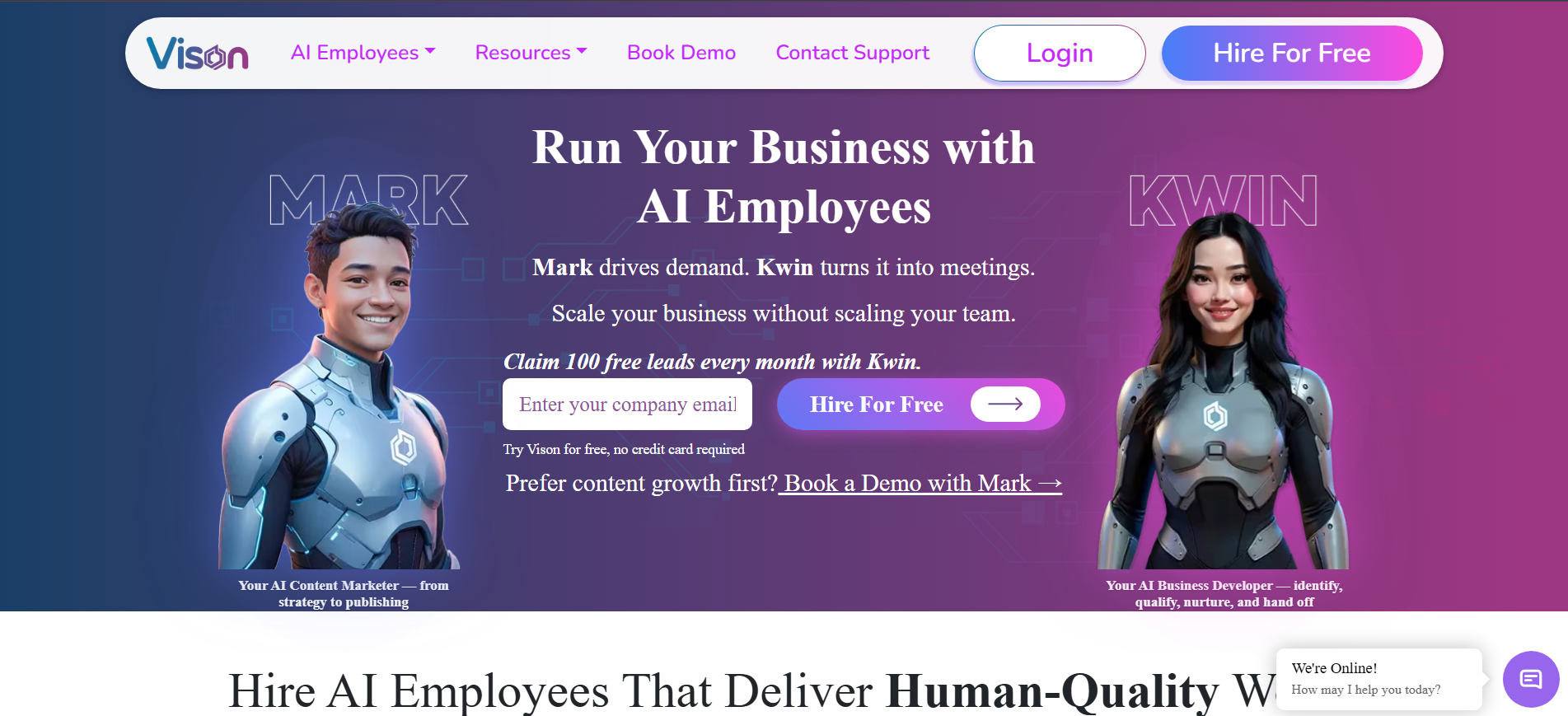
Kwin by Vison AI is an AI Business Developer that identifies, qualifies, and engages buyers already visiting your website. It takes prospects from visitor identification to sales handoff instead of simply giving your team another lead list.
Kwin identifies 60–70% of visitors at the person and company level across 175+ countries, including names, work emails, phone numbers, and LinkedIn profiles.
It then scores visitors on ICP Fit and Purchase Intent, using page views, visit frequency, session depth, and referral sources to decide which prospects meet your qualification thresholds.
Qualified leads receive a personalized 3-step email sequence through Gmail, Outlook, or SMTP/IMAP. Positive replies go to your inbox with the full thread and summary, while Slack and your CRM receive the handoff.
Setup takes about 5 minutes using a website pixel or Google Tag Manager. Infiniticube generated 2.5× more qualified leads in 45 days, with over 35% of meetings coming from non-form visitors.
Key Features:
- Person and company-level identification: Reveals names, work emails, phone numbers, LinkedIn profiles, company, revenue, industry, and location.
- 60 to 70% identification rate: Unmasks far more of your anonymous traffic than company-only tools, across 175+ countries.
- Behavioral analysis: Reads page views, visit frequency, session depth, and referral source to understand what each visitor wants.
- Dual scoring: Combines an ICP fit score with a Purchase Intent score to rank every visitor.
- Threshold-based triggers: Acts only when a lead crosses the minimum ICP and Purchase Intent scores you set.
- Autonomous nurture: Sends a personalized 3-step email sequence from your own domain through Gmail, Outlook, or SMTP/IMAP.
- Positive-reply handoff: Forwards the full email thread and a short summary to your inbox, then syncs with Slack and your CRM.
- Four independent filters: Country-level, page-level, data-level, and exclusion filters, including removing public sector and government traffic.
- Auto-built knowledge base: Learn your offer from your website, so every email sounds on-brand.
- Free forever entry: Lead Watcher gives you 100 leads a month with no credit card, and Win+ adds a 7-day free trial.
Pros
- Combines identification, qualification, outreach, and handoff in one workflow
- Person-level identification across 175+ countries
- Five-minute, no-code setup
- SOC 2 Type II, GDPR, CCPA, ISO 9001:2015, and ISO 27001:2022 certified
Cons
- Built for inbound website traffic rather than cold-list building
- LinkedIn outreach and custom workflows are still in development
- Works best for businesses with steady B2B website traffic
Best For: B2B revenue teams, SaaS growth teams, and lean SDR teams that want to turn anonymous website traffic into sales-ready conversations.
Get Started With Kwin and see which buyers are already showing interest on your website.
2. ZoomInfo
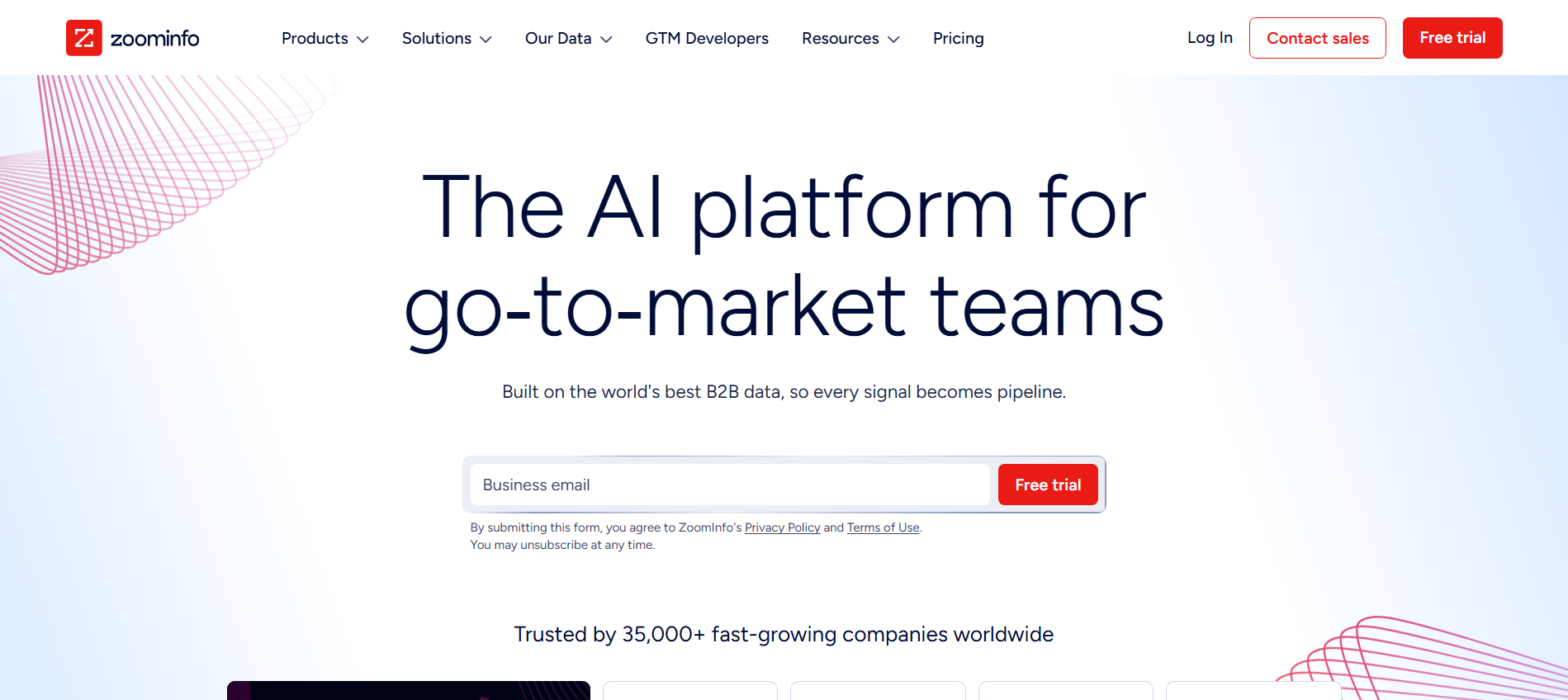
ZoomInfo is a large sales intelligence platform with 600M+ contacts, 135M+ companies, and 300+ data points per record. Its GTM Workspace uses AI to surface best-fit accounts and act on buying signals, while WebSights identifies companies visiting your website. The trade-off is that visitor identification remains company-level, unlike Kwin's person-level identification.
Key Features:
- Massive B2B Database: Provides verified emails, direct dials, org charts, technographics, and company data.
- Intent Data: Highlights companies showing active interest in relevant products and categories.
- GTM Workspace AI: Recommends target accounts, generates outreach, and triggers workflows from buying signals.
Pros
- Deep data coverage: Detailed contact records and organizational intelligence.
- Connected GTM platform: Combines intent, enrichment, intelligence, and engagement capabilities.
- Broad integrations: Supports 300+ integrations, including Salesforce and HubSpot.
Cons
- Enterprise pricing: Cost can be difficult to justify for smaller sales teams.
- Company-level visitor ID: WebSights identifies the visiting company rather than the individual.
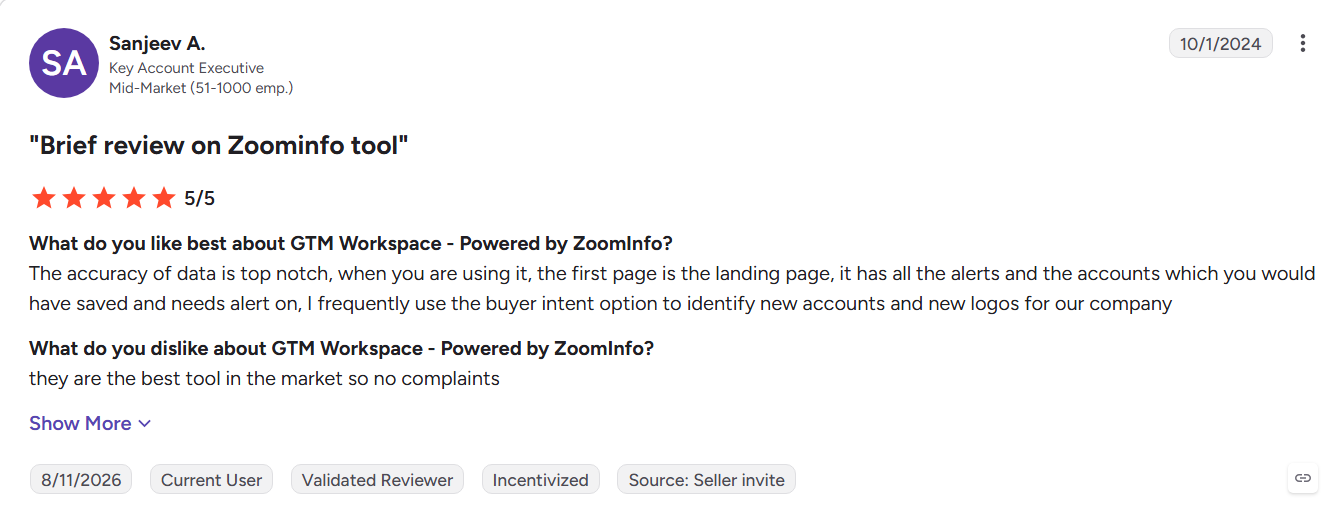
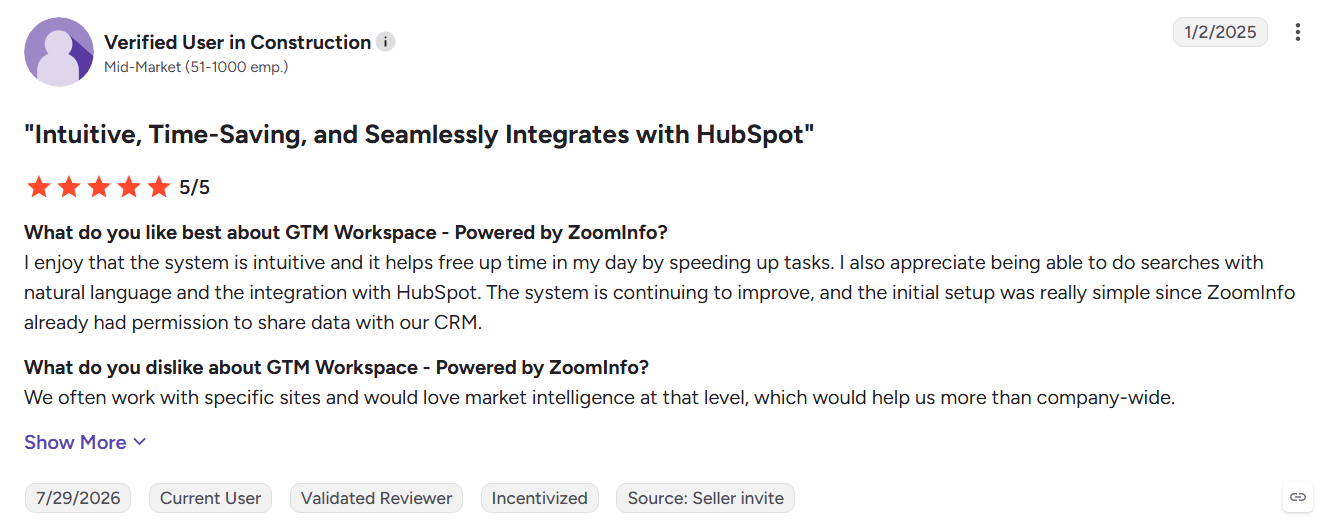
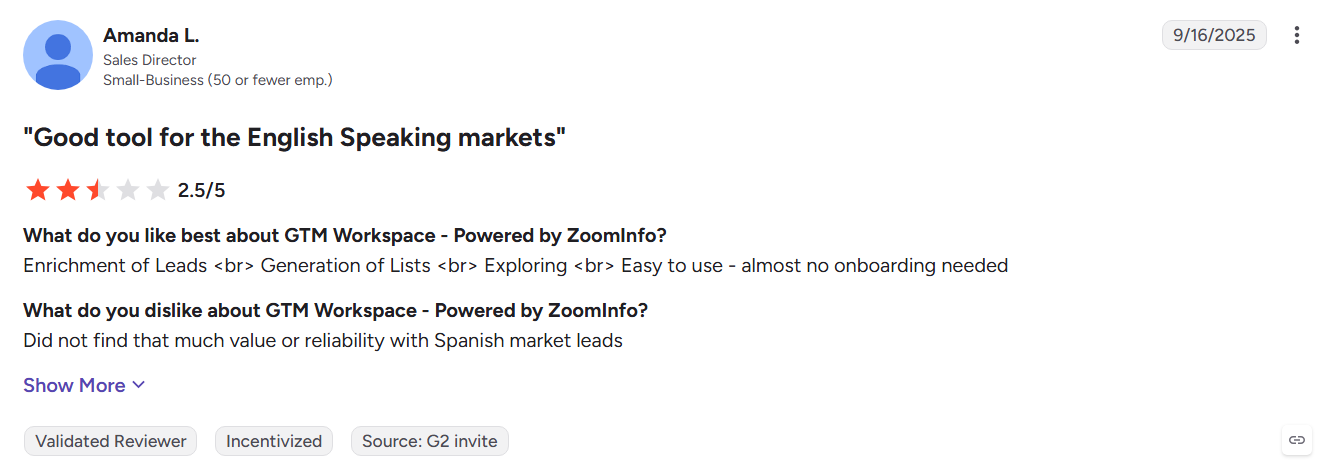
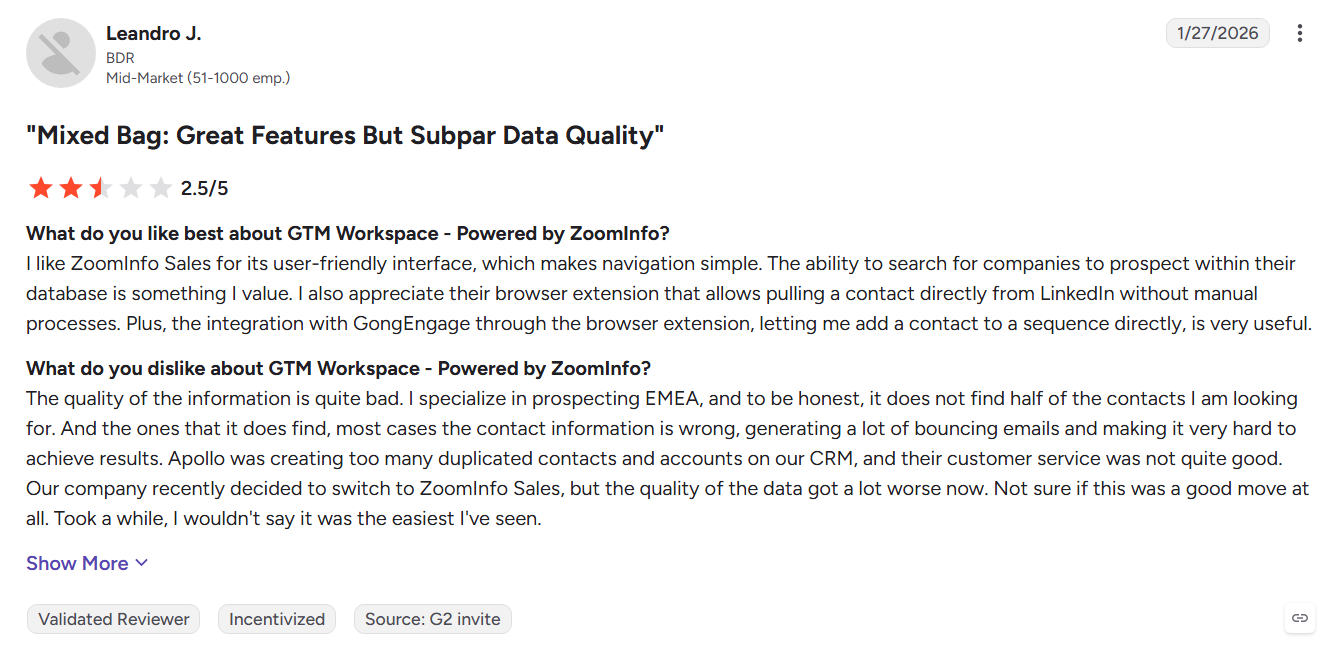
- Learning curve: Its extensive feature set can require significant onboarding, while G2 reviewers also mention pricing and occasional contact-data accuracy issues.
Best For: Mid-market and enterprise revenue teams that need a broad GTM intelligence platform and can support enterprise-level investment.
For more options, see our guide to ZoomInfo alternatives.
3. Apollo.io
Apollo.io combines a large B2B contact database with email sequences, calling, and AI-assisted outreach. Its free plan makes it an accessible starting point for SMB teams building outbound campaigns. The limitation is that Apollo shows who could buy, not who is visiting your site now, while Kwin uses first-party visitor signals to identify and engage active prospects.
Key Features:
- Large Contact Database: Search 200M+ contacts using 60+ filters across roles, company size, technology, and more.
- Sequencing and Dialer: Run email, calling, and LinkedIn tasks from one sales workspace.
- Buyer Intent: Prioritize accounts using intent signals and website activity.
Pros
- All-in-one workflow: Combines prospect data and outreach in one platform.
- Accessible entry point: Offers public pricing and a useful free plan.
- CRM connectivity: Integrates with popular CRM systems for smoother prospect management.
Cons
- Data variability: Accuracy can differ across industries and regions.
- Credit usage: Phone reveals consume more credits than email data.
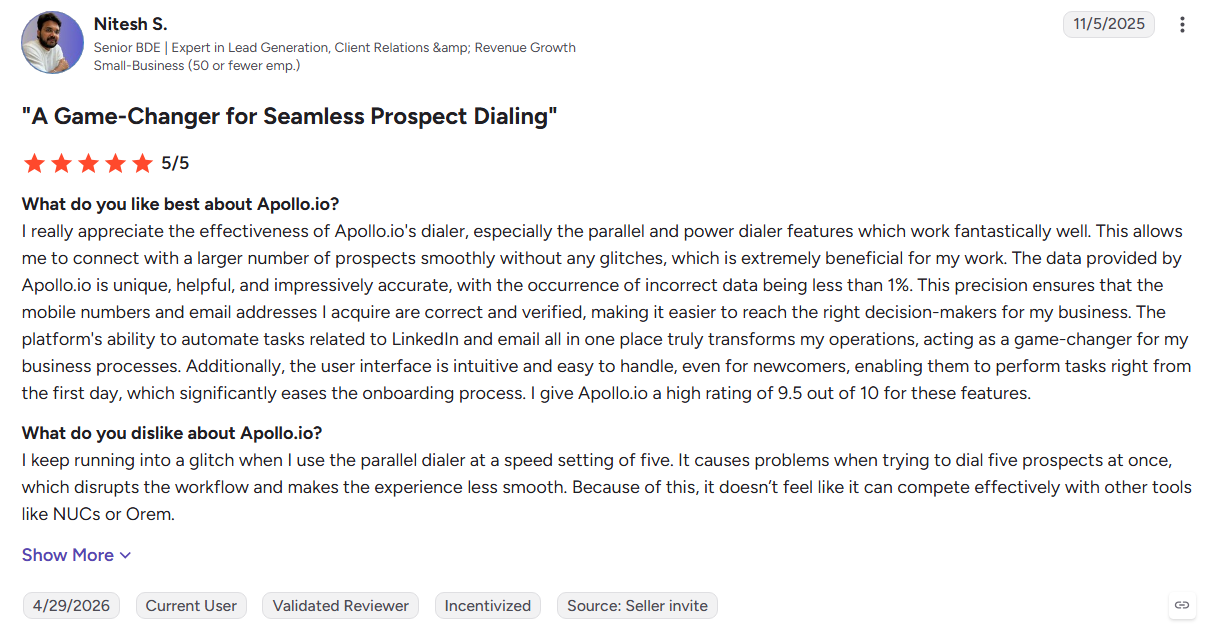
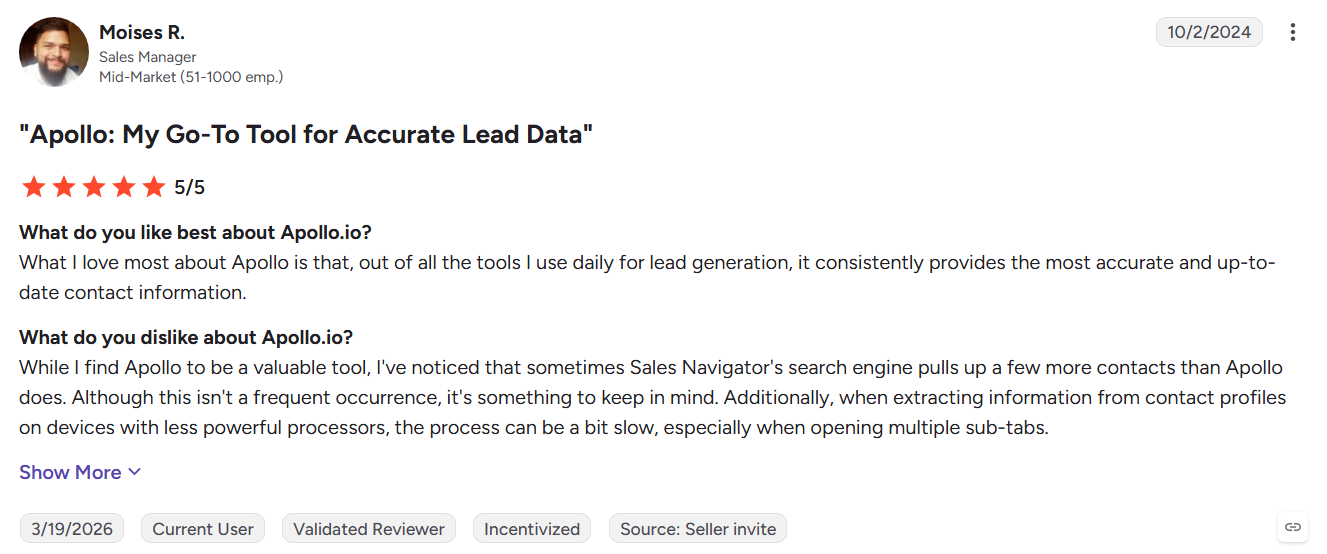
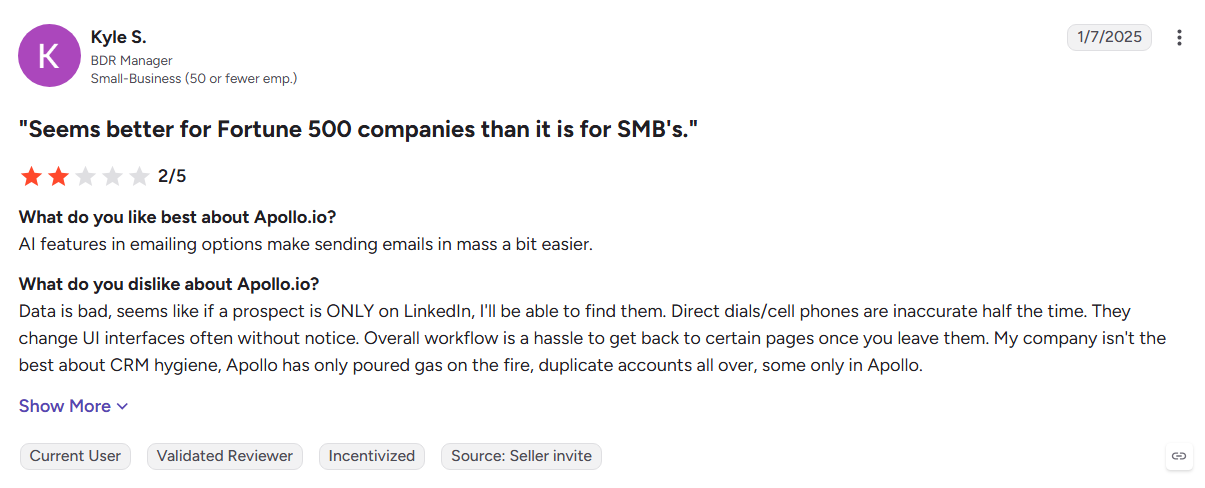
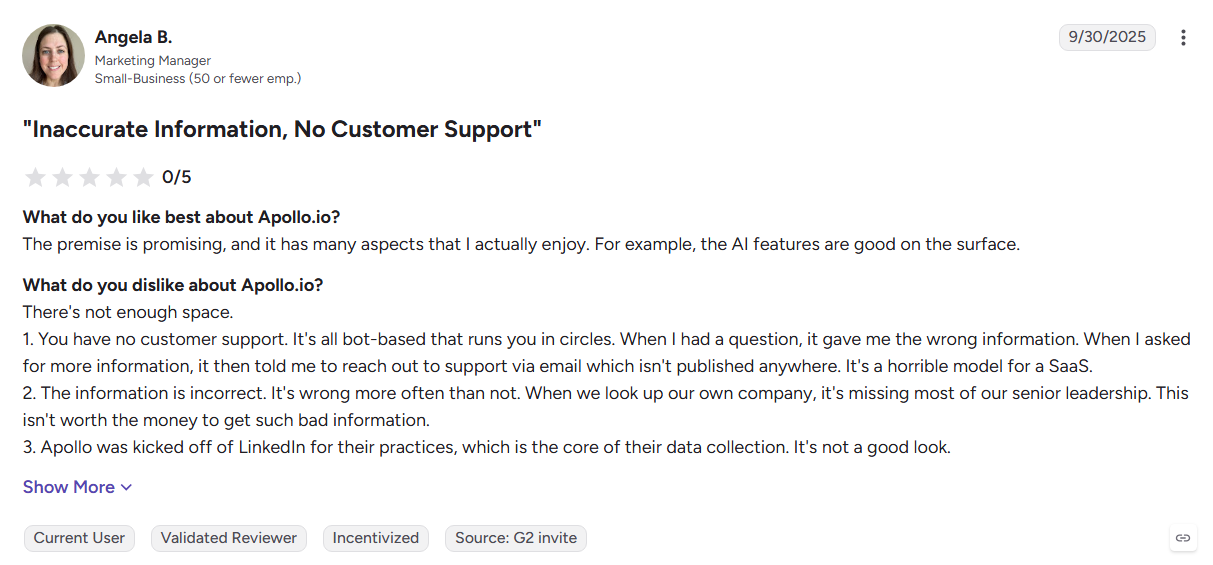
- Higher-tier features: Advanced capabilities require paid tiers, while G2 reviewers provide additional feedback on data accuracy.
Best For: Startups and SMB sales teams that want prospecting data and outreach automation in one platform.
For more options, see our guide to Apollo.io alternatives.
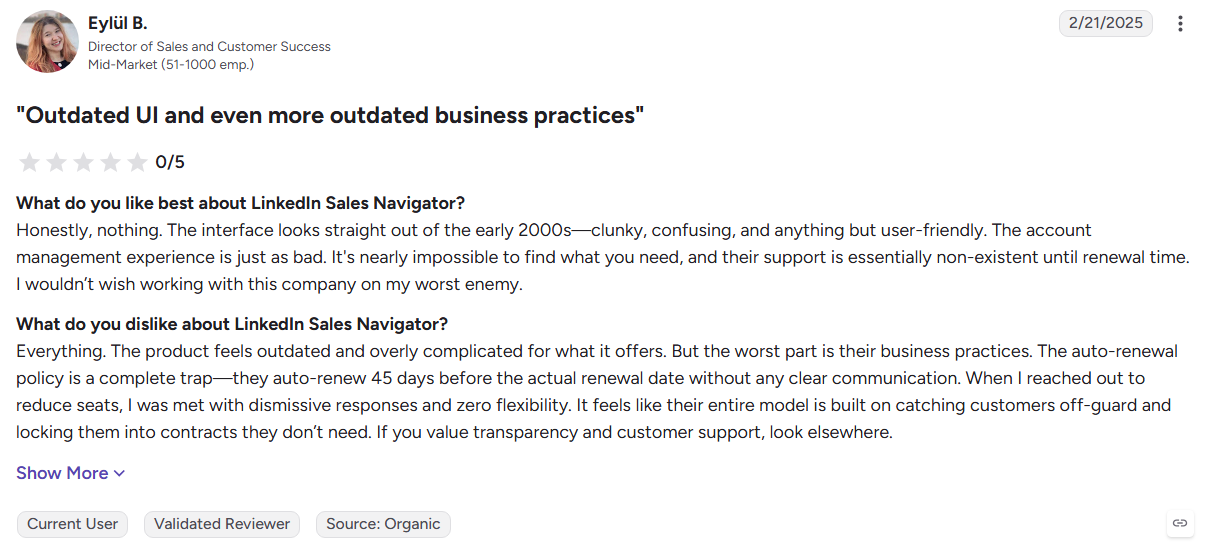
4. LinkedIn Sales Navigator
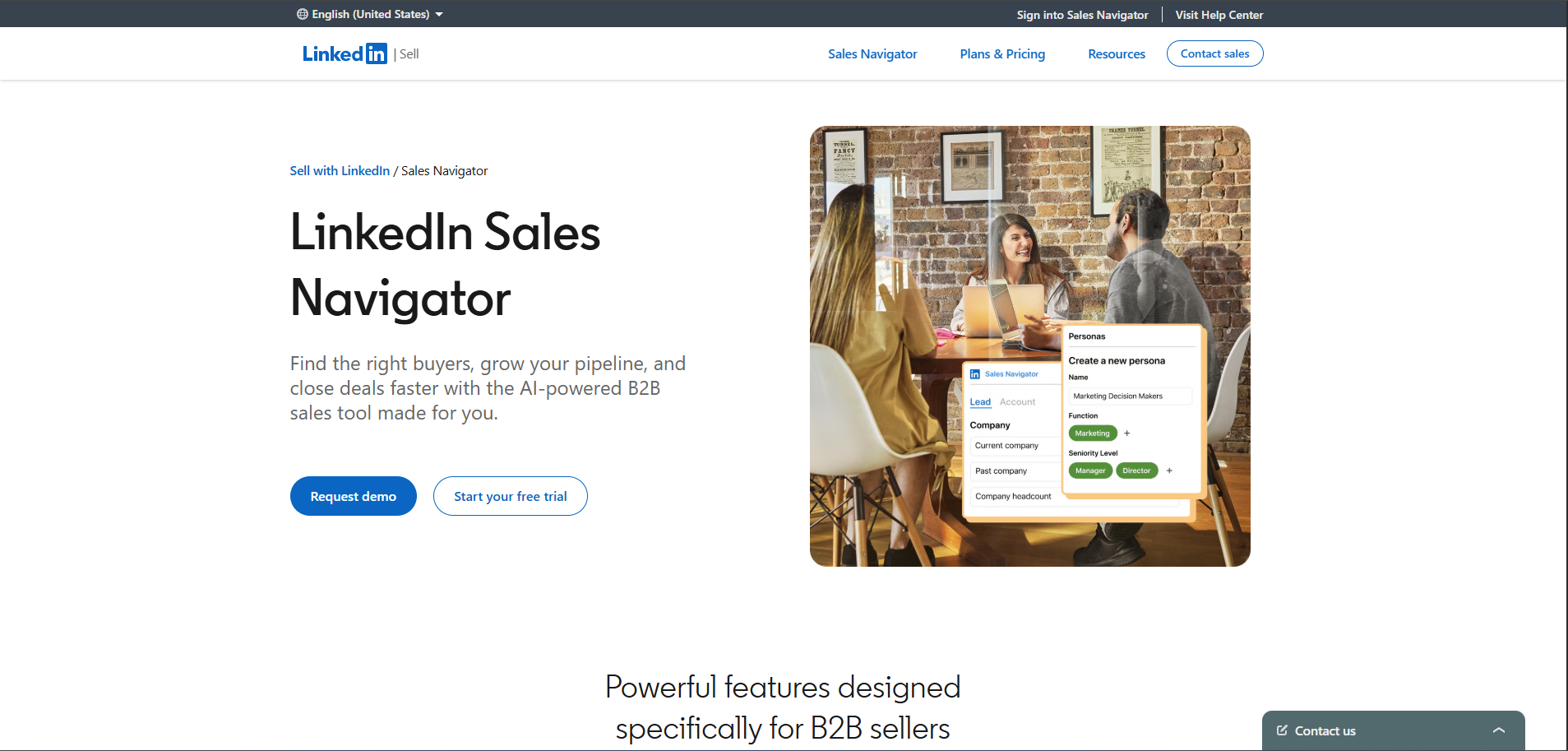
LinkedIn Sales Navigator gives sales teams access to LinkedIn's 1B+ member network, with advanced search, lead recommendations, and alerts for job changes and other prospect activity. TeamLink can also reveal warm introduction paths through colleagues, making it useful for relationship-led selling.
Key Features:
- Advanced Search: Filter prospects by seniority, role, company size, growth, and other attributes.
- Real-Time Alerts: Track job changes, promotions, posts, and updates from saved leads.
- InMail: Contact prospects directly even when they are outside your existing network.
Pros
- Current profiles: Member-maintained information can provide timely prospect context.
- Warm introductions: TeamLink helps identify connections through your existing network.
- Prospect alerts: Surfaces relevant changes and activity for saved leads.
Cons
- No verified contact data: Emails and direct dials are not its core offering.
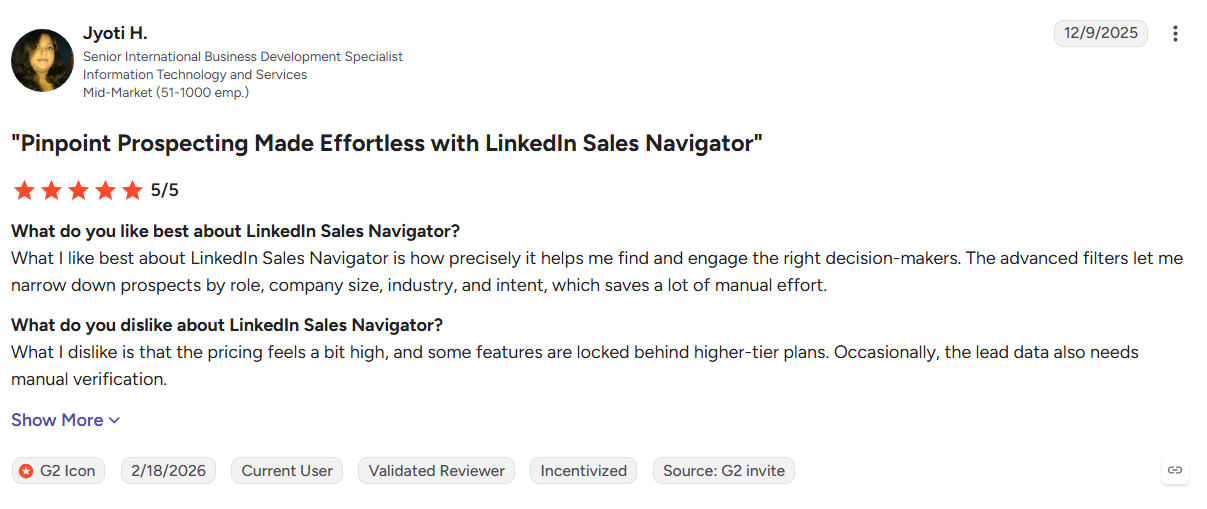
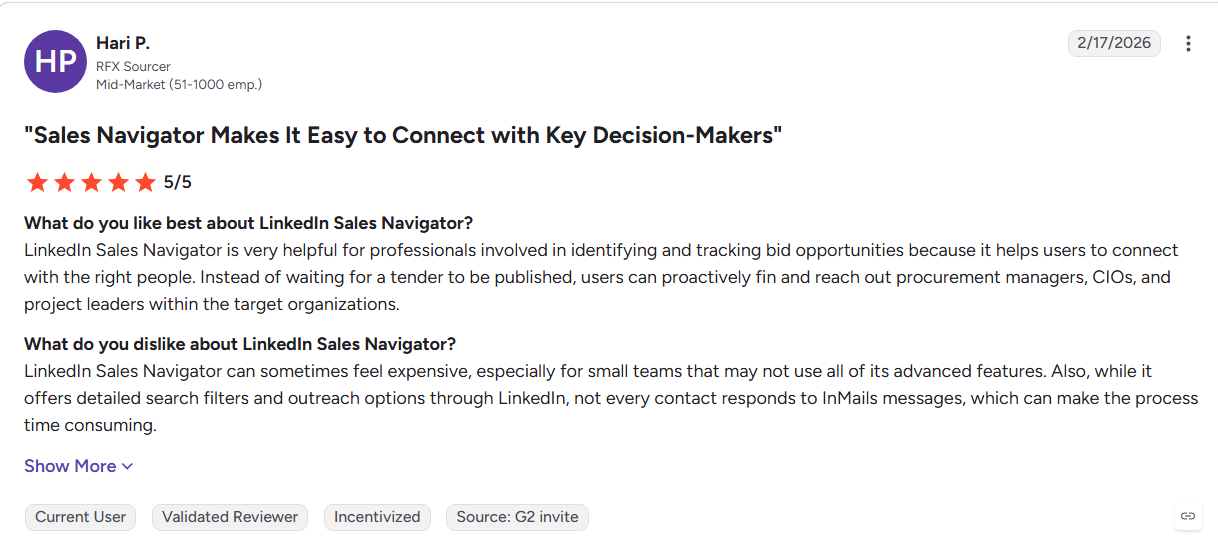
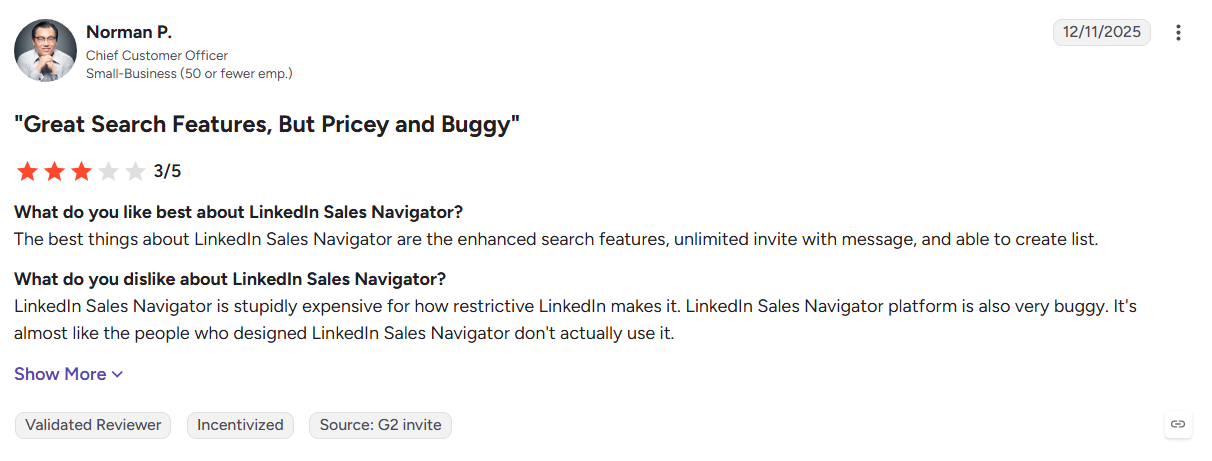
- Per-seat pricing: Costs increase considerably across higher tiers.
- Advanced CRM features: Deeper CRM synchronization requires higher-tier plans, while G2 reviewers provide insight into tier value.
Best For: Account executives and SDRs using relationship-led, account-based selling on LinkedIn.
5. Cognism
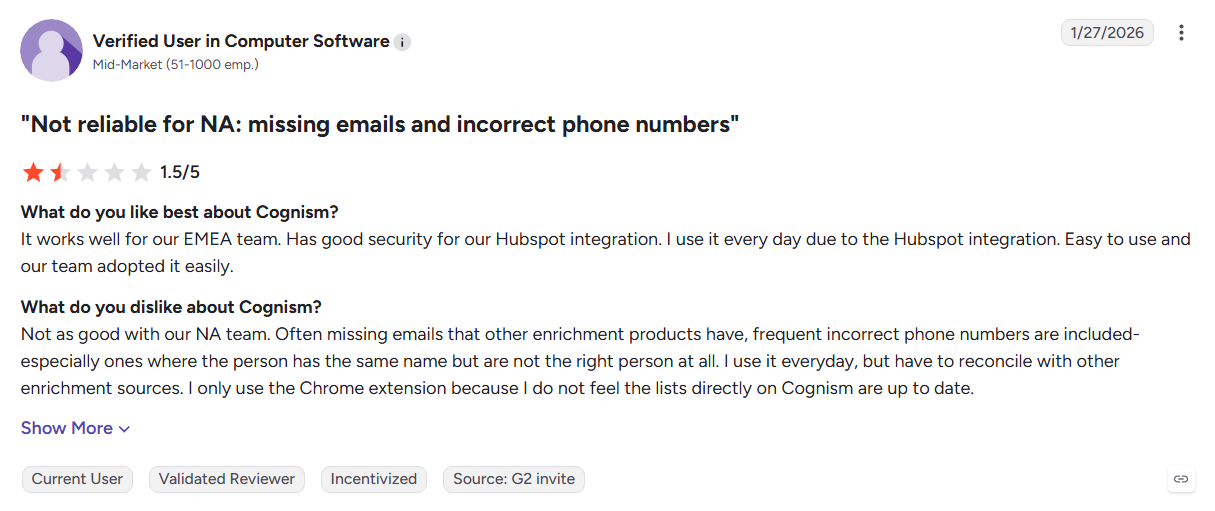
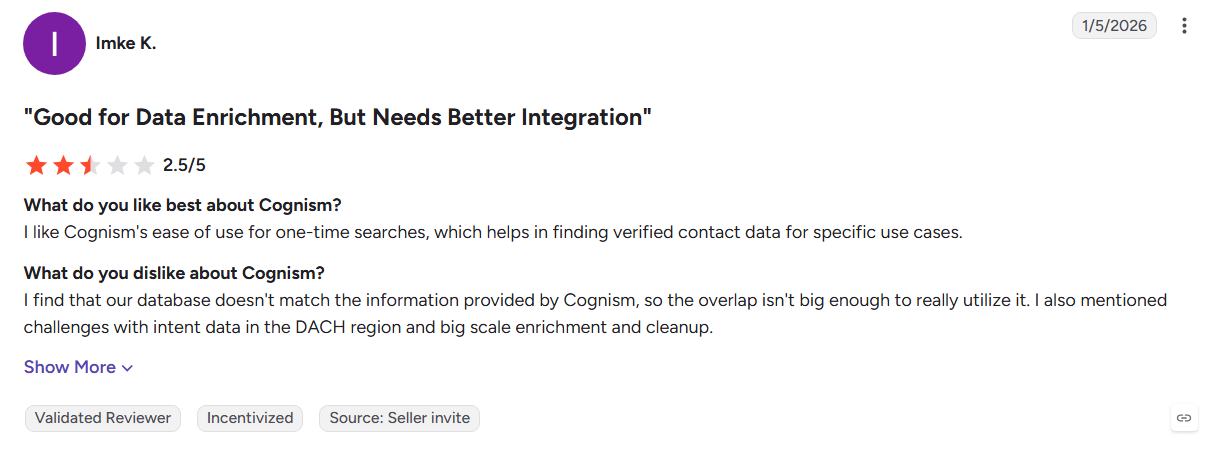
Cognism is a European-first sales intelligence platform known for Diamond Data, including mobile numbers verified by phone. It adds intent, funding, hiring, and leadership-change signals to help teams find and prioritize contacts, particularly across EMEA markets.
Key Features:
- Diamond Data: Phone-verified mobile numbers designed to improve connection rates.
- Compliance: GDPR- and CCPA-aligned data with do-not-call screening.
- Sales Triggers: Surfaces funding, hiring, and leadership-change signals.
Pros
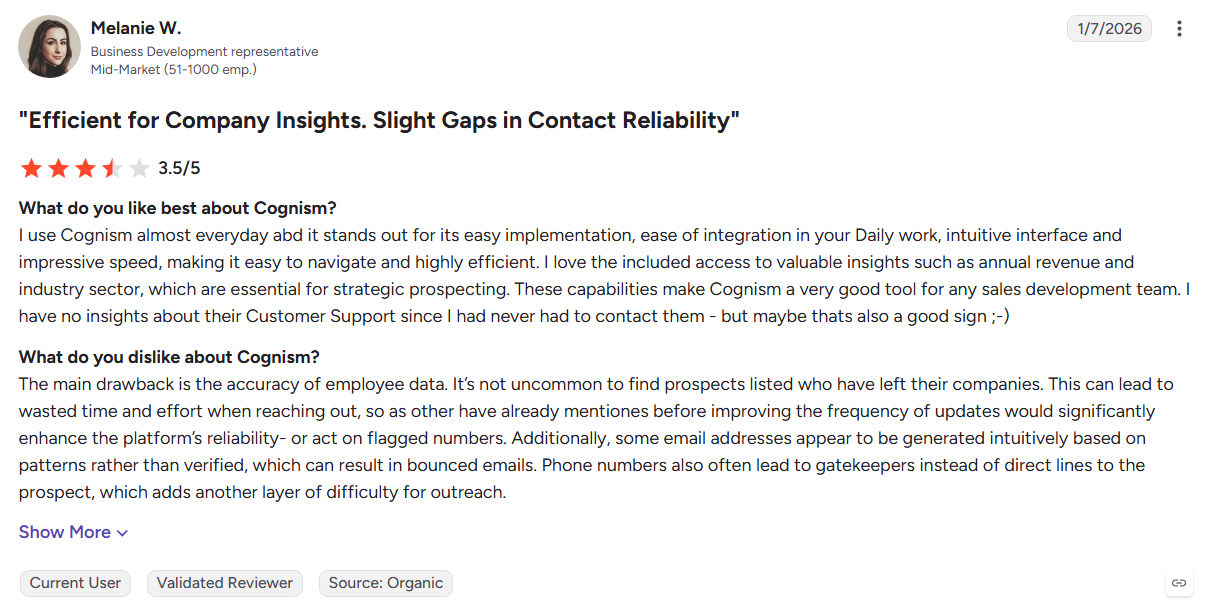
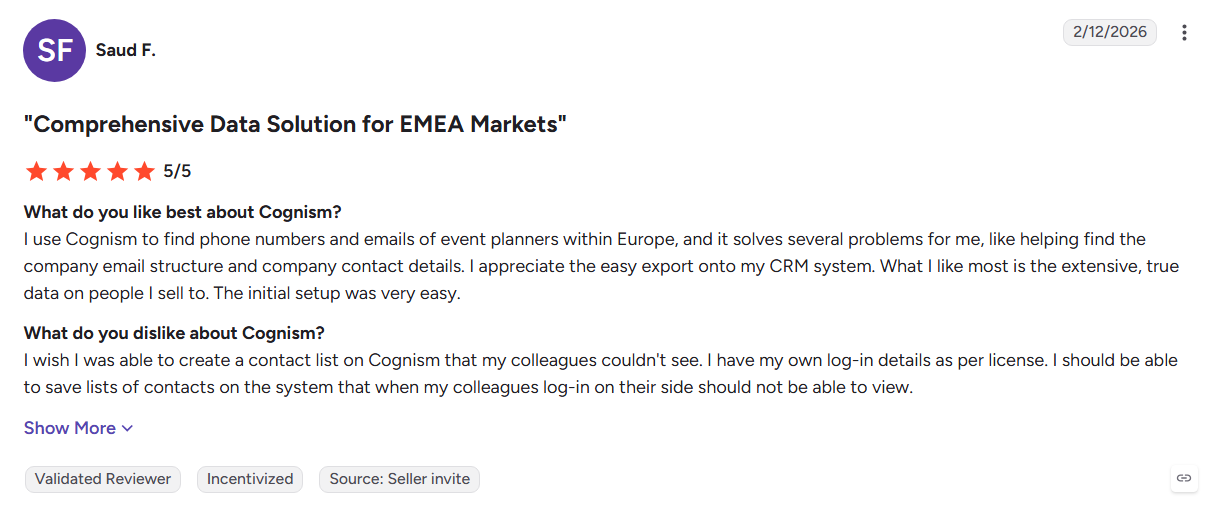
- Strong EMEA coverage: Particularly useful across European markets.
- Human-verified numbers: Adds an extra verification layer to mobile data.
- Compliance focus: Built with privacy and regulated-market requirements in mind.
Cons
- Custom pricing: Quote-based plans and annual contracts can limit flexibility.
- Regional variation: Coverage can be thinner outside its strongest markets.
- No native outreach engine: Teams need another platform for automated outreach, while G2 feedback can help assess regional coverage.
Best For: Call-focused outbound teams selling into the UK, DACH, France, and Nordic markets.
For more options, see our guide to Cognism alternatives.
6. Lusha
Lusha focuses on fast prospect lookups through a browser extension that reveals contact details from LinkedIn and company websites. Its buying signals add context around job changes, hiring, and funding, while the platform keeps the workflow simple for individual sellers and small teams.
Key Features:
- One-Click Reveal: Find contact details directly from LinkedIn, Sales Navigator, and company websites.
- Buying Signals: Track job changes, hiring activity, and funding events.
- Bulk Enrichment: Update existing prospect lists with additional contact data.
Pros
- Fast prospecting: Makes manual LinkedIn research quicker.
- Free entry point: Offers a free plan for testing the platform.
- Simple workflow: Useful for reps who mainly need quick contact lookups.
Cons
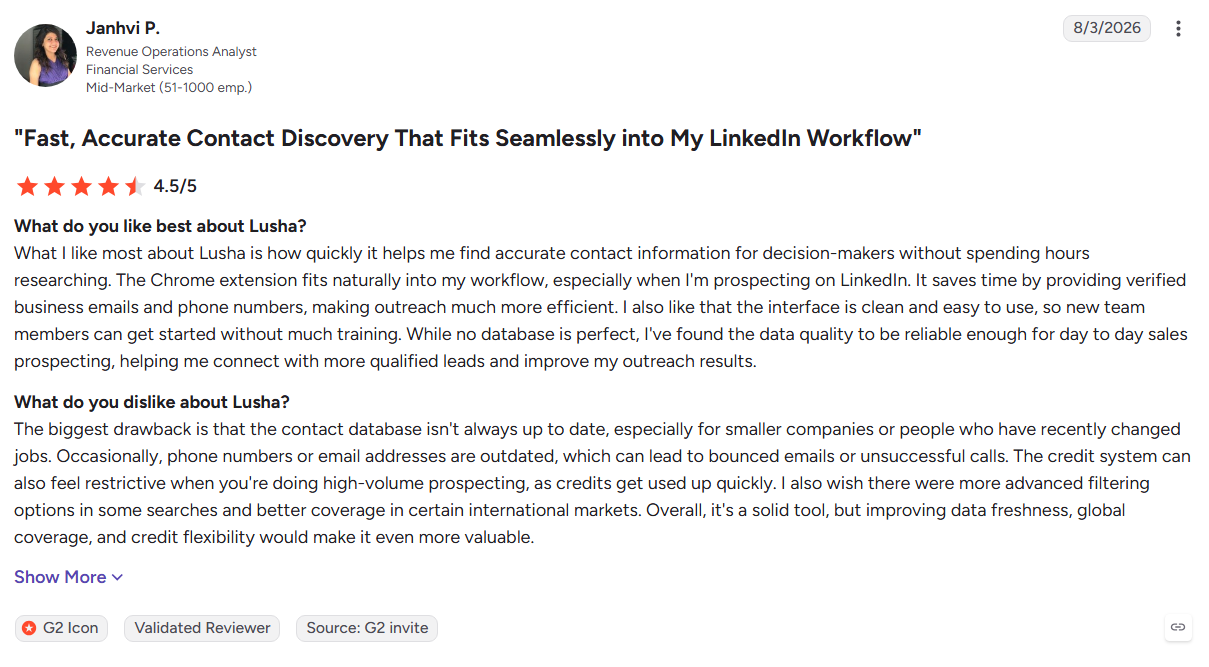
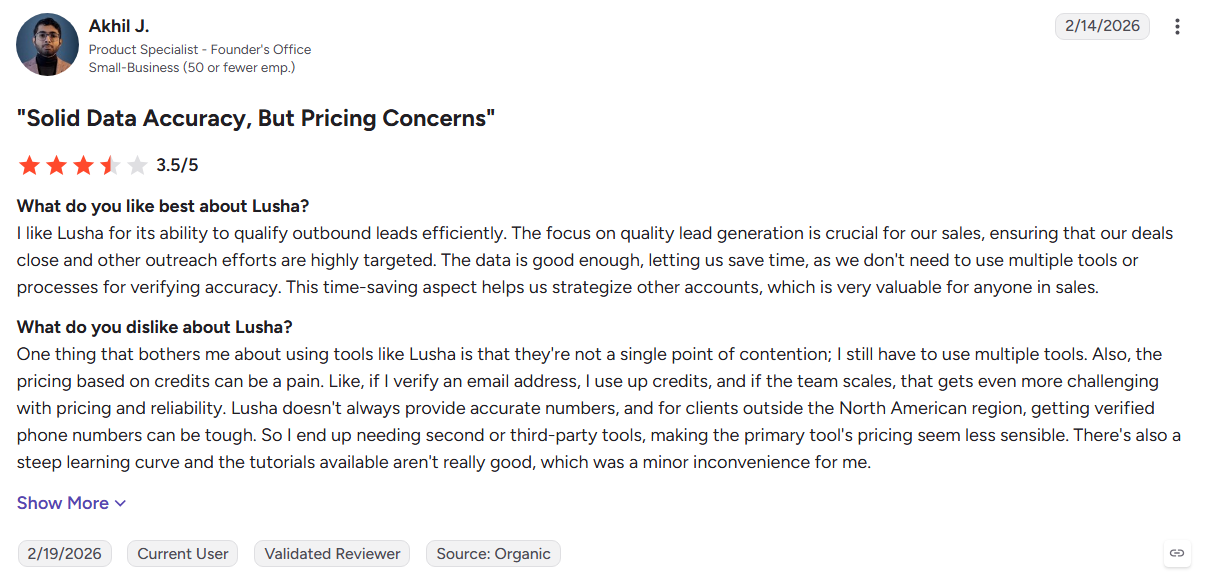
- Credit limits: High-volume prospecting can consume credits quickly.
- Costly phone reveals: Mobile numbers use more credits than email data.
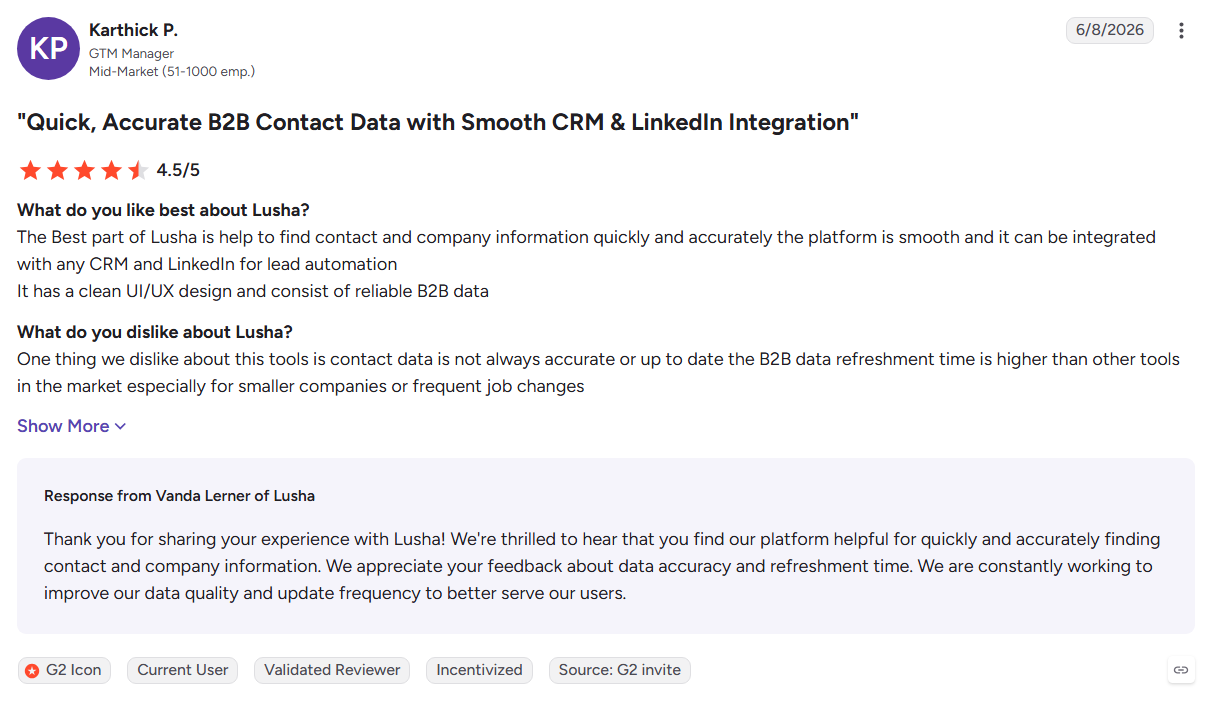
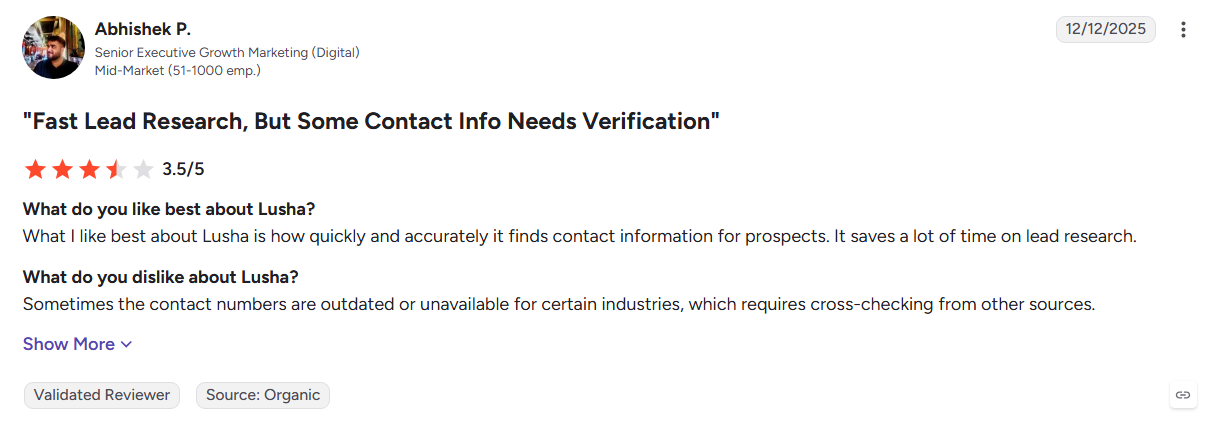
- Limited orchestration: It provides prospect data but less workflow automation, while G2 reviewers also note differences in coverage across markets.
Best For: Individual sellers and small sales teams that primarily discover prospects through LinkedIn.
7. Seamless.AI
Seamless.AI uses real-time web search to find contact information rather than relying entirely on a fixed database. Its Autopilot feature can build prospect lists from defined criteria, while Buyer Intent and other intelligence features add context for prioritizing accounts.
Key Features:
- Real-Time Search: Finds contact information when prospects are searched.
- Autopilot: Builds lead lists automatically from selected criteria.
- Chrome Extension: Lets reps prospect directly from LinkedIn and company websites.
Pros
- Fresh prospect discovery: Can surface contacts that static databases may miss.
- Free evaluation: Provides a free plan for testing the platform.
- CRM integrations: Connects prospect data with common sales systems.
Cons
- Variable accuracy: Contact quality can differ across searches and markets.
- Unpublished paid pricing: Exact paid costs are not publicly listed.
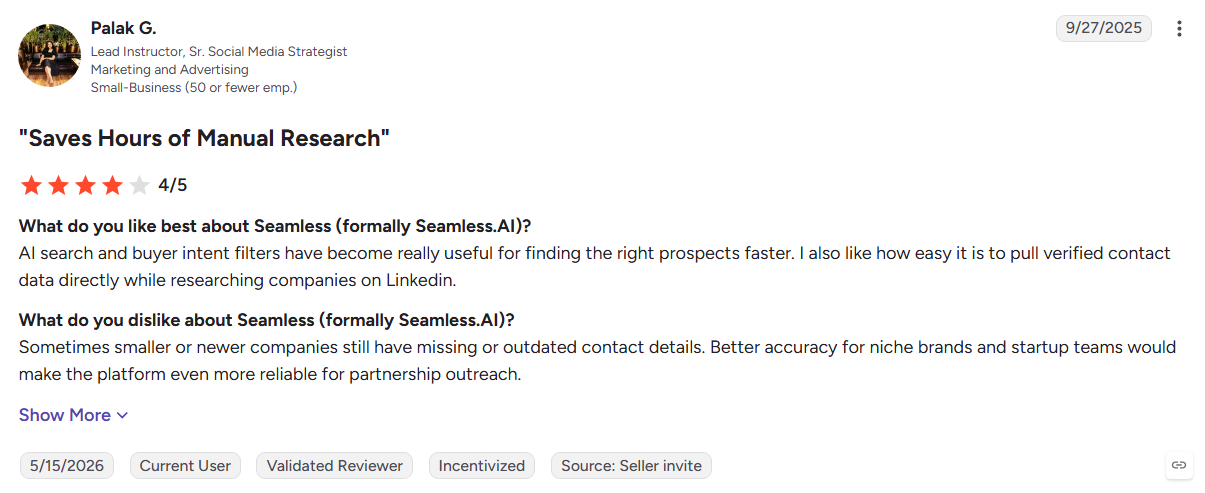
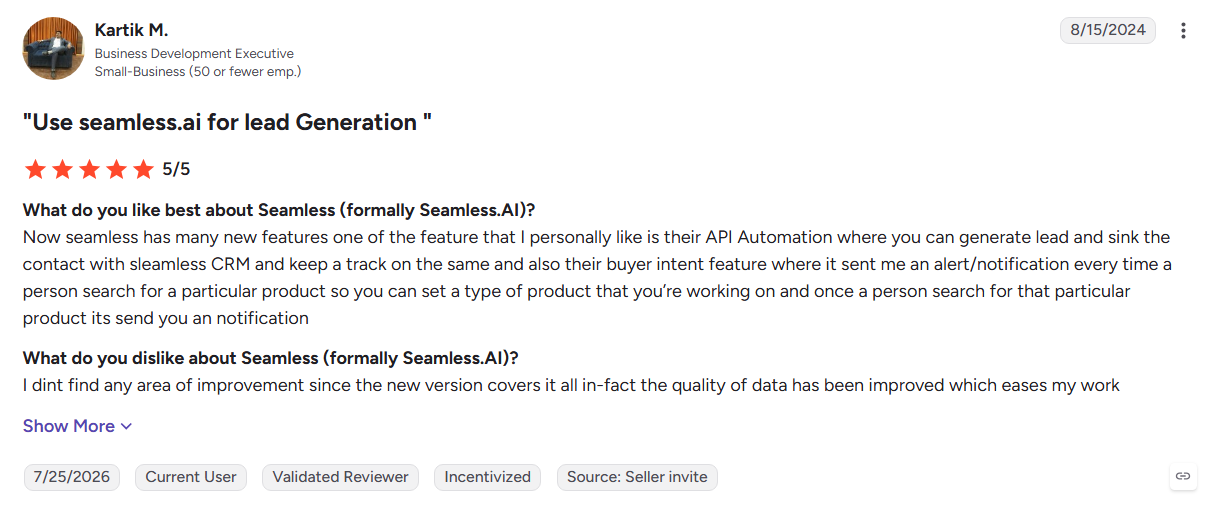
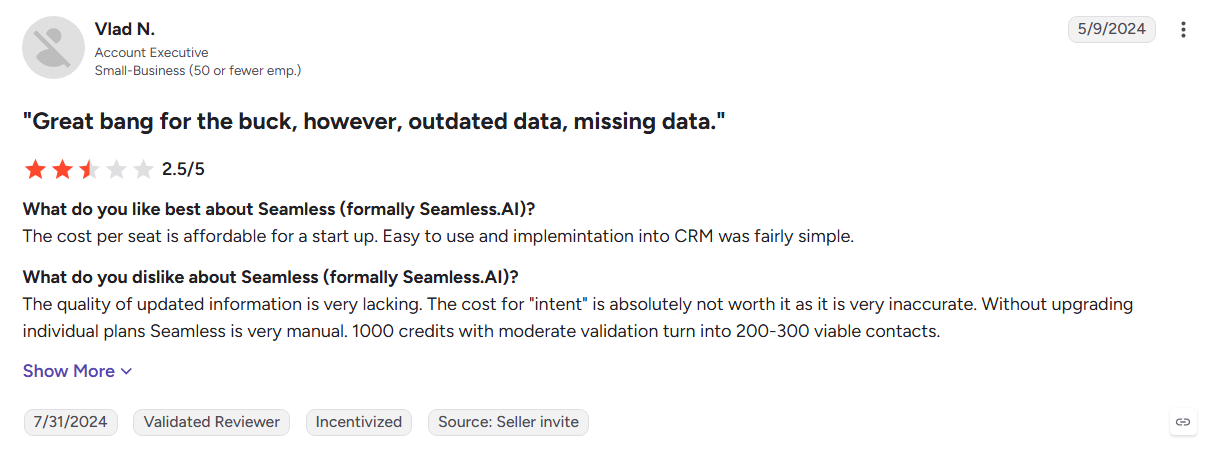
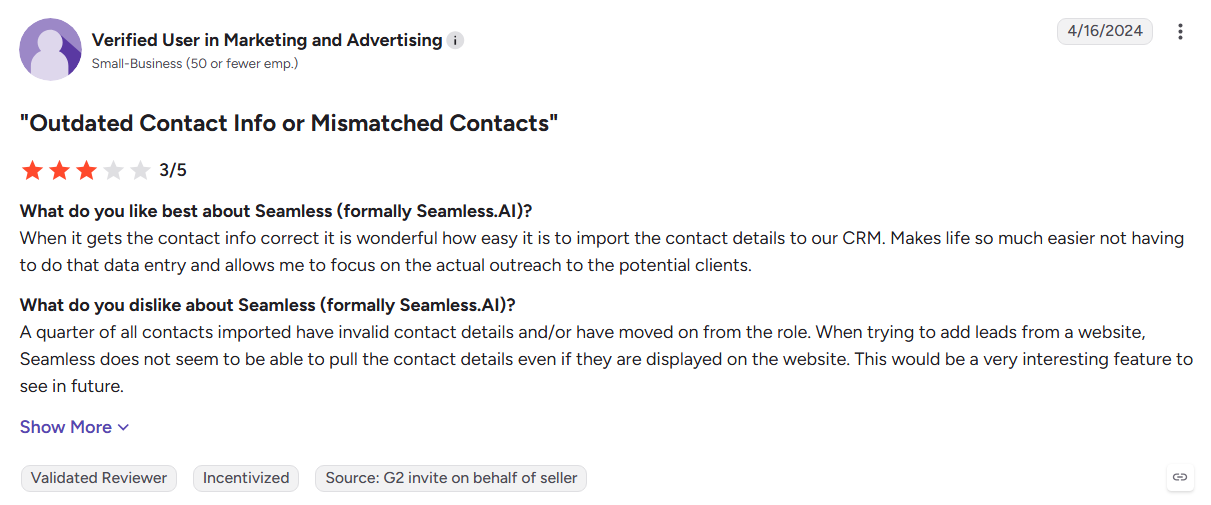
- Mixed user feedback: G2 reviewers discuss the product experience, while Trustpilot reviewers raise concerns around billing and cancellation.
Best For: Sales teams that need to build large prospect lists quickly.
For more options, see our guide to sales prospecting tools.
8. UpLead
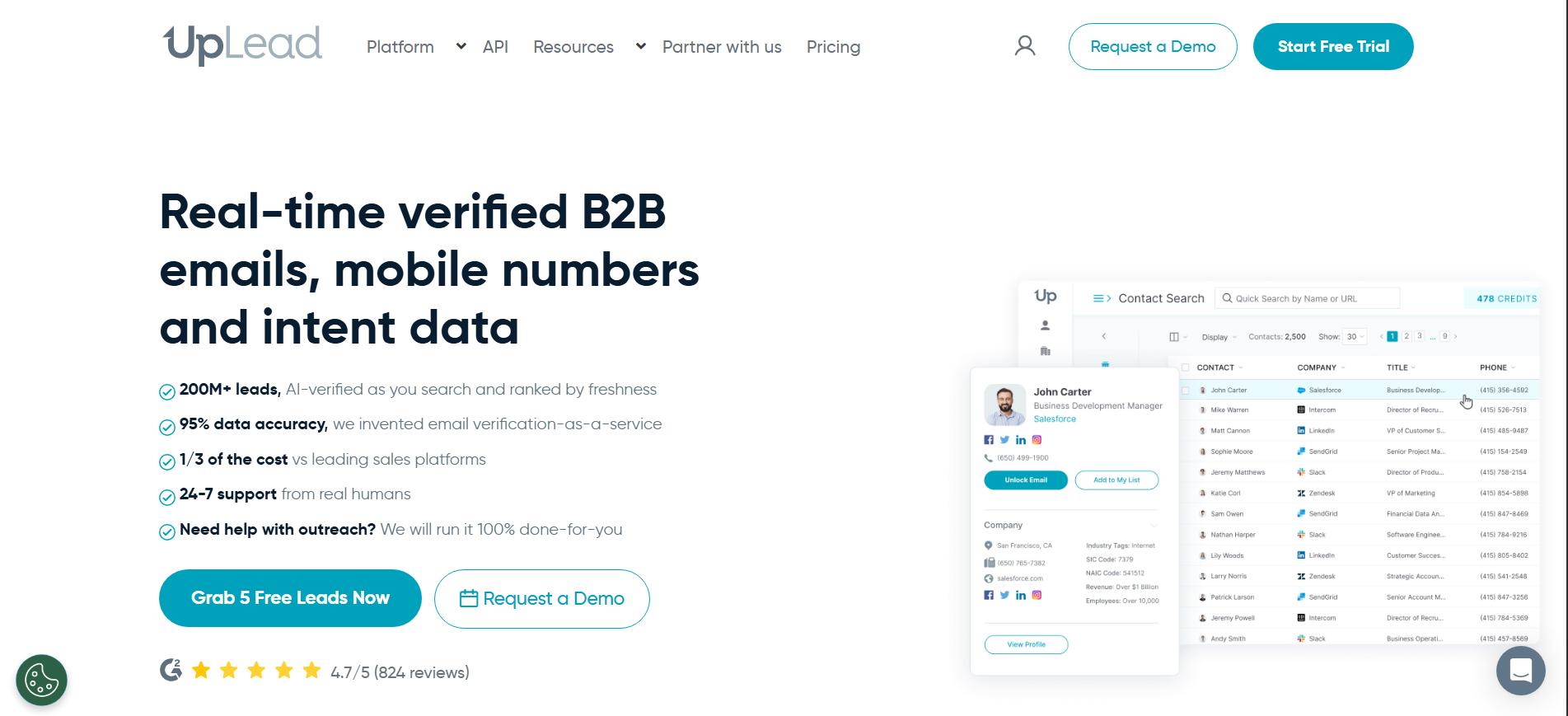
UpLead focuses on verified contact data, checking each email in real time before you download it. With 50+ filters, technographics, and intent data, it helps teams build cleaner prospect lists, while Kwin focuses on first-party website behavior to identify when prospects are ready to engage.
Key Features:
- Real-Time Verification: Checks email deliverability when contact data is accessed.
- 50+ Search Filters: Narrow prospects by industry, company size, location, role, and other attributes.
- Technographics and Intent: Target companies by technology usage and research activity.
Pros
- Data accuracy: Strong focus on keeping email records reliable.
- Free testing: Lets teams evaluate data quality before committing.
- Simple interface: Easy to build targeted contact lists without a complex workflow.
Cons
- Smaller database: Has less overall coverage than platforms such as Apollo.io and ZoomInfo.
- Limited integrations: Offers fewer integrations than larger sales intelligence platforms.
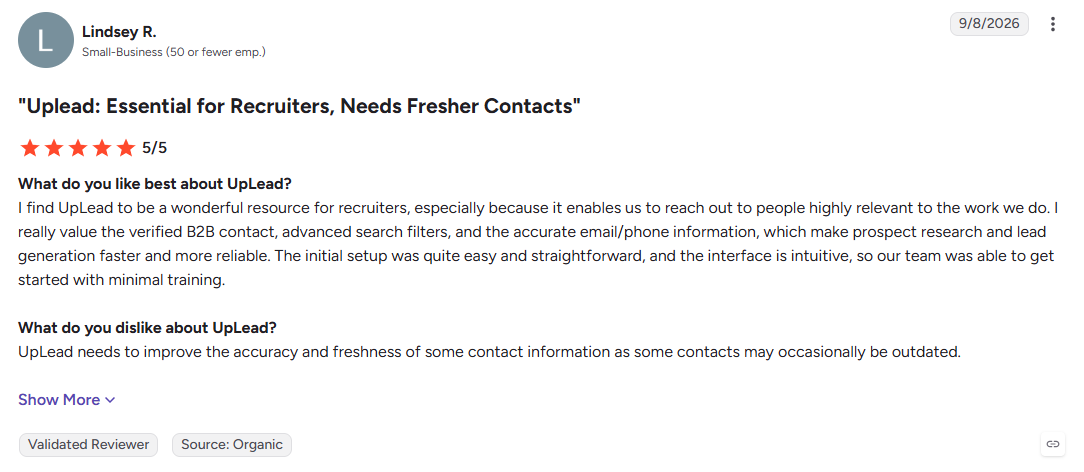
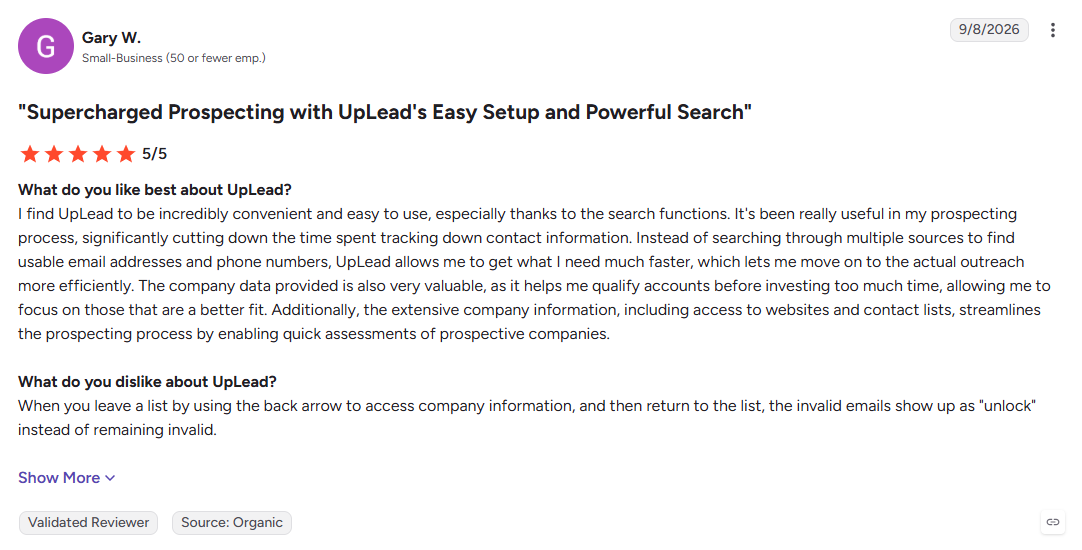
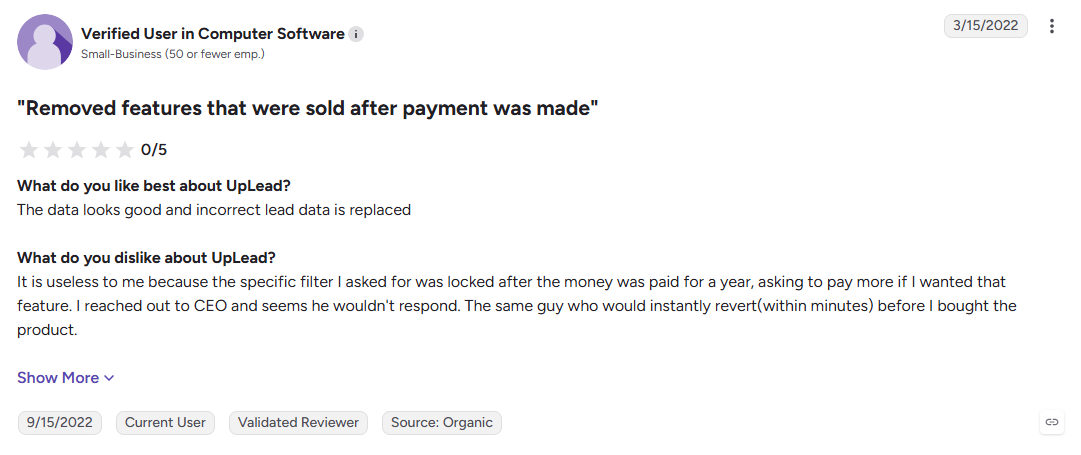
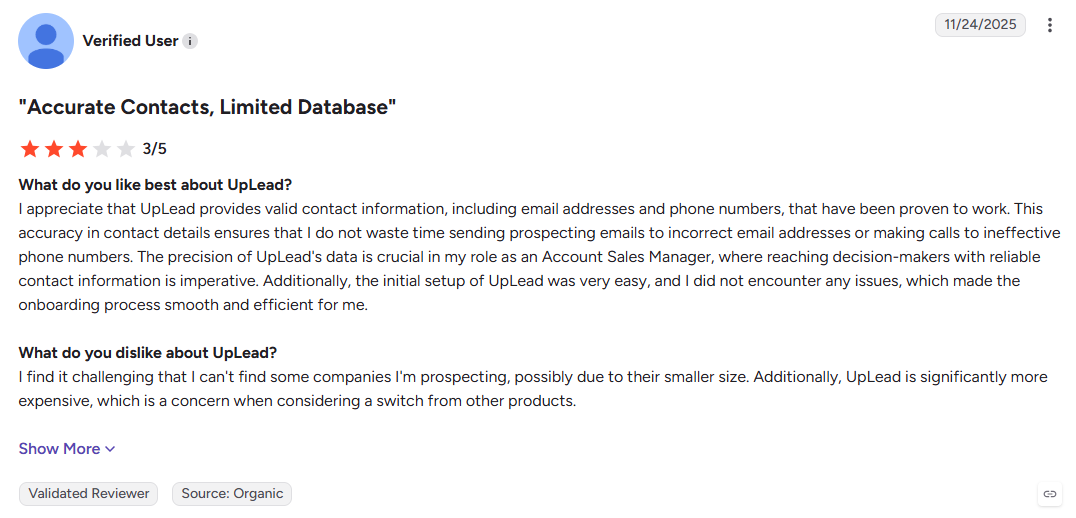
- No outreach engine: Requires another tool to run automated campaigns, while G2 reviewers generally praise accuracy and support but raise cost concerns at higher volumes.
Best For: Sales and marketing teams that prioritize verified email data and low bounce rates.
9. RocketReach
RocketReach helps reps quickly find professional emails and phone numbers, then turn those results into reusable prospect lists. Its List Generation and social-profile matching features make it useful for targeted research, but sequencing and website visitor intelligence require additional tools.
Key Features:
- Advanced Filters: Search by industry, revenue, headcount, education, and other criteria.
- Enrichment API: Add contact data to internal systems and workflows at scale.
- Browser Extension: Find prospect information directly from LinkedIn and company websites.
Pros
- Fast lookups: Quickly retrieves individual contact details.
- Self-serve plans: Gives teams a straightforward way to access the platform.
- API access: Supports larger-scale enrichment workflows.
Cons
- Limited intent access: Intent data is available only on higher-tier plans.
- Variable match rates: Contact coverage can differ across industries and regions.
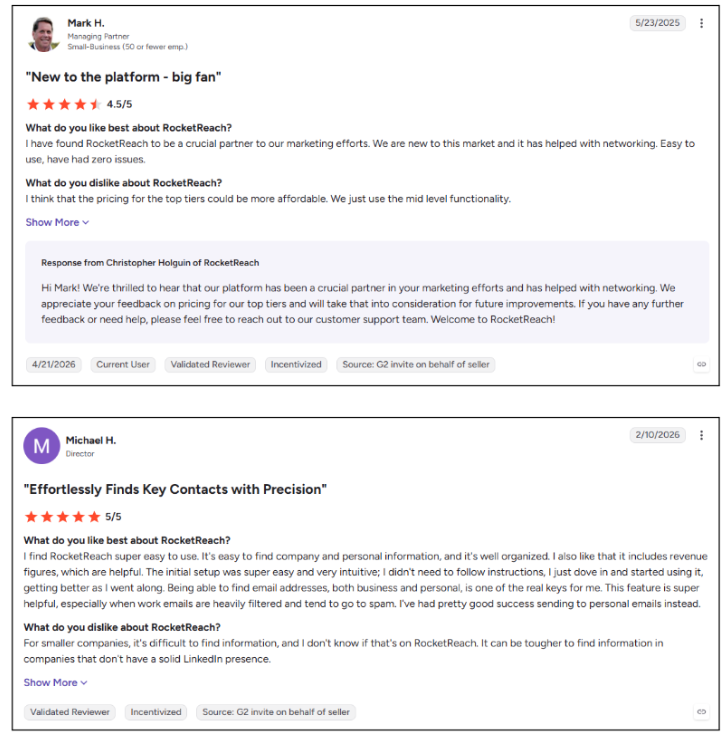
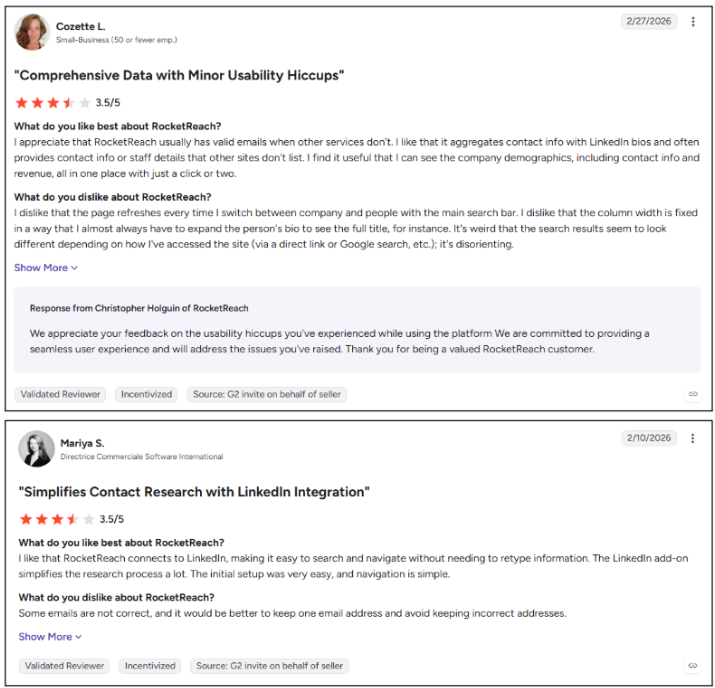
- Data gaps: G2 reviewers frequently mention missing or inaccurate direct-dial information.
Best For: Recruiters and sales reps who need fast contact lookups rather than a complete prospecting automation platform.
10. LeadIQ
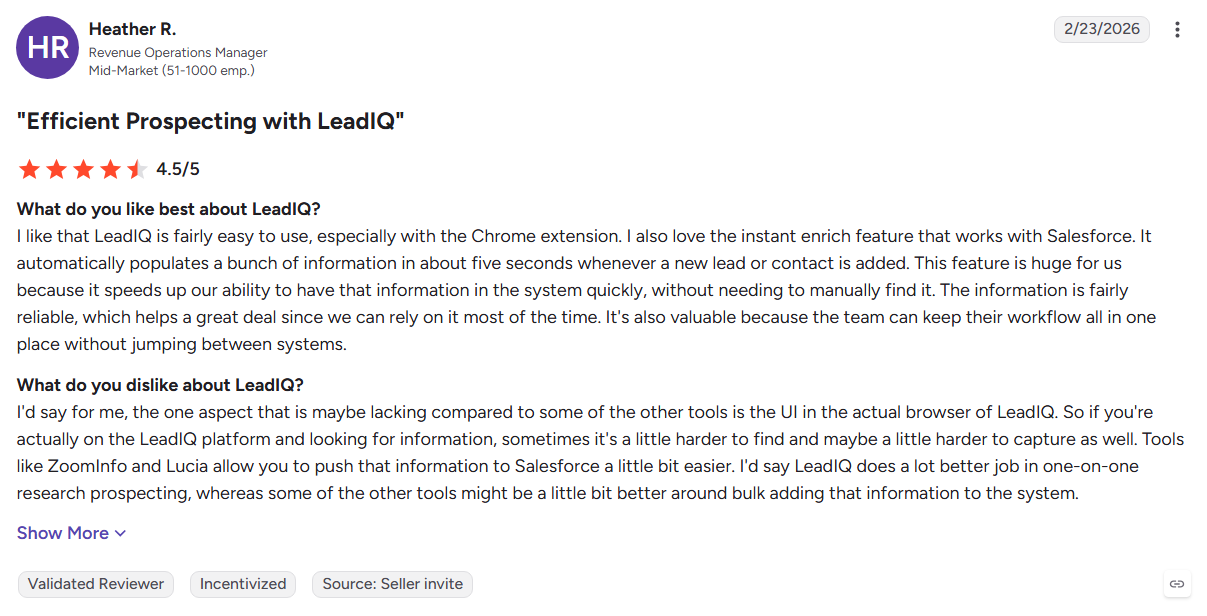
LeadIQ turns LinkedIn prospecting into a faster capture workflow, letting reps save contacts and push them into Salesforce or sales engagement platforms. Job-change tracking also helps teams reconnect with existing contacts when they move into new buying opportunities.
Key Features:
- One-Click Capture: Save contact details from LinkedIn and company websites.
- Job Change Alerts: Identify when existing contacts move to new companies.
- AI Email Writing: Generate personalized outreach within the prospecting workflow.
Pros
- Fast capture: Moves prospects from LinkedIn into the sales workflow quickly.
- Sales engagement integrations: Connects prospect data with common outreach platforms.
- Free starting plan: Lets teams test the workflow before upgrading.
Cons
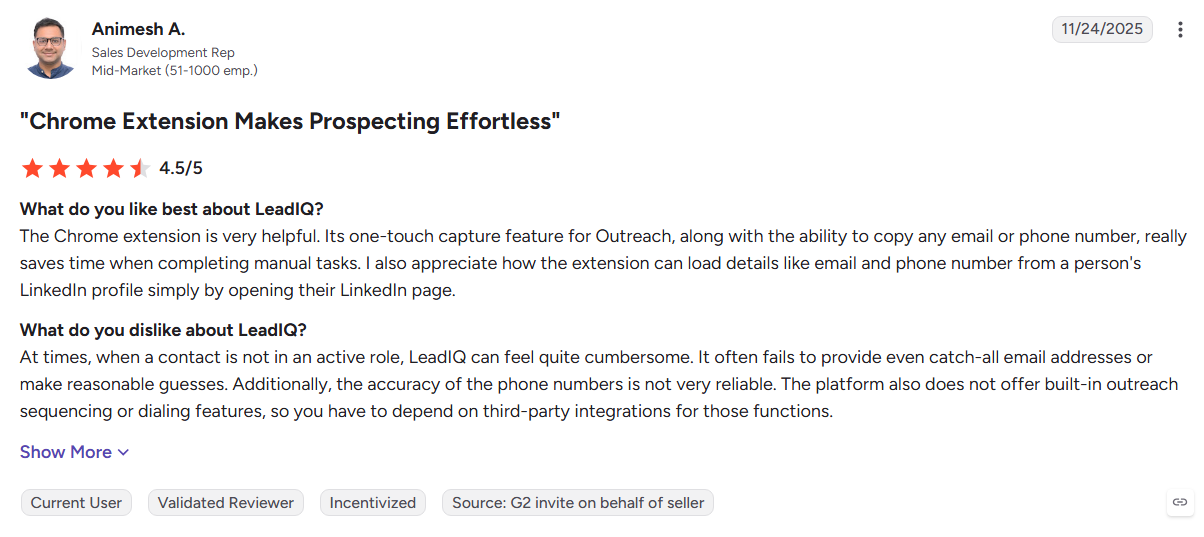
- Limited intelligence: Does not offer deep intent or account intelligence.
- Not bulk-focused: Better suited to targeted capture than large-scale list building.
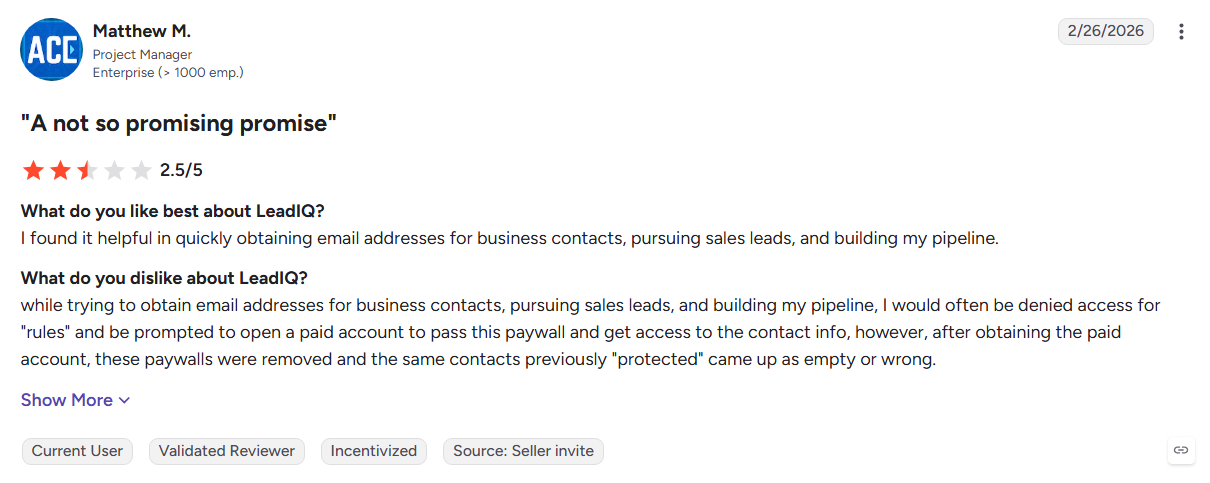
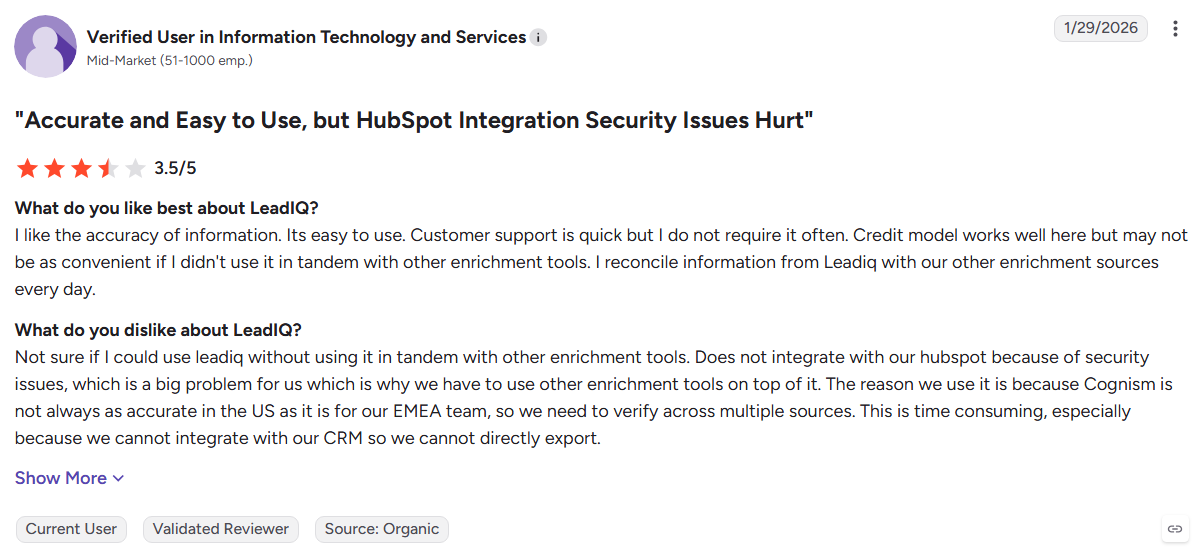
- Phone accuracy: G2 reviewers praise the workflow but commonly flag phone-data accuracy outside the US.
Best For: SDR teams that already prospect on LinkedIn and work primarily with Salesforce.
11. Kaspr
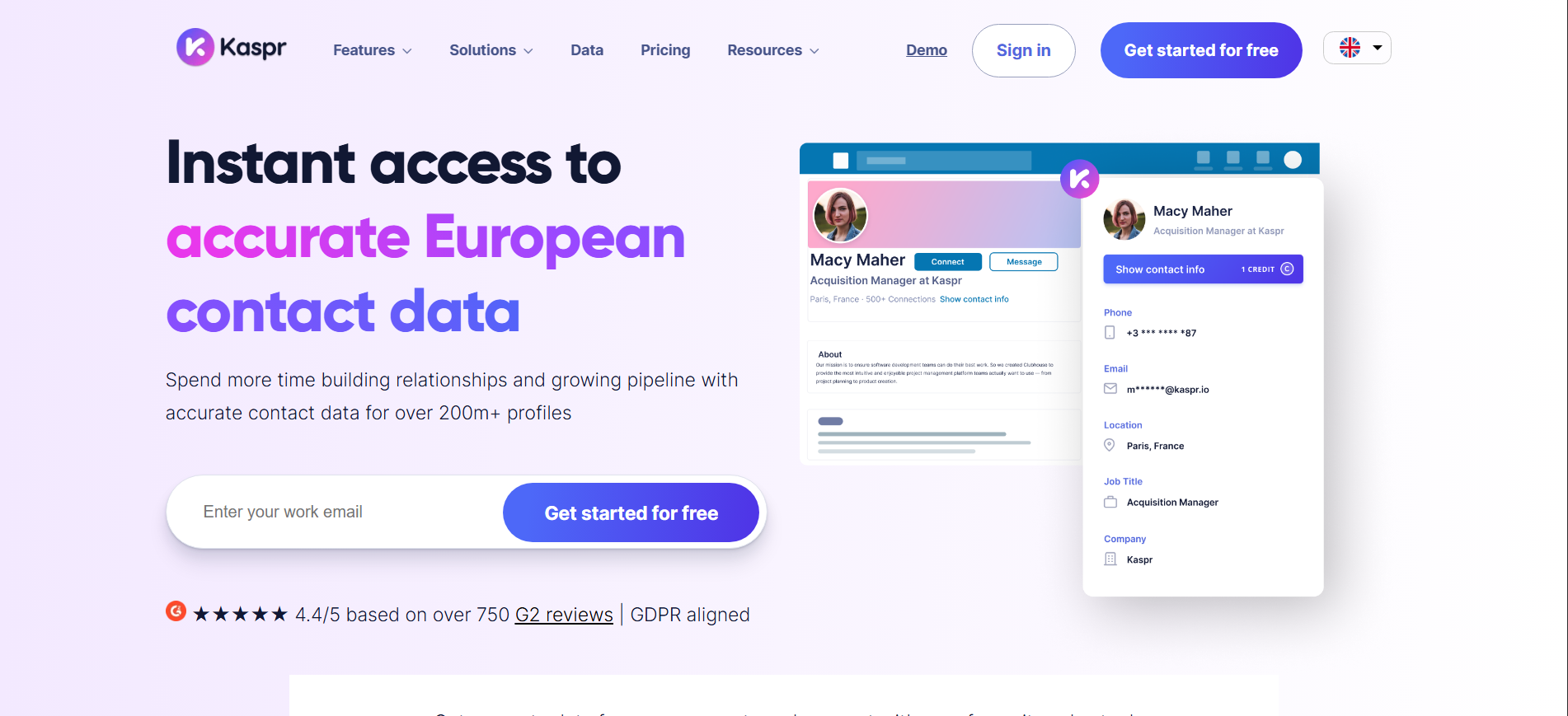
Kaspr brings contact discovery directly into LinkedIn and Sales Navigator, letting reps reveal emails and phone numbers without leaving the prospect's profile. Its European focus makes it particularly useful for teams building LinkedIn-led lists across European markets.
Key Features:
- Chrome Extension: Reveal contact details directly from LinkedIn pages, searches, and events.
- Real-Time Verification: Check contact information before adding it to your workflow.
- CRM Integrations: Sync prospect data with Salesforce, HubSpot, and Pipedrive.
Pros
- European coverage: Strong fit for European contact research.
- Simple setup: Easy self-serve workflow for LinkedIn prospecting.
- Free testing: Provides a free plan to evaluate contact quality.
Cons
- LinkedIn dependency: Prospect discovery is heavily tied to the LinkedIn ecosystem.
- Phone limitations: Phone credits are more restricted than email access.
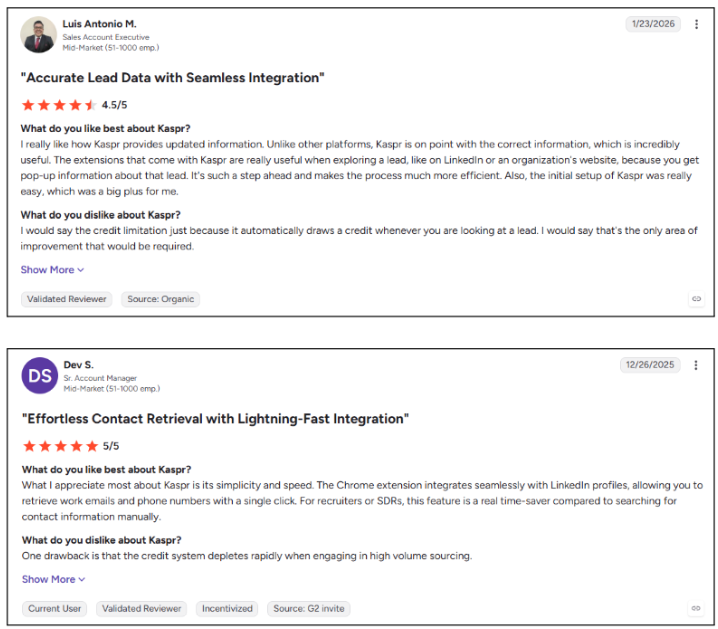
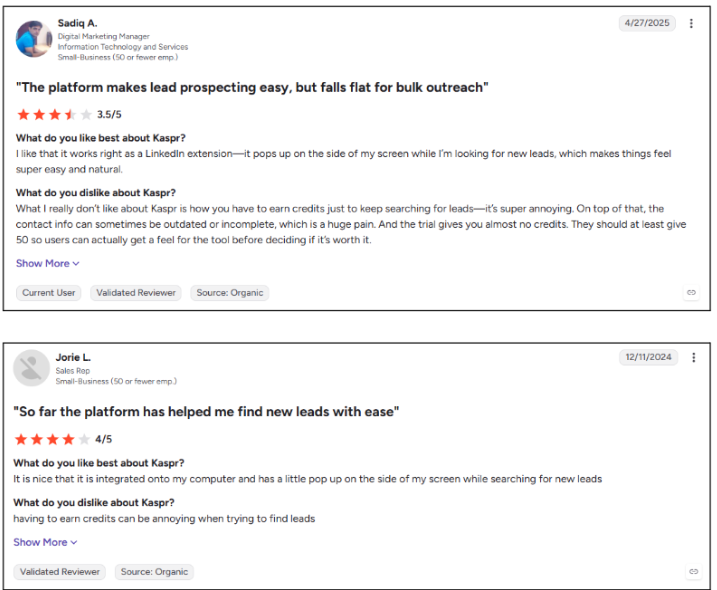
- No multichannel outreach: Requires another platform for automated campaigns, while G2 reviewers praise its simple extension but note weaker coverage in smaller markets.
Best For: SDRs and small sales teams prospecting on LinkedIn across European markets.
12. Hunter.io
Hunter.io specializes in professional email discovery and verification, letting teams find addresses by domain or individual name before checking their deliverability. Its lightweight campaign builder also covers basic cold email, making it a focused option for email-first outbound.
Key Features:
- Domain Search: Finds company contacts and identifies common email patterns.
- Email Finder: Locates professional addresses using a person's name and company.
- Email Verifier: Checks deliverability before an address enters an outreach campaign.
Pros
- Email-focused workflow: Covers finding, verifying, and emailing contacts in one place.
- Free plan: Gives small teams a low-cost way to test the platform.
- Reliable verification: Strong focus on reducing invalid email addresses.
Cons
- No phone data: Does not provide direct-dial contact information.
- Limited intelligence: Offers less firmographic and intent data than broader sales platforms.
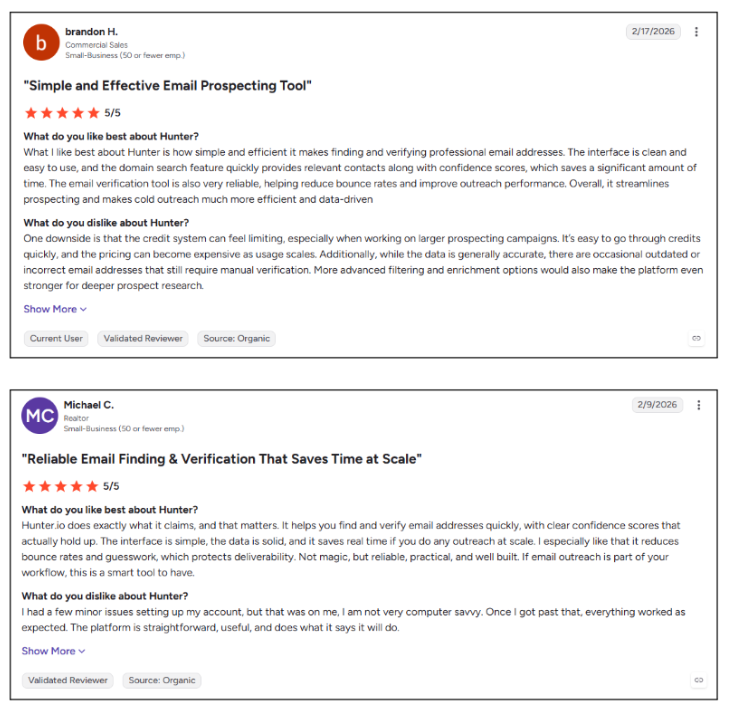
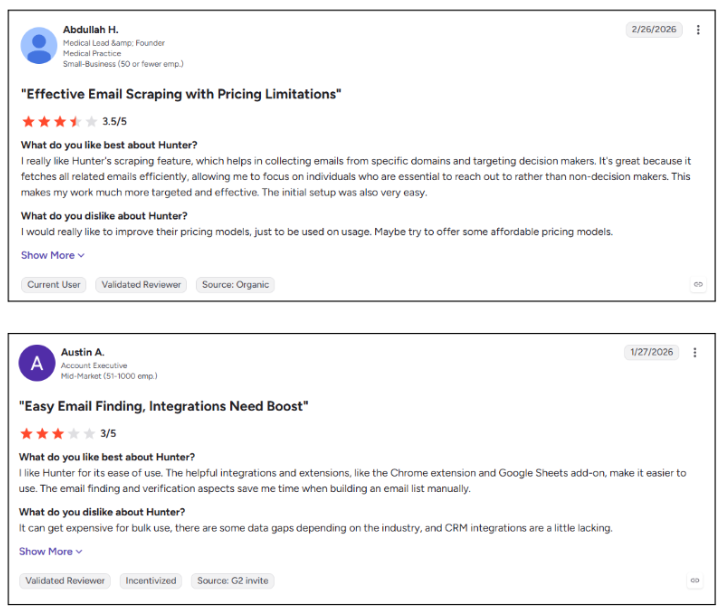
- Narrower prospecting scope: Best suited to email rather than multichannel outreach, while G2 reviewers praise verification quality but note the lack of phone data.
Best For: Founders and small teams whose outbound strategy is built primarily around cold email.
13. Snov.io
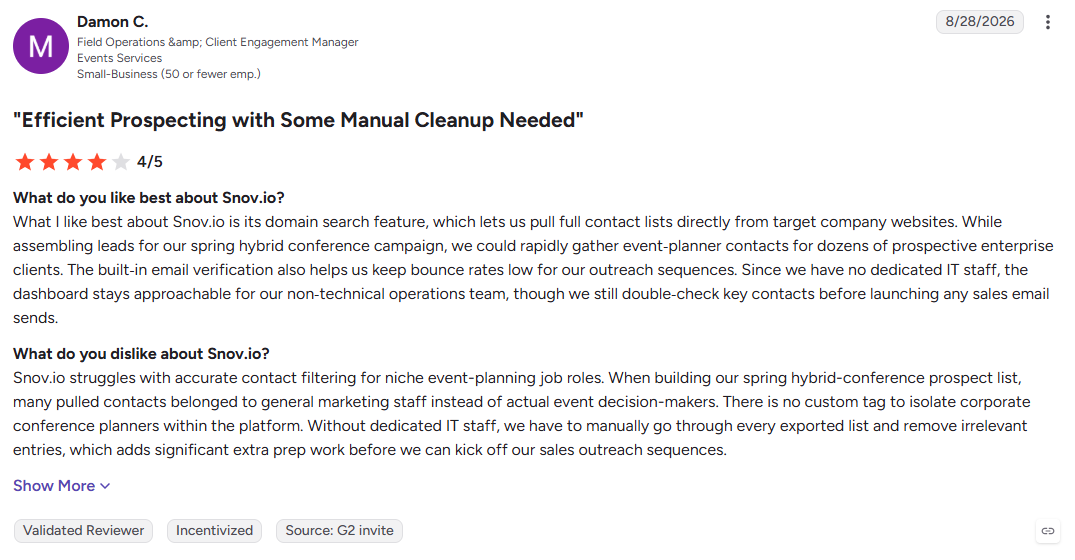
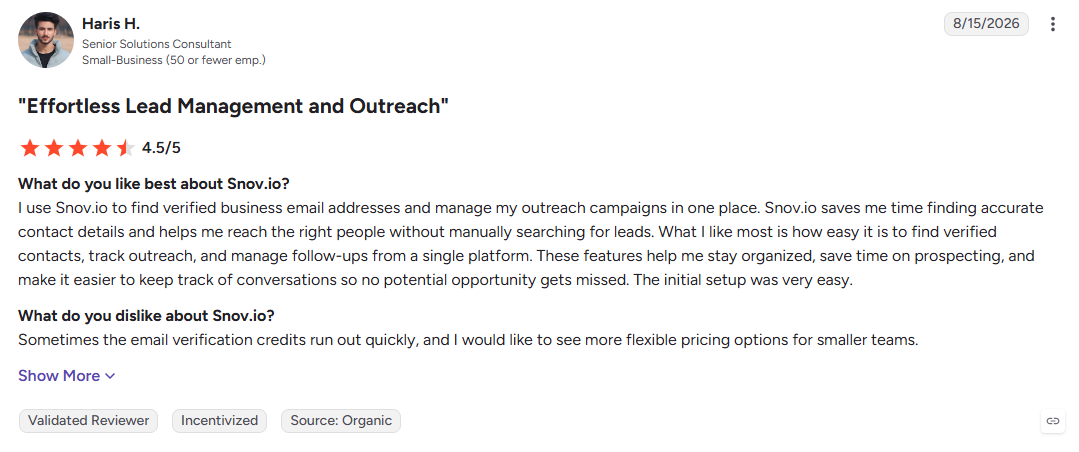
Snov.io brings email finding, verification, drip campaigns, warm-up, and CRM into one affordable outbound suite. It gives early-stage teams the tools to build and manage cold outreach in one place, while Kwin focuses on engaging people who have already shown interest through your website.
Key Features:
- Finder and Verifier: Build prospect lists and check email quality in the same workflow.
- Drip Campaigns: Automate email sequences with LinkedIn steps available as an add-on.
- Deliverability Toolkit: Includes warm-up, spam checks, and domain diagnostics.
Pros
- All-in-one value: Combines core outbound functions at an accessible price.
- Deliverability support: Helps teams prepare and protect sending domains.
- Easy to learn: A practical starting point for teams new to outbound automation.
Cons
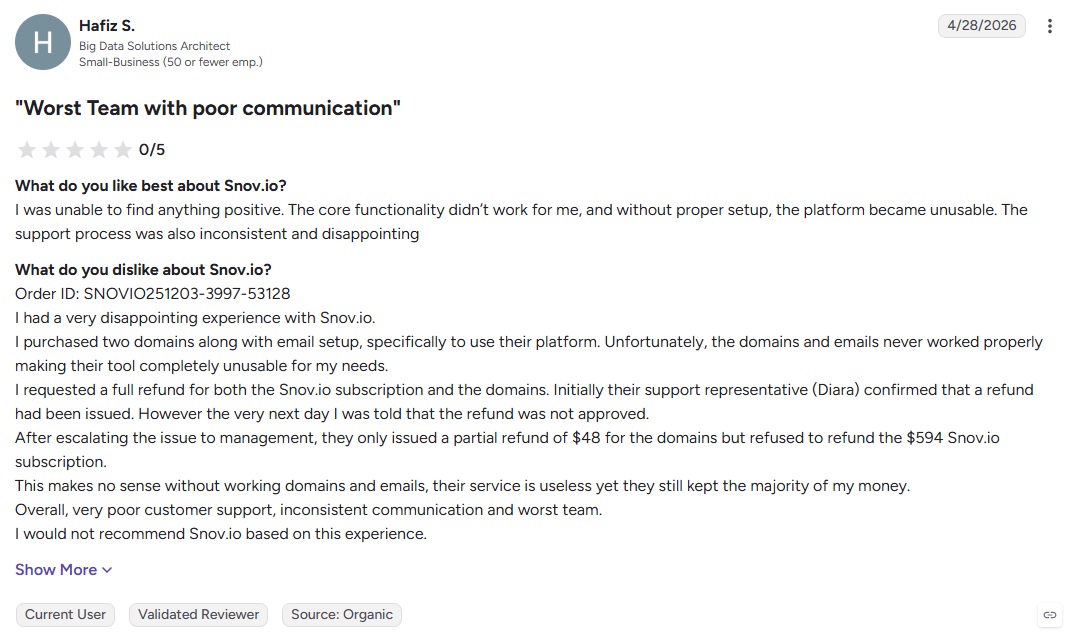
- Smaller database: Offers less contact coverage than platforms such as Apollo.io or Lusha.
- Extra LinkedIn cost: LinkedIn automation requires an additional purchase.
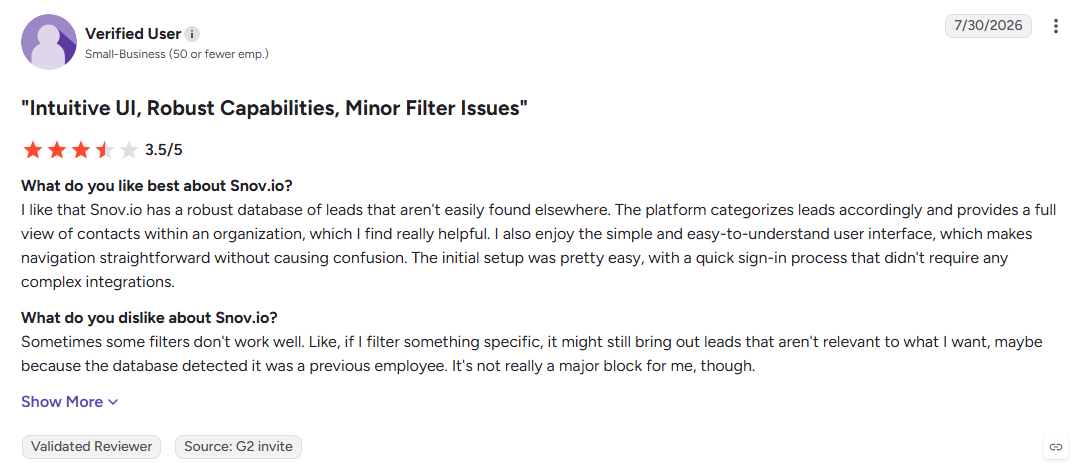
- Crowded workspace: Managing multiple campaigns can make the dashboard feel busy, while G2 users provide additional feedback on data depth.
Best For: Startups and agencies building outbound campaigns on a tight budget.
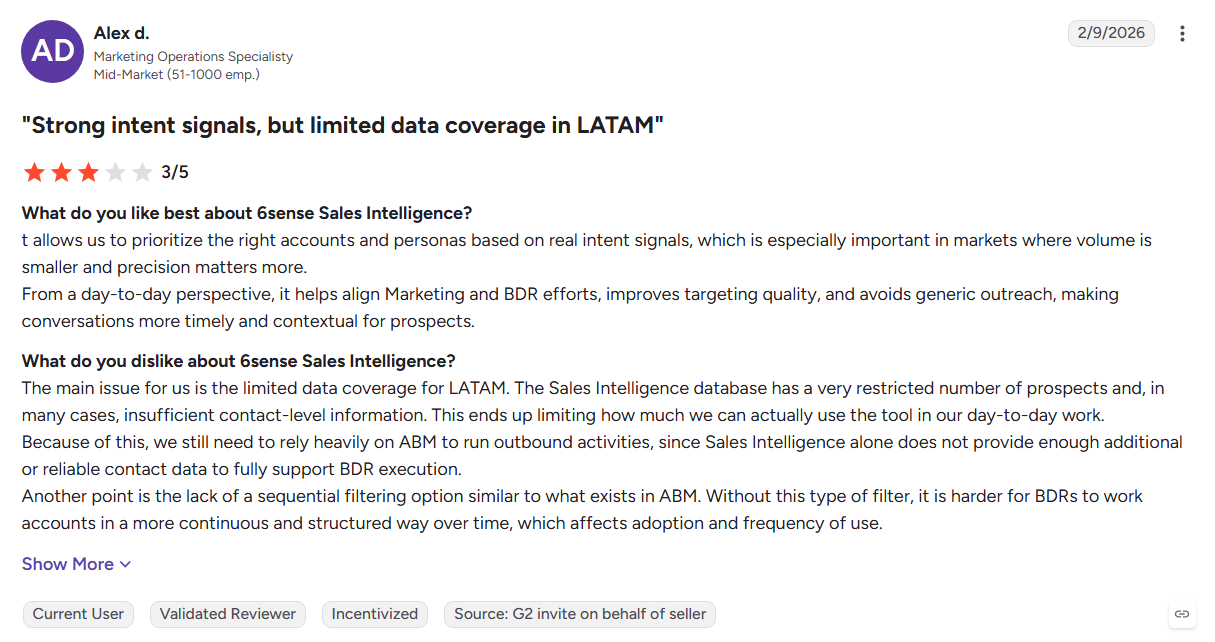
14. 6sense
6sense uses predictive AI to identify accounts showing buying intent and estimate where they are in the purchase journey. It tracks anonymous research activity and combines intent with ABM orchestration, while Kwin goes further by identifying the individual visitor and starting the conversation.
Key Features:
- Predictive Buying Stages: Classifies accounts from early awareness through purchase.
- Dark Funnel Tracking: Surfaces anonymous research behavior across the web.
- ABM Orchestration: Runs display and retargeting campaigns across key channels.
Pros
- Predictive intent: Strong modeling for identifying accounts moving toward a purchase.
- Native ABM: Connects intent signals with advertising and account-based campaigns.
- Buying group insights: Helps teams understand the roles involved in a potential deal.
Cons
- Not a contact database: Teams need another source for detailed contact information.
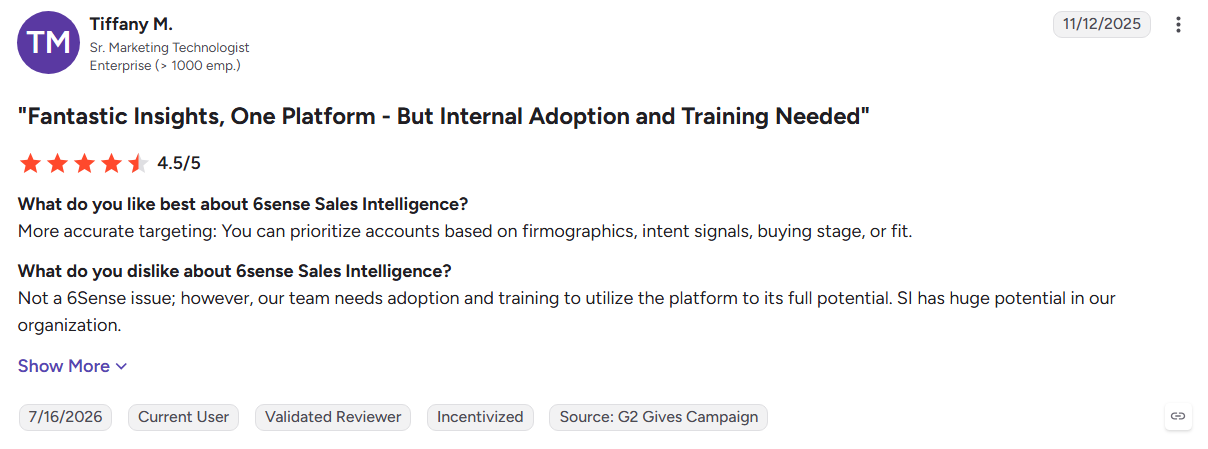
- Training required: Its broad feature set can take time to learn.
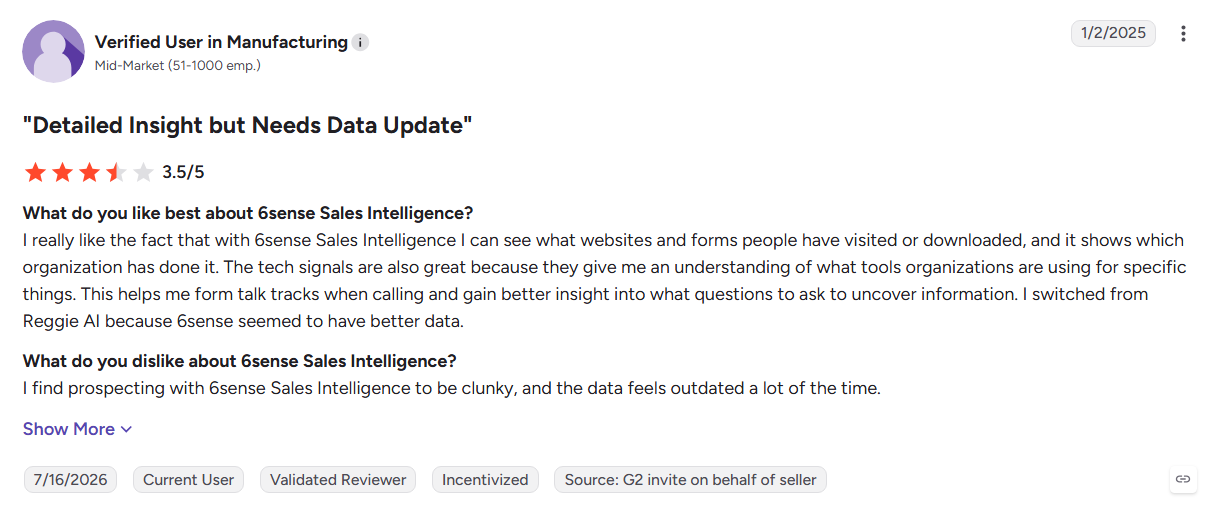
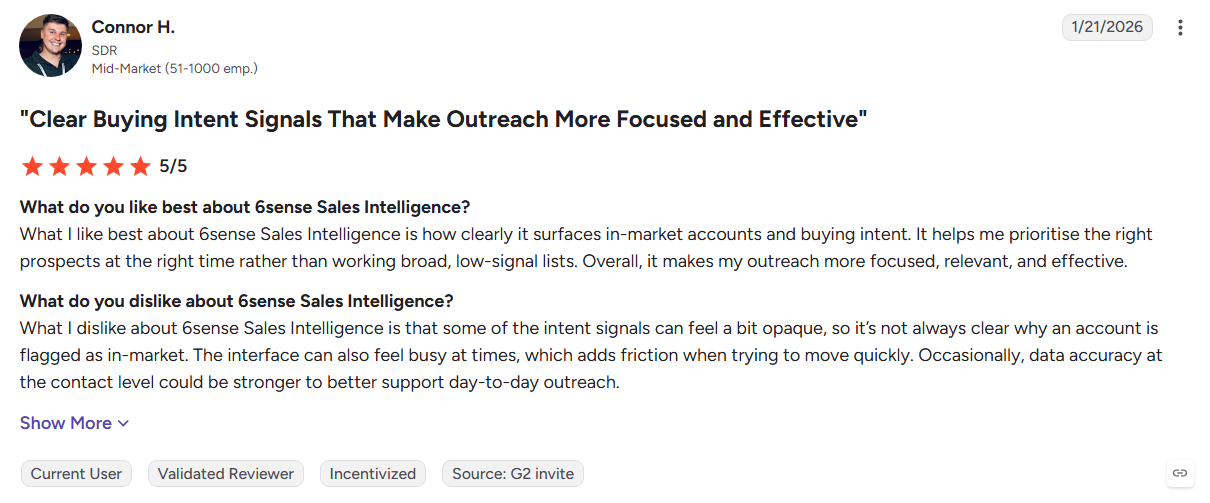
- Quote-based pricing: Paid plans require a custom commercial discussion, while G2 reviewers can provide insight into onboarding requirements.
Best For: Enterprise ABM programs with dedicated marketing operations teams.
15. Leadfeeder (Dealfront)
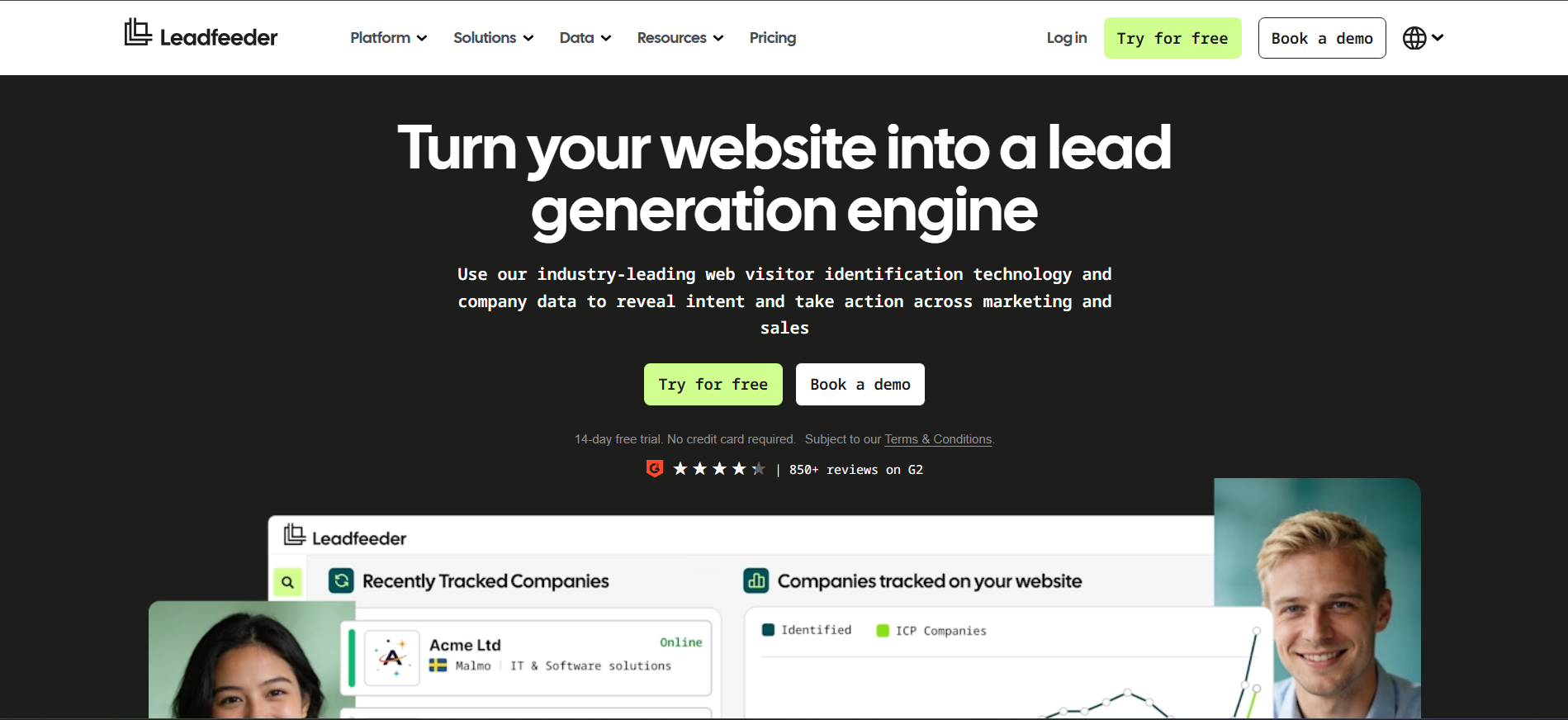
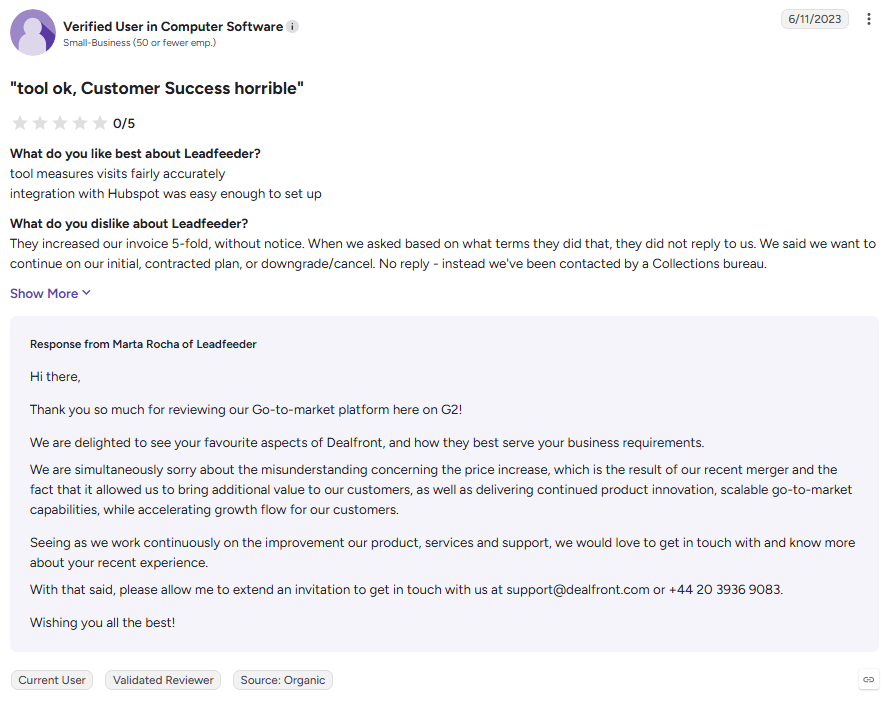
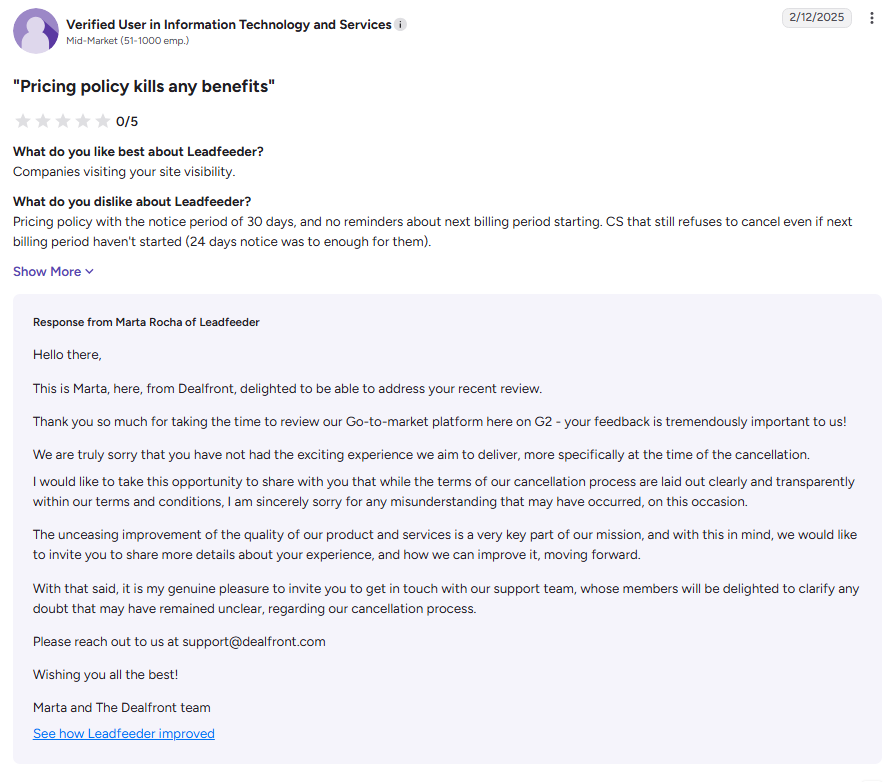
Leadfeeder identifies companies visiting your website and uses behavioral signals to score their interest. It covers 60M+ companies and 400M+ contacts, with trigger alerts and cookieless tracking, but stops at company-level identification, while Kwin can identify and engage the individual visitor.
Key Features:
- Company-Level Identification: Shows which organizations visited and which pages they viewed.
- 100+ Filters: Segment visitors by location, financial data, trigger events, and keywords.
- Trigger Alerts: Surface signals such as funding, growth, and website changes.
Pros
- European coverage: Strong fit for businesses targeting European markets.
- Free starting plan: Lets teams begin tracking without an immediate paid commitment.
- Campaign attribution: Helps connect website activity with marketing campaigns.
Cons
- Company-level only: Does not identify the individual visitor.
- Regional strength: Data is strongest in European markets.
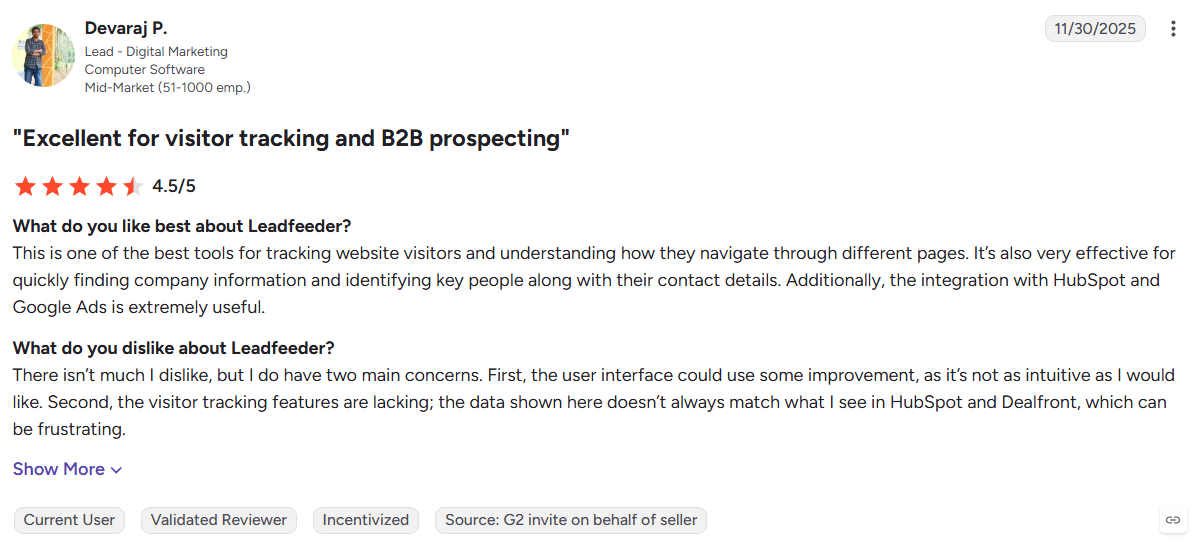
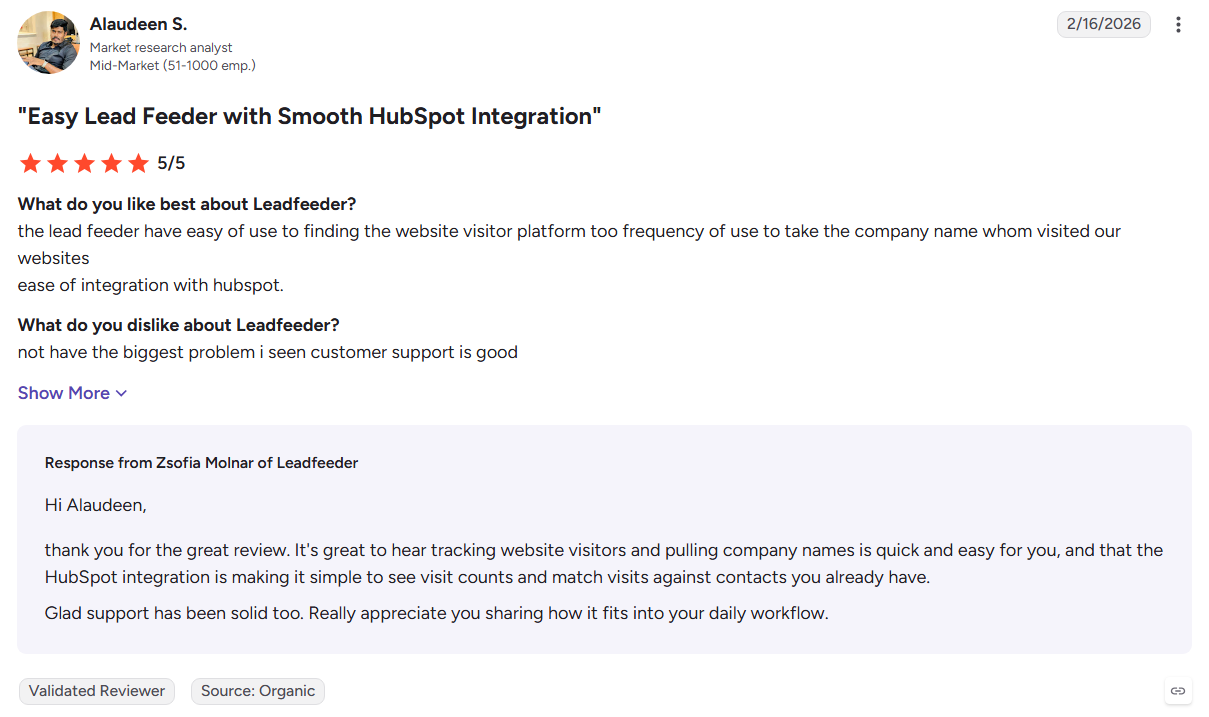
- No native outreach: Requires another tool to contact identified prospects, while G2 reviewers provide feedback on regional match rates.
Best For: European B2B teams that need company-level website visitor intelligence.
16. RB2B
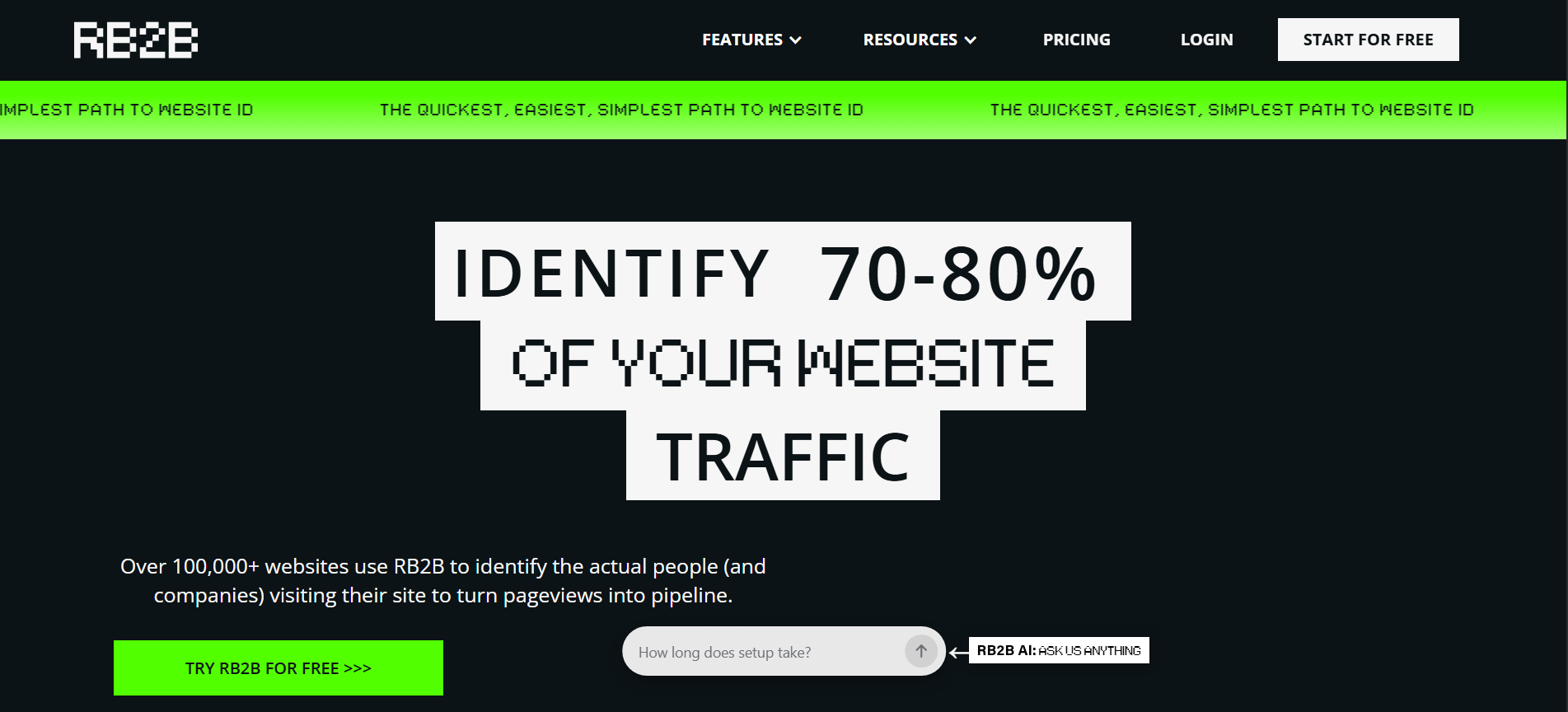
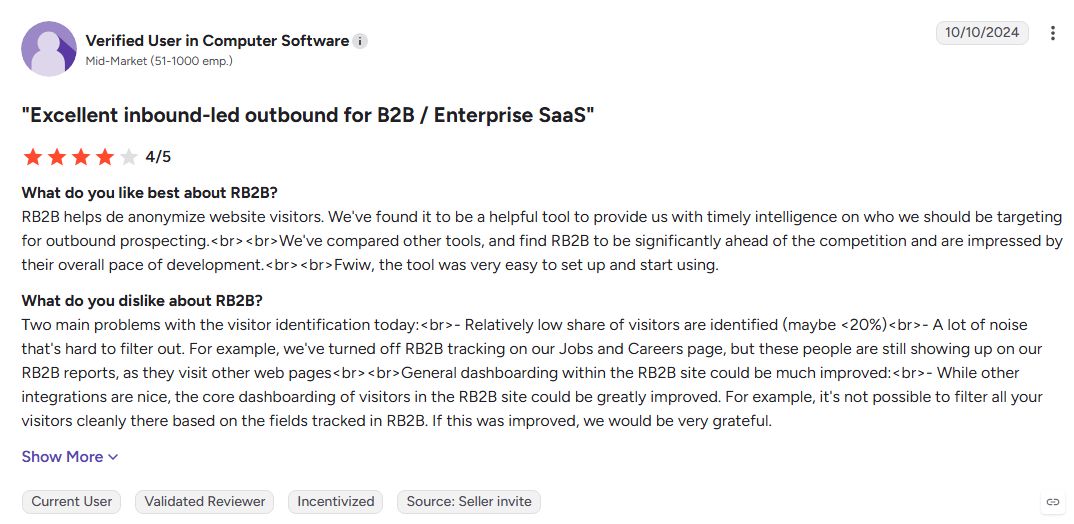
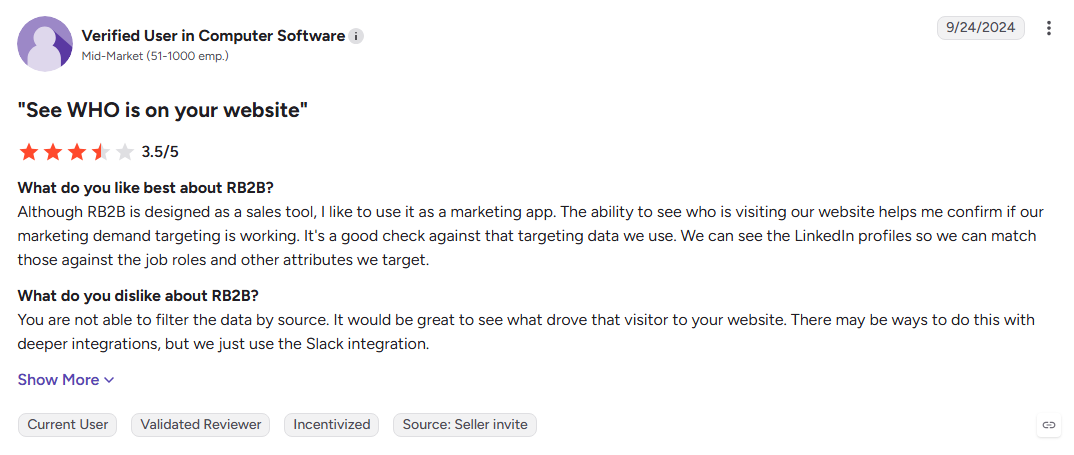
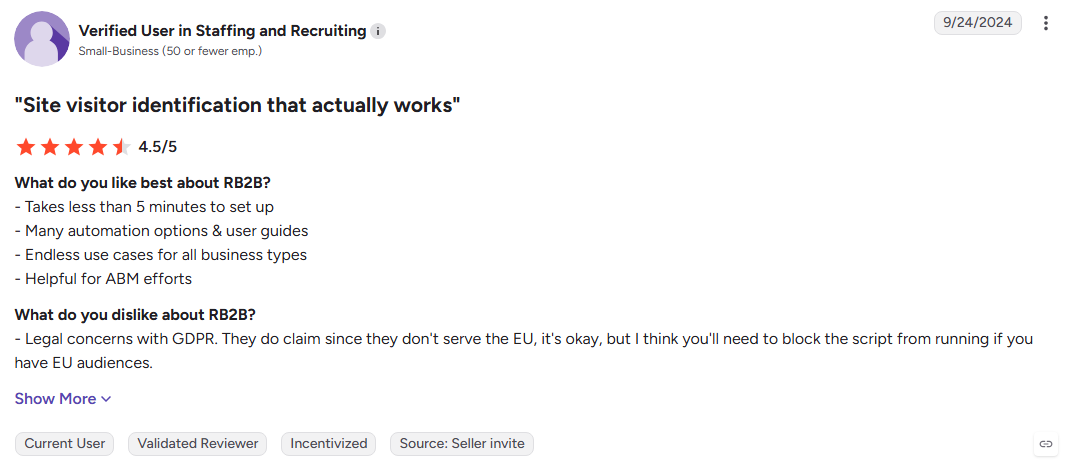
RB2B identifies individual website visitors and sends their LinkedIn profiles directly to Slack, giving US-focused startups a fast way to act on inbound interest. Its person-level coverage is mainly US-based, and it lacks native nurturing, while Kwin combines broader geographic coverage with automated follow-up.
Key Features:
- Person-Level Identification: Reveals LinkedIn profiles for matched US website visitors.
- Slack Alerts: Sends real-time notifications when relevant visitors appear.
- Company Fallback: Identifies the organization when a person cannot be matched.
Pros
- Quick setup: Designed to get visitor alerts running with minimal effort.
- Real-time notifications: Sends visitor activity directly into Slack.
- Free plan: Provides an entry point for testing the platform.
Cons
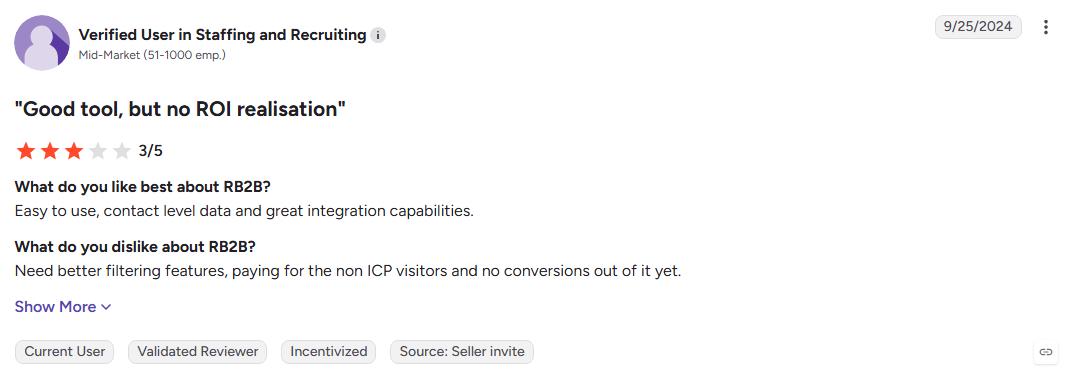
- US-focused coverage: Person-level identification is primarily limited to US traffic.
- Traffic-based costs: Credit usage increases as website traffic grows.
- No native nurturing: Does not automatically run follow-up campaigns, while G2 reviewers can help assess match rates.
Best For: US-focused startups that want real-time Slack alerts for identified website visitors.
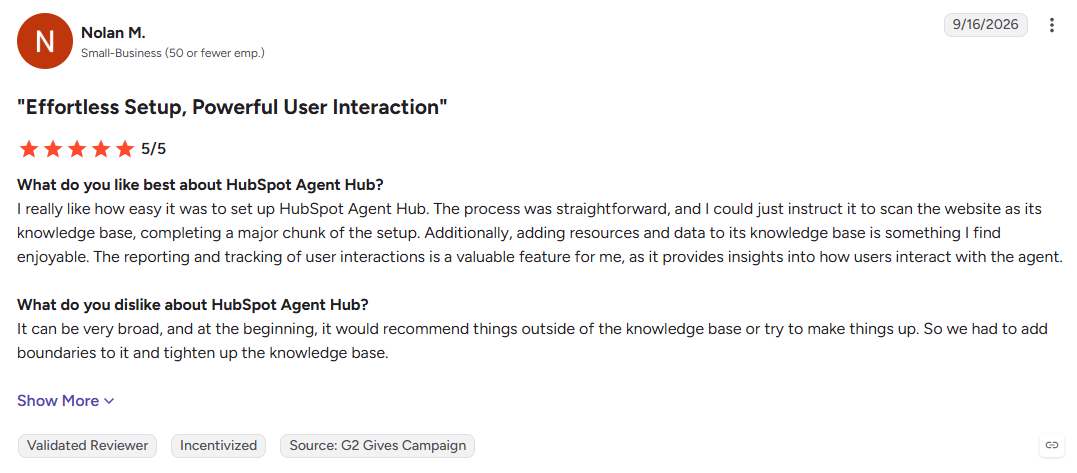
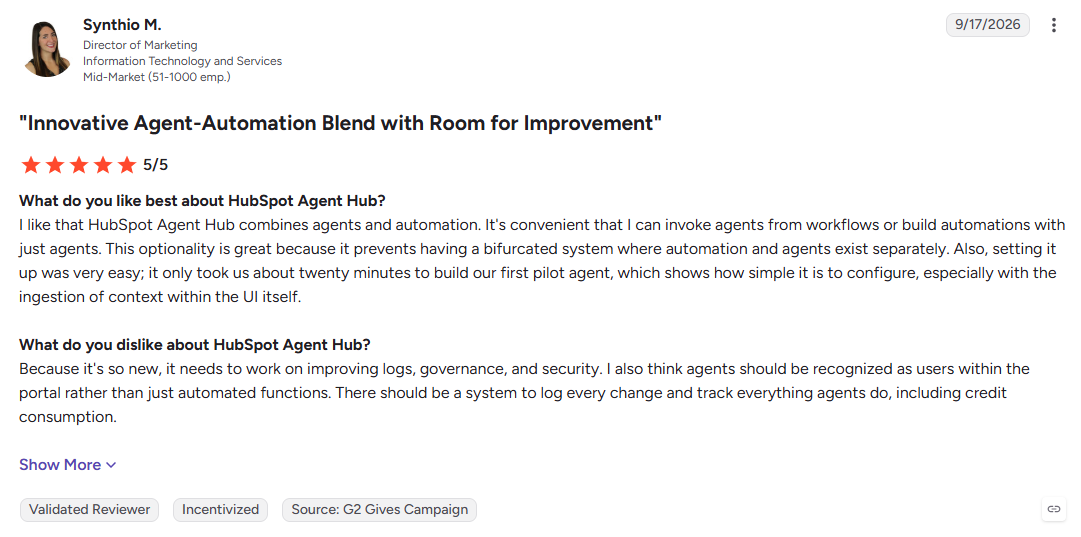
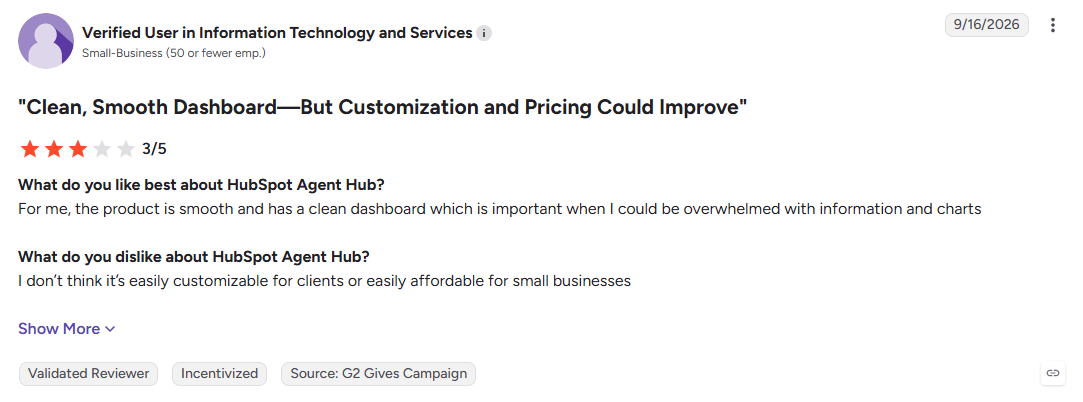
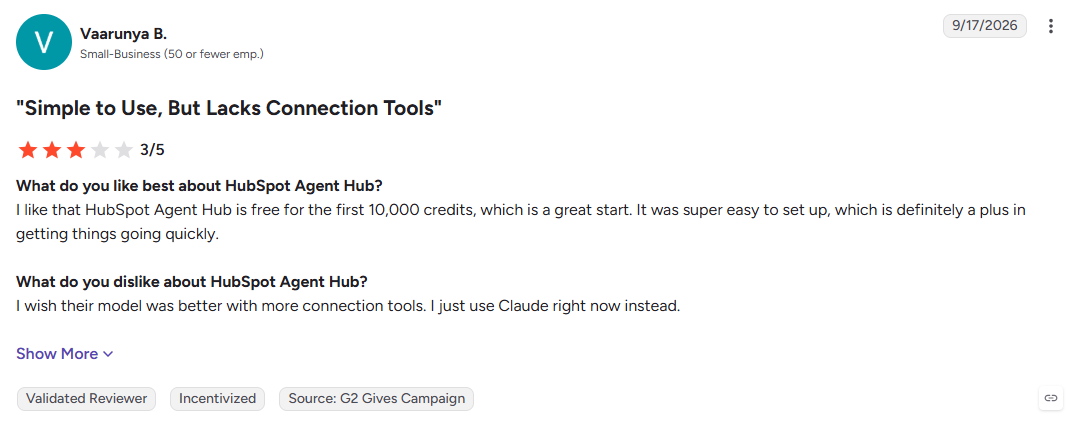
17. HubSpot Breeze Intelligence
Breeze Intelligence, formerly Clearbit, brings enrichment and buyer intent directly into HubSpot. It fills missing CRM fields, shortens forms, and identifies visiting companies through HubSpot credits, while Kwin focuses on revealing the person behind the visit and engaging them.
Key Features:
- Automatic Enrichment: Adds firmographic and contact information to CRM records.
- Company Reveal: Identifies organizations visiting your website.
- Form Shortening: Captures useful information while reducing the number of form fields.
Pros
- Native HubSpot experience: Fits directly into an existing HubSpot workflow.
- Complete CRM records: Helps fill missing company and contact information.
- Unified billing: Uses HubSpot credits rather than requiring a separate enrichment platform.
Cons
- HubSpot dependency: Requires a paid HubSpot subscription.
- Credit consumption: Costs can increase as enrichment volume grows.
- Company-level identification: Does not provide person-level visitor identification, while G2 reviewers offer feedback on the post-acquisition experience.
Best For: Teams already running their sales and marketing operations on HubSpot.
18. Bombora
Bombora specialises in B2B intent data, using Company Surge scores to show which organisations are researching topics related to your product. Its account-level signals help teams time outreach around rising interest, while Kwin captures first-party intent directly from your website and acts on it immediately.
Key Features:
- Company Surge Scoring: Flags accounts showing increased research around selected topics.
- Topic-Level Insights: Reveals the subjects each account is actively researching.
- 100+ Integrations: Connects intent signals with ABM, CRM, and advertising workflows.
Pros
- Broad third-party research signals
- Helps sharpen outreach timing
- Works across many downstream platforms
Cons
- No contact data
- Requires other tools to activate intent
- Can be costly for smaller teams
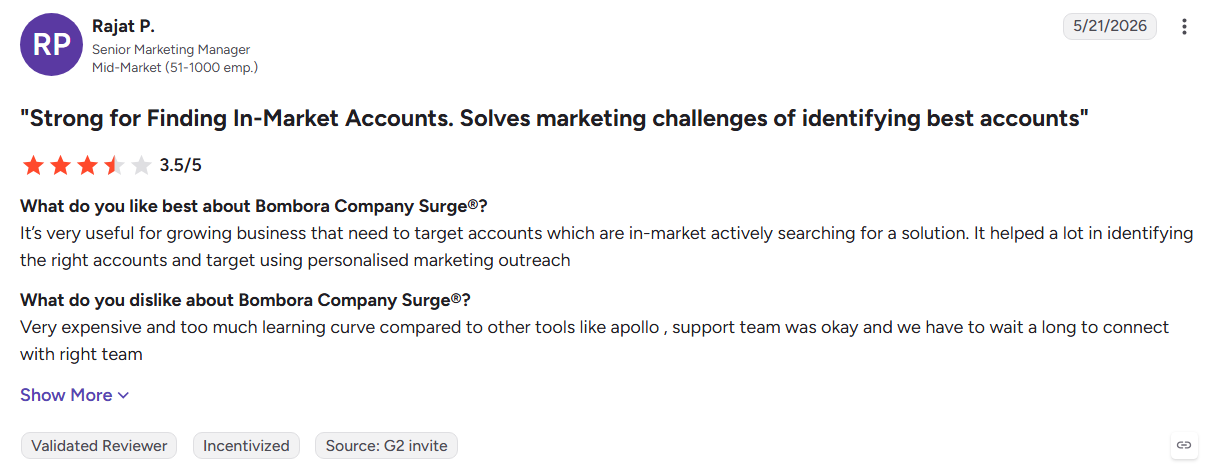
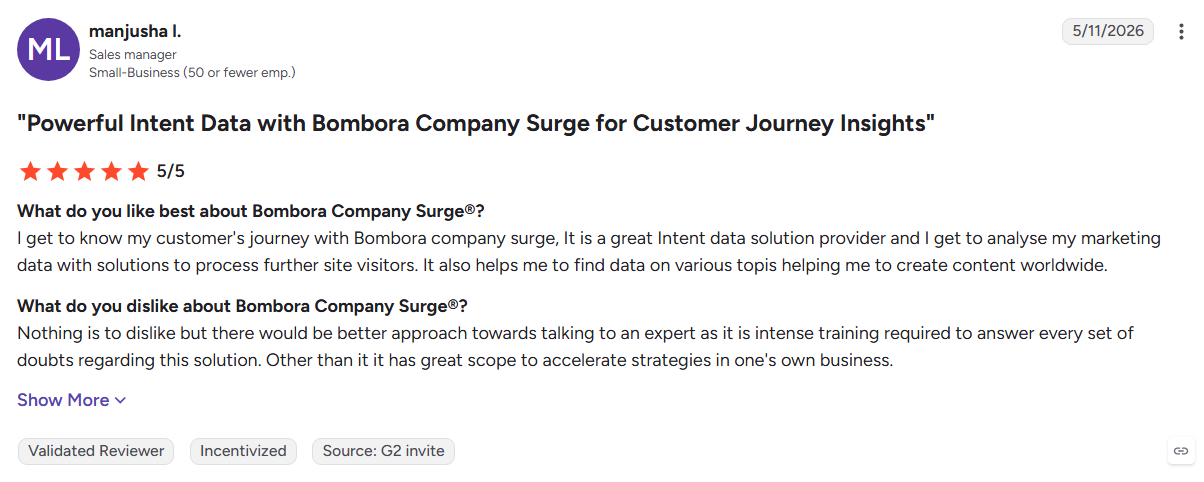
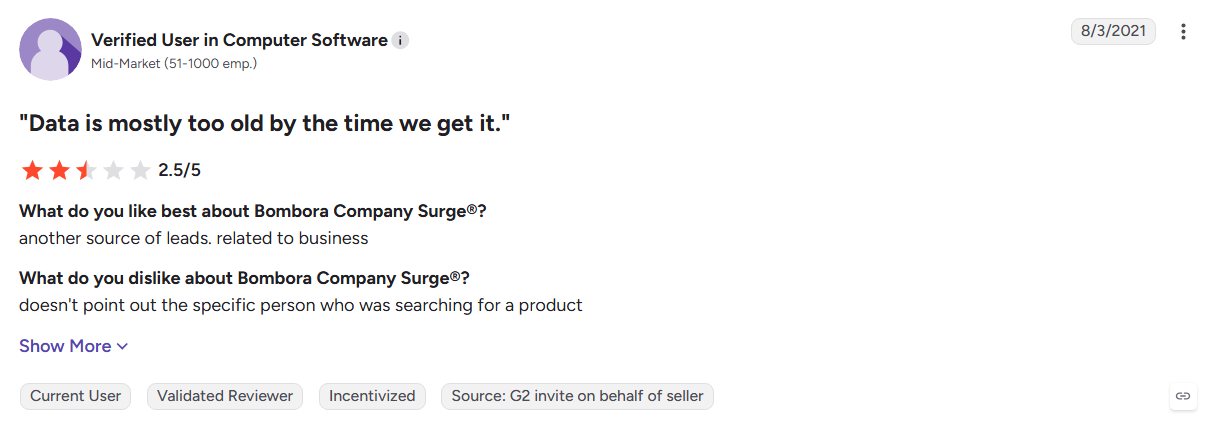
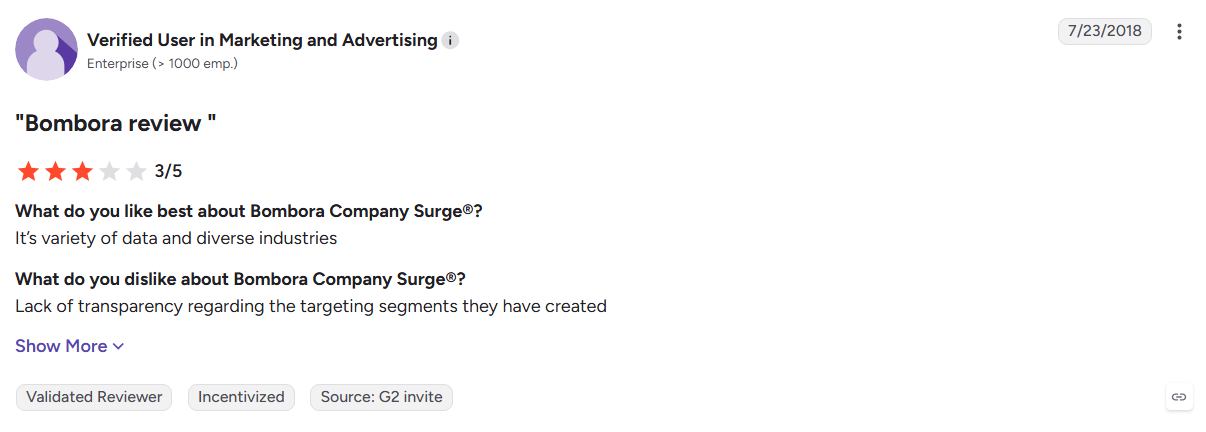
- G2 reviewers discuss topic coverage and category relevance.
Best For: ABM and demand generation teams timing campaigns around account-level research activity.
19. Clay
Clay is a data orchestration platform for RevOps teams and GTM engineers. It connects 150+ enrichment providers through waterfalls and uses Claygent AI to research companies and people. Its flexibility is powerful, but outreach requires connected tools, while Kwin provides visitor identification and outreach out of the box.
Key Features:
- Waterfall Enrichment: Queries multiple providers to improve match rates.
- Claygent AI: Researches accounts and contacts using web signals.
- Signal Tracking: Monitors funding, hiring, and job changes.
Pros
- Highly flexible enrichment
- Waterfalls improve data coverage.
- Strong for advanced RevOps workflows
Cons
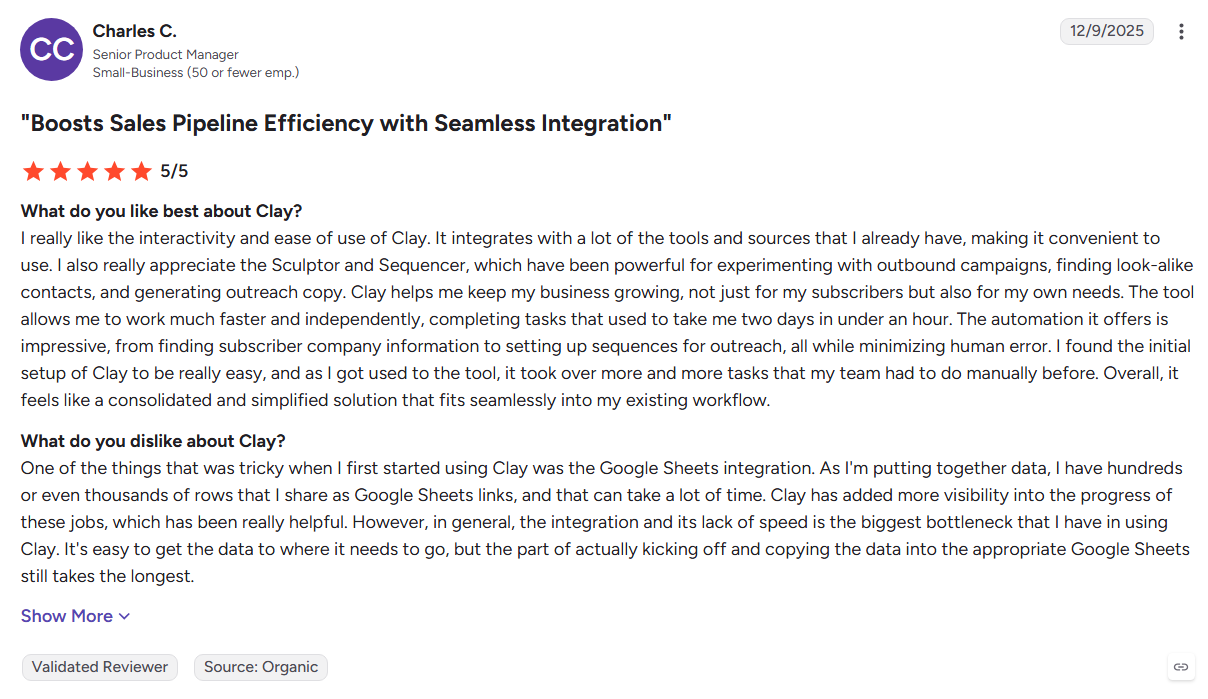
- Steep learning curve
- Credit usage can be difficult to forecast
- No native multichannel outreach
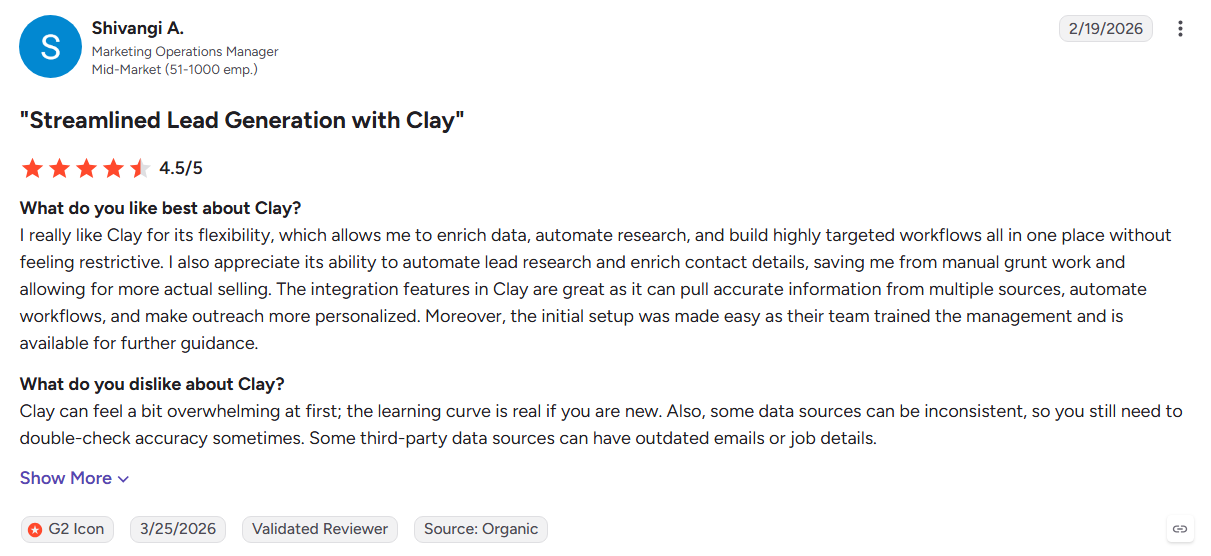
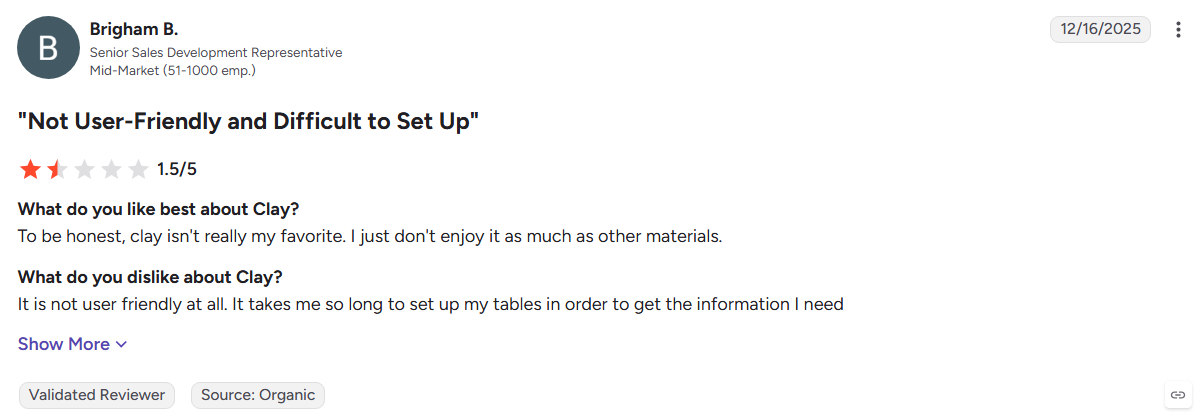
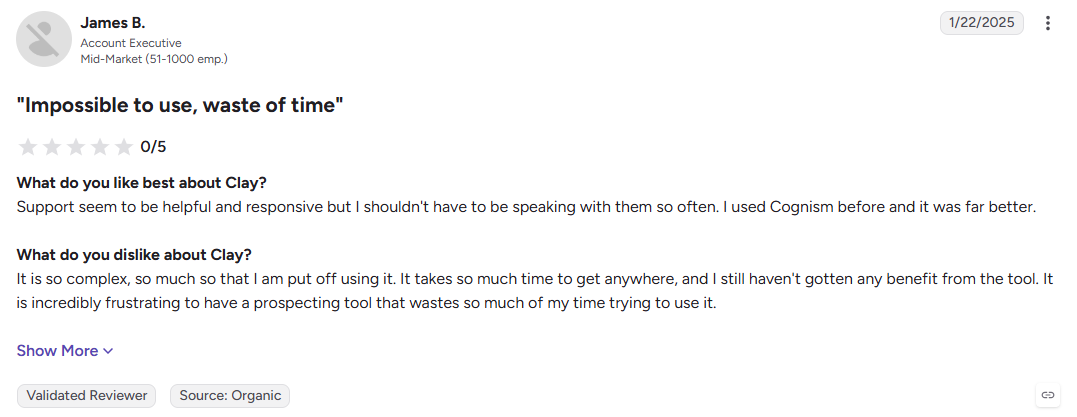
- G2 reviewers praise its enrichment power but flag complexity.
Best For: RevOps teams building custom, multi-source enrichment workflows.
20. Crunchbase
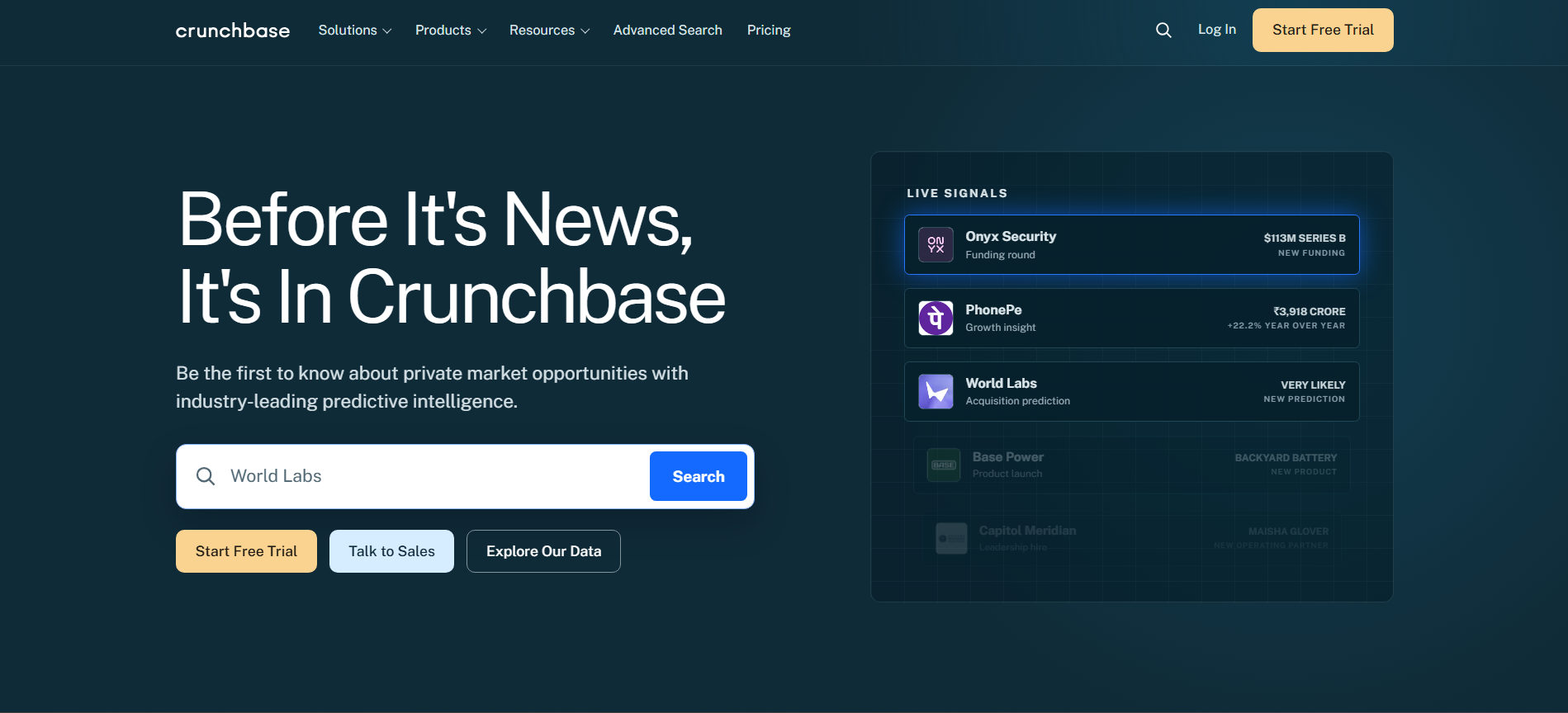
Crunchbase focuses on private company intelligence, covering funding rounds, acquisitions, and leadership changes. Its search and alerts help sales teams identify growth moments, while Kwin shows when people from those companies are actively visiting your website.
Key Features:
- Company Search: Filter accounts by industry, funding stage, and location.
- Growth Signals: Track funding, acquisitions, and leadership changes.
- Saved Lists and Alerts: Monitor target accounts as new events occur.
Pros
- Strong funding and startup data
- Clean, fast interface
- Accessible entry plans
Cons
- Company-first with limited contact data
- Exports and CRM sync require higher tiers.
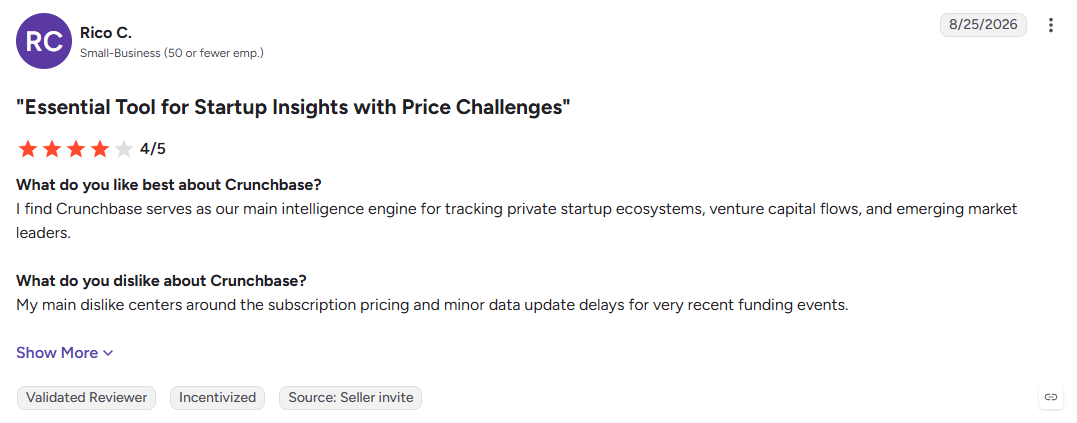
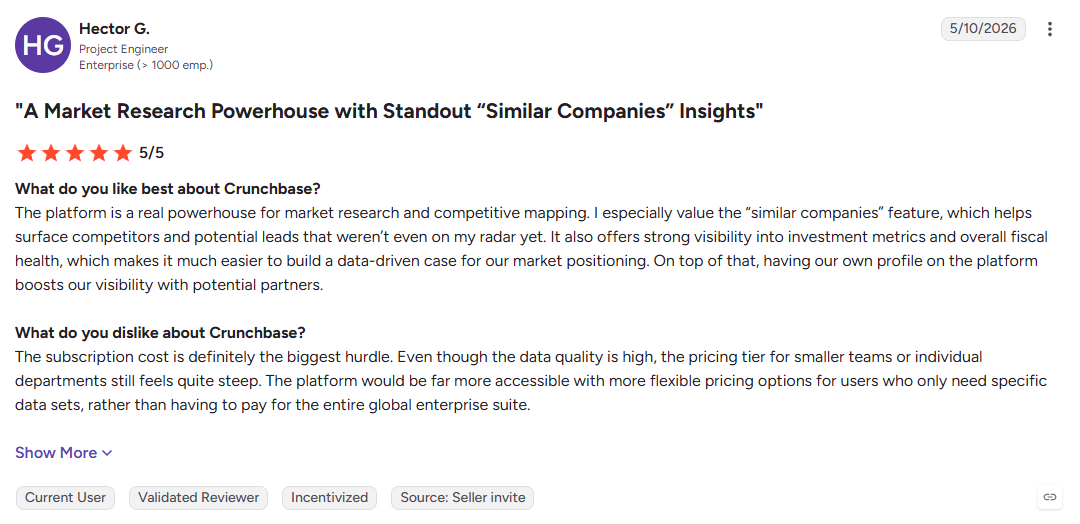
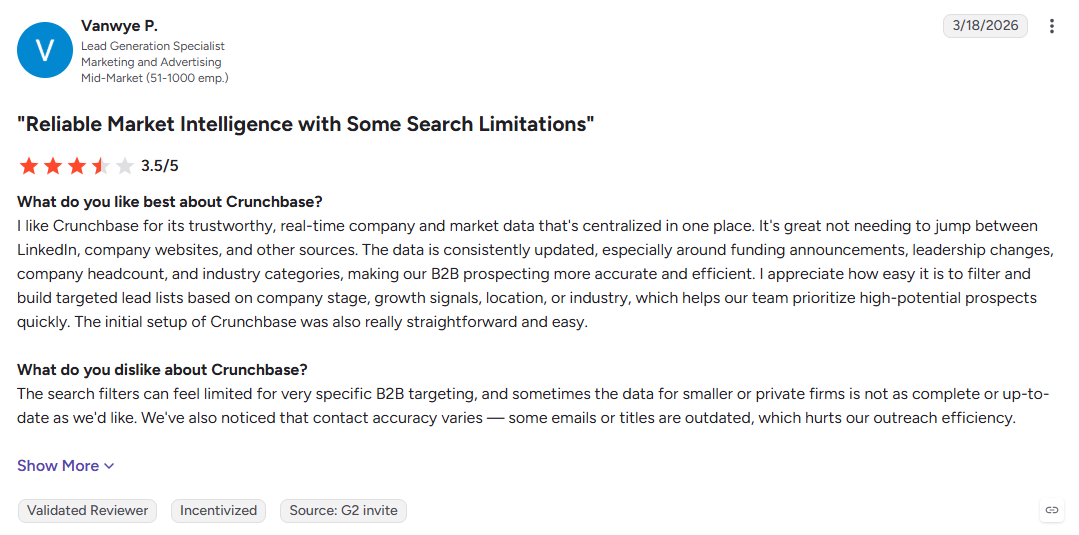
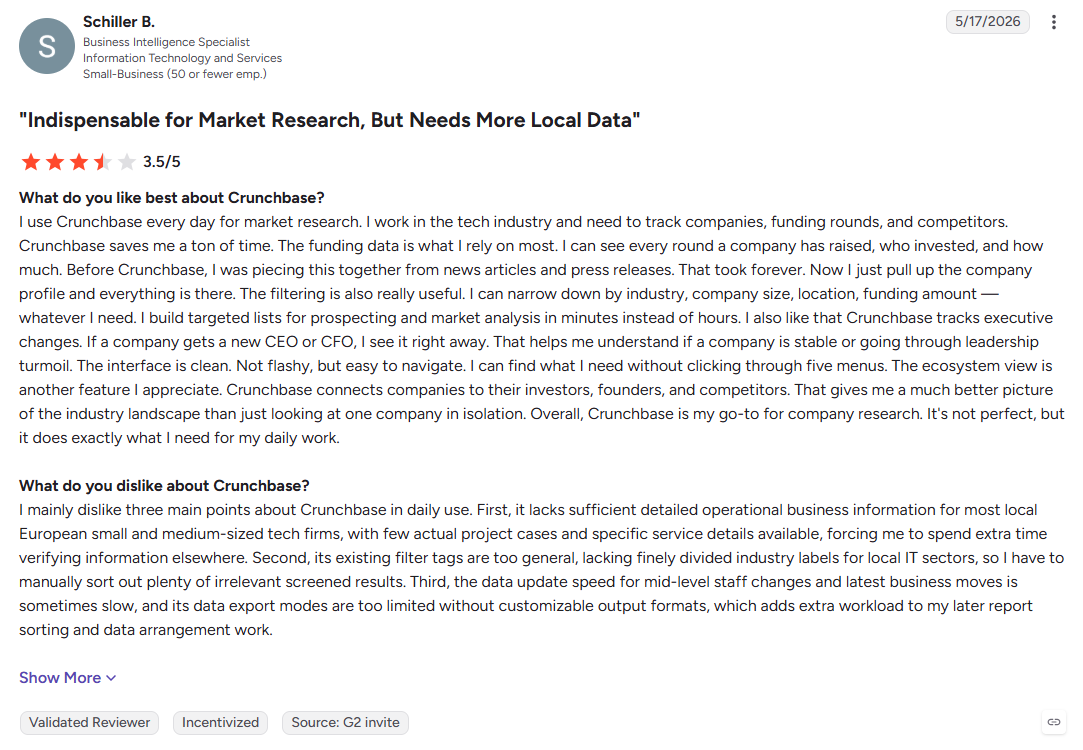
- G2 reviewers praise its filters and profiles while noting pricing and European SMB coverage.
Best For: Teams selling into VC-backed startups and scale-ups.
21. Outreach
Outreach is an enterprise sales engagement platform built around multistep sequences across email, phone, and LinkedIn. Its AI recommends next actions and provides deal insights, while Kwin supplies qualified visitors and the first personalised touch.
Key Features:
- Sequences: Automate multichannel touches and sales tasks.
- AI Deal Insights: Suggest next steps and help predict deal outcomes.
- Conversation Intelligence: Transcribe and analyse sales calls.
Pros
- Powerful sequence automation
- Strong visibility into rep activity
- Deep Salesforce integration
Cons
- No built-in contact database
- Custom pricing with annual contracts
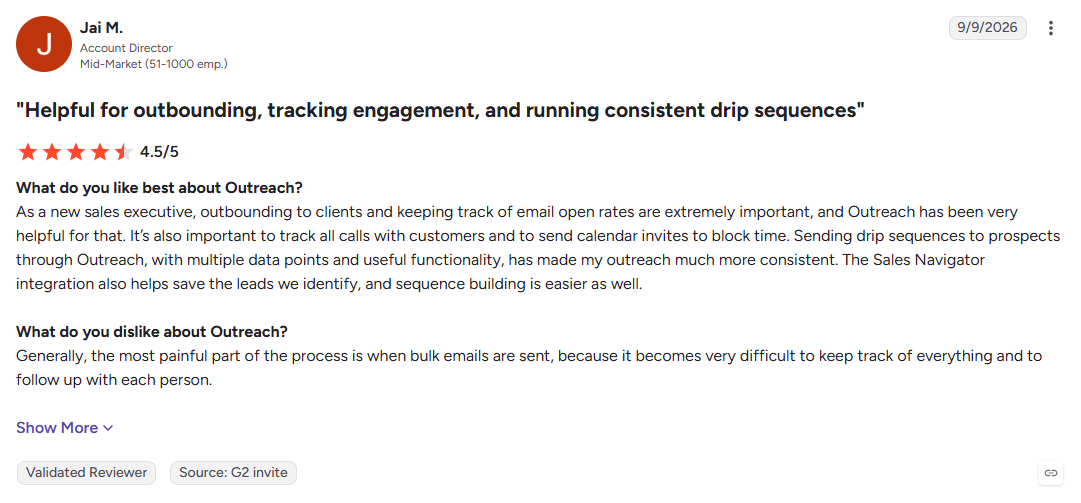
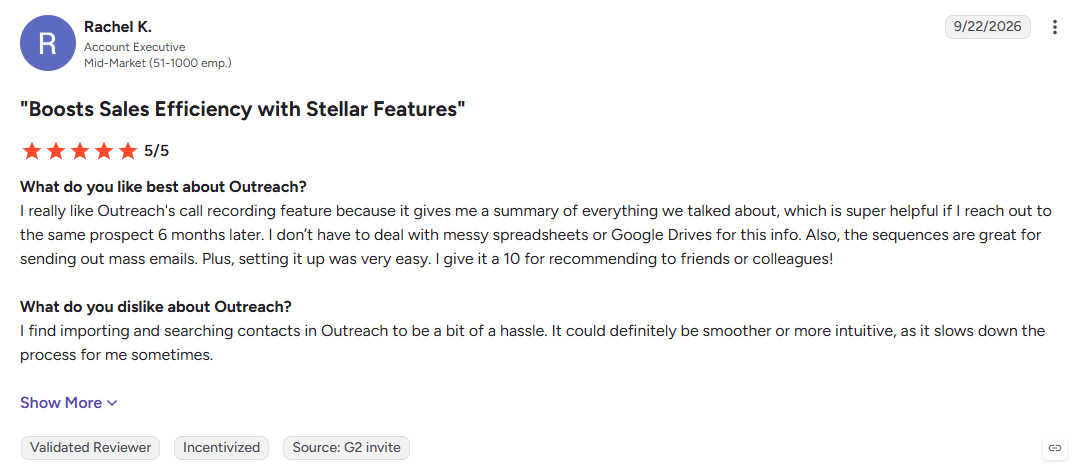
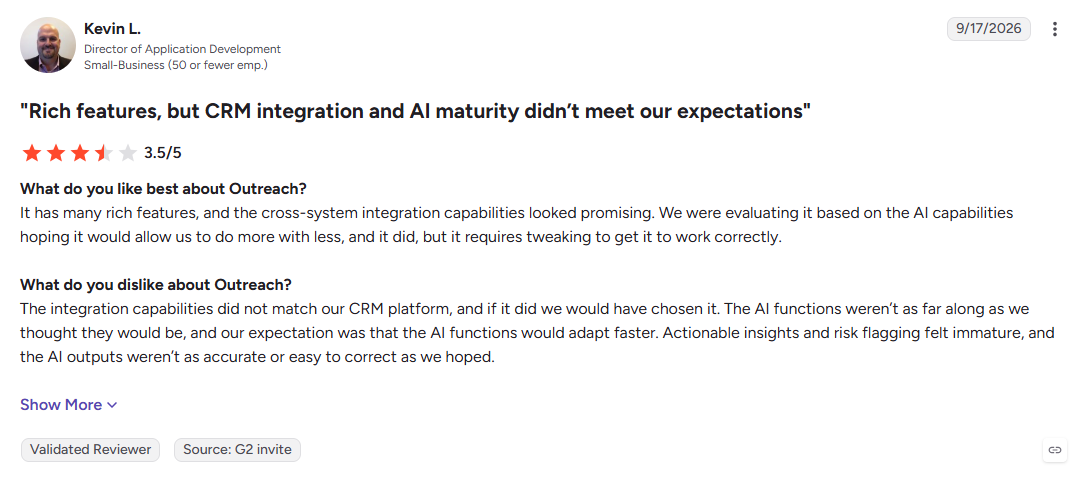
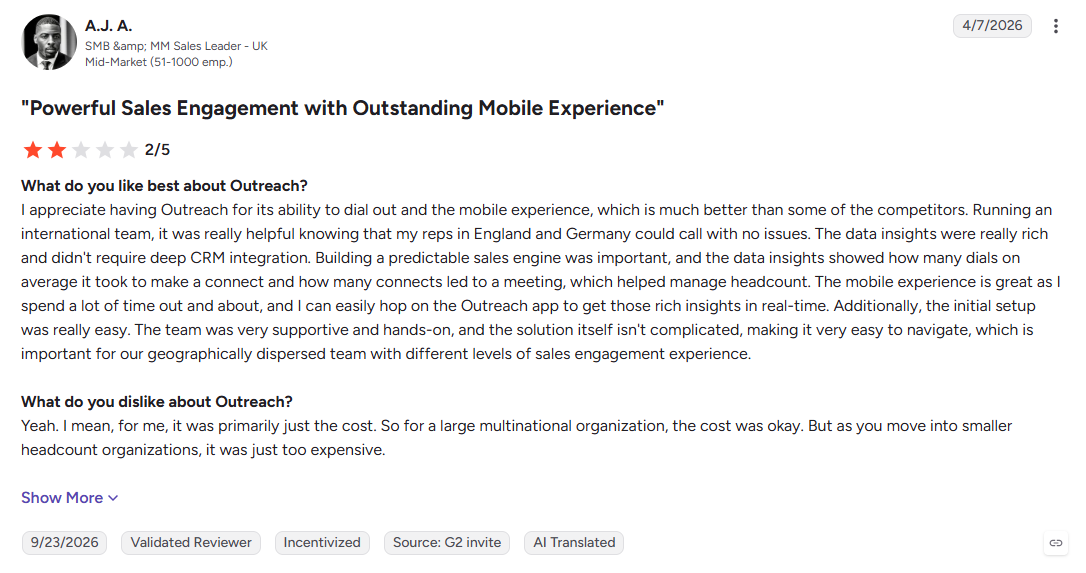
- G2 reviewers praise its automation while noting a learning curve.
Best For: Large SDR teams with established outbound playbooks.
22. Salesloft
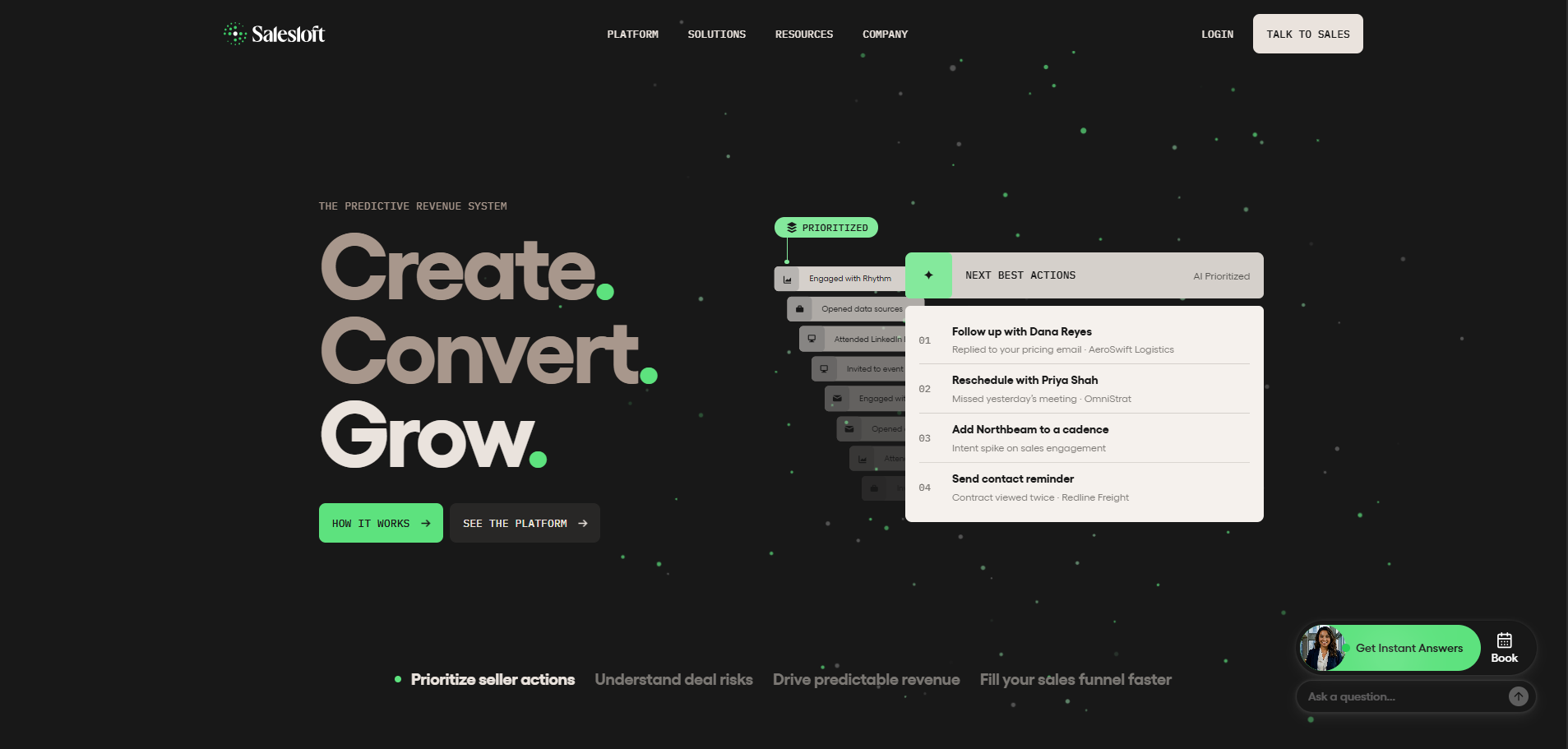
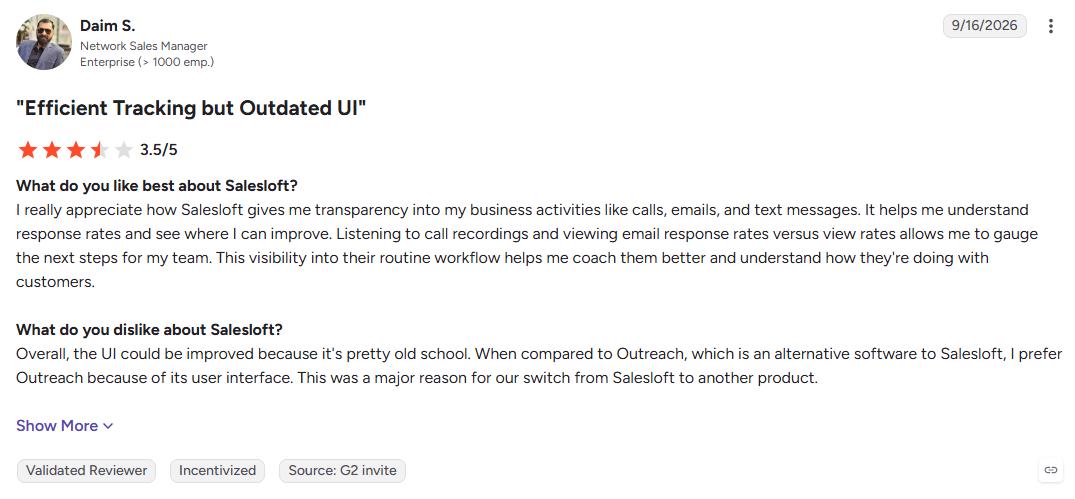
Salesloft helps SDR and AE teams run multichannel cadences, track engagement, and coach reps with conversation intelligence. Its Rhythm engine uses buyer signals to prioritise the next action. Kwin handles the earlier step by identifying and qualifying who should enter a cadence.
Key Features:
- Cadence Builder: Combines email, calls, social touches, and tasks.
- Rhythm: Prioritises daily actions based on buyer signals.
- Conversation Intelligence: Records and summarises sales calls.
Pros
- Robust cadence workflows
- Strong Salesforce sync
- Built-in coaching tools
Cons
- Needs a separate data provider
- Pricing is not publicly listed.
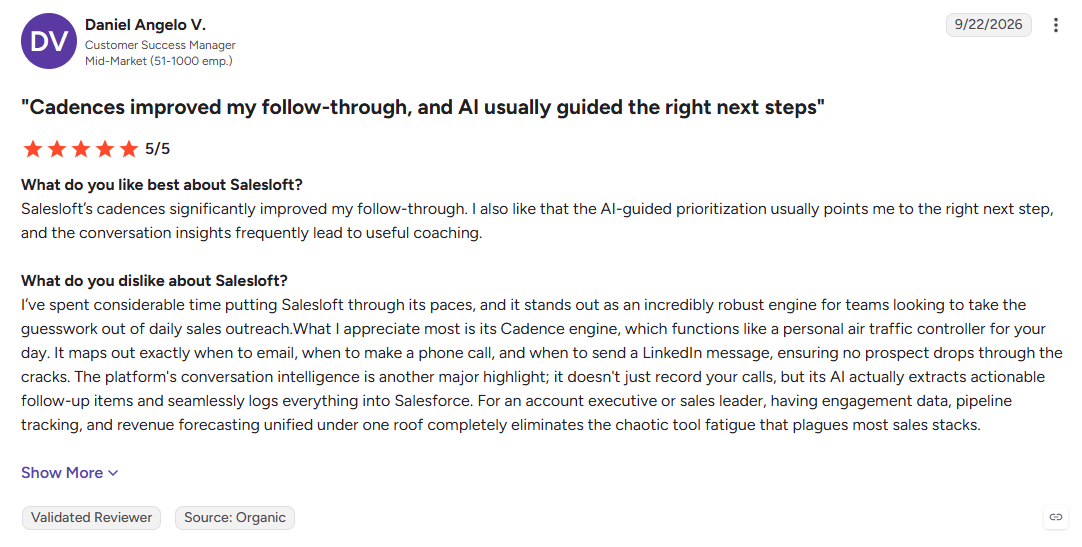
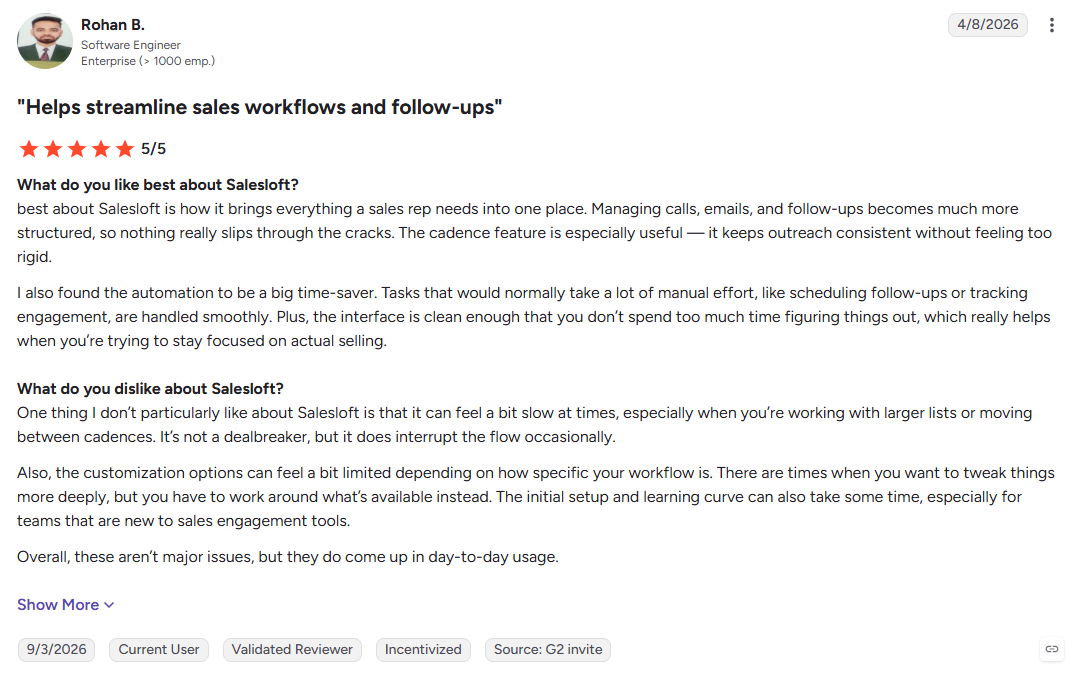
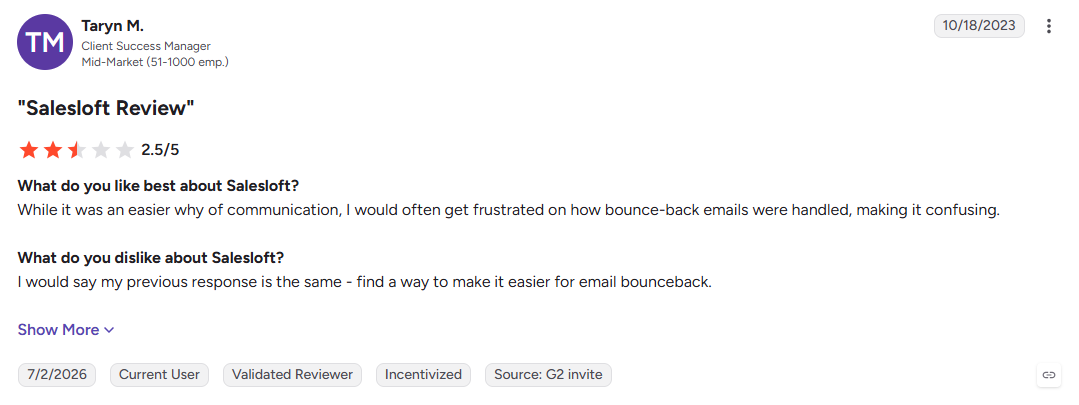
- G2 reviewers mention a learning curve and setup complexity.
Best For: Multichannel SDR teams in mid-market and enterprise companies.
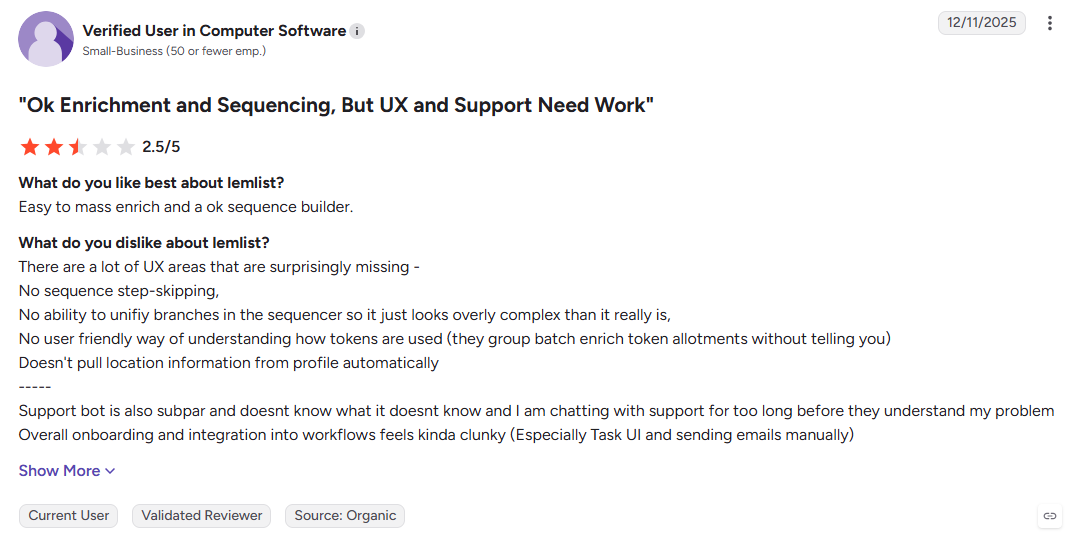
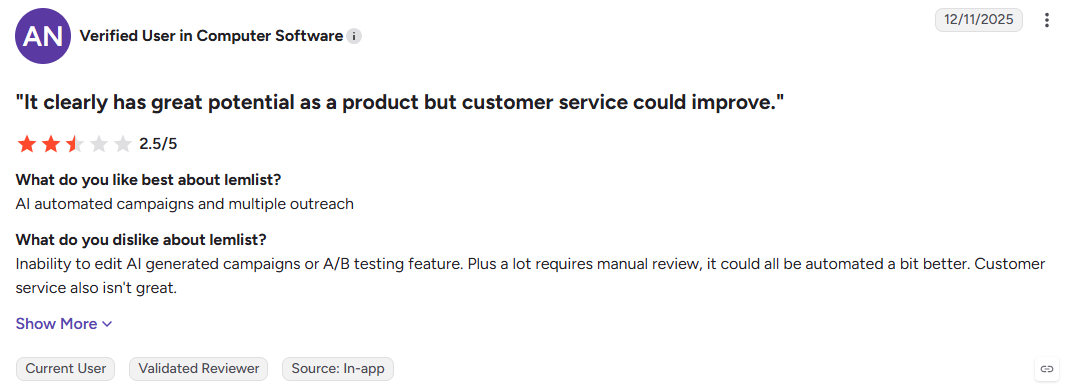
23. Lemlist
Lemlist combines a lead database, AI personalisation, and multichannel sequences across email, LinkedIn, phone, and WhatsApp. Its deliverability tools help teams protect sender health as campaigns scale. Kwin takes a warmer approach by engaging visitors who already know your brand.
Key Features:
- Lead Database: Find and enrich prospects inside the platform.
- AI Personalisation: Tailor messages using role, company, and context.
- Multichannel Sequences: Combine email, LinkedIn, calls, and WhatsApp.
Pros
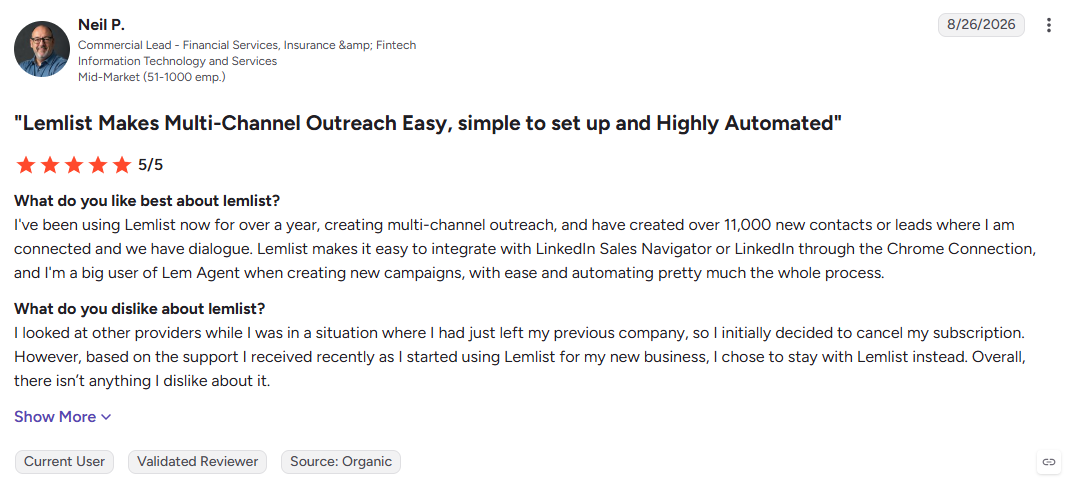
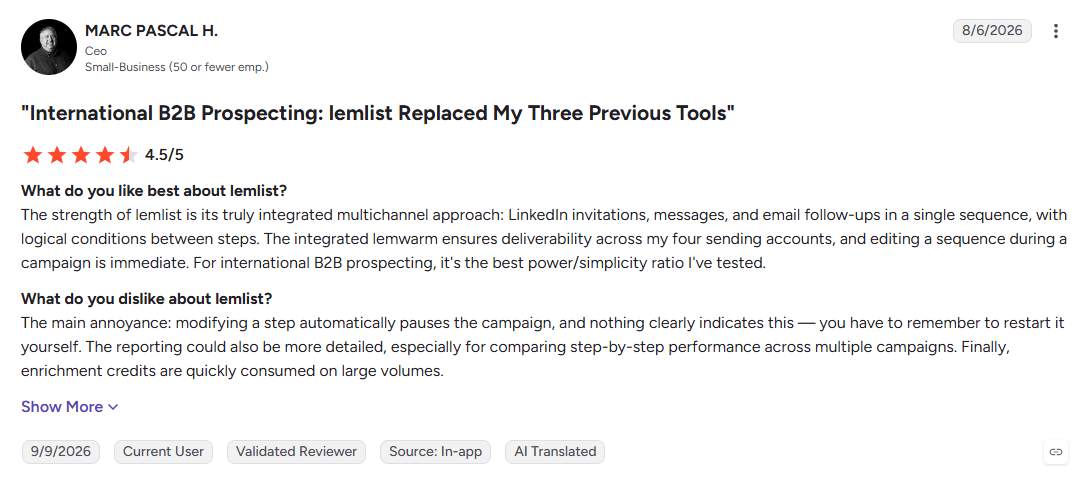
- All-in-one outbound workflow
- Strong deliverability tools
- Flexible personalisation
Cons
- Advanced multichannel features require higher tiers.
- WhatsApp and calling numbers are add-ons.
- G2 reviewers provide feedback on sender limits.
Best For: SMB teams and agencies running personalised multichannel outbound.
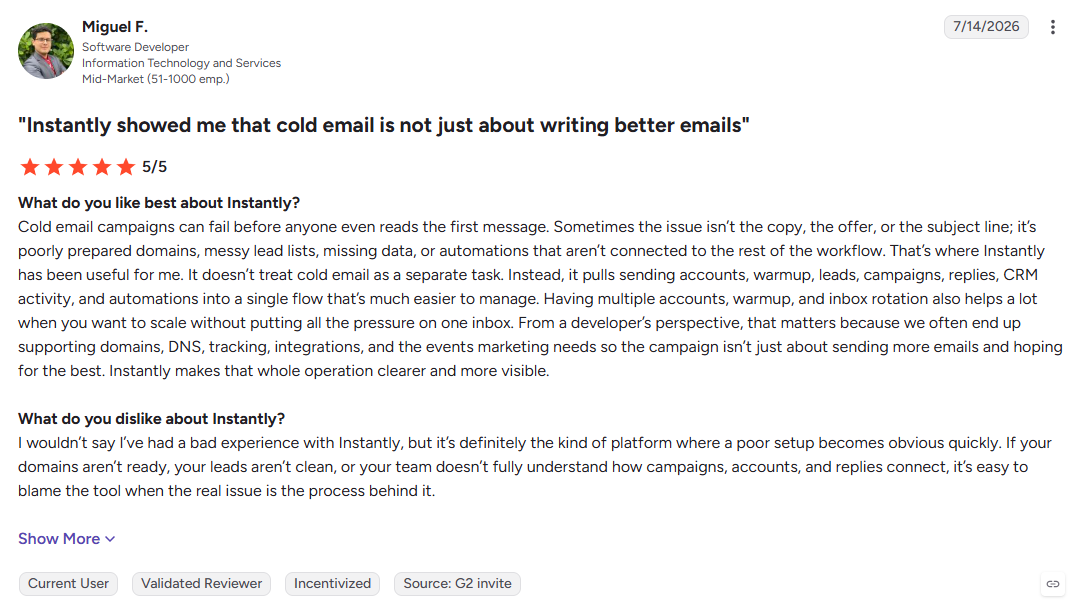
24. Instantly
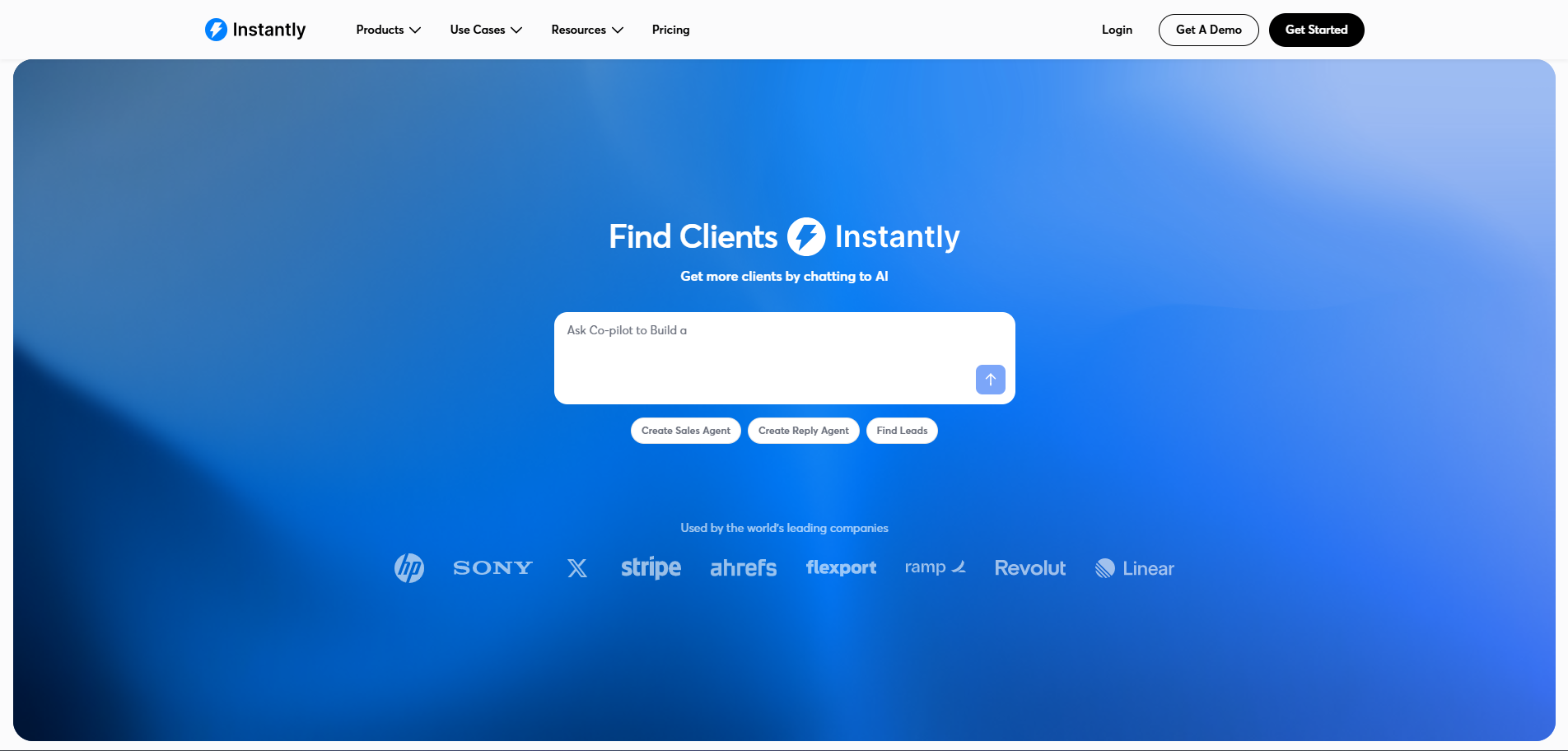
Instantly is built for high-volume cold email, using inbox rotation and automated warm-up to scale campaigns across multiple accounts. It focuses on outbound volume, while Kwin focuses on warmer website visitors who already show buying intent.
Key Features:
- Campaign Builder: Create sequences with variables and smart scheduling.
- Email Warm-Up: Gradually increase sending activity to support deliverability.
- Inbox Rotation: Spread campaigns across multiple sending accounts.
Pros
- Scales email volume efficiently
- Strong deliverability features
- Simple interface
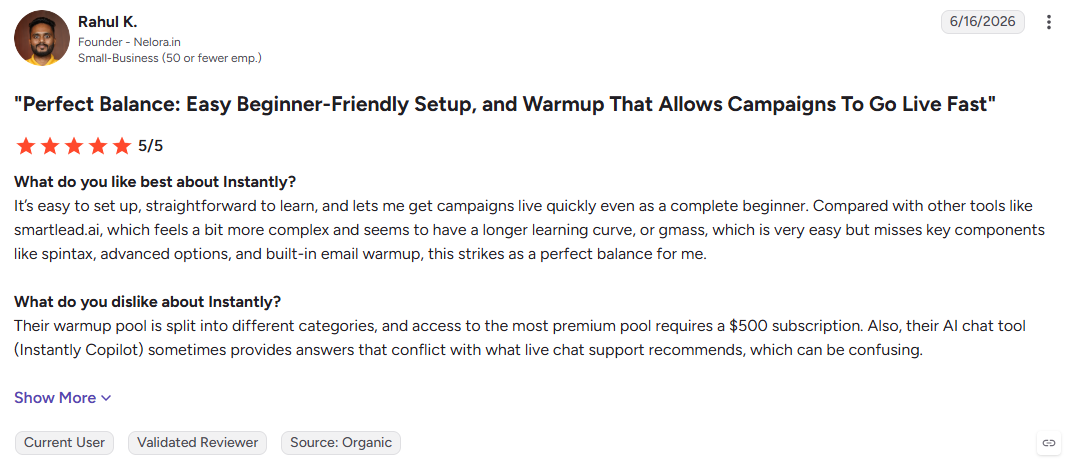
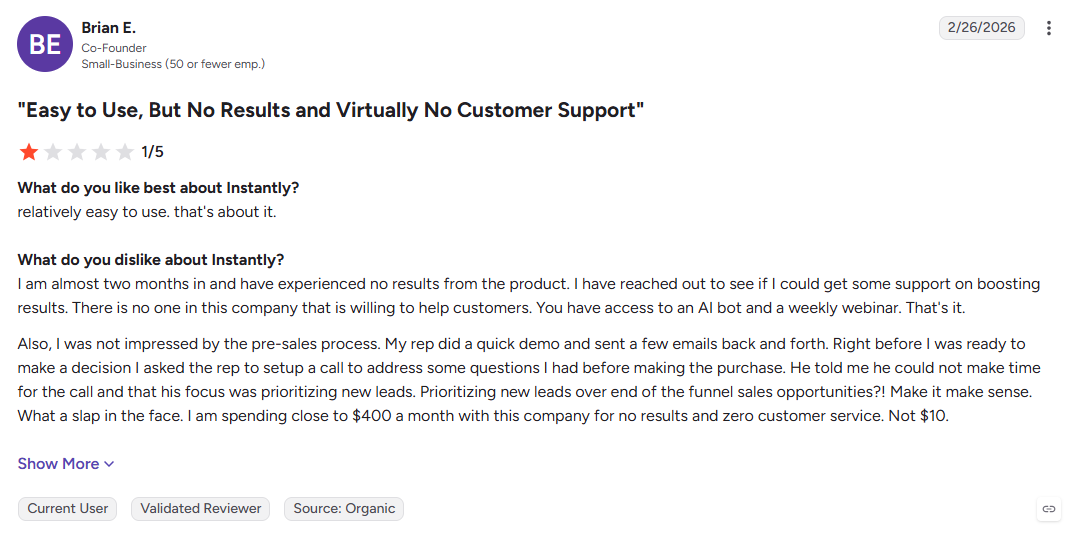
Cons
- Email-focused with no phone data
- Outreach and lead data are priced separately.
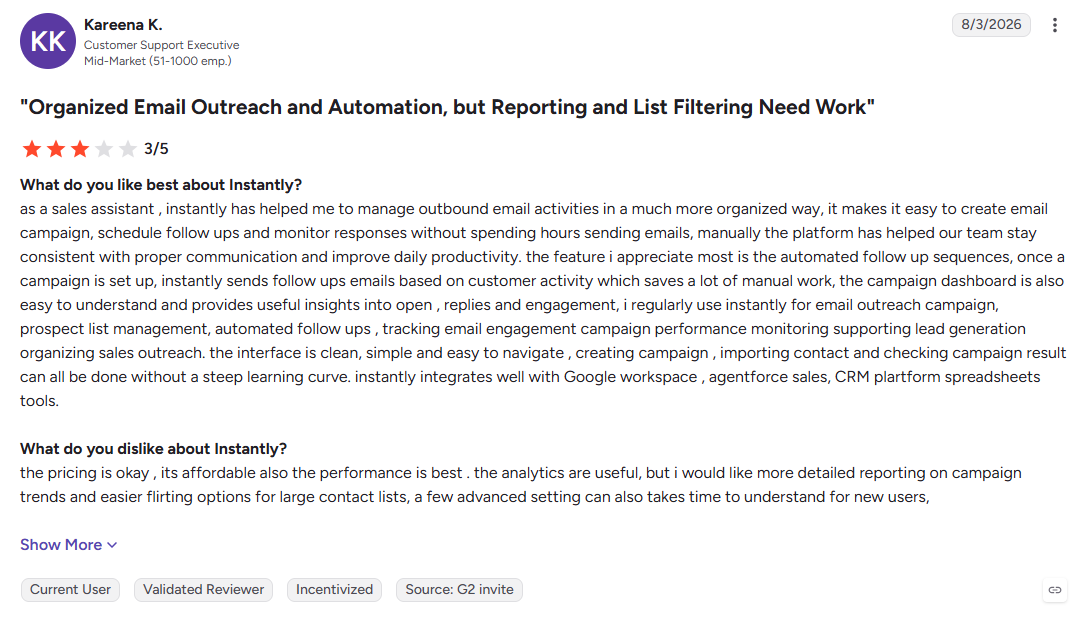
- G2 reviewers provide feedback on support and data quality.
Best For: Agencies and outbound teams sending large email volumes.
25. Artisan
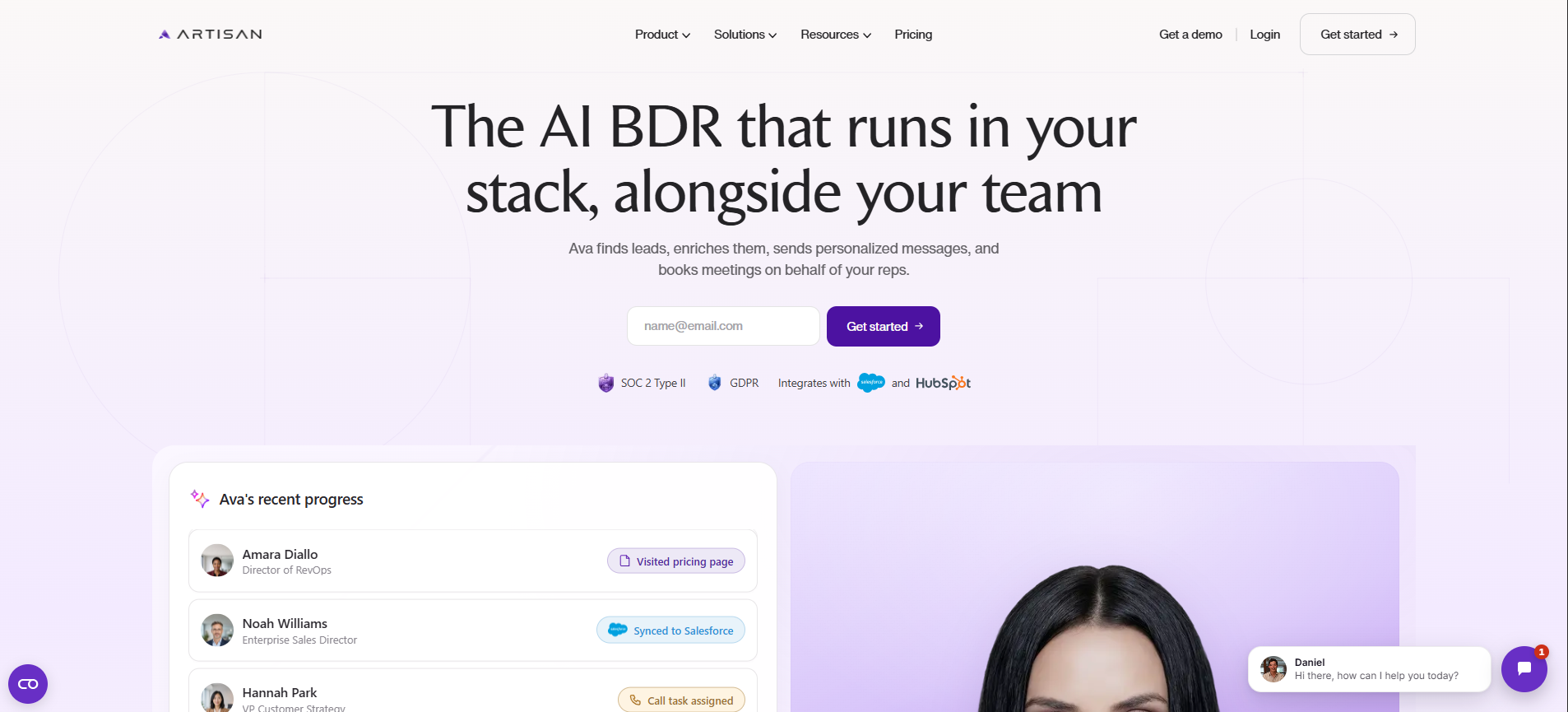
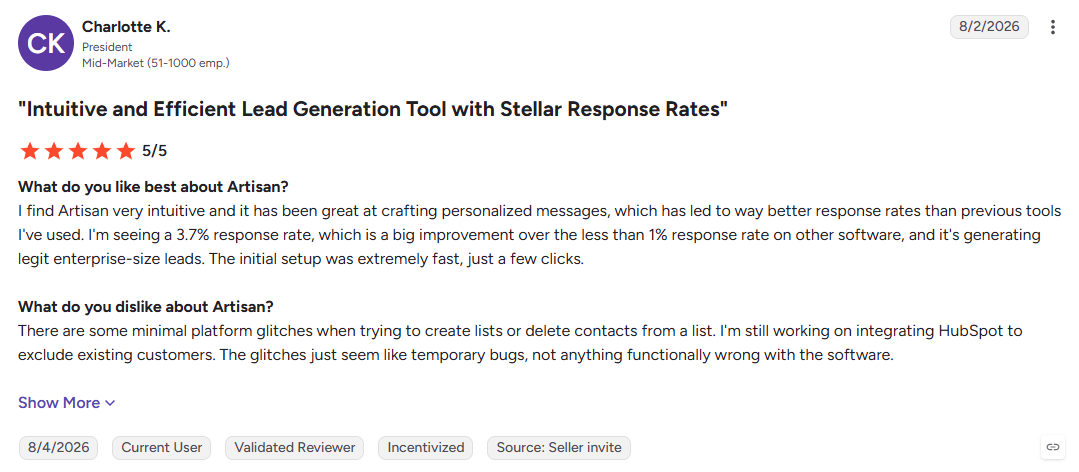
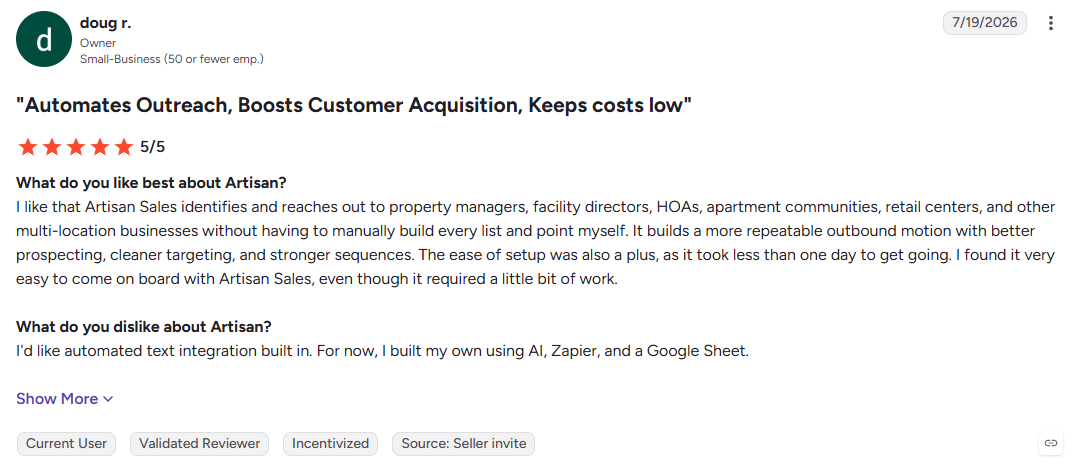
Artisan offers Ava, an AI BDR that researches prospects, writes personalised emails, and runs campaigns across email and LinkedIn. Its built-in database and Data Miner support cold outbound, while Kwin focuses on warm website traffic and real buyer behaviour.
Key Features:
- Ava AI BDR: Handles prospect research, messaging, and follow-ups.
- Built-In Database: Provides B2B, local, and e-commerce prospect data.
- Data Miner: Enriches leads with updated information.
Pros
- Automates most outbound tasks
- Database included
- Guided onboarding
Cons
- Custom pricing only
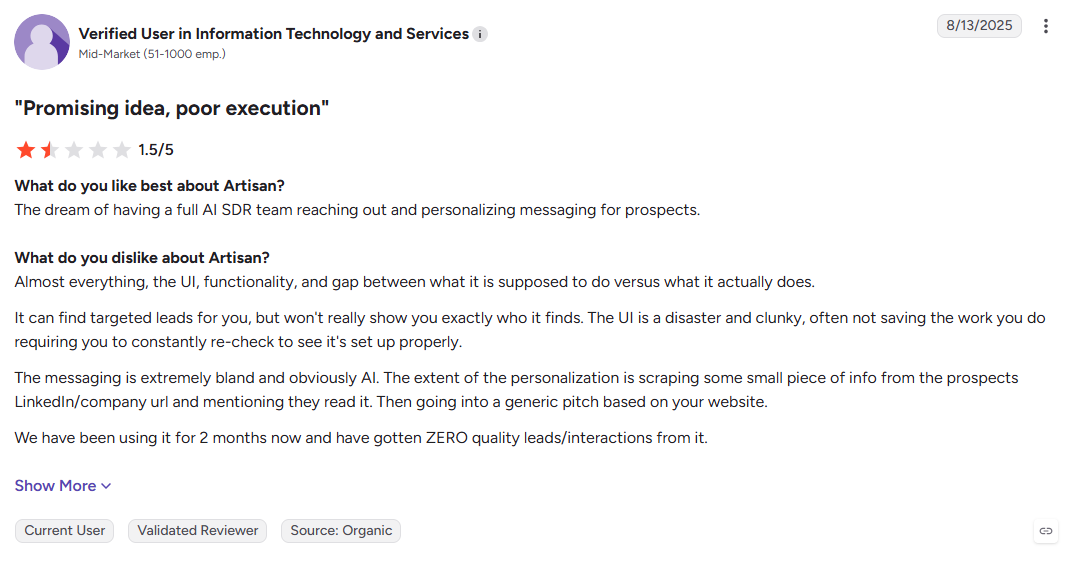
- Messaging still needs human oversight.
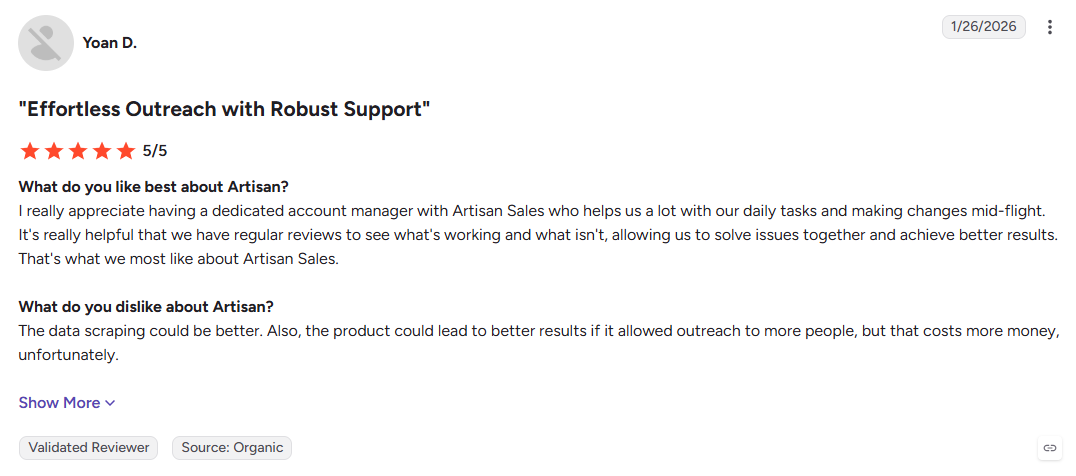
- G2 reviewers praise setup and support while some mention UI and data-accuracy issues.
Best For: Teams that want to automate cold outreach at scale.
26. HubSpot Sales Hub
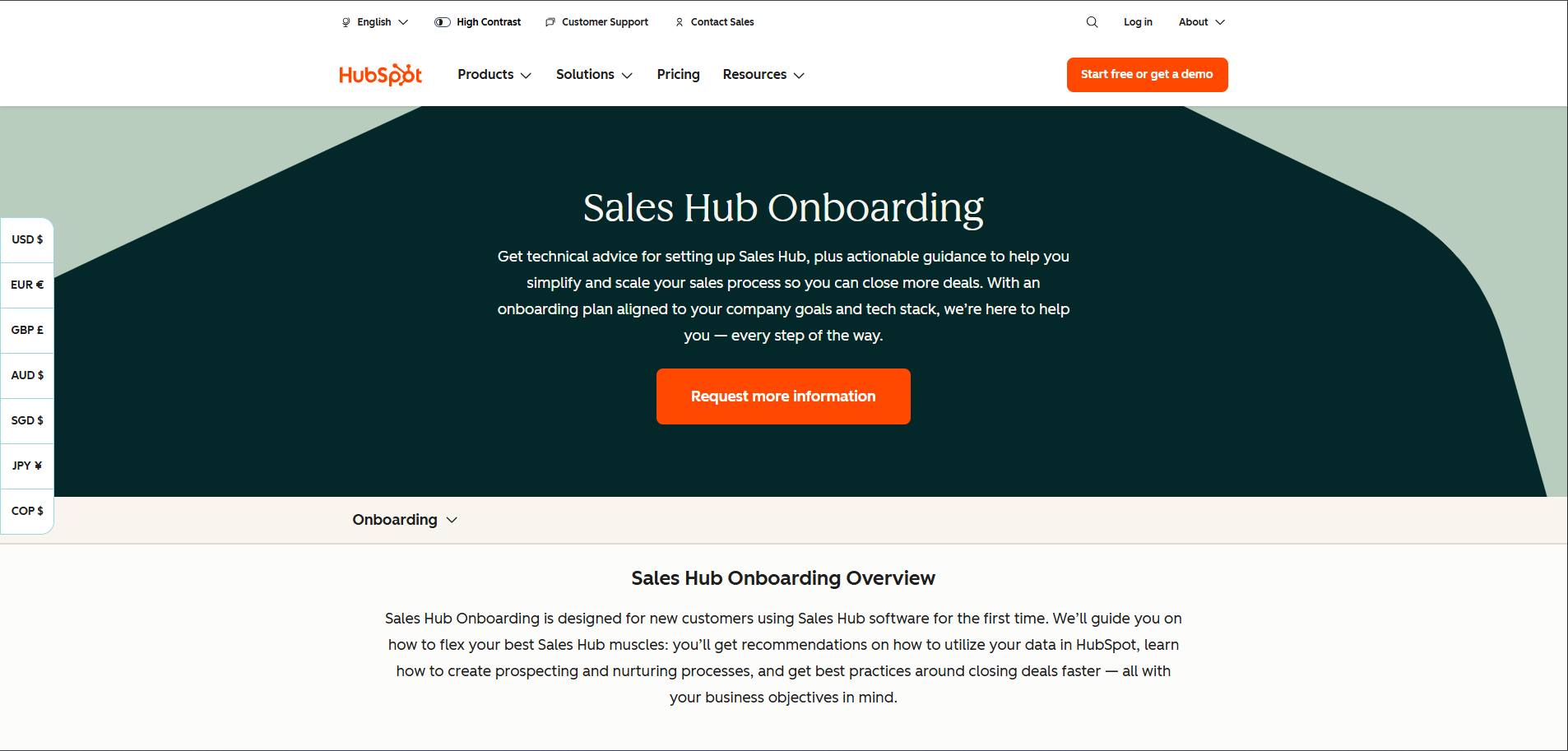
HubSpot Sales Hub combines CRM, email tracking, sequences, meeting scheduling, and lead scoring in one platform. Its Breeze Prospecting Agent adds AI-powered research and outreach on paid tiers. Kwin complements it by feeding identified and scored website visitors into the CRM.
Key Features:
- Free CRM: Manage contacts, deals, and pipelines.
- Sequences and Automation: Automate follow-ups on paid tiers.
- Breeze Prospecting Agent: Supports AI research and personalised outreach.
Pros
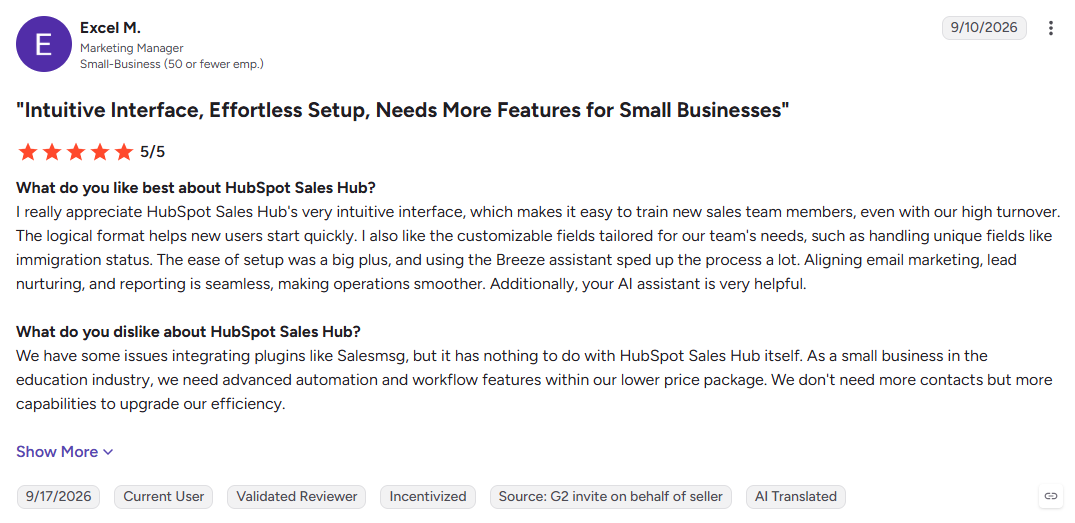
- Easy for teams to adopt
- Free CRM to start
- Unified sales and marketing platform
Cons
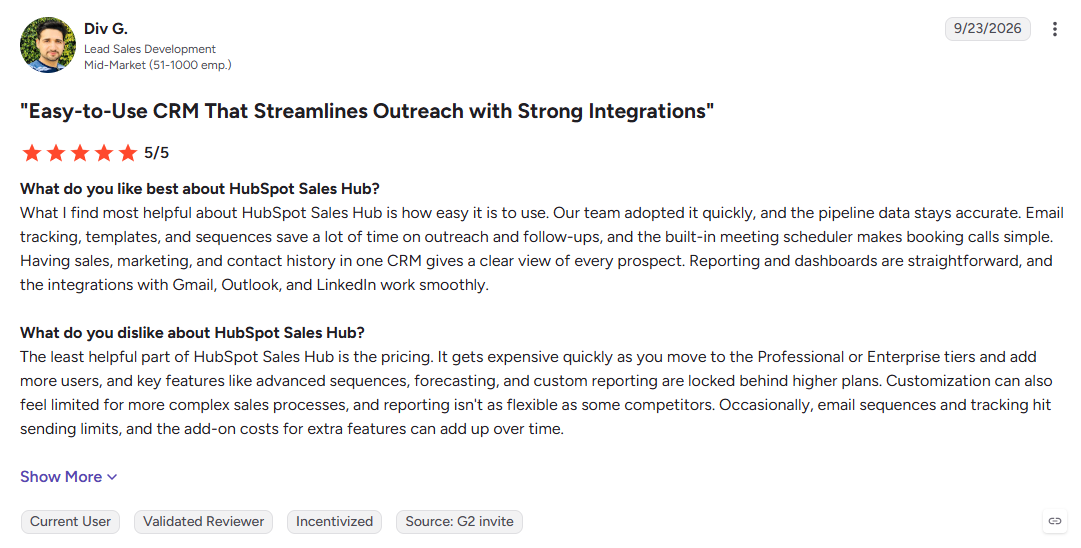
- Advanced sequences require higher tiers.
- Costs increase as seats and features expand.
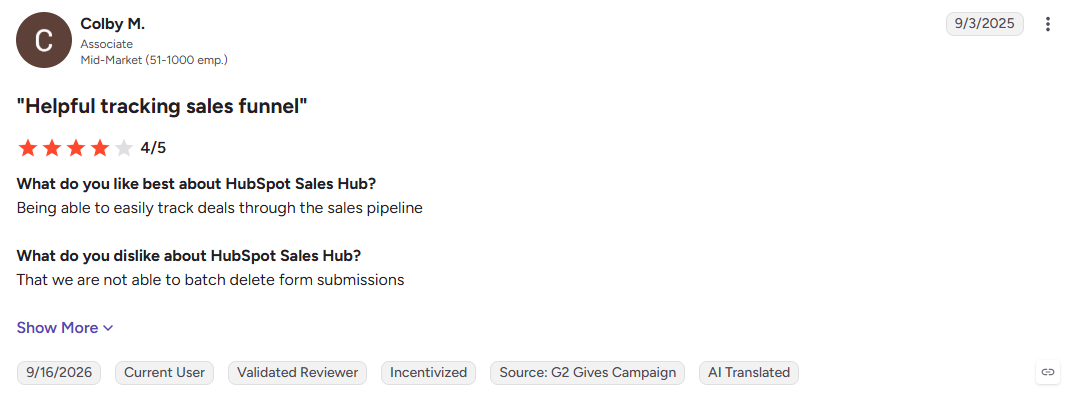
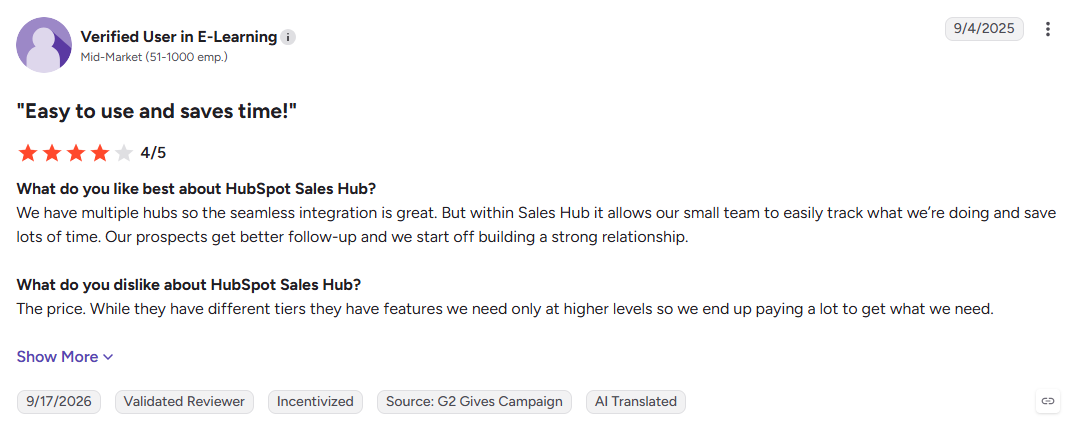
- G2 reviewers note higher costs as teams scale.
Best For: HubSpot-first SMB and mid-market sales teams.
Also Read: 20 Best Lead Enrichment Tools for B2B
How to Choose the Right Sales Prospecting Tool
A lengthy list of features doesn’t necessarily mean success. Use these checks to find the right fit for your sales process.
- Find Your Biggest Bottleneck: Choose based on the problem you need to solve, such as poor data, weak intent signals, or slow follow-up.
- Check Identification Level: Company-level shows which account visited. Person-level shows who visited and helps reps follow up faster.
- Test Data Accuracy: Run your own ICP through the platform and check match rates, email bounce rates, and phone accuracy.
- Check Global Coverage: If you sell in EMEA or APAC, verify regional data coverage, including global visitor identification across 175+ countries.
- Verify Integrations: Look for CRM, Slack, sales engagement, and API integrations that fit your existing tech stack.
- Compare Automation: Check whether the tool only provides data or also handles scoring, outreach, qualification, and lead handoff.
- Review Compliance: Check GDPR, CCPA, SOC 2 Type II, and ISO 27001 documentation before choosing a platform.
- Calculate Real Cost: Include seats, credits, add-ons, and other tools. Compare the total cost against qualified meetings generated.
- Run the Same Trial: Test shortlisted tools on the same accounts and compare contacts, replies, meetings, and time saved.
- Think Long Term: Choose flexible plans that can support more users, higher volume, and new AI capabilities as your team grows.
Why Kwin Works for Your Warmest Leads
The majority of prospecting tools assist in finding or contacting leads. Kwin focuses on a more valuable signal: people already showing interest on your website. It identifies, qualifies, engages, and hands off those visitors automatically.
- Identify buyers: A lightweight pixel identifies 60–70% of visitors across 175+ countries at the person and company level.
- Score intent: ICP Fit and Purchase Intent scores separate high-value visitors from low-intent traffic.
- Track behavior: Kwin uses pages viewed, repeat visits, session depth, and other on-site signals to understand buying interest.
- Filter smarter: Country, page, data, and exclusion filters help remove unwanted traffic and focus your pipeline.
- Automate follow-ups: Qualified visitors receive personalised 3-step email sequences through Gmail, Outlook, or SMTP/IMAP, based on a knowledge base built from your website.
- Hand off sales-ready leads: Positive replies reach your inbox with the full thread and summary, while Slack and CRM handoffs keep your team in the loop.
- Built for trust: Kwin holds SOC 2 Type II, GDPR, CCPA, ISO 9001:2015, and ISO 27001:2022 certifications and does not sell or share your data.
- Proven in practice: Infiniticube generated 2.5× more qualified leads in 45 days, with 35%+ of meetings coming from visitors who never filled out a form.
Ready to turn warm website traffic into conversations? Hire Kwin For Free with 100 leads per month and no credit card required.
Conclusion
The right sales prospecting tools should help you find the right buyers, act on buying signals, and turn interest into meetings.
Databases like ZoomInfo and Apollo.io support cold outbound, while engagement and intent platforms improve outreach and timing. Kwin brings visitor identification, intent scoring, and personalised outreach together for buyers already exploring your website.
We hope this guide helped you understand the different options and find the right fit for your sales motion. Before choosing, identify your biggest pipeline gap and test the platform against it.
If your website gets traffic that never converts, hire Kwin for free and turn anonymous visitors into sales conversations.