
TL;DR
- The Core Problem: Apollo.io is a world-class database, but for Visitor ID, it tracks at the Company Level only. It tells you "IBM visited," and then leverages its database to suggest high-intent personas or decision-makers at that company to target.
- The Direct Answer: If you are happy knowing just the company name and filtering leads manually, Apollo is sufficient. If you need to identify the specific person visiting from 175+ countries and reach out automatically, switch to Kwin by Vison AI.
- The Verdict: Kwin is the only tool that delivers Person-Level Identification globally (not just in the US), giving you a massive advantage in international markets.
- Fast Facts:
- Apollo Visitor ID: Identifies Companies (Account-Level). You must guess the contact.
- Kwin Visitor ID: Identifies Specific People (Person-Level) across 175+ countries.
- The Workflow: Apollo = Manual Search -> Reveal Email -> Add to Sequence. Kwin = Autonomous.
- Pricing Model: Apollo = Charges credits for every action (reveal, email, AI). Kwin = 1 Credit covers everything (ID + Automatic multi-channel outreach is included).
The B2B sales landscape has reached a tipping point. For years, the gold standard was to buy a massive database, filter for titles, and "spray and pray" cold emails. But in 2026, that playbook is broken. Today, the most valuable leads aren’t the ones you find in a static database—they are the ones already browsing your pricing page.
If you want to identify website visitors, you’ve likely realized that a standard database like Apollo.io has a major gap: it tells you who could buy, but it doesn't always tell you who visits my website right now. To stay competitive, modern revenue teams are shifting toward website visitor identification tools that uncover the "Dark Funnel."
In this guide, we’ll explore how to identify who visits your website at a person-level and why the top Apollo.io alternatives are moving away from manual searching toward autonomous, real-time track website visitors workflows. We will show you how to identify anonymous website visitors and turn that silent traffic into high-intent pipeline without ever asking them to fill out a form.
Why Modern Sales Teams are Seeking Apollo.io Alternatives
While Apollo.io remains a powerhouse for B2B data, it is fundamentally a database first, tracking tool second. As B2B buying cycles become 100% digital, the "Actionability Gap" is widening.
According to McKinsey’s State of AI 2025 Report, 62% of high-growth organizations are now pivoting toward "Agentic" AI systems. These aren't just tools that provide data; they are tools that act on data.
The Core Frustrations with Apollo.io for Visitor ID:
- The "Manual Labor": Even if you see a company visited your site in Apollo, you still have to manually search for the right persona, find their email, and add them to a sequence.
- Data Saturation: Because Apollo is so accessible, the "burn rate" of its data is high. Your prospects are likely receiving the same templated outreach from ten other competitors using the same list.
- Missing Person-Level Intel: Most legacy website visitor tracking tools only provide "Account-Level" data (e.g., "Someone from Google visited"). To win in 2026, you need to know it was Jane Doe, the VP of IT, not just a generic employee.
Apollo.io: The Breakdown
Pros:
- Massive Contact Database: Access to 275M+ B2B contacts and 73M+ companies, making it one of the largest datasets at its price point.
- Unified Sales Stack: Eliminates "tool fatigue" by combining a lead database, email sequencer, dialer, and task manager in one platform.
- Excellent Chrome Extension: Seamlessly scrapes LinkedIn and company websites to find contact details on the fly.
- Affordable Entry Point: Offers a very generous free tier and low-cost basic plans ($49/mo) that are attractive to startups and solo founders.
Cons:
- Inconsistent Data Quality: Frequent complaints regarding "stale" records and high bounce rates, even for contacts marked as "verified."
- No Real Person-Level ID: Apollo primarily tracks company-level website visits; it does not identify the specific individual browsing your site in real-time like "Agentic" AI tools such as Kwin.
- Steep Learning Curve: The UI is often described as "busy" and "cluttered," requiring 2-4 weeks of consistent use for a team to become fully proficient.
- Support & Billing Friction: Significant negative feedback on G2 regarding "sneaky" renewal policies and long wait times for support tickets.
Verified Customer Feedback & References
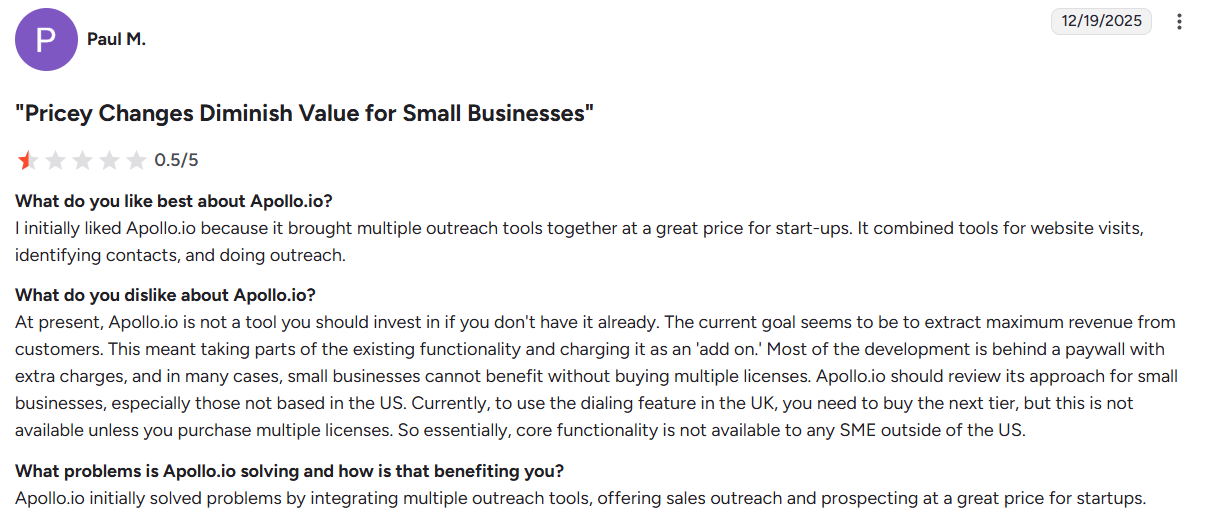
On G2 Apollo got a mixed review and maximum people purchased it for the database. They complain about the data accuracy or stale data.
"Support is practically non-existent for small teams." "The platform is powerful, but God forbid you have a technical glitch. The support is mostly bots and pre-written articles. It took us 10 days to resolve a simple billing error that paused our entire outreach." — Marketing Manager, TrustRadius Verified Review (November 2025) View Apollo.io TrustRadius Sentiment
The Ultimate Comparison: Top 10 Website Visitor Identification Tools (2026)
While Apollo.io is a legendary database for outbound prospecting, the "New Frontier" of B2B sales belongs to tools that can identify website visitors in real-time. In 2026, the focus has shifted from finding leads to responding to them while they are still on your site.
The following table compares the top Apollo.io alternatives based on their ability to identify who visits your website and turn that data into autonomous revenue.
Why These Alternatives Outperform Apollo for Inbound Sales
In 2026, the primary reason sales leaders seek website visitor identification software beyond Apollo is the "Speed-to-Lead" factor.
- Person-Level Visibility: Most tools in the table above (especially Kwin and RB2B) solve the "Who is it?" problem. Apollo often identifies that a company is visiting, but you still have to manually hunt for the stakeholder.
- Autonomous Action: Tools like Kwin have evolved into "Agentic AI." They don't just track website visitors; they engage them. While Apollo requires a human to build a list and start a sequence, Kwin identifies the visitor and initiates the conversation in under 60 seconds.
- Bypassing Form Fatigue: These alternatives help you identify website visitors without forms, allowing you to capture the 98% of traffic that usually bounces without leaving an email.
Ready to stop manual prospecting and start identifying your silent visitors? See Kwin in Action
Top 10 Apollo.io Alternatives for Person-Level Identification
1. Kwin (Vison.ai) – The World’s Best "AI Business Developer"
Kwin isn't just a tool to identify website visitors without forms; it is a specialized AI employee designed to manage your entire inbound funnel autonomously. While other tools give you a dashboard to check, Kwin gives you a Slack notification that says, "I identified the VP of Sales from Microsoft on your site and already sent them a personalized LinkedIn invite."
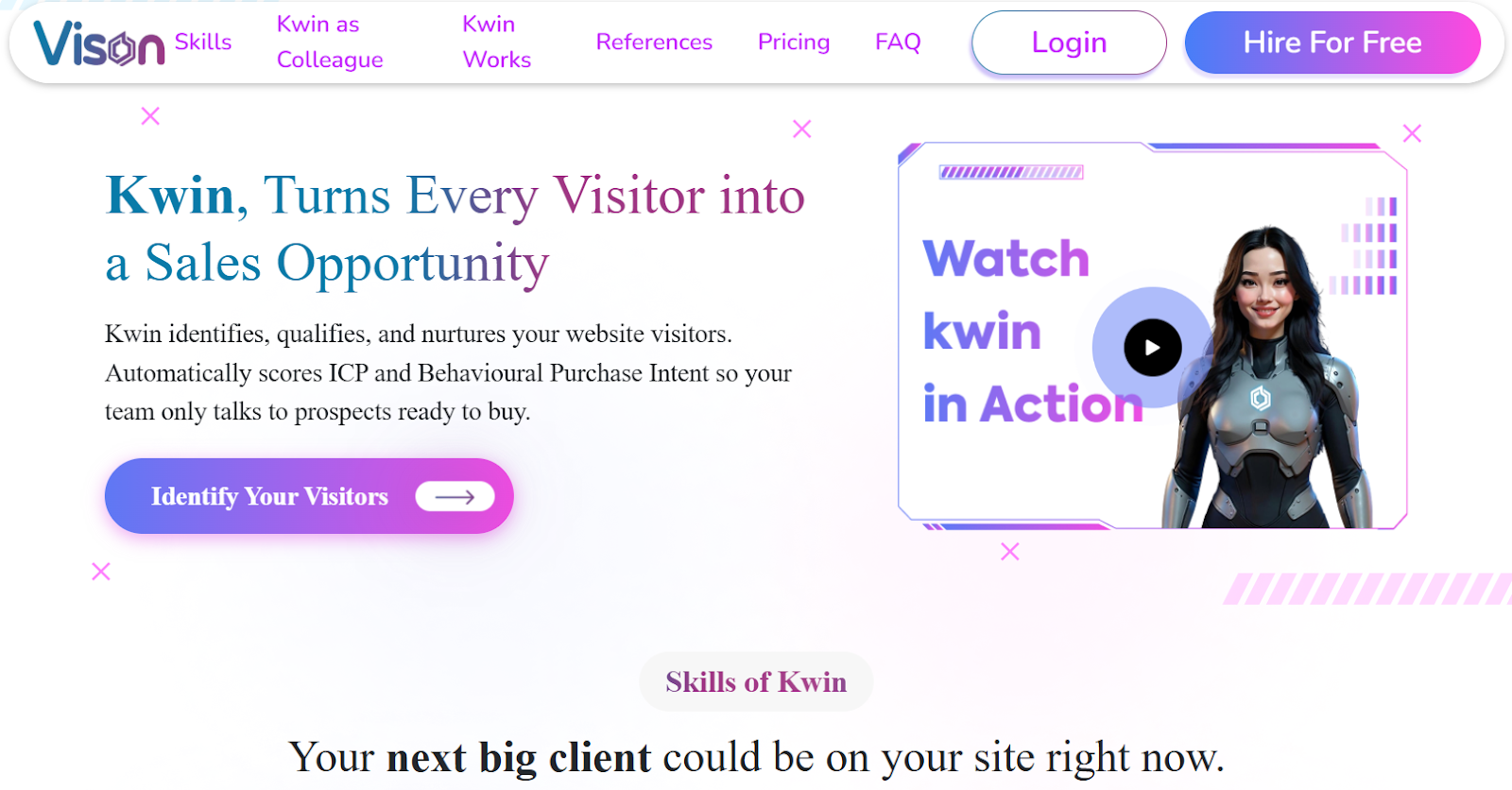
- How it Works: Kwin uses a proprietary website visitor identification software layer that bypasses the limitations of simple reverse IP lookups. It matches visitors to a global identity graph to provide person-level data.
- The "Agentic" Difference: Most website visitor tracking tools stop at identification. Kwin acts as an AI Business Developer, executing outreach the second a high-intent lead lands on your site.
Pros:
- Person-Level Accuracy: Real-time identification of specific individuals, not just company names.
- Autonomous Outreach: Automatically triggers emails or LinkedIn messages based on site behavior.
- Zero Manual Work: No more exporting CSVs or building manual sequences.
- High Match Rates: Consistently outperforms legacy IP-based tools by 2x in remote-work environments.
Cons:
- Premium Focus: Built for teams that value speed and automation over bulk database scraping.
Best For: B2B SaaS and agencies that want to turn website traffic into meetings on autopilot.
2. ZoomInfo
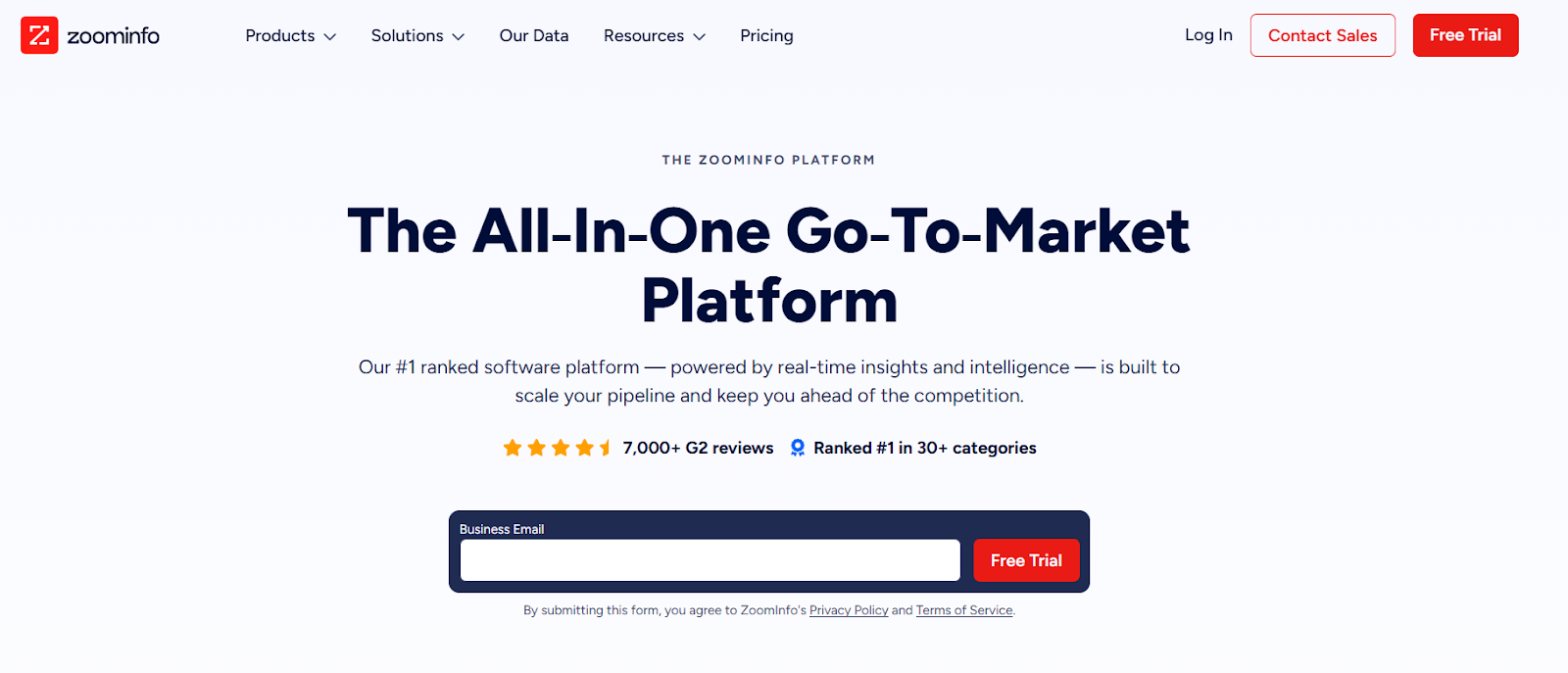
ZoomInfo is often the first alternative companies consider when they outgrow Apollo. Its "WebSights" feature is a powerful way to track B2B website visitors, but it comes with an enterprise price tag.
Source:Zoominfo
- Pros: Massive database and deep "intent" signals (e.g., what topics companies are researching elsewhere).
- Cons: Extremely expensive, often starting at $15,000–$25,000/year. The UI is notoriously complex and requires a dedicated administrator.
Best For: Fortune 500 companies with massive budgets and complex sales structures.
3. Clearbit (by HubSpot)
Now part of the HubSpot ecosystem, Clearbit Reveal is the "silent engine" behind many website visitor analytics stacks.
Source:Hubspot
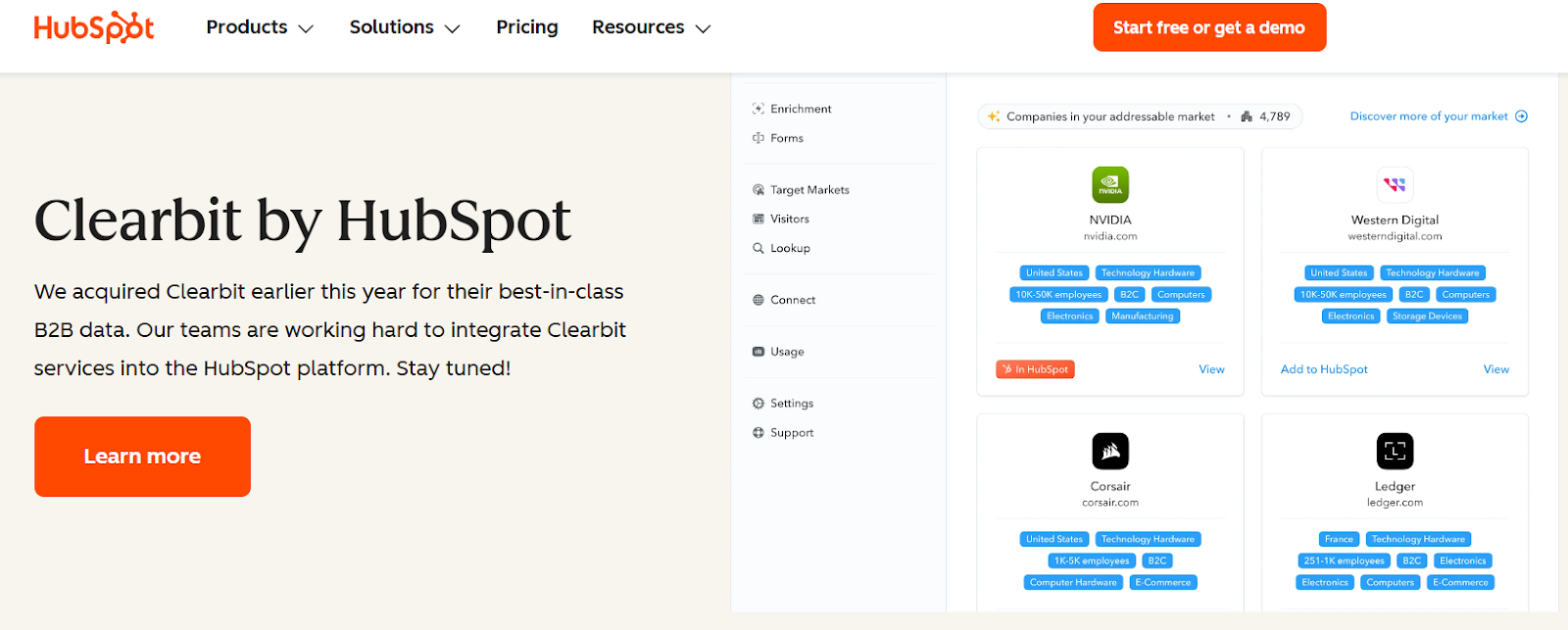
- Pros: Unmatched data enrichment. If you have an email, Clearbit can tell you everything about the person behind it.
- Cons: Since the HubSpot acquisition, its standalone support has shifted. It primarily identifies companies, leaving the "person-level" identification to be solved via other integrations.
Best For: Heavy HubSpot users who need firmographic data to power their CRM.
4. Cognism
If your target market is Europe, Apollo's data can sometimes put you at risk of privacy violations. Cognism is the top alternative for compliant website visitor data.
Source:Cognism
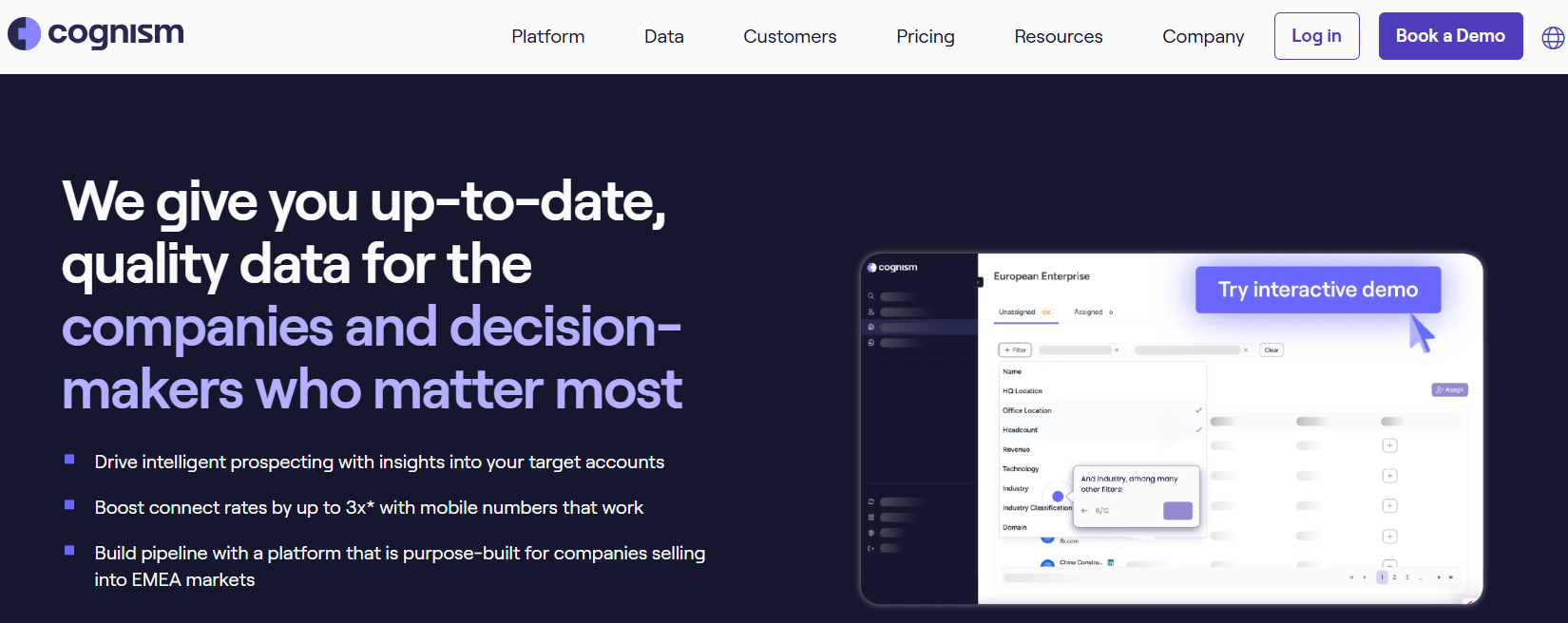
- Pros: Phone-verified mobile numbers and a "zero-tolerance" approach to GDPR compliance.
- Cons: Expensive and lacks the autonomous "Agentic" features of Kwin. It provides the data, but you still have to do the work.
Best For: Sales teams targeting the UK and EU who need "Diamond Verified" contact info.
5. Warmly
Warmly focuses on the "Inbound" experience, providing a "Signal-based" platform that alerts you when prospects are on-site.
Source:Warmly
- Pros: Good real-time alerts and a "Live Chat" feature that lets you jump in while the visitor is still browsing.
- Cons: Can be noisy. Without a tool like Kwin to filter and act, your sales team might get overwhelmed by "ping fatigue."
Best For: Mid-market teams looking for a bridge between visitor ID and live sales engagement.
6. RB2B
RB2B gained massive popularity recently for its simple value proposition: identifying the LinkedIn profiles of your website visitors.
Source:RB2B
- Pros: Very easy to install; provides actual LinkedIn profiles of visitors.
- Cons: High "bounce" rate in data. It only identifies a small percentage of traffic (often 10-15%) and doesn't automate the follow-up.
Best For: Startups on a tight budget who want to manually "stalk" their visitors on LinkedIn.
7. Leadfeeder (by Dealfront)
Leadfeeder is one of the oldest names in how to track website visitors. It’s reliable but traditional.
Source:Leadfeeder
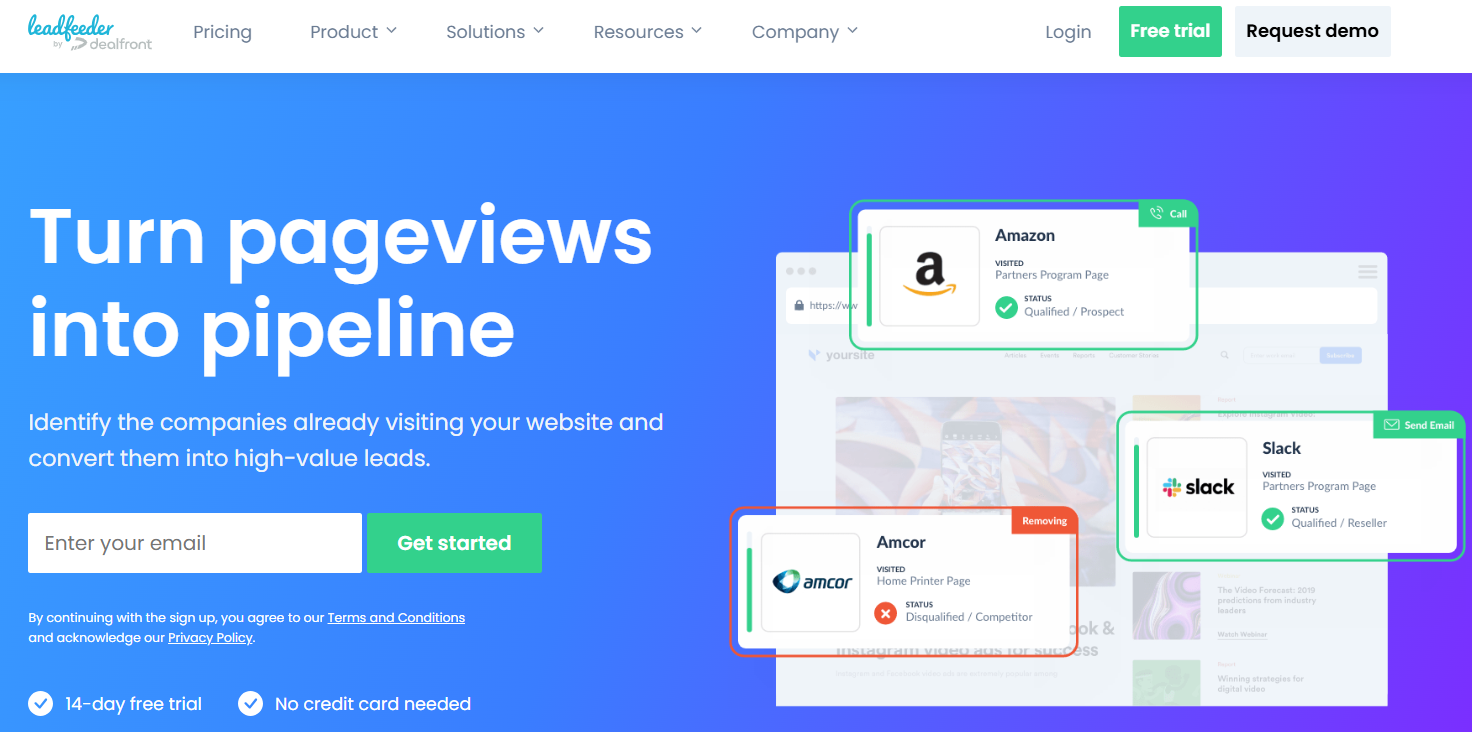
- Pros: Excellent at identifying company visitors and showing exactly which pages they viewed.
- Cons: It is strictly company-level. You’ll know "Microsoft" visited, but not that "Steve" was the one looking at the pricing page.
Best For: Marketing teams focused on account-based marketing (ABM) rather than direct sales outreach.
8. Lusha
Lusha is primarily a browser extension that helps reveal contact info of a lead.
Source:Lusha
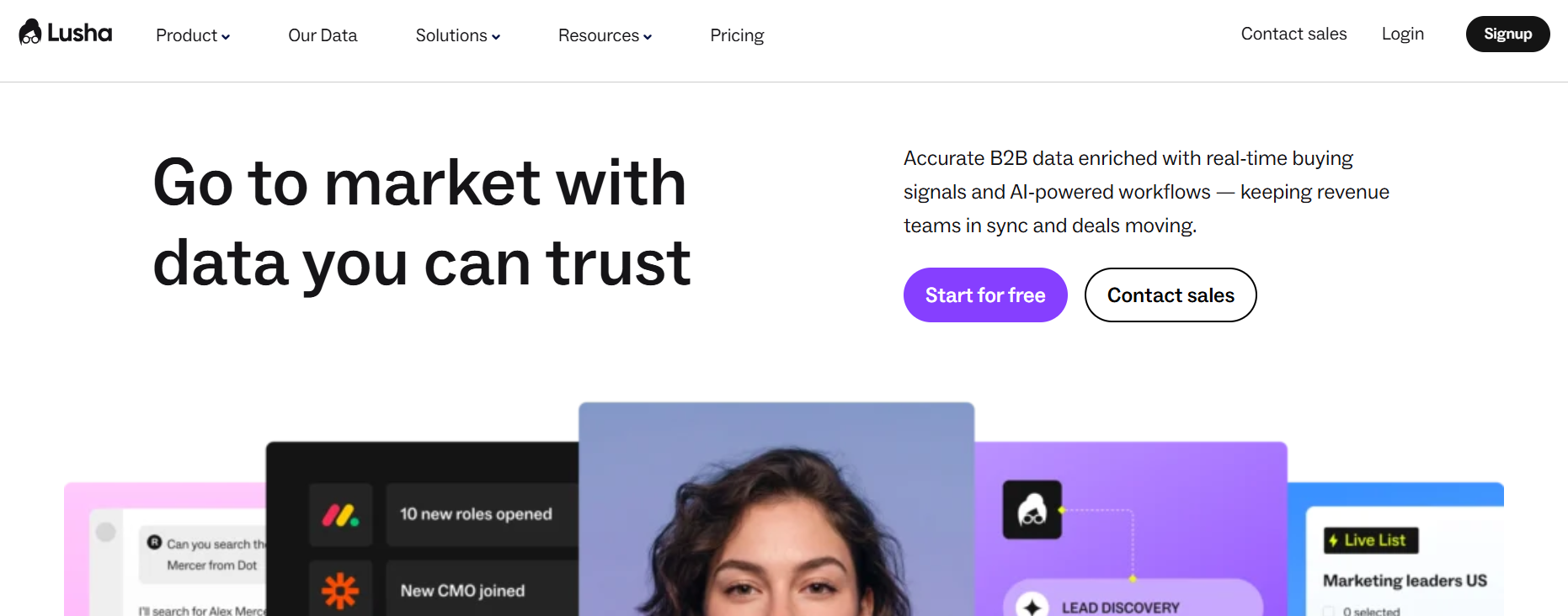
- Pros: Extremely user-friendly and great for one-off contact reveals.
- Cons: Lacks the "site-wide" identification scale. It’s more of a tool for a rep to use after they find a lead.
Best For: Individual sales reps who need to "find an email" quickly.
9. Seamless.ai
Seamless.ai uses an AI engine to crawl the web for contact info in real-time, rather than relying on a static database.
Source:Seamless.ai
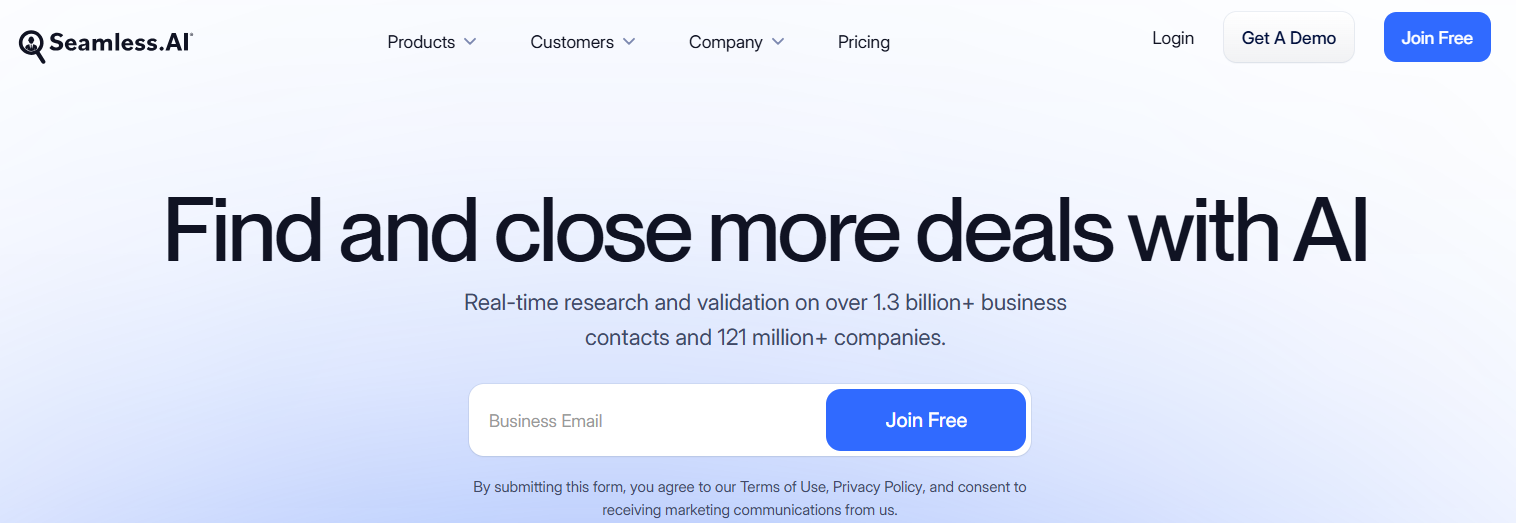
- Pros: Good for finding niche contacts that might not be in Apollo yet.
- Cons: Users frequently complain about "data hallucinations" where the AI generates incorrect emails.
Best For: High-volume outbound teams who need a "cheaper" alternative to ZoomInfo.
10. Clay
Clay isn't a visitor ID tool per se, but it is the best tool to process visitor data. Many teams use Kwin to identify a visitor and then use Clay to "enrich" that lead with dozens of data points.
Source:Clay
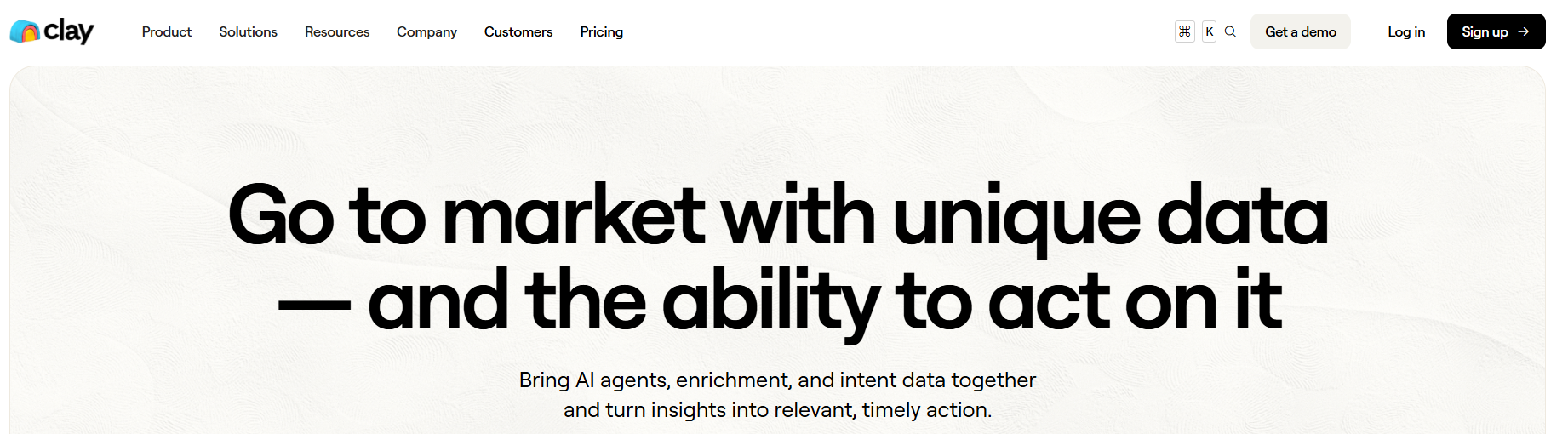
- Pros: Infinite flexibility. You can scrape anything and build any workflow.
- Cons: Very high learning curve. You essentially need to be a "data engineer" to get the most out of it.
Best For: Advanced "Growth Hackers" who want to build custom, complex GTM engines.
For 2026, the B2B data landscape has shifted toward "AI-driven identification" rather than just static databases. Apollo.io remains the price-to-value leader for individuals, while enterprise giants like ZoomInfo and Cognism have shifted toward multi-year, high-ticket "platform" fees.
The newest category—AI Business Developers (like Kwin)—is emerging as a more cost-effective alternative to hiring human BDRs or buying expensive "intent-only" platforms.
Pricing Showdown: Apollo.io vs. The Alternatives (2026)
The "Hidden" Cost of Apollo.io On the surface, Apollo's $49/month Basic plan looks unbeatable. But when you use it for Website Visitor ID, the costs stack up quickly:
- The "Credit" Trap: Apollo charges "Export Credits" to reveal emails. If you have 500 visitors, you can burn through your monthly limit in days.
- The "Inbound" Gate: High-volume visitor tracking is often reserved for higher tiers or requires the "Inbound" add-on.
- The "Seat" Minimum: To get the best features (like the Power Dialer or advanced AI), you are forced into the "Organization" plan, which requires a minimum of 3 users (starting at ~$450/month).
The Vison AI Advantage: Kwin by Vison AI starts at $56/month and includes autonomous multi-channel outreach. You pay only for the leads Kwin identifies, and she handles the writing and sending for free, saving you from needing to hire a team to manage Apollo.
2026 Pricing Trends & Warnings:
- The "AI Agent" Premium: Tools like Kwin are priced not just on data, but on action. While traditional databases (ZoomInfo) charge for the contact info, AI Business Developers charge for the outreach result, often yielding a lower "Cost Per Lead" than manual prospecting.
- Credit Inflation: Most tools (Apollo, Clay, RB2B) have moved to "Usage-Based" models. In 2026, many have increased the "cost-per-reveal," making it crucial to filter your traffic before using credits.
- The Annual Contract Trap: Enterprise tools (ZoomInfo, Cognism) still heavily resist monthly billing. If you need flexibility, stick to Kwin, RB2B, or Apollo.
- Hidden Setup Fees: Any tool claiming "Enterprise Grade" (Warmly, ZoomInfo) typically hides a $2,500 to $5,000 "Implementation Fee" in the fine print. Always ask to have this waived during end-of-quarter negotiations.
Strategic Guide: How to Track B2B Website Visitors Effectively
To truly master how to track website visitors, you need a strategy that goes beyond just installing a pixel. Here is the 2026 blueprint for website visitor identification for B2B SaaS:
1. Identify Anonymous Visitors on Your Website Without Cookies
With the death of third-party cookies, traditional tracking is failing. Modern website visitor identification software now uses "Identity Graphs." These graphs link a person's business email, LinkedIn profile, and device ID to their IP address, allowing you to identify website visitors without cookies.
2. Filter for High-Intent Behavior
Not every visitor is a lead. To identify website visitors for lead generation, you must filter out:
- Users visiting your "Careers" page.
- Existing customers logging into your app.
- Bot traffic from search engines.
- The Secret Sauce: Focus only on visitors who spend more than 30 seconds on your "Pricing" or "Competitor Comparison" pages.
3. Deploy an AI "Revenue Teammate"
The biggest mistake companies make when they identify anonymous website visitors is waiting too long to follow up. If a prospect visits your site on Tuesday, but your SDR doesn't email them until Friday, the "magic moment" is gone.
Using an agentic tool like Kwin ensures that the outreach happens in under 5 minutes.
"In the world of B2B, speed to lead isn't just a metric; it's the difference between a closed deal and a 'who are you?'
Why Person-Level Data is the Only Metric That Matters in 2026
If you are still asking how to identify company visitors on website, you are living in 2021. Knowing that "Apple" visited your site is useless if you don't know if it was the janitor or the VP of Product.
Person-level visitor identification allows you to:
- Personalize Outreach: "Hi [Name], I saw you were looking at our integration with Salesforce..."
- Avoid Waste: Don't waste your ad budget or email credits on the wrong people within an organization.
- Shorten Sales Cycles: By identifying the decision-maker early, you bypass the "gatekeeper" phase entirely.
Ready to Turn Silent Traffic Into Revenue?
Stop guessing who visits my website and start booking meetings with anonymous visitors with Kwin. While Apollo.io is a great tool for building lists, it’s not built to win the "Real-Time Revenue" game.
Kwin is the only Apollo.io alternative that doesn't just give you a list of names—it gives you a pipeline of opportunities. Our AI Agent identifies your website visitors at a person-level and initiates the conversation before your competitors even know they are on the market.
Hire your AI Business Developer today. Get Started with Kwin Free Trial