
TL;DR
- Core Problem: Most of your B2B traffic leaves without a name, so the buying signals you paid to attract vanish before sales ever sees them.
- Direct Answer: Use a research tool that identifies visitors at person and company level, scores their intent, and acts fast. Kwin by Vison AI leads because it identifies, qualifies, nurtures, and hands off on autopilot.
- Verdict: Most tools stop at a dashboard. Kwin turns anonymous traffic into booked meetings across 175+ countries, so no signal goes cold.
- Fast Facts: Person and company-level identification, a 60% to 70% identification rate, and coverage in 175+ countries. A free forever plan gives you 100 leads a month with no credit card.
Your website is the busiest room in your business, yet most of the people inside it never say a word. They read your pricing, scan your case studies, compare you to rivals, and then leave without a trace.
That silence is expensive, and it is what research tools for anonymous website visitor identification are built to fix.
These website visitor identification tools reveal the companies and people behind your traffic.
The trouble is that the market is crowded, and every vendor swears it is the best. So we tested the field and compared it honestly to save you the guesswork.
In this guide, you will learn:
- What anonymous website visitor identification really means
- How these research tools work under the hood
- What match rates you can honestly expect
- 15 research tools for anonymous website visitor identification
- Key features, pros, cons, and real pricing
- How to choose the right fit and dodge the costly mistakes
By the end of this guide, you will know which tool matches your team, your traffic, and your budget. More importantly, you will know how to turn silent visitors into booked meetings.
What Anonymous Website Visitor Identification Actually Means
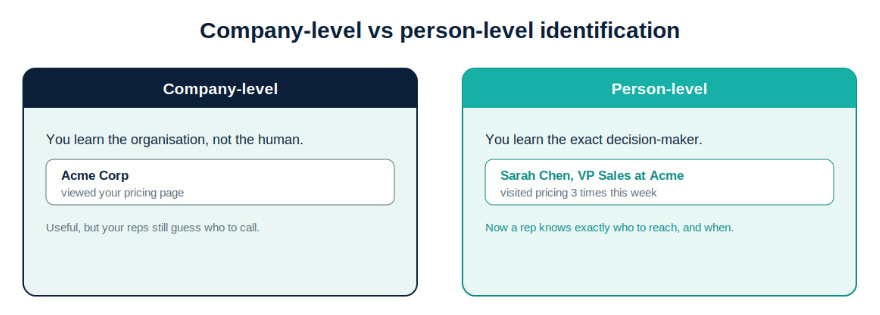
Anonymous website visitor identification splits into two very different jobs, and you need to know both before any tool comparison matters.
One names the business behind a visit, the other names the human. Getting this distinction clear will save you money and disappointment later.
1. Company-level identification
Company-level identification tells you the organisation behind a session. So you see something like an alert that Acme Corp viewed your pricing page. It works by matching the visitor's IP address to a business database. It is mature and reasonably accurate, yet it still leaves your reps guessing which of Acme's 400 employees to call.
2. Person-level identification
Person-level identification goes further and names the individual, with a role, a work email, and a LinkedIn profile. Now you learn that Sarah Chen, VP of Sales at Acme, read your pricing three times this week. Fewer tools like Kwin do this well, yet it is the detail that lets a rep run a real one-to-one follow-up.
How Research Tools Identify Anonymous Website Visitors
Anonymous visitor identification is a step-by-step process. From tracking website activity to identifying companies and potential buyers, each stage helps turn anonymous traffic into actionable sales opportunities.
Here’s how research tools for anonymous website visitor identification work:
1. Install a Tracking Script
Add a small tracking script to your website through the header or Google Tag Manager. Similar to Google Analytics, it starts tracking visitor activity in the background without affecting the user experience.
2. Collect Visitor Data
The tool records key details such as the visitor's IP address, device, browser, pages viewed, referral source, and session duration. These signals create the foundation for identifying the visitor.
3. Enrich the Data
The collected data is matched with proprietary and third-party databases to add valuable information, including company details, technologies used, and available contact data.
4. Identify the Company
Using IP intelligence and company databases, the platform determines which business visited your website. It provides details such as the company name, industry, size, revenue, and location.
5. Identify the Person
Advanced platforms use identity matching and multiple data sources to identify the individual behind the visit. When available, they provide the visitor's name, job title, and verified contact information.
6. Score Visitor Intent
The tool analyzes browsing behavior and compares it with your Ideal Customer Profile (ICP). It then assigns an intent score to help you identify visitors who are most likely to become qualified leads.
Also Read: How To Identify Who Visits Your Website: A Complete Guide
What Match Rates to Realistically Expect
Match rate is the share of your anonymous visitors a tool can actually put a name to. It is the first number to pressure-test before you trust any anonymous website visitor identification tool.
Vendors quote it generously, so a little skepticism goes a long way. Here is the honest picture.
1. Company-level match rate reality
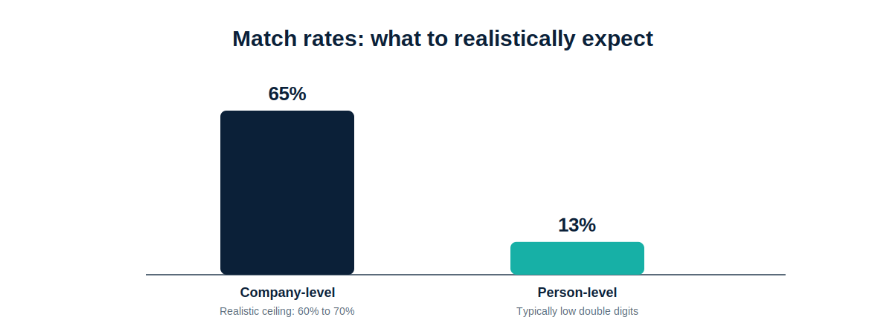
Company-level identification is the mature side of the category, and a realistic ceiling sits around 60% to 70%. Hitting that top end usually means blending several data sources, not IP lookup alone. Kwin lands in this band while also resolving the person.
2. Person-level match rate reality
Person-level identification is far harder, so even the best research tools for anonymous website visitor identification built for it typically land in the low double digits. Remote work, VPNs, and mobile traffic all drag those numbers down, and most US-only tools resolve nobody abroad. Kwin widens this through a proprietary resolution network that reaches individuals across 175+ countries.
3. The 90% claim is a red flag
If any anonymous website visitor identification vendor promises 90% or higher person-level accuracy, treat it as a reason to dig in. Ask them to walk you through the methodology, and test the tool against your own traffic. A free tier is the cleanest way to check.
How We Selected These Research Tools for Anonymous Website Visitor Identification
We did not rank on brand names or marketing budgets. Every research tool for anonymous website visitor identification below earned its place against the same nine checks.
We weighed each of these criteria equally so no single flashy feature could tip the result.
- Identification level: Company-only, person-level, or both, and across how many countries.
- Enrichment depth: How much firmographic, technographic, and contact data each tool appends.
- Intent and scoring: On-site behavioural signals plus any third-party intent layer.
- Outreach automation: Whether the tool acts on a visit or just hands you a dashboard.
- CRM and stack fit: Native, bi-directional sync with Salesforce, HubSpot, and Slack.
- Compliance and data sourcing: Certifications, consent handling, and how data is sourced.
- Coverage and geography: Where each tool is strong, from the US to the EU and beyond.
- Pricing transparency: Published plans and predictable costs as traffic grows.
- Best-fit use case: The team size and go-to-market motion each tool truly serves.
15 Best Research Tools for Identifying Anonymous Website Visitors in 2026
This comparison table gives you a fast overview of the best research tools for anonymous website visitor identification.
Let’s explore each tool in detail.
1. Kwin by Vison AI
Kwin by Vison AI is not another dashboard you log into and forget. She is a working AI Business Developer, a real team member for your funnel.
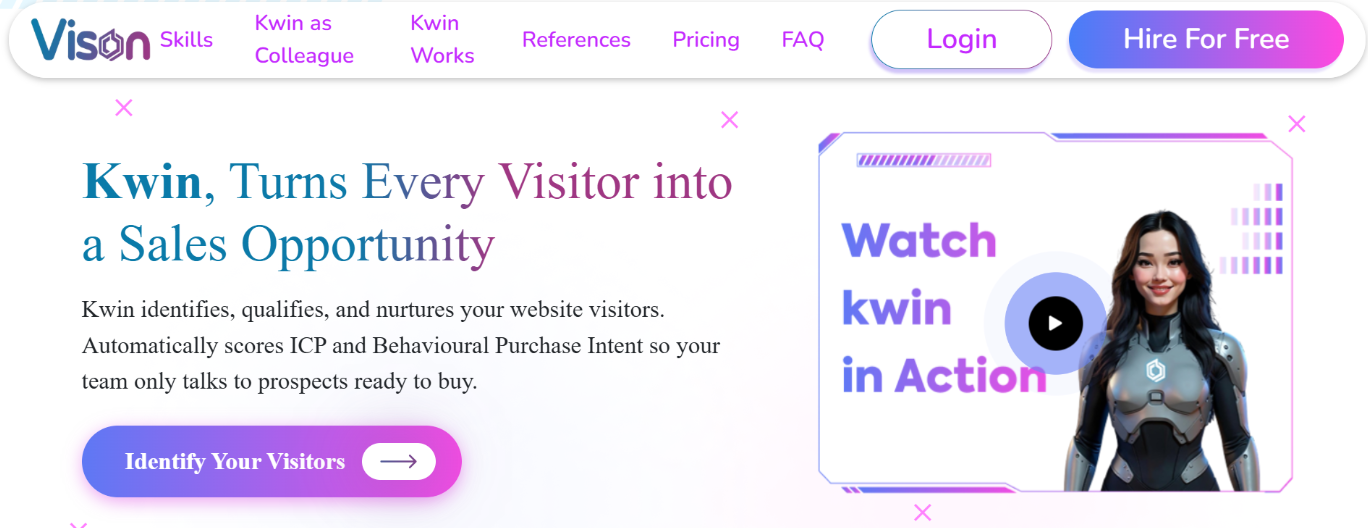
She identifies your anonymous visitors, qualifies them, nurtures them, and hands the hot ones to your reps. That is why she sits at number one on this list.
Most tools stop at a company name, or reveal people only inside the United States. Kwin identifies visitors at both company and person level across 175+ countries, using a proprietary identity resolution network instead of tired IP databases. So your international pipeline stops being a blind spot.
The bigger difference is what happens after the match. Kwin auto-builds a knowledge base from your website, derives your ideal customer profile, and scores every visitor by ICP fit and Purchase Intent. When a lead crosses your set threshold, she drafts and sends personalised outreach from your own domain.
When a prospect replies, Kwin forwards the full email thread and a short summary to your inbox. She then loops in your reps through Slack and your CRM.
She works from publicly available business data and carries a full compliance stack, so trust is built into the workflow rather than bolted on.
She also starts free forever, so you can watch her turn anonymous traffic into booked meetings before you pay a cent.
For lean teams that want enterprise-grade results without enterprise cost or complexity, that combination is genuinely hard to beat. You can see how she began in this Meet Kwin walkthrough.
Key features
- Person and company-level identification with names, work emails, phone numbers, LinkedIn profiles, and company, revenue, industry, and location data.
- Proprietary resolution network delivering a 60% to 70% identification rate across 175+ countries.
- ICP fit score and Purchase Intent score calculated from real browsing behaviour.
- Threshold-based triggering, so Kwin acts only once a lead crosses your minimum ICP and intent scores.
- Personalised email sequences sent from your own domain, with LinkedIn outreach in development.
- Positive-reply handling that forwards the full thread and a summary straight to your inbox.
- Handoff to Slack, your CRM, and existing tools with full visitor context.
- Country-level and page-level filters, including filtering out public sector and government traffic.
- Free forever Lead Watcher plan with 100 leads a month and no credit card, plus a five-minute no-code install.
Pros
- Person and company-level identification across 175+ countries, not just the US
- Autonomous workflow from identification through qualification, nurture, and handoff
- Free forever entry, no credit card, and a five-minute pixel or GTM install
- Publicly available business data backed by SOC 2 Type II, GDPR, CCPA, ISO 9001:2015, and ISO 27001:2022
Cons
- Built for B2B revenue teams, so pure analytics or B2C use cases fit less naturally.
- Custom workflows and LinkedIn outreach are still in development.
Best for: B2B revenue leaders and lean SDR teams that want to identify anonymous website visitors and act on them automatically, without adding headcount.
Pricing: Free forever Lead Watcher plan with 100 leads a month and no credit card, plus paid plans on a Win+ 7-day free trial. Pricing scales with the volume of leads you identify.
Hire Kwin For Free and start identifying your visitors today, no credit card required.
2. RB2B
RB2B built its name on one sharp promise: person-level identification that drops a visitor's LinkedIn profile straight into Slack. For US outbound teams, that speed from pixel to named contact is genuinely useful.
The catch is reach. RB2B resolves people only for US traffic, while Kwin identifies individuals across 175+ countries. See the full Kwin vs RB2B breakdown for the side-by-side.
Key features
- Person-level reveal with name, LinkedIn URL, and verified work email.
- Real-time Slack and Teams alerts the moment a visitor lands.
- Hot Pages and Hot Leads filtering by ICP and behaviour.
- Five-minute pixel install with global company-level coverage via Demandbase.
Pros
- Fast person-level alerts pushed into Slack
- Free forever tier with no credit card
- Quick, no-code pixel setup
Cons
- Person-level data is US-only
- No built-in nurturing or outreach
- Accuracy varies by traffic source
Best for: US-focused teams that want person-level Slack alerts as an early funnel signal.
Pricing: Free with 150 credits a month, Starter $79/month, Pro from $149/month, and Pro+ from $199/month.
3. ZoomInfo (WebSights)
ZoomInfo is the heavyweight of B2B data, and WebSights is its visitor identification module. It ties anonymous traffic to companies, then layers intent and a huge contact database on top.
WebSights mostly names the company, so your reps still dig for the right person, and contracts start high. Kwin names the person and emails them for you, as our Kwin vs ZoomInfo comparison shows. For more options, see our ZoomInfo alternatives guide.
Key features
- WebSights company identification tied to intent signals.
- 100M+ companies and 500M+ contacts for enrichment.
- First and third-party intent layered onto identified accounts.
- Native Salesforce and HubSpot sync with real-time alerts.
Pros
- Deep, verified B2B database
- Intent and enrichment inside one platform
- Strong North American coverage
Cons
- Enterprise pricing and long contracts
- Steep onboarding curve
- Person-level detail needs manual digging
Best for: Mid-market and enterprise teams that want visitor data inside a full GTM platform.
Pricing: Custom pricing, with enterprise contracts that typically start around $15,000 a year.
4. Warmly
Warmly treats the reveal as step one. It identifies visitors at company and person level, then engages them on the spot with AI chat. Hot leads route to reps before they leave.
Its live model leans on your team being always on, and full orchestration climbs into five figures a year. Kwin runs the follow-up herself once a lead is identified, as our Kwin vs Warmly page lays out.
Key features
- Waterfall identification across 20+ data providers.
- First, second, and third-party intent signals.
- AI chat, smart popups, and personalised landing pages for on-site conversion.
- TAM Agent for outbound audience building and orchestration.
Pros
- Reveal plus on-site engagement in one place
- Strong multi-source intent layering
- Free tier to test the data
Cons
- Full platform is expensive
- Longer setup and configuration
- Person-level match rate stays modest
Best for: Well-resourced teams that want identification plus live on-site conversion.
Pricing: Free for up to 500 reveals a month. Paid plans start around $599/month and scale to $20,000+ a year for full orchestration.
5. 6sense
6sense is built for enterprise account-based marketing. It predicts which accounts are in-market by reading intent signals from across the web, then flags them when they hit your site.
The trade-off is real: setup is heavy, pricing is enterprise-grade, and it stops at account level. Kwin identifies the individual and acts within minutes, as the Kwin vs 6sense comparison makes clear.
Key features
- Predictive account scoring for buying stage and fit.
- Multi-source third-party intent down to the keyword.
- Account matching that ties anonymous and known activity together.
- Form enrichment and buying-committee mapping.
Pros
- Deep predictive intent coverage
- Mature tooling for large ABM programs
- Free entry tier for basic search
Cons
- Enterprise cost and implementation
- Account-level, not person-level
- Needs a dedicated RevOps owner
Best for: Enterprise ABM teams with budget and dedicated operations capacity.
Pricing: Free tier with 50 credits a month, plus custom paid plans that typically run into five figures a year.
6. Leadfeeder (Dealfront)
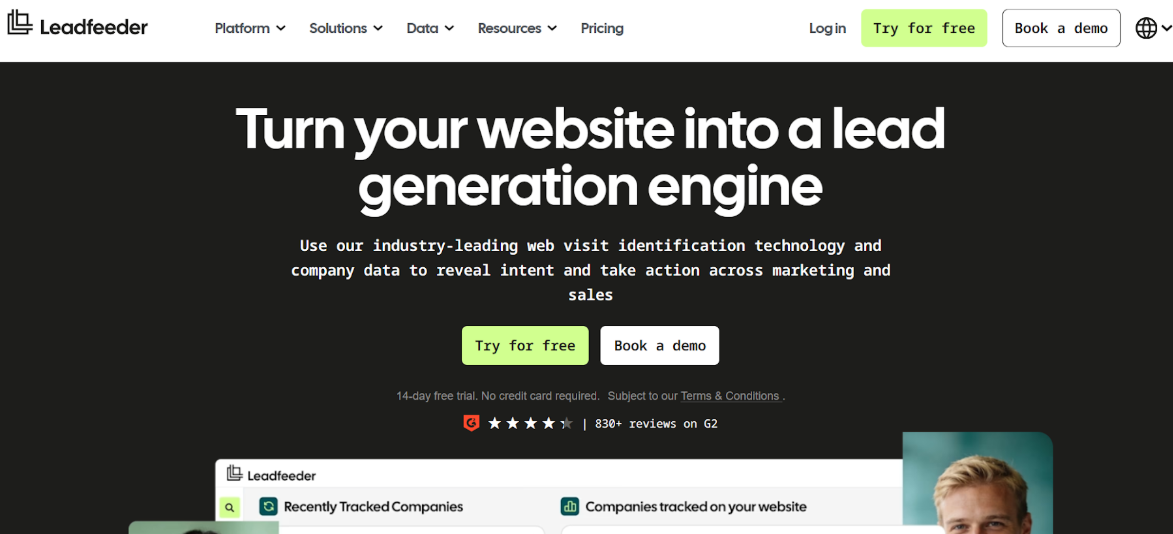
Leadfeeder, now part of Dealfront, is one of the easiest company-level tools to adopt. It connects to your analytics, resolves visits to companies, and filters out bots and ISP noise.
It stops at the company, so you still hunt for the buyer, and its real strength is Europe. Kwin adds person-level detail globally and acts on it, which our Kwin vs Leadfeeder page details.
Key features
- Reverse-IP company identification with bot filtering.
- 60M+ company and 400M+ contact database through Dealfront.
- Behavioural intent and lead scoring.
- Native CRM sync with strong EU and GDPR coverage.
Pros
- Free Lite tier to test before paying
- Transparent, published pricing
- Deep CRM integrations
Cons
- Company-level only, no person reveal
- Smaller US person-level reach
- Innovation slowed after the merger
Best for: SMB and mid-market teams that want affordable, GDPR-friendly company identification.
Pricing: Free Lite for 100 companies, Website Visitor Identification from EUR 99/month, and Platform from EUR 399/month.
7. Apollo.io
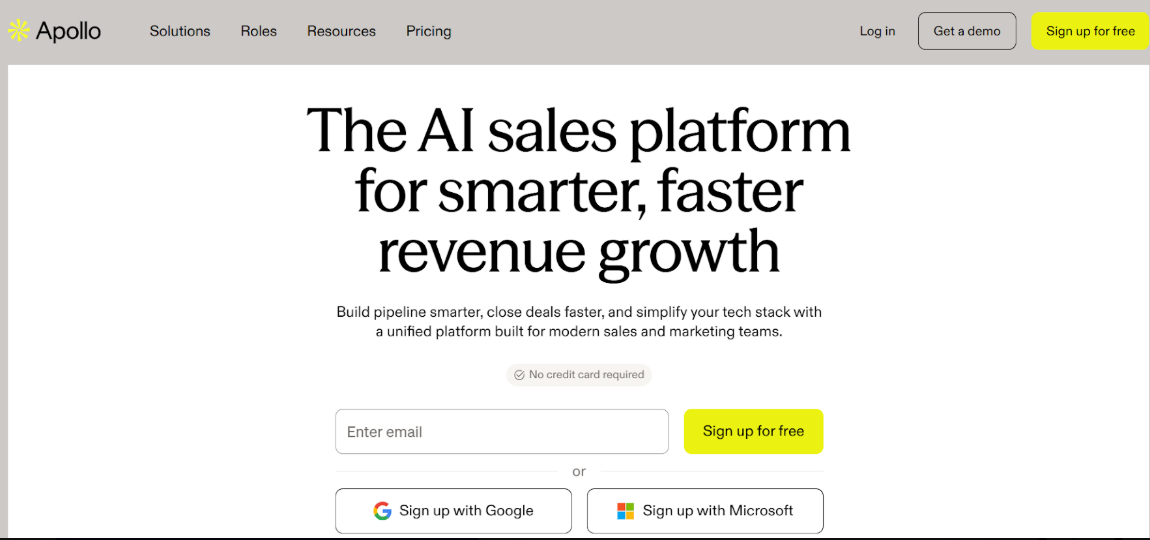
Apollo is a full sales platform with one of the largest contact databases around, and visitor identification is a newer layer on top. It tells you a company visited, then suggests decision-makers to target.
For visitor ID, Apollo tracks at the company level, so you still guess the contact. Kwin identifies the specific person and reaches out for you, as the Kwin vs Apollo comparison explains.
Key features
- Company-level visitor tracking with intent signals.
- 275M+ contact database for enrichment.
- Built-in email sequences.
- CRM sync with Salesforce and HubSpot.
Pros
- Generous free tier
- Huge contact database
- Sequencing built in
Cons
- Visitor ID is company-level only
- Data can be broad rather than deep
- Weaker outside North America
Best for: Outbound-heavy teams already using Apollo's contact database.
Pricing: Free, then Basic $49/user/month, Professional $79/user/month, and Organization $119/user/month, billed annually.
8. Factors AI
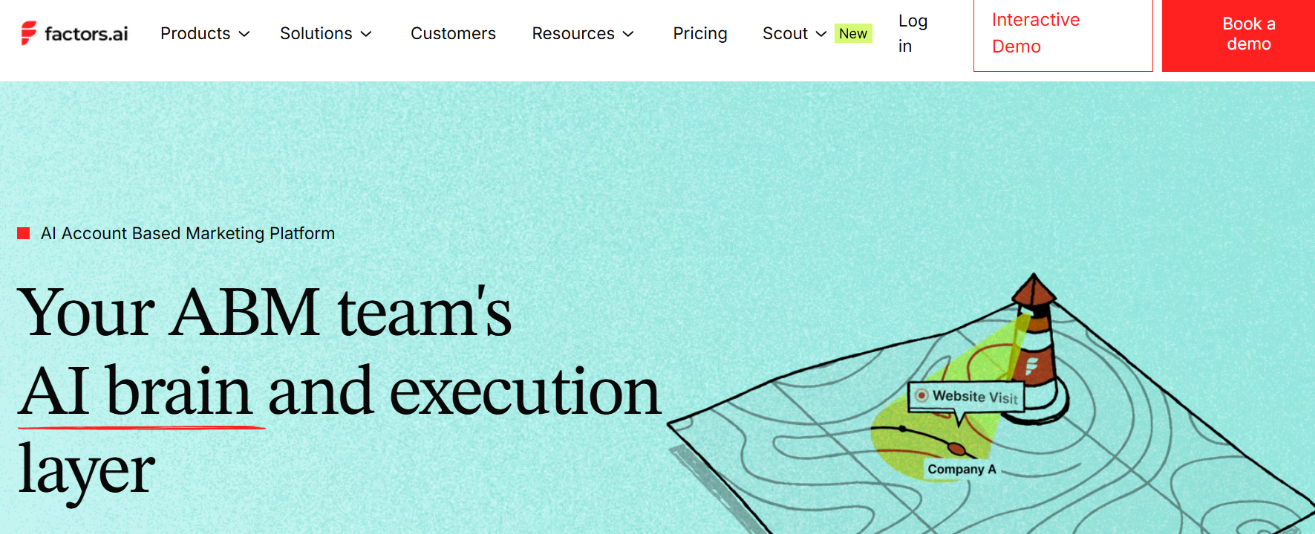
Factors AI comes at visitor identification from the marketing-attribution side. It unmasks the accounts visiting your site and ties them back to the campaigns and channels that drove them in.
It centres on account-level analytics rather than person-level outreach. Kwin closes that gap by identifying people and acting instantly, as the Kwin vs Factors AI comparison shows.
Key features
- Account identification with high company matches on upper tiers.
- Multi-touch attribution across campaigns.
- LinkedIn and Google AdPilot for ad audiences.
- Slack alerts and CRM updates on account engagement.
Pros
- Strong attribution and ad optimisation
- Solid integrations, including G2 and LinkedIn
- Free plan to test identification
Cons
- Account-level focus
- Limited person-level contact data
- Paid tiers are custom-quoted
Best for: Marketing teams focused on ABM, ad spend, and attribution.
Pricing: Free for up to 200 companies a month, with custom paid tiers above that.
9. Cognism
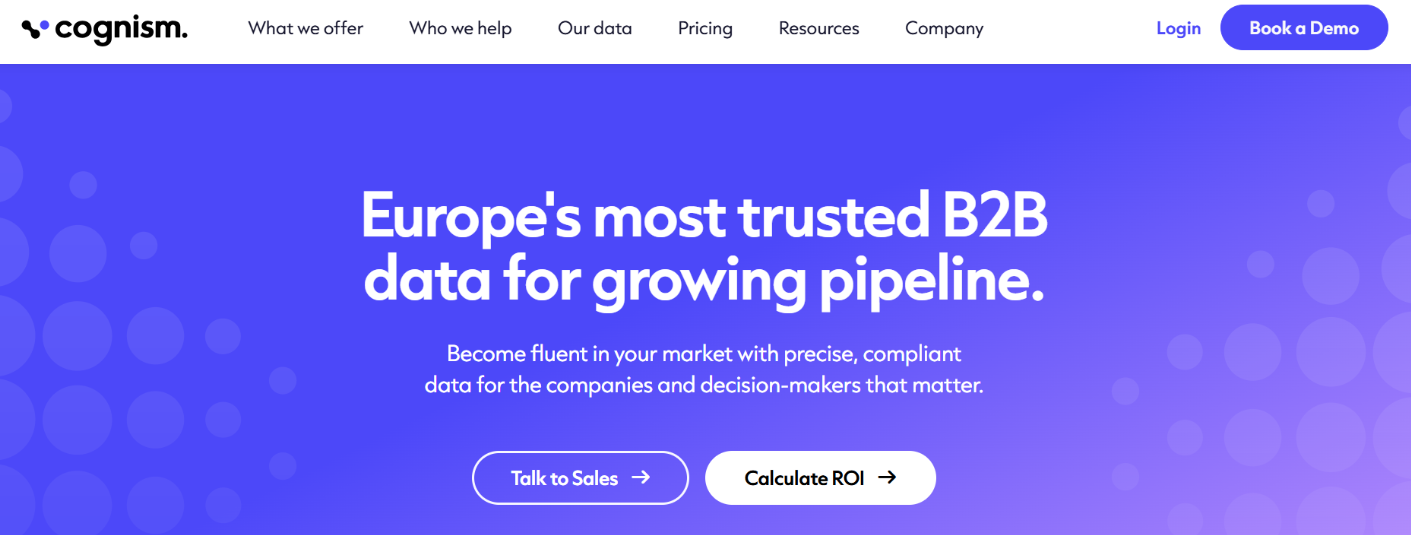
Cognism's edge is data quality, especially phone-verified mobile numbers and a compliance-first posture. It pairs visitor identification with a global database that is strong across EMEA.
It hands you the data, but you still do the outreach work, and pricing is custom and steep. Kwin turns identification into action on autopilot, as the Kwin vs Cognism page explains.
Key features
- Phone-verified mobile numbers through Diamond Data.
- Global database that is notably strong in EMEA.
- Bombora-powered third-party intent.
- GDPR and DNC compliance with CRM integrations.
Pros
- High-quality, phone-verified contacts
- Strong EMEA coverage
- Compliance-first data sourcing
Cons
- Custom, high pricing
- Separate workflow needed for outreach
- Weaker coverage in the US
Best for: Teams selling into Europe that need compliant, phone-verified contacts.
Pricing: Custom pricing (contact sales).
10. Albacross
Albacross is a European-built company identification tool with published pricing and light automation. It reveals visiting companies, segments them by intent, then triggers email and LinkedIn follow-up.
It stays at the company level and runs on annual contracts. Kwin unmasks the actual person and automates the whole follow-up, as our Kwin vs Albacross page shows. See more in our Albacross alternatives guide.
Key features
- Company identification with strong EU accuracy.
- Auto-segmentation filters on firmographic and behavioural data.
- Intent-based alerts when leads cross a threshold.
- Email and LinkedIn sequences built in.
Pros
- Transparent per-tier pricing
- GDPR-compliant by design
- Tracks unlimited visitors on every plan
Cons
- Company-level only
- Annual contracts required
- Data coverage varies by region
Best for: European teams that want company identification with built-in outreach.
Pricing: Starter EUR 59/month, Professional EUR 149/month, and Organization EUR 375/month.
11. Lusha
Lusha is best known for a fast browser extension that reveals verified emails and direct dials. Its visitor identification highlights the companies browsing your site so reps can move quickly.
Lusha leans on manual, credit-based reveals and does not act on visits for you. Kwin identifies visitors and runs the outreach automatically, as the Kwin vs Lusha page and our Lusha alternatives guide detail.
Key features
- Verified emails and direct dials.
- Browser extension for LinkedIn and company sites.
- Company visitor highlights and intent signals.
- API access for technical workflows.
Pros
- Fast, low-friction lookups
- Published, predictable pricing
- Strong EMEA data coverage
Cons
- Credit-based costs add up
- Visitor ID is shallow
- No autonomous outreach
Best for: Individual reps and small teams that want quick contact lookups.
Pricing: Free with 40 credits a month, Pro $49/user/month, Premium $79/user/month, and Scale on a custom quote.
12. Lead Forensics
Lead Forensics is one of the oldest names in the category, built around a large owned IP-to-company database and hands-on support. New users even get an account manager to help set up workflows.
It identifies companies only, with no person-level data or built-in outreach, and pricing sits behind a sales call. Kwin gives you the person and the follow-up in one flow, so nothing waits on a rep.
Key features
- Reliable company matching at scale.
- Large owned IP-to-company database.
- ICP alerts and intelligence reports.
- CRM routing into your sales stack.
Pros
- Dependable company matching
- Strong UK and EU coverage
- Hands-on onboarding support
Cons
- Company-level only
- Dated user interface
- Custom pricing with no free tier
Best for: Established teams that want reliable company ID with dedicated onboarding.
Pricing: Custom quote (contact sales).
13. Snitcher
Snitcher identifies the companies on your site in real time and enriches Google Analytics with that data through its Spotter API. It is a favourite for agencies and GA-first teams.
Its identification is scoped to site visitors at company level, with no autonomous outreach. Kwin adds person-level detail and acts on every high-intent visit rather than waiting for a rep to notice.
Key features
- IP-based company identification.
- Native GA4 enrichment through the Spotter API.
- Intent signals on pricing and comparison pages.
- Six native CRM syncs and a white-label option for agencies.
Pros
- Rare native GA4 enrichment
- Full features on every plan
- Transparent, no-contract pricing
Cons
- Site-visitor scope only
- Limited intent beyond on-site
- No conversation intelligence
Best for: Agencies and SMB teams already living in Google Analytics.
Pricing: From EUR 49/month, with a 14-day free trial.
14. Clearbit (Breeze Intelligence)
Clearbit, now Breeze Intelligence after its HubSpot acquisition, reveals visiting companies and enriches records natively inside HubSpot. Its identity graph is strong for US mid-market and enterprise traffic.
It only makes sense inside HubSpot, and it is a data layer rather than an action tool. Kwin identifies people and runs outreach without another workflow to build and maintain.
Key features
- Company-level revelation surfaced into HubSpot.
- Firmographic and technographic enrichment.
- Form shortening that lifts conversion.
- Buying-intent signals from HubSpot's data layer.
Pros
- Deepest HubSpot integration
- Strong US data quality
- Form shortening improves conversion
Cons
- HubSpot-only ecosystem
- Company-level, not person-level
- Credit-based costs climb with traffic
Best for: HubSpot-native teams that want native reveal and enrichment.
Pricing: HubSpot add-on from around $45/month, scaling with credits.
15. Leadinfo (Visitor Queue)
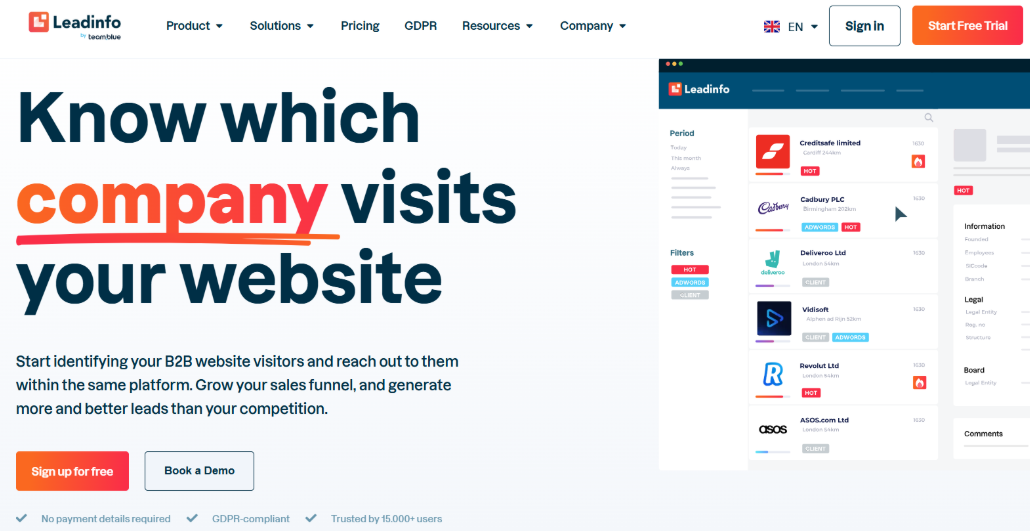
Leadinfo, which recently absorbed Visitor Queue, offers a clean inbox view of the companies visiting your site, with intuitive lead scoring. It is one of the friendlier tools to adopt.
It focuses on company-level reveals and is strongest in Europe. Kwin identifies the individual globally and turns that signal into booked meetings, rather than a scored list.
Key features
- The company operates across 195 countries and 220M+ companies.
- Intuitive lead scoring with visual flame ratings.
- Decision-maker contact details.
- Autopilot outreach add-on and 70+ integrations.
Pros
- Friendly inbox interface
- Transparent, published pricing
- Strong European coverage
Cons
- Mostly company-level
- US and Asia accuracy dips
- Deeper features sit on higher tiers
Best for: European SMB and mid-market teams that want simple company identification.
Pricing: Essential EUR 39/month for up to 50 leads, and Scale EUR 159/month.
Also Read: Global Visitor Identification Across 175+ Countries
Now that you have seen the best research tools for anonymous website visitor identification, let's look at how to match one of these research tools to your own team.
How to Choose the Right Research Tool for Anonymous Visitor Identification
The best anonymous website visitor identification tool is not the one with the longest feature list. It is the one that fits your motion, your traffic, and your stack. Here are five key factors to consider while choosing from the research tools for anonymous website visitor identification:
1. Match the identification level to your sales motion
If you run high-touch B2B sales, person-level identification changes what your reps can actually do. They reach a named buyer instead of a faceless company.
If you run broad account-based campaigns, company-level may be enough. Be honest about which motion you truly operate in, then buy for that, not for the demo.
2. Weigh your traffic geography
US-built and EU-built tools have very different strengths, and most person-level tools resolve nobody outside the States. If your buyers sit across ABM campaigns in several regions, prioritise a tool with genuine global coverage. This is where the 175+ countries reach stops being a slogan and starts saving the pipeline.
3. Decide between reveal-only and reveal-plus-action
Some tools are a clean reveal engine and nothing more, which is fine if you already own a sequencer and a chat tool. If you would rather not stitch four vendors together, choose a platform that folds scoring, outreach, and handoff into one place. That single decision often saves more than any pricing difference.
4. Check CRM and stack fit
A broken CRM sync quietly kills the whole workflow, so confirm native support for your system before you buy. Native HubSpot and Salesforce connectors are common, while Pipedrive or Zoho sometimes mean a workaround. Ask specifically whether the sync is bi-directional, because one-way data creates more cleanup than it saves.
5. Pressure-test pricing and match quality
Do not budget on the sticker price alone, because credit models and low match rates inflate the real cost fast. Run a trial against your own traffic and measure how many identified leads are genuinely usable. A free forever tier, like Kwin's, is the cleanest way to prove value before any money changes hands.
5 Common Mistakes to Avoid When Choosing a Visitor Identification Tool
Choosing the right visitor identification tool is not just about features. Avoiding these common mistakes will help you get accurate data, better leads, and a higher return on your investment.
Mistake 1. Choosing a Tool Based Only on Price
Buying the cheapest tool may save money upfront, but it often comes with outdated data, low match accuracy, and limited features.
Solution: Focus on data accuracy, freshness, and how well the tool fits your sales process instead of choosing the lowest price.
Mistake 2. Not Integrating the Tool with Your CRM
If visitor data stays inside a separate dashboard, your sales team may never act on it at the right time.
Solution: Choose a tool that automatically sends qualified leads to your CRM and alerts your sales team instantly.
Mistake 3. Prioritizing Quantity Over Quality
Some research tools for anonymous website visitor identification identify many visitors but provide low-quality matches that waste your team's time.
Solution: Look for verified visitor matches, reliable intent scores, and meaningful engagement data instead of focusing on the total number of identified visitors.
Mistake 4. Ignoring Data Privacy and Compliance
Not checking how a vendor collects and processes data can create legal and compliance risks.
Solution: Choose a provider that uses compliant data sources and can clearly explain where its data comes from and how it follows privacy regulations.
Mistake 5. Waiting Too Long to Contact Visitors
A visitor's interest fades quickly after leaving your website. Delayed follow-up often means missed opportunities.
Solution: Set up automated alerts and follow up with high-intent visitors as soon as they are identified to improve your chances of conversion.
Compliance, Privacy, and Data Sourcing for Visitor Identification
Anonymous website visitor identification lives or dies on trust, so how a tool sources and handles data matters as much as its match rate. The good news is that responsible identification is very achievable. Here is what separates a safe tool from a risky one.
1. Publicly available business data, not sensitive personal data
The best tools, Kwin included, work from publicly available business data rather than sensitive personal information. That distinction keeps identification useful for sales while staying on the right side of privacy expectations. When a vendor is vague about where data comes from, treat it as a warning, not a detail.
2. Company-level versus person-level obligations
Company-level identification generally carries lighter obligations, since a business IP is not personal data the way an individual's details are. Person-level reveal involves personal data, so it brings clearer duties around lawful basis and transparency. Match your approach to your region.
3. The certification stack to demand
Ask every shortlisted vendor for their certifications, and treat a full stack as the baseline, not a bonus. Kwin carries SOC 2 Type II, GDPR, CCPA, ISO 9001:2015, and ISO 27001:2022. CCPA is called out clearly for US readers.
Also Read: Who Is Visiting My Website? Turn Anonymous Traffic Into Leads
Why Kwin Ranks #1 for Anonymous Website Visitor Identification
Every tool above solves a slice of the problem. Vison AI built Kwin to solve the whole thing, which is why she tops the list.
The reason is simple: most tools stop at the reveal, and Kwin treats it as the starting line for real anonymous website visitor identification.
While other platforms populate a dashboard, Kwin populates your calendar. She identifies the specific person behind a visit and scores them against your ICP and intent thresholds.
Only then does she act, so your reps never sift through noise. That focus is why teams keep switching to her.
Here is what sets her apart from the field:
- Person-level, global reach: Kwin unmasks real decision-makers across 175+ countries, not just US companies.
- Autonomous action: She writes and sends personalised outreach from your domain the moment intent crosses your threshold.
- Built-in trust: Publicly available business data plus SOC 2 Type II, GDPR, CCPA, ISO 9001:2015, and ISO 27001:2022.
- Free forever entry: Prove the value with 100 leads a month, no credit card, before you ever pay.
Ready to see it on your own traffic? Hire Kwin For Free and watch her turn anonymous visitors into booked meetings, with no credit card required.
Conclusion
Anonymous traffic is not a mystery you have to accept; it is a pipeline waiting to be claimed. The right research tool reveals who is on your site, scores their intent, and helps you reach them before a competitor does.
We hope this guide helped you understand how research tools for anonymous website visitor identification work and which tool fits your team. The 15 best above each earn a place, yet only Kwin identifies people globally and acts on every high-intent visit for you.
Now it is your turn to stop letting warm buyers slip away. To map the right setup for your traffic and goals, connect with our experts to turn anonymous traffic into booked meetings.