
Someone interested in your business is on your website right now. They're checking your pricing, reading your services, or comparing you with competitors. A few minutes later, they leave, and you never know who they were.
That blind spot is exactly what website visitor identification software was built to close.
These tools help solve this problem by revealing the companies, and sometimes even the people, behind those visits. But there is one catch: not every tool is GDPR compliant. Choosing the wrong one can put your business at privacy and compliance risk.
That's why choosing the right GDPR compliant visitor identification tool matters. It helps you identify high-intent visitors, stay compliant with privacy laws, and turn anonymous traffic into qualified leads.
In this guide, you'll discover:
- What GDPR compliant website visitor identification tools really are
- How these tools work
- 12 best GDPR-compliant visitor identification tools
- How to compare them before you invest
- Which tool is the right fit for your business
By the end, you will know which GDPR compliant website visitor identification tools fit your market. You will also know how to vet them against EU privacy rules and turn silent browsers into sales-ready conversations.
What Is a GDPR-Compliant Website Visitor Identification Tool?
A GDPR compliant website visitor identification tool does more than say it's GDPR compliant. It follows privacy laws when collecting and processing visitor data.
That means using the right legal basis for different types of data, protecting user privacy, and keeping proper records to prove compliance if needed.
When done correctly, you can identify website visitors while staying compliant with GDPR. If not, your business could face privacy and legal risks.
How GDPR-Compliant Visitor Identification Actually Works
A GDPR compliant website visitor identification tool works in three simple steps. It first tracks anonymous activity, then identifies the visiting company, and only reveals a person's details when there is a valid legal basis.
Step 1. Track Anonymous Visits
A small tracking pixel is added to your website. It records anonymous information like pages viewed, time spent, referral source, and device. Even without a name attached, IP addresses and device identifiers can still count as personal data under GDPR.
Step 2. Identify the Company
The tool matches the visitor's IP address with a business database to identify the company behind the visit. Since it uses publicly available business information, this step usually relies on legitimate interest under GDPR.
Step 3. Reveal the Right Person (When Allowed)
Some tools can also identify the person behind the visit. They only do this when they have a valid legal basis and follow GDPR requirements. If not, they simply show the company information instead.
This approach helps businesses identify high-intent visitors while staying compliant with GDPR.
Is Anonymous Website Visitor Tracking GDPR Compliant?
Anonymous website visitor tracking can be GDPR compliant, but not by default. IP addresses can count as personal data. Company-level tracking usually rests on legitimate interest, with a documented assessment, a privacy notice, an opt-out, and cookie consent where needed.
The real issue in GDPR and anonymous website visitor tracking is the IP address. GDPR Recital 30 names IP addresses as online identifiers that can single out a person when combined with other data.
Company-level identification matches that IP to a business, not a named individual. Legitimate interest under Article 6(1)(f) can cover this, with three safeguards in place:
- Legitimate interest assessment: Document why you need the data, why identification is necessary, and why it does not override visitor rights.
- Privacy notice: State plainly what you collect, why you collect it, which vendors process it, and how long you keep it.
- Opt-out: Give visitors a simple way to object, and honour that choice across every tool in your stack.
Cookies bring a separate test under ePrivacy rules. Storing or reading information on a visitor's device needs consent unless it is strictly necessary.
For GDPR anonymous website visitor identification at the person level, you need a stronger basis and tighter controls. Kwin works from publicly available business data, not sensitive personal data.
Her trust stack covers SOC 2 Type II, GDPR, CCPA, ISO 9001:2015, and ISO 27001:2022. Country-level filters let you exclude markets where you have not confirmed a lawful basis.
Also Read: How To Identify Anonymous Website Visitors: Meet Kwin, Your AI Business Developer
Why GDPR Compliance Is Non-Negotiable for Visitor Identification
Here are five reasons why GDPR compliance is non-negotiable for visitor identification:
1. The Real Cost of Getting It Wrong
GDPR fines can hit €20 million or 4% of annual global turnover, whichever is higher (Article 83). A single careless tracker can expose every visitor record you hold, turning a lead source into a balance-sheet risk. That is a steep price for data you could have collected safely.
2. Buyer Trust Is the New Conversion Lever
Buyers are sharper about privacy than ever, and an honest data practice now reads as a signal of quality. When your privacy policy plainly states what you collect and why, prospects lean in instead of bouncing. In a crowded market, that quiet credibility often decides who gets the meeting.
3. You Cannot Afford to Ignore EU and UK Traffic
If any of your pipeline touches Europe or the UK, a US-only tracker leaves you both exposed and blind. Compliant, EU-aware tools let you act on that traffic instead of quietly dropping it.
For global teams, that coverage is the difference between a full funnel and a leaky one. Ignoring it does not reduce risk. It simply hands those buyers to a competitor.
4. Match-Rate Honesty: Why 60-70% Is the Real Ceiling
Your match rate, the share of visitors a tool can actually identify, has a hard ceiling. Any vendor promising 90% or more is selling a story, not a methodology. The honest ceiling for blended company and person-level identification sits around 60-70%, the rate Kwin reports and stands behind.
5. Compliance Unlocks Pipeline, It Does Not Block It
The myth is that privacy rules choke lead generation, when the opposite is true for teams that design it right. A compliant setup lets you work the vast majority of traffic that never fills a form, safely and at scale. Handled well, compliance is an accelerator for gdpr compliant lead generation, not a brake.
Visitor Identification Compliance Beyond GDPR: UK GDPR, CCPA and ePrivacy
Visitor identification compliance does not stop at the EU GDPR, because your traffic rarely comes from one jurisdiction. Three more rule sets matter when you choose GDPR compliant website visitor identification tools.
1. UK GDPR
The UK applies its own version of the regulation, the UK GDPR, enforced by the Information Commissioner's Office (ICO). Its lawful bases, transparency duties, and data subject rights closely mirror the EU text.
Check current ICO guidance before you launch, since UK data rules continue to evolve.
2. CCPA/CPRA for US Traffic
Data about California residents falls under the California Consumer Privacy Act (CCPA), as amended by the California Privacy Rights Act (CPRA). It applies to businesses that meet set thresholds.
Consumers can ask to know, delete, and correct their data, and opt out of its sale or sharing. Unlike GDPR, the CCPA is largely an opt-out model, so focus on clear notices at collection and honouring Global Privacy Control signals.
3. ePrivacy and Cookie Rules
The EU ePrivacy Directive covers storing or reading information on a visitor's device, including cookies and similar trackers. Consent is required unless that access is strictly necessary for a service the user asked for.
The UK applies the same principle through the Privacy and Electronic Communications Regulations (PECR). Cookieless methods reduce this burden but do not always remove it, since the rules also reach similar device-level techniques.
Treat this as a general overview, not legal advice, and confirm your obligations in each market with qualified counsel.
The 12 Best GDPR Compliant Website Visitor Identification Tools
Here is how the leading GDPR compliant visitor identification platforms compare at a glance, from company-only solutions to tools that name the buyer. Kwin ranks first for combining person-level coverage, a full compliance stack, and autonomous outreach in one platform.
Let's look at each tool in detail.
1. Kwin (Vison AI): Best Overall for Compliant, Autonomous Pipeline
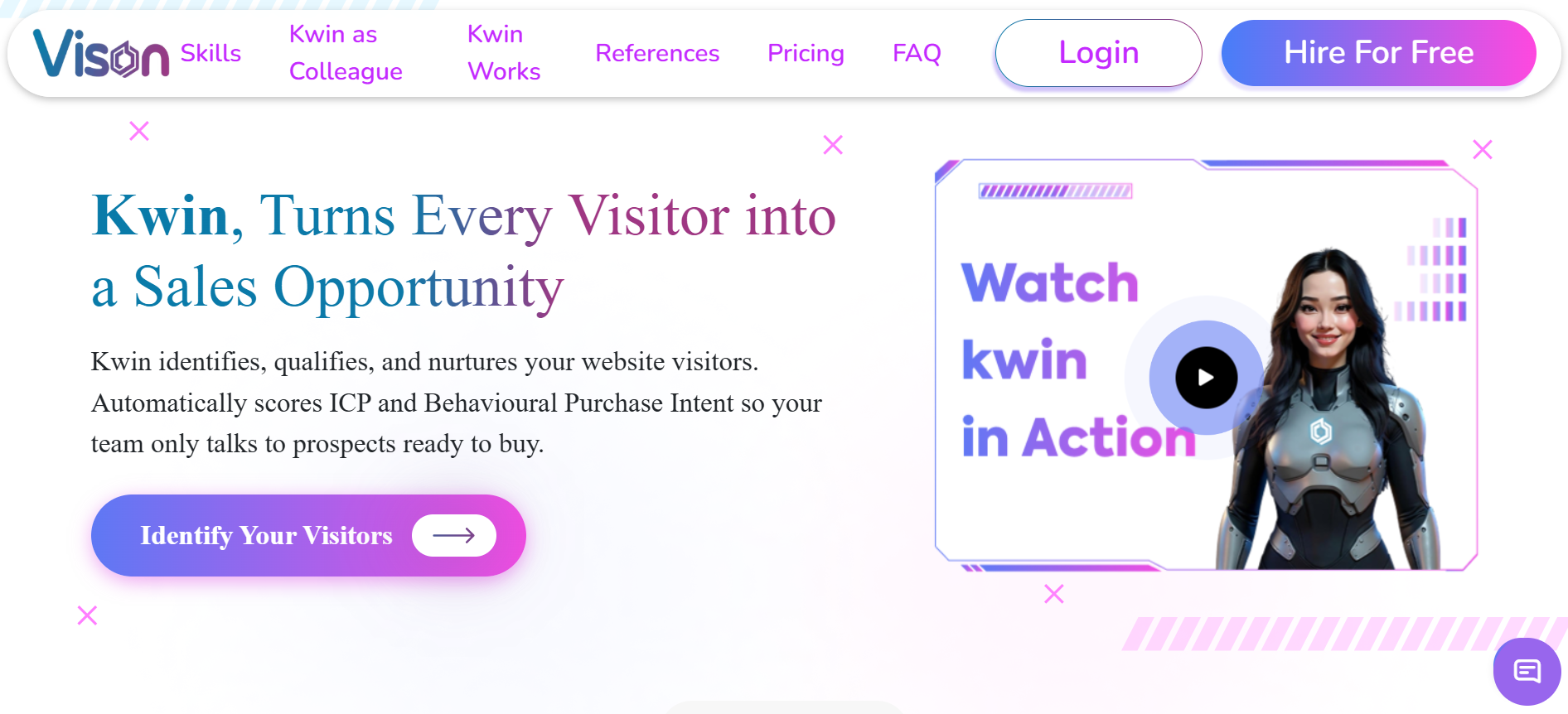
Kwin is more than a visitor identification tool. She works like an AI Business Developer, identifying high-intent website visitors, qualifying them, and helping turn them into sales opportunities automatically.
Unlike most tools that only reveal the visiting company, Kwin identifies both the company and the person behind the visit across 175+ countries. You get details like name, work email, phone number, LinkedIn profile, company, industry, and revenue.
Kwin also scores every visitor based on ICP Fit and Purchase Intent, so your team focuses only on qualified prospects. Once a visitor meets your criteria, Kwin can automatically send personalized emails, notify your team, and sync hot leads with your CRM or Slack.
From a compliance perspective, Kwin uses privacy-safe methods, avoids invasive third-party cookies, and holds certifications including SOC 2 Type II, GDPR, CCPA, ISO 27001:2022, and ISO 9001:2015. She also offers a free plan with 100 identified leads per month and no credit card required.
Key Features:
- Person and company identification: Kwin reveals the organisation and the individual behind a visit across 175+ countries. You get names, work emails, phone numbers, LinkedIn profiles, plus company, revenue, industry and location data.
- Dual AI scoring: Every visitor gets an ICP fit score (how closely they match your ideal customer profile). Kwin pairs it with a Purchase Intent score (how ready they are to buy).
- Threshold-based triggers: You set a minimum ICP fit and Purchase Intent score, and Kwin acts only once a visitor crosses it.
- Autonomous nurturing and replies: High-fit visitors receive a personalized email sequence from your own domain. When someone replies, Kwin forwards the full thread plus a short summary to your inbox.
- Instant handoff: Hot, sales-ready leads route to Slack, your CRM, and the tools your team already uses.
- Four independent filters: Country-level excludes traffic from countries you choose, and page-level tracks only your key pages. Data-level filters by industry, sector, company size, and company type, and exclusion filters drop unwanted leads to cut noise.
- Five-minute, no-code setup: Install the pixel through your site header or Google Tag Manager, and Kwin builds her knowledge base from your website automatically.
GDPR & Compliance: Kwin works from publicly available business data, not sensitive personal data, with privacy-safe methods and no invasive third-party cookies. In strict-privacy regions, she leans on company-level intelligence over individual tracking. The trust stack covers SOC 2 Type II, GDPR, CCPA (called out for US readers), ISO 9001:2015 and ISO 27001:2022.
Best For: Global B2B revenue teams that want compliant, person-level identification plus automated outreach in one place.
Hire Kwin For Free and start turning anonymous traffic into booked meetings, no credit card required.
2. Leadfeeder: Best for EU-Native Company-Level Identification
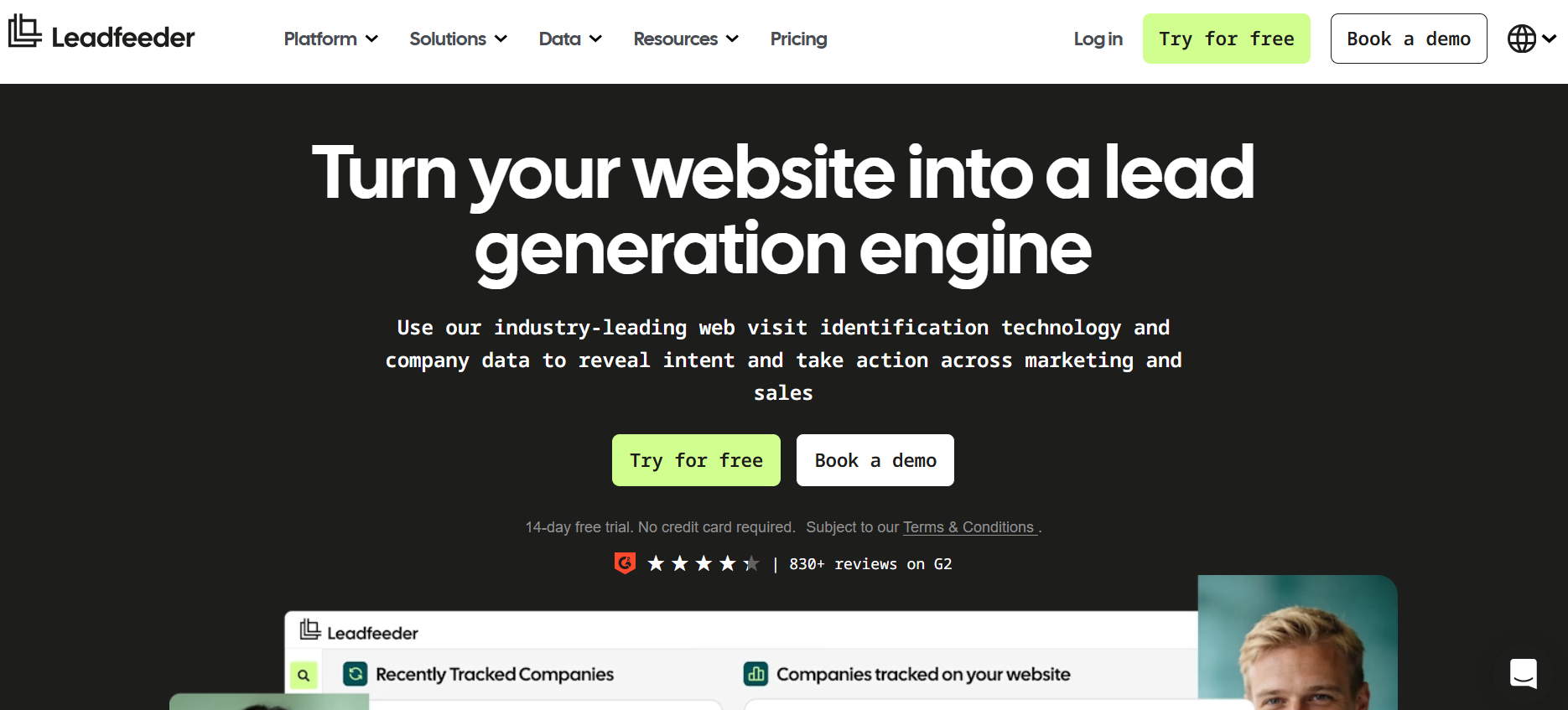
Leadfeeder, the platform formerly branded as Dealfront, is one of the longest-standing names in company-level identification. It matches IP data to a large business database and shows which companies viewed which pages, with the clean reporting that marketing teams rely on.
Key Features:
- Company-level identification: Reveals the organisation behind each visit with firmographics and page-level behaviour.
- Cookieless, GDPR-first design: Built around EU privacy rules and ready for a cookieless web.
- Deep CRM integrations: Syncs with Salesforce, HubSpot, Pipedrive and most major CRMs.
- Behaviour filters: Segment visiting companies by industry, size, location or pages viewed.
GDPR & Compliance: Leadfeeder is EU-built with European data hosting and a GDPR-first approach, which makes it a safe default for European traffic.
Best For: Marketing and demand-gen teams that want reliable company-level identification with strong reporting.
See how Kwin compares in our Kwin vs Leadfeeder breakdown.
3. Leadinfo: Best for Real-Time Company Identification in Europe
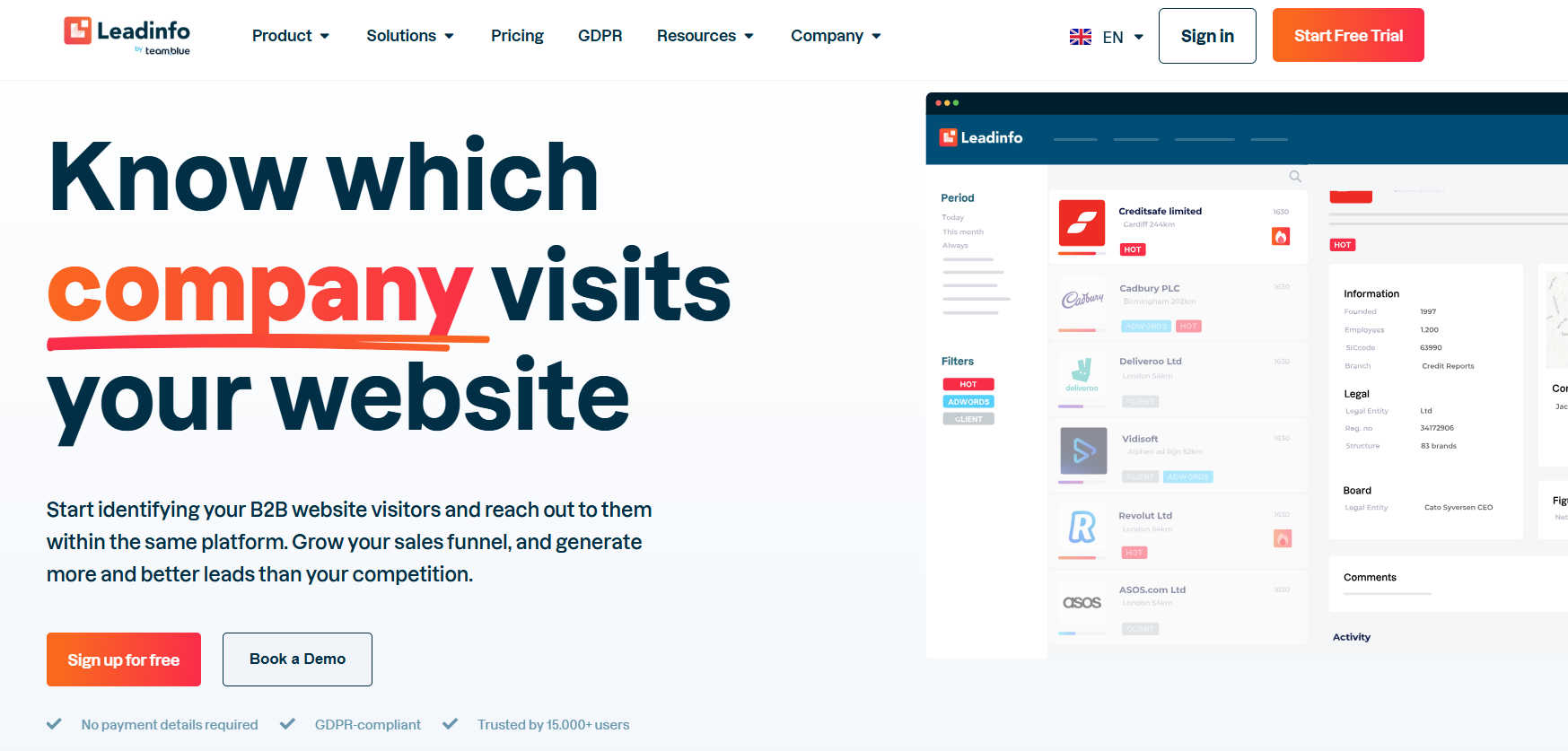
Leadinfo is a Dutch platform built for real-time company identification on European websites. It matches corporate IPs to a company database and surfaces visiting organisations the moment they land, using a privacy-first, cookieless model.
Key Features:
- Real-time company reveals: See visiting companies and the pages they view as it happens.
- Cookieless identification: Uses network metadata rather than tracking cookies.
- 70+ integrations: Connects to Salesforce, HubSpot, Pipedrive and marketing automation tools.
- Autopilot add-on: Adds multichannel follow-up on top of identification.
GDPR & Compliance: Leadinfo hosts data in EU centres, aligns with Schrems II, holds ISO 27001 and processes company data only, which keeps it firmly inside GDPR.
Best For: European teams that want fast, compliant company-level identification with a simple setup.
4. Cognism: Best for Compliance-First Prospecting Data
Cognism pairs website visitor data with a compliance-first B2B database known for phone-verified mobile numbers. It is widely regarded as the strongest option for European and UK contact data.
Key Features:
- Verified contact data: Phone-verified mobile numbers and compliance-checked emails.
- Company and contact identification: Connects a visiting account to the right decision-makers.
- Intent signals: Layered third-party intent data to prioritise in-market accounts.
- CRM and sales-tool integrations: Works across Salesforce, HubSpot and outreach platforms.
GDPR & Compliance: Cognism is built with a privacy-first architecture and a strict approach to GDPR and CCPA. That makes it one of the safest databases for EU and UK targeting.
Best For: Sales teams that need verified, compliant contact data alongside visitor identification, especially in Europe.
For a deeper look, read our Cognism alternatives breakdown or the Kwin vs Cognism comparison.
5. Albacross: Best for GDPR-Safe Account-Based Marketing
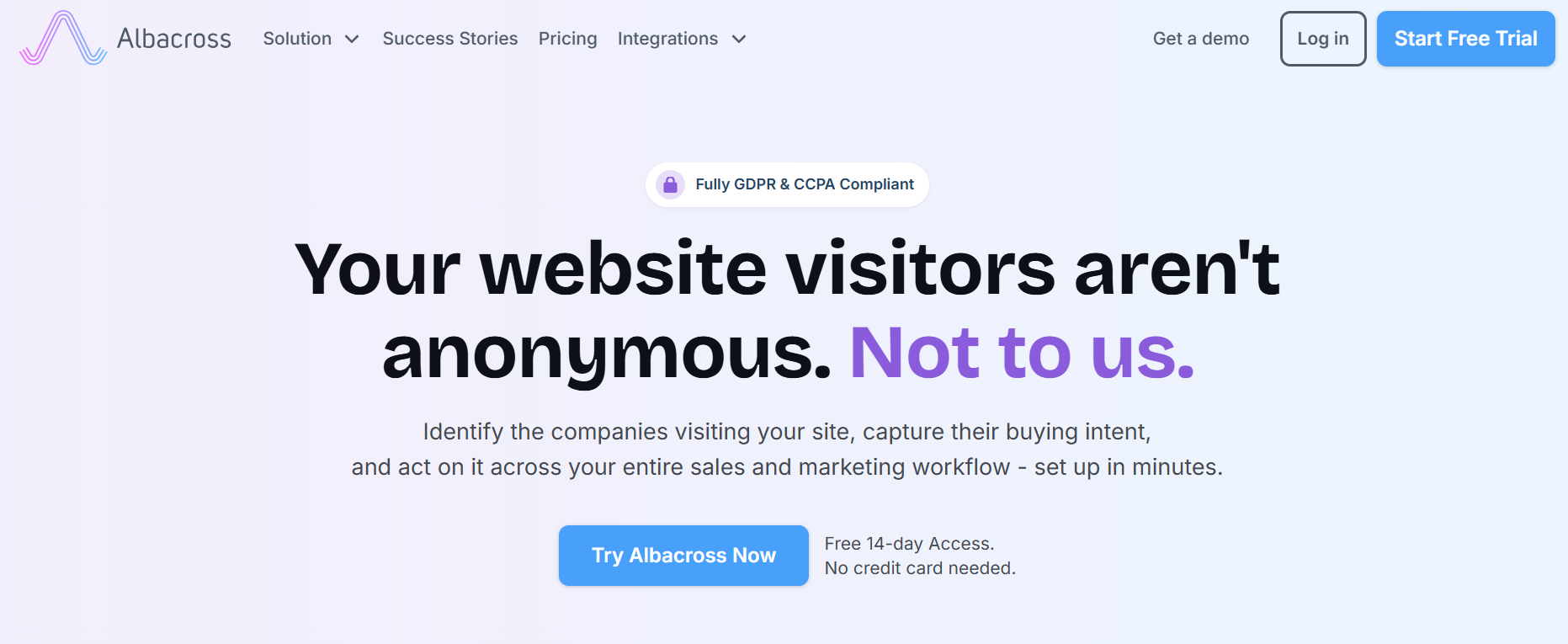
Albacross is a Swedish platform built from the ground up for GDPR, with a strong focus on European company-level identification and account-based marketing.
Key Features:
- European company identification: Accurate firmographics for EU accounts.
- ABM and retargeting: Push identified audiences into LinkedIn and display ads.
- Intent and engagement scoring: Prioritise accounts by behaviour.
- Light outreach sequences: Built-in email and LinkedIn follow-up.
GDPR & Compliance: Albacross is EU-based and engineered for GDPR, making it a safe choice for teams whose priority is European compliance.
Best For: European companies, or global teams running EU-focused ABM campaigns.
See more options in our Albacross alternatives guide.
6. Lead Forensics: Best for Established Company-Level Tracking
Lead Forensics is a long-established, dedicated company-level platform with one of the largest private IP-to-company databases and hands-on customer support.
Key Features:
- Large IP database: Strong company matching at scale.
- Journey tracking: See which pages accounts viewed and in what order.
- Real-time alerts: Notify reps when target accounts visit.
- Dedicated support: Account managers help set up scoring and workflows.
GDPR & Compliance: Lead Forensics provides GDPR and CCPA-compliant data handling, suited to UK and EU company-level use.
Best For: Teams that want a focused, well-supported company-level tool for higher traffic volumes.
7. ZoomInfo WebSights: Best for Enterprise Data Depth
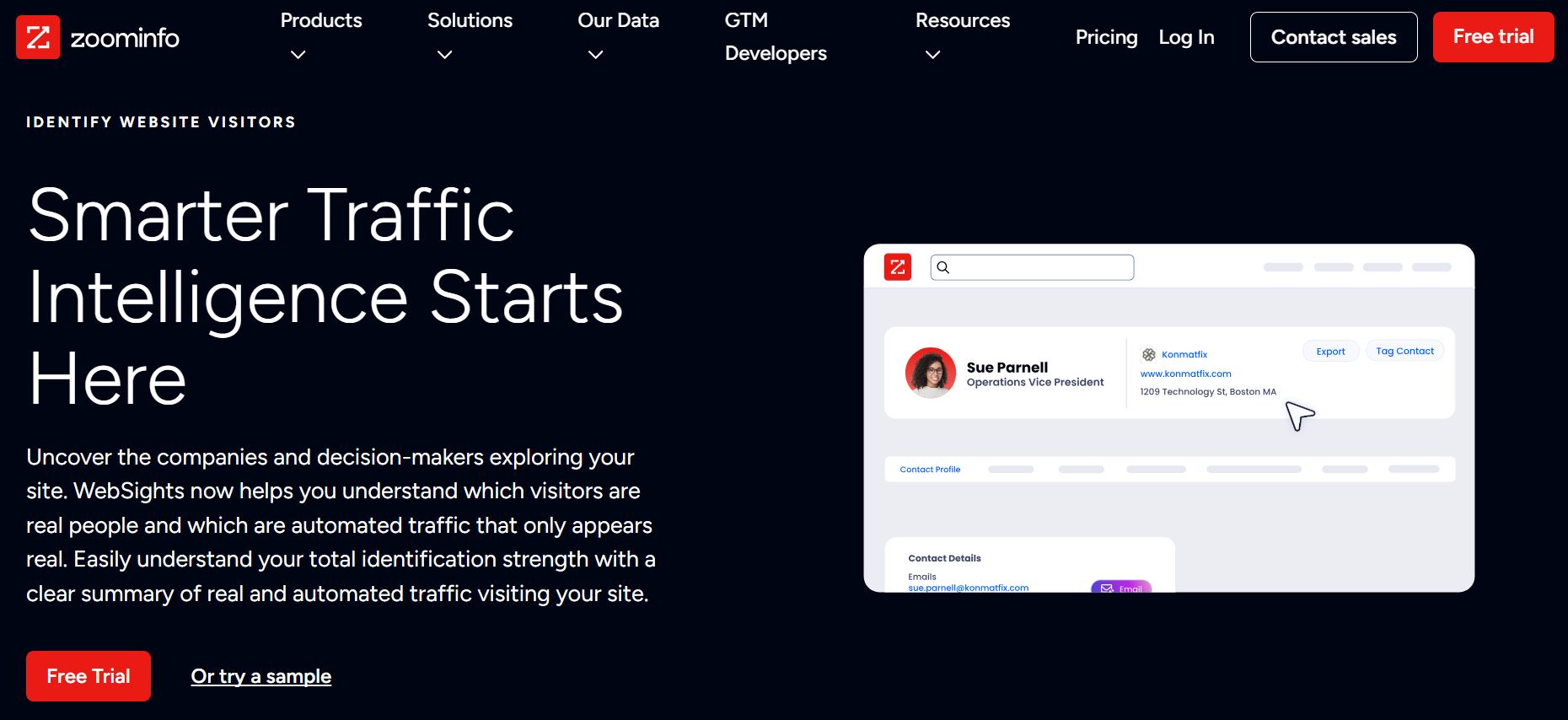
ZoomInfo is an enterprise sales-intelligence platform where WebSights adds visitor identification on top of a vast B2B database. It connects visits to enriched company and contact records.
Key Features:
- Company and contact reveal: Matches visits to ZoomInfo's large database.
- Intent data: Signals that go beyond on-site behaviour.
- Workflow automation: Built-in lead routing and orchestration.
- Deep integrations: Native sync with major CRMs and marketing platforms.
GDPR & Compliance: ZoomInfo holds SOC 2 Type II, ISO 27001 and ISO 27701, plus a TRUSTe GDPR programme, though its data is US-centric by origin.
Best For: Enterprise teams that need broad sales intelligence with visitor identification as one piece.
8. 6sense: Best for Enterprise Intent and ABM
6sense is an enterprise revenue platform that feeds visitor identification into AI-driven intent predictions and account-based orchestration across channels.
Key Features:
- Predictive intent: AI scores where accounts sit in their buying journey.
- Account identification: Enterprise-scale company matching.
- Buying-stage detection: Surfaces accounts moving toward a decision.
- ABM orchestration: Coordinates campaigns across channels.
GDPR & Compliance: 6sense runs an enterprise compliance program, though, like other US-built platforms, EU teams should confirm data handling for their region.
Best For: Large ABM teams that want predictive intelligence on top of identification.
9. Warmly: Best for Signal-Based Person-Level Identification
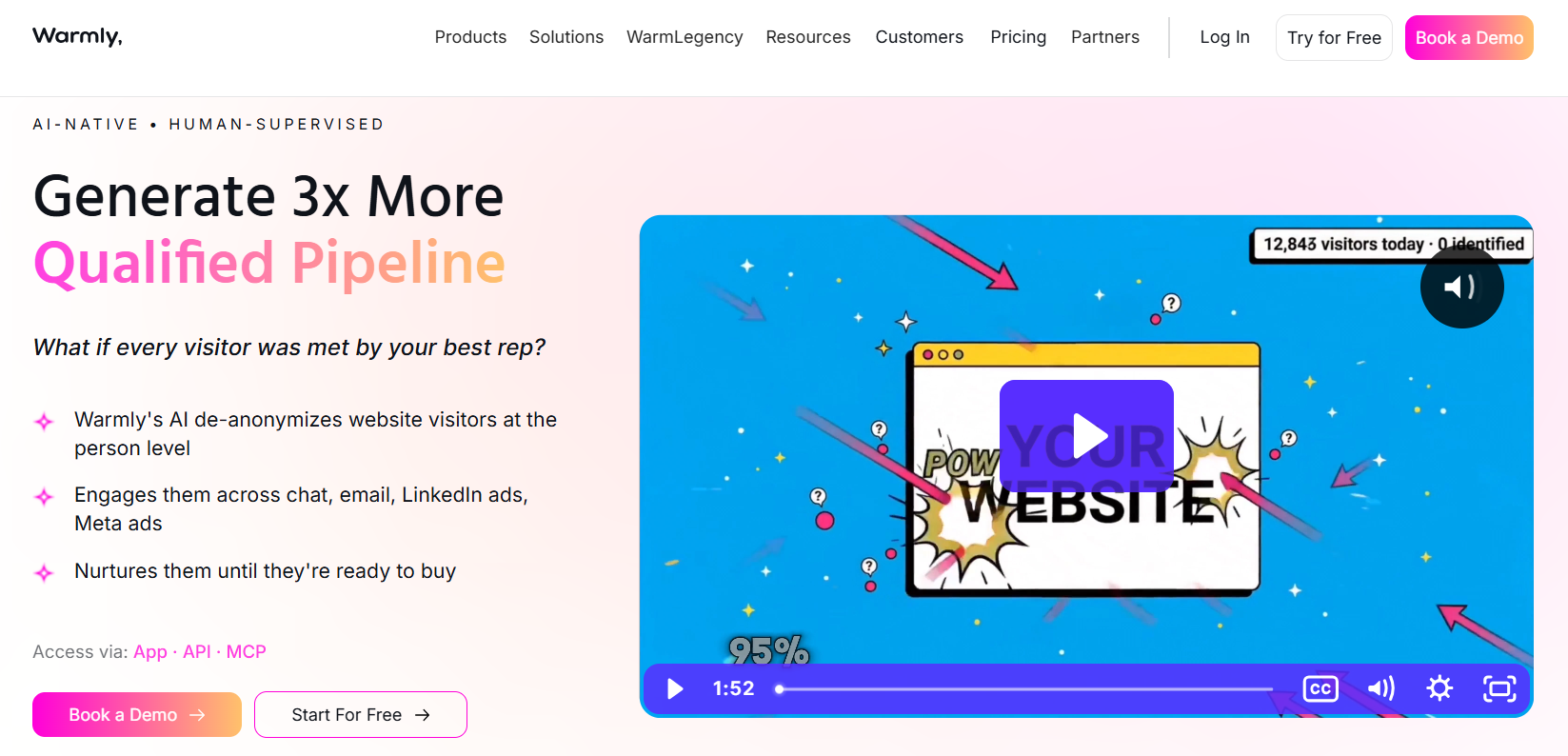
Warmly combines person and company identification with on-site engagement, using a signal-based model to spot in-market visitors and engage them in real time.
HubSpot has agreed to acquire Warmly, according to Warmly's official announcement, so check how the deal may change its data handling over time.
Key Features:
- Person and company reveal: Identifies both, using a multi-provider data waterfall.
- Intent signals: First, second and third-party signals to find hot leads.
- On-site engagement: AI chat and personalized pop-ups while visitors are live.
- Outbound orchestration: Routes high-intent visitors to reps or sequences.
GDPR & Compliance: Warmly carries SOC 2, but its GDPR posture varies by feature tier, so EU teams should confirm coverage before relying on person-level data.
Best For: Mid-market teams that want to identify and engage visitors on-site in real time.
10. RB2B: Best for US Person-Level Identification
RB2B built its reputation on free, person-level identification for US website traffic, pushing named visitors straight to Slack in real time.
Key Features:
- US person-level reveal: Names, LinkedIn profiles, and emails for US visitors.
- Real-time Slack alerts: Buyer signals reach reps in seconds.
- Hot-lead tagging: Flags high-fit visitors with ICP filters.
- Company-level via partner: Adds global company resolution through an integration.
GDPR & Compliance: RB2B stays aligned by design, since its person-level identification is US-only and it does not collect EU person-level data. Global company data is left to a partner.
Best For: US-focused teams that want free, person-level identification with minimal setup.
11. Factors AI: Best for Visitor Analytics and Attribution
Factors AI blends company-level identification with marketing attribution, mapping how accounts move from ad click to conversion across touchpoints.
Key Features:
- Account identification: Company-level visitor tracking.
- Multi-touch attribution: Connects visits to campaign performance.
- LinkedIn ad insights: See ad engagement alongside site visits.
- Journey mapping: Follow accounts across the funnel.
GDPR & Compliance: Factors AI is GDPR-compliant and commonly used by European teams that need attribution without personal tracking.
Best For: Marketing teams that want identification tied directly to attribution.
12. Clearbit (Breeze Intelligence): Best for HubSpot-Native Enrichment
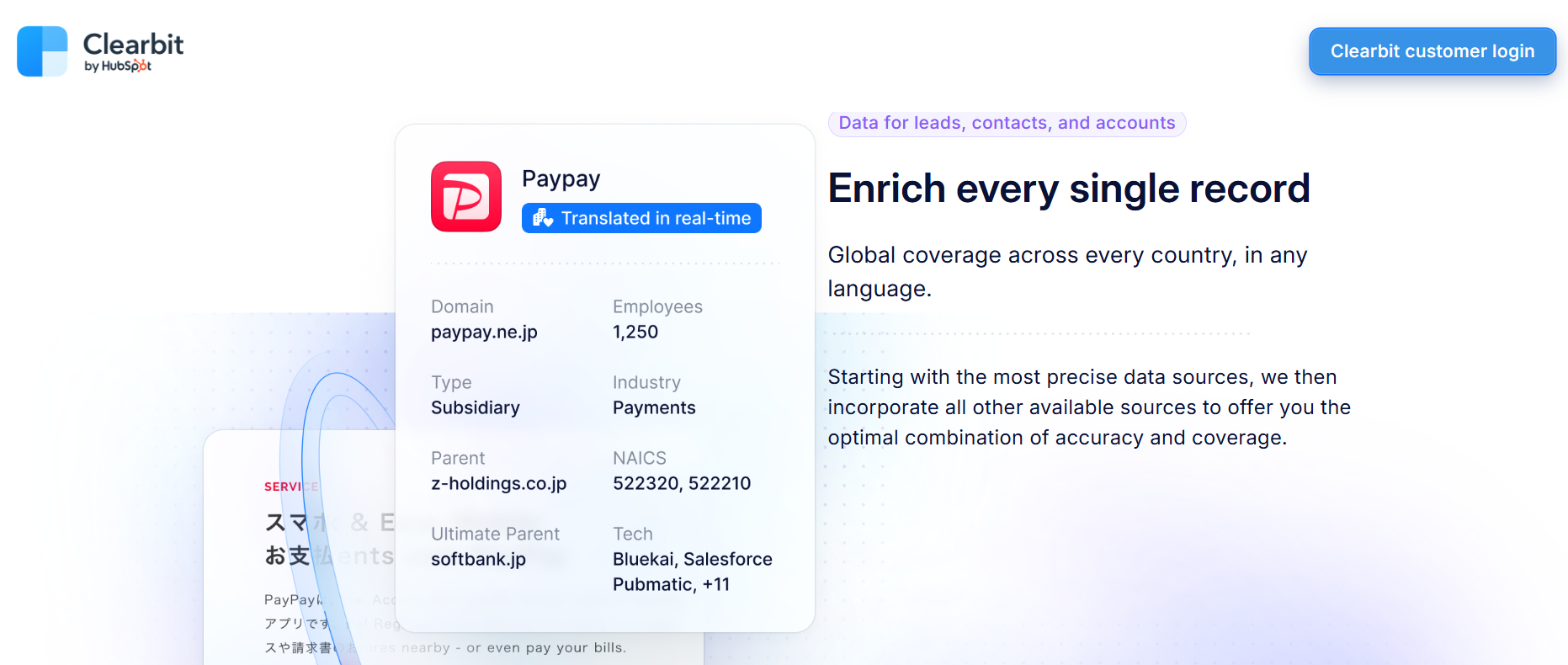
Clearbit, now part of HubSpot as Breeze Intelligence, focuses on real-time enrichment and company-level identification inside the HubSpot ecosystem.
Key Features:
- Company reveal: Identifies anonymous traffic by organisation.
- Real-time form enrichment: Shortens forms while capturing more data.
- Native HubSpot integration: Lives inside the HubSpot dashboard.
- Firmographic data: Enriches records with company detail.
GDPR & Compliance: Clearbit inherits HubSpot's compliance posture and is used widely by EU teams, though it primarily handles company-level data since the acquisition.
Best For: HubSpot users who want native enrichment and identification without adding a separate vendor.
Also Read: Who Is Visiting My Website? How To Turn Anonymous Traffic Into Leads
How We Evaluated These GDPR-Compliant Tools
We didn't rank these tools based on marketing promises. Instead, we compared them using the factors that matter most for privacy, accuracy, features, and overall value. Here's what we looked at:
- GDPR compliance: Does the tool handle company and personal data in a GDPR-compliant way?
- Security and certifications: Does it have trusted certifications like SOC 2 and ISO 27001, along with a Data Processing Agreement (DPA)?
- Data storage: Where is the data stored, and does it follow EU privacy requirements?
- Identification capabilities: Can it identify companies, people, or both? How accurate are its match rates?
- Automation: Does it only identify visitors, or can it also qualify leads and automate follow-ups?
- Integrations and pricing: Does it integrate with popular CRMs and business tools, and is its pricing clear and transparent?
These criteria helped us identify the tools that deliver the best balance of compliance, performance, and value for B2B businesses.
Now that you have seen how the leading tools compare, the next step is choosing the right tool for your market and your risk appetite. Let's break that decision down.
How to Choose the Right GDPR-Compliant Visitor Identification Tool
Choosing the right tool is about more than identifying website visitors. It should also protect user privacy, meet GDPR requirements, and help your sales team convert more visitors into customers. Here are five things to check before you decide.
1. Check GDPR Compliance
Make sure the tool clearly explains how it collects, stores, and processes visitor data. It should follow GDPR rules and use the correct legal basis for handling both company and personal information.
2. Verify Security Standards
Choose a provider with trusted security certifications like SOC 2 and ISO 27001. Also, check whether they offer a Data Processing Agreement (DPA), which explains how your data is protected and managed.
3. Review Data Storage and Privacy
Ask where your visitor data is stored and who has access to it. If your business serves customers in Europe, look for providers with EU-friendly data hosting and transparent privacy practices.
4. Choose the Right Identification Level
Some tools only identify the company visiting your website, while others can also identify the individual visitor. Company-level identification is suitable for many businesses, while person-level identification gives your sales team more detailed information for outreach.
5. Choose a Tool That Helps You Take Action
Identifying visitors is only the first step. The best tools also qualify leads, score buying intent, send real-time alerts, automate follow-ups, and integrate with your CRM. This helps your team reach interested prospects faster and improves your chances of converting them into customers.
How to Test a Tool's Match Rate and Compliance Before You Buy
A product demo only shows the best-case scenario. The best way to evaluate a visitor identification tool is to test it on your own website. Here's how.
1. Understand Your Website Traffic
Review your website traffic from the last 90 days. Look at where your visitors come from, the devices they use, and their locations. This helps you set realistic expectations because match rates vary by region and traffic source.
2. Test It on a High-Intent Page
Install the tracking pixel on a page like your pricing, demo, or contact page. These pages usually attract visitors who are more likely to become customers, giving you a better idea of the tool's performance.
3. Compare Two Tools Side by Side
If possible, test two visitor identification tools on the same page for about two weeks. Compare how many visitors each tool identifies and which one delivers more useful results.
4. Focus on Quality, Not Just Match Rate
A higher match rate doesn't always mean better results. Check whether the identified visitors match your ideal customer profile (ICP). Accurate, high-quality leads are far more valuable than a long list of irrelevant companies.
5. Verify GDPR Compliance
Before choosing a tool, confirm that it provides a Data Processing Agreement (DPA), explains where your data is stored, and clearly follows GDPR requirements. A tool isn't worth using if it identifies more visitors but puts your business at compliance risk.
Also Read: Apollo.io Alternatives: Top 10 Visitor Identification Tools
Why Kwin Is the Most Complete GDPR-Compliant Choice
Most GDPR compliant website visitor identification tools hand you data and leave the hard part to you.
Kwin does the opposite. She identifies the visitor, scores their fit and intent, nurtures them, and hands the hot ones to your team. All of it runs on a foundation built for compliance from day one.
Here is why compliance-conscious revenue teams rank Kwin first among GDPR compliant website visitor identification tools:
- Identification and action in one: Every other tool hands you data and stops. Kwin identifies, qualifies, nurtures, and hands off, so you never bolt on a separate outreach stack.
- Person-level, everywhere: Most person-level rivals only work on US traffic. Kwin names the buyer across 175+ countries.
- An agent, not a dashboard: She acts on every visit on autopilot, instead of leaving the follow-up to your team.
- Compliant by design: She works from publicly available business data, not sensitive personal data, on a fully certified stack.
- Proof, not promises: infiniticube saw 2.5x more qualified leads in 45 days, with over 35% of meetings coming from non-form visitors.
If your pipeline depends on trust as much as traffic, that combination is hard to beat.
Hire Kwin For Free and let an AI Business Developer turn your anonymous visitors into booked meetings, with no credit card required.
Conclusion
Identifying your website visitors is no longer optional, but doing it without the right lawful basis is a risk you cannot afford. The strongest GDPR compliant website visitor identification tools keep company data and personal data in separate lanes.
They prove their compliance with real certifications, and act on every visit instead of leaving you a spreadsheet. Across all twelve, Kwin stands out for pairing person-level coverage and a full compliance stack with genuine automation.
We hope this guide helped you understand how these tools work, what makes them compliant, and how to test one before you buy. Now it is your turn to put it into practice and stop letting high-intent visitors slip away unseen.
Ready to turn anonymous traffic into a compliant, sales-ready pipeline? Book a free demo today and start booking meetings from the visitors you already have.