
TL;DR
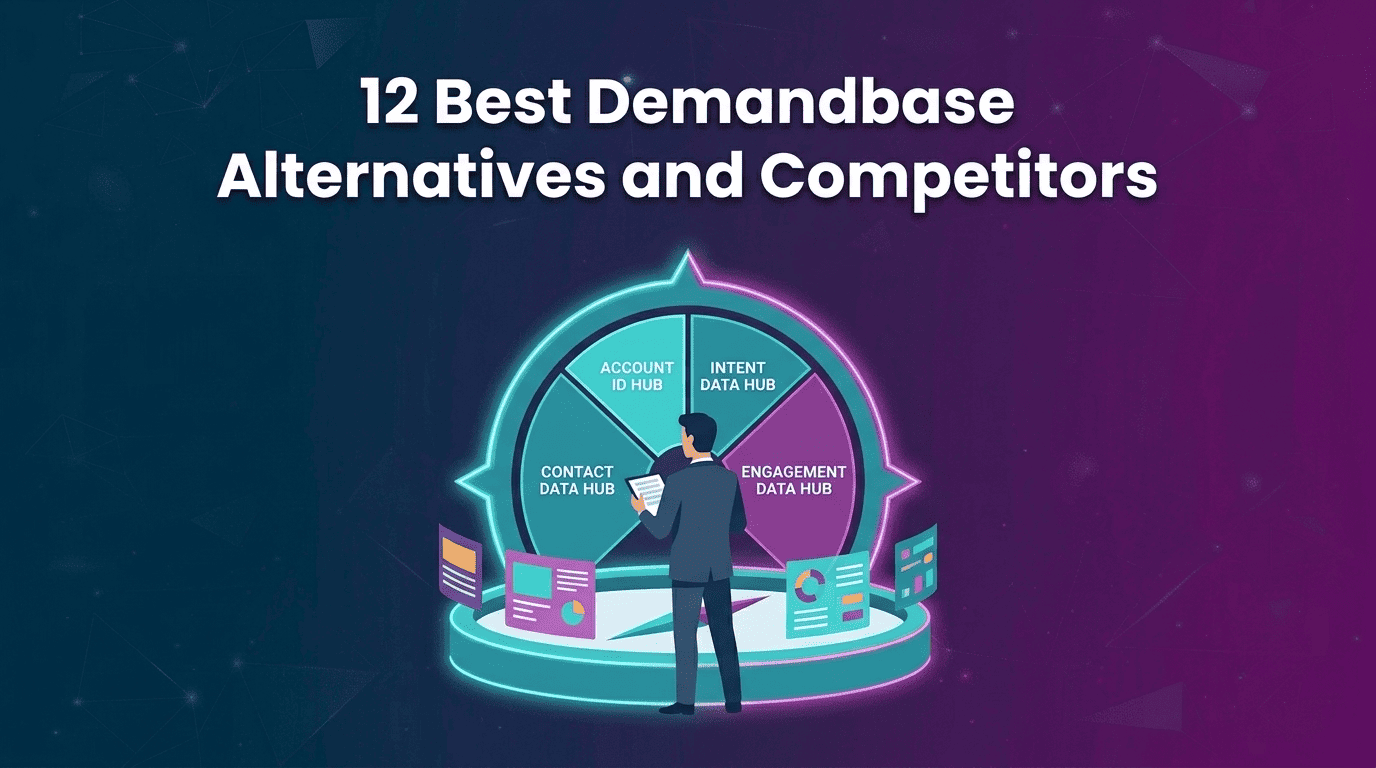
Demandbase is a strong enterprise ABM platform, but it may be too expensive or complex for teams that mainly need to identify website visitors and turn them into sales conversations. This guide compares 12 Demandbase competitors, including Kwin for person-level identification and automated outreach, 6sense for predictive intent, ZoomInfo for contact data, and RollWorks and Terminus for ABM advertising, helping you choose the right tool based on your goals, budget, and sales workflow.
Someone from your ideal company just visited your pricing page. They looked at your services. Read a case study. Maybe even came back the next day.
Then they left. No form fill. No demo request. No email.
Demandbase can tell you that the company was there. But for many revenue teams, that is only half the answer. The real question is: Who was the person behind the visit, and what should you do next?
That is why revenue teams start shortlisting Demandbase competitors.
Some want person-level visitor identification. Others need better contact data, stronger intent signals, simpler ABM, or outreach that happens automatically instead of handing another lead list to sales.
The good news is that you no longer have to choose between knowing who visited and knowing what to do about it.
In this guide, we compare the 12 best Demandbase competitors. You will see what each platform does, how much it costs, who it suits, and where it falls short.
By the end, you'll know which of these Demandbase competitors can turn more website visitors into real sales opportunities.
7 Signs You Have Outgrown Demandbase
Here are seven signs you may have outgrown Demandbase and should start comparing Demandbase competitors:
1. The Cost Is Higher Than The Results
Demandbase pricing is quote-based, with plans commonly starting around $25,000 per year and going higher. If the meetings and opportunities you get do not justify the cost, a simpler alternative may make more sense.
2. Setup Takes Too Long
Demandbase can require a lot of setup before your team starts getting useful insights. CRM integration, data mapping, audience setup, and reporting can all take time. If you need results within weeks, a simpler tool may be a better fit.
3. You Pay For Features You Don't Use
Demandbase includes features for advertising, account intelligence, data, and sales intelligence. If you only need visitor identification or intent data, you may end up paying for features your team rarely uses.
4. You Know The Company, But Not The Person
This is one of the biggest gaps for sales teams. Knowing that a company visited your website is useful, but knowing who visited can be much more valuable. Without person-level data, your sales team still has to research the account and find the right contact.
5. You Want More First-Party Intent Data
Demandbase uses different intent signals, including bidstream data. However, many teams now want to focus more on what prospects actually do on their own website. Pages viewed, time spent, repeat visits, and pricing-page activity can provide more direct buying signals.
6. Your Team Still Has To Write Every Email
Finding and scoring a potential buyer is only the first step. Someone still needs to research the prospect, write an email, and follow up. If your team spends too much time on these manual tasks, an alternative with built-in outreach automation could be a better option.
7. You Need Better Global Coverage
If you sell across North America, Europe, and Asia-Pacific, visitor identification needs to work well across all these regions. Data quality can vary by country and company size, so it is worth checking whether Demandbase gives you the coverage you need.
Also Read: How To Identify Who Visits Your Website: Complete Guide
12 Demandbase Competitors Compared At A Glance
Here is how the 12 Demandbase competitors stack up before we open each one properly:
Now that you have seen how they compare, let's explore each of these Demandbase competitors in detail.
1. Kwin by Vison AI: #1 Best Overall Demandbase Alternative
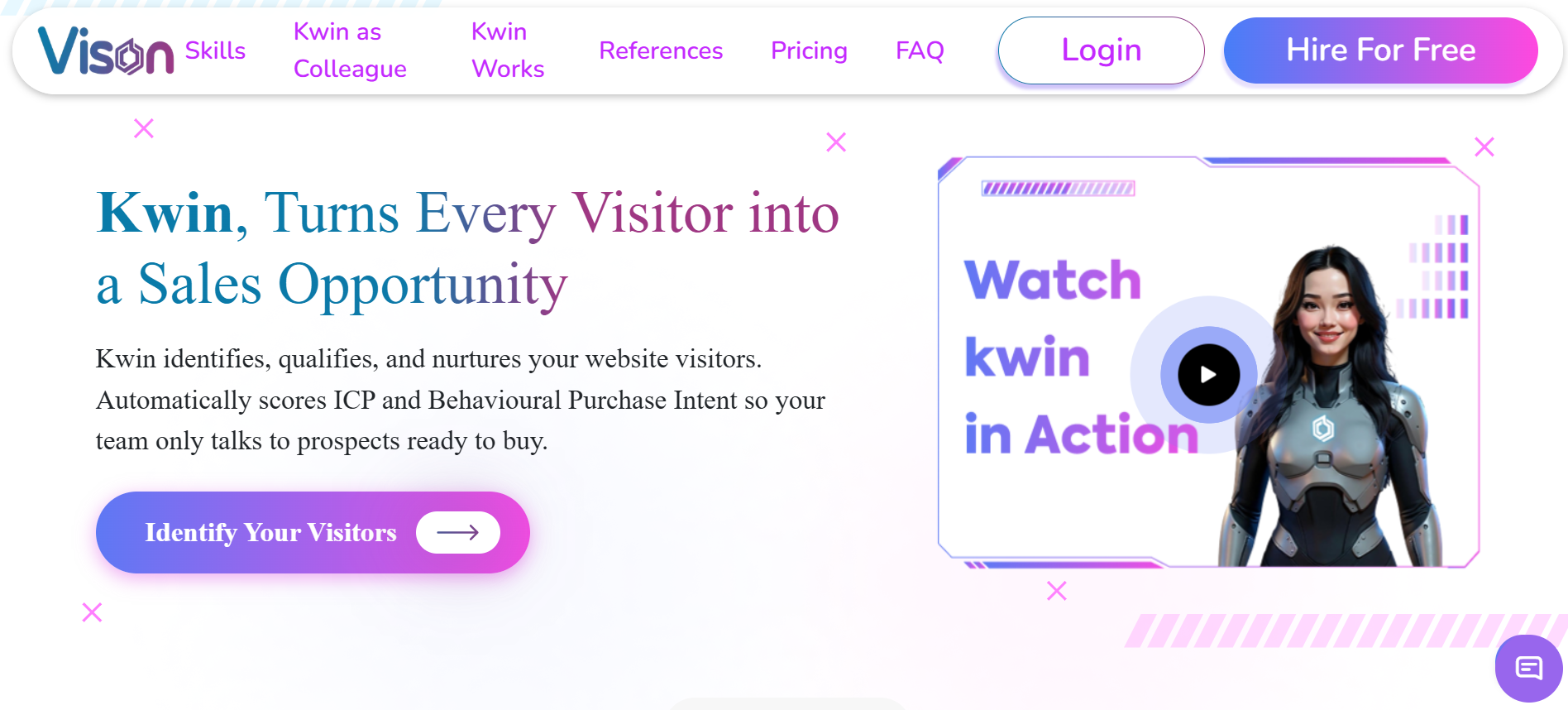
Kwin by Vison AI goes beyond telling you which company visited your website. As an AI Business Developer, it identifies visitors at the person and company level, checks their ICP fit and buying intent, and helps turn high-intent visitors into conversations.
Setup takes about five minutes with a lightweight pixel or Google Tag Manager. Kwin then analyzes visitor activity and enriches identified profiles with details such as name, work email, phone number, LinkedIn profile, job title, industry, company size, and location.
You can set your own ICP and Purchase Intent thresholds, so Kwin focuses only on visitors worth contacting. When a visitor qualifies, it can create a personalized email from your domain and hand the reply back to your team with the relevant context.
That makes Kwin one of the few Demandbase competitors built for teams that want more than account-level insights. Instead of giving sales another list to review, Kwin helps move website traffic toward actual sales conversations.
Key Features
- Person and company identification: Returns names, verified work emails, phone numbers, LinkedIn profiles, and firmographics covering revenue, industry, headcount, and location.
- Dual scoring: Calculates an ICP fit score, meaning how closely a visitor matches your ideal customer. A Purchase Intent Score then reads how ready they are to buy.
- Threshold-based triggers: You set the minimum ICP and Purchase Intent score. Kwin acts only once a visitor crosses that line.
- Autonomous nurture: High-fit visitors receive a personalized email sequence sent from your own domain, not a generic vendor address.
- Positive-reply handoff: Kwin forwards the full email thread plus a short summary to your inbox, then loops your team in through Slack or your CRM.
- Four independent filters: Country-level, page-level, data-level, and exclusion filters screen out public sector traffic, irrelevant regions, or specific pages before a credit is spent.
Pricing: Free forever on the Lead Watcher plan, covering 100 leads per month with no credit card. Win+ adds a 7-day free trial with paid plans above that, and there is no annual lock-in.
Pros
- Identifies 60 to 70% of visitors at person and company level across 175+ countries
- Runs identification, scoring, nurture, and handoff as one continuous motion
- Free forever entry point removes the procurement conversation entirely
- Setup takes about five minutes through a pixel or Google Tag Manager
- Certified across SOC 2 Type II, GDPR, CCPA, ISO 9001:2015, and ISO 27001:2022
Cons
- Runs one predefined workflow, so arbitrary custom automation is not available yet.
- Built for converting inbound traffic rather than cold list building
- Requires you to trust an AI Employee with first-touch outreach
Best For: B2B revenue teams that want inbound traffic converted into booked meetings without hiring another SDR. It also suits lean teams that cannot justify a six-figure account-based contract.
2. 6sense
6sense is the alternative that most often reaches the final round against Demandbase. Its predictive model places every account into a buying stage, then recommends what to do next for each segment.
The distinction matters when several teams work the same named-account list. Demandbase orchestrates what happens after prioritisation. 6sense gives sales and RevOps a clearer read on urgency. Our Kwin vs 6sense breakdown covers the workflow gap in detail.
Key Features
- Predictive stage modelling: Classifies accounts across awareness, consideration, decision, and purchase using anonymous web activity and historical deal patterns.
- Buying group mapping: Surfaces multiple stakeholders inside large deals rather than a single contact.
- Native ad orchestration: Runs display, LinkedIn and web personalisation from one platform.
- Deep integrations: Connects natively with Salesforce, Marketo and Outreach.
Pricing: 6sense does not publish pricing. Third-party data places full ABM plans from around $10,000 per year, scaling into six figures depending on modules and seats.
Pros
- Strongest buying-stage modelling among the Demandbase competitors on this list
- Genuinely useful free tier for evaluating data quality
- Mature orchestration across advertising and sales alerts
Cons
- Reviewers on G2 flag duplicate records and uncertainty about data accuracy
- No contact database at ZoomInfo scale, so enrichment leans on partner data
- Rollout demands dedicated ops ownership or the platform gathers dust
Best For: Enterprise teams with a dedicated RevOps function and the process maturity to turn predictive scores into daily rep action.
3. ZoomInfo
ZoomInfo answers the question account intent leaves hanging, which is who to call next. Its value sits in the depth of verified contacts behind every identified company.
That makes it a different kind of alternative. You trade orchestration depth for raw reach and rep-level actionability, as our guide to ZoomInfo alternatives explains in full.
Key Features
- Audience builder: Combines a very large contact database with intent topics and granular firmographic filters.
- Reverse-IP visitor tracking: Identifies visiting companies and surfaces likely contacts inside them.
- Multi-touch attribution: Ties advertising spend through to pipeline and closed-won revenue.
- Cross-team access: Shares one data layer across sales, marketing, and RevOps surfaces.
Pricing: Enterprise plans typically start around $10,000 per year and can exceed $20,000 per year, depending on seats and modules.
Pros
- Deepest verified contact and phone coverage of all the Demandbase competitors here
- Free-to-start model lets you validate match rates before committing
- Broad platform reduces the number of vendors you manage
Cons
- Buyers on Capterra report inconsistent EMEA data quality
- Auto-renewal terms draw persistent criticism in user discussions
- Credit logic and add-on pricing make total cost hard to model upfront
Best For: Sales-led organisations that need contact coverage at scale and prefer one vendor across prospecting, marketing and operations.
4. AdRoll ABM (Formerly RollWorks)
RollWorks rebranded to AdRoll ABM under parent company NextRoll, and many comparison lists still miss that change. The product stayed broadly the same, but the Salesforce package and API mapping shifted, so older documentation will mislead you.
It trims account-based marketing down to the parts mid-market teams actually activate. Intent signals arrive from Bombora and G2, and it owns its demand-side platform rather than routing through third parties.
Key Features
- Pre-built ICP models: Launches account targeting without a data science project behind it.
- Owned ad inventory: Runs programmatic, social, and connected-TV campaigns through its own platform.
- Lead-to-account matching: Syncs identified accounts cleanly into your CRM.
- Budget pacing: Reports multi-touch attribution alongside spend control.
Pricing: Starts around $975 per month across the Standard, Professional, and Ultimate plans.
Pros
- Lowest-friction rollout among the advertising-led Demandbase competitors
- Owned demand-side platform improves bid control
- Strong HubSpot integration suits SMB and mid-market stacks
Cons
- Users on Capterra note difficulty running LinkedIn campaigns and reaching the right accounts.
- Contact-data scale trails the larger providers here
- Offers no native buyer intent beyond partner feeds
Best For: Mid-market marketing teams whose primary motion is paid media against a named account list, especially HubSpot users.
5. Terminus by DemandScience
Terminus pulls advertising, chat, and email into a single attribution model. That appeals to marketers tired of stitching three dashboards together, and its shared account timeline gives sales and marketing one version of the truth.
Following the DemandScience acquisition, the platform now carries a content syndication network and managed demand generation services alongside the original toolkit.
Key Features
- Cross-channel advertising: Manages display, LinkedIn, and connected-TV inventory in one place.
- Email signature marketing: Turns everyday employee email into account-based awareness.
- Shared account timeline: Gives marketing and sales a single engagement view.
- Content syndication: Adds managed demand generation through the DemandScience network.
Pricing: Typically ranges from $18,000 to $40,000 annually, depending on channel mix and account volume.
Pros
- Widest channel mix per dollar among the mid-tier Demandbase competitors
- Long-running recognition as a category leader on G2
- Managed services available for teams without execution bandwidth
Cons
- Reviewers on G2 describe weaker sales workflows than the sales-led alternatives.
- Brand and pricing continue shifting after the acquisition
- Person-level identification for reps remains a gap
Best For: Marketing teams that want ads, chat, and email measured under one attribution model without enterprise-tier spend.
6. Warmly
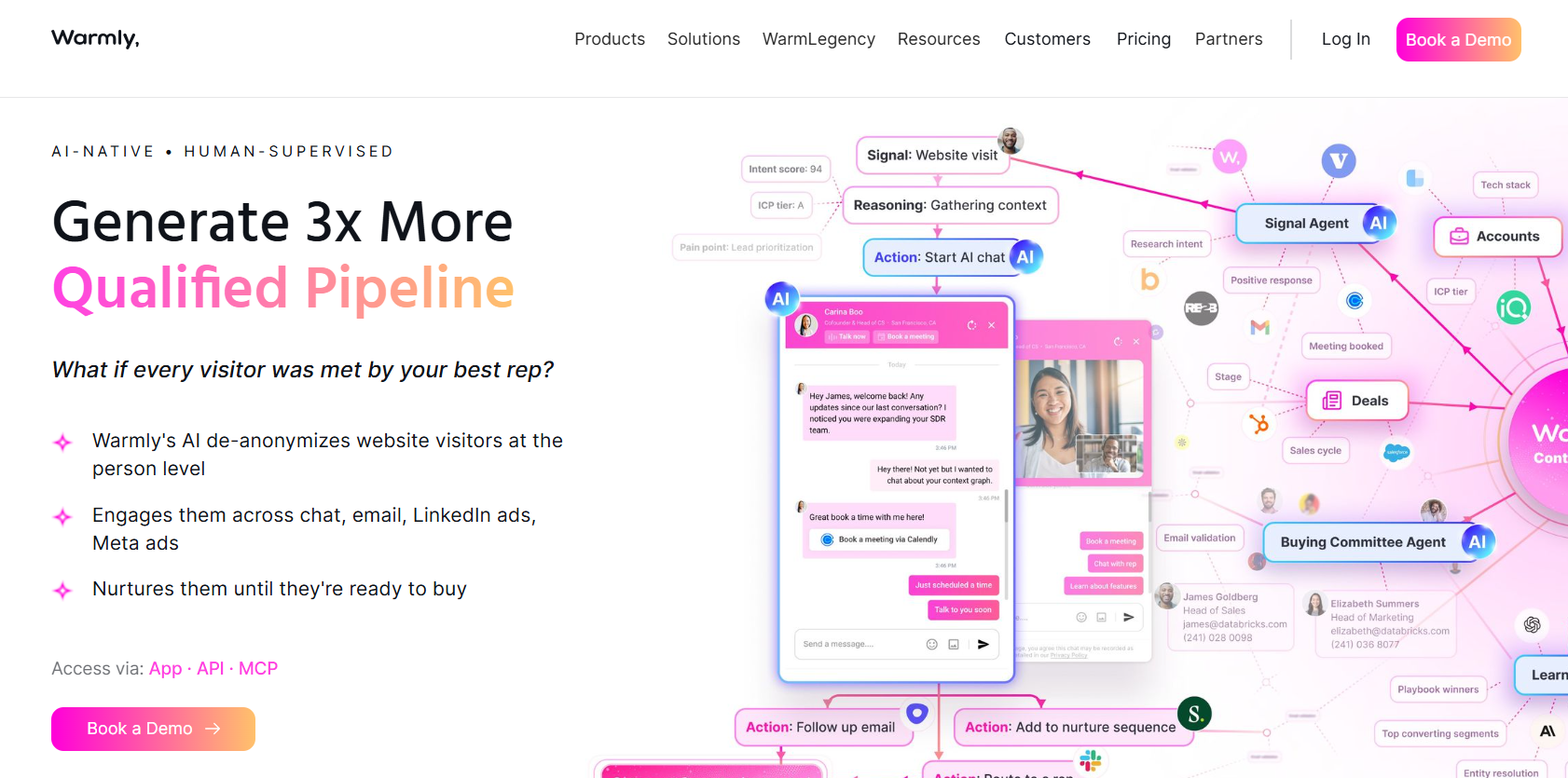
Warmly attacks the problem at the moment of the visit. Its inbound agent runs an AI chat that already knows the visitor's company, role, and page history before it speaks. A human gets pulled in when the conversation earns it.
Behind that sits an outbound agent handling ICP tiering, buying committee mapping, and intent scoring. Both halves read from one shared data layer, and our Warmly comparison unpacks the trade-offs.
Key Features
- Person-level reveal: Identifies individual visitors alongside company-level matches.
- Context-aware AI chat: Loads CRM and intent context before the first message, then hands off to reps with the transcript intact.
- Smart popups and landing pages: Reshapes offers and headlines around who is actually reading.
- Buying committee mapping: Sorts contacts into champion, decision-maker, influencer, and approver roles.
Pricing: Free plan available. Paid plans start around $599 per month, scaling to five-figure annual contracts as you add agents.
Pros
- Rated 4.6 out of 5 across 203 G2 reviews
- Engages visitors during the session rather than hours later
- Native two-way sync with HubSpot and Salesforce
Cons
- Entry pricing sits well above pixel-only identification tools
- Paid tiers bill annually or quarterly, which strains smaller budgets
- Person-level match rates trail company-level rates by a wide margin
Best For: Funded startups and mid-market teams with enough live traffic to justify staffing an on-site conversion motion.
Also Read: 15 Best B2B Website Visitor Identification Tools
7. RB2B
RB2B does one thing and keeps the price honest. It reveals individual visitors on US traffic and pushes them into Slack, which is often exactly enough for a founder-led sales motion.
Treat it as a wedge rather than a platform. No advertising layer, no attribution model, and no outreach engine sits behind the reveal, as our RB2B alternatives guide sets out.
Key Features
- Person-level reveal: Names individual US visitors rather than their employer.
- Real-time Slack alerts: Delivers identified profiles into the channel your team already watches.
- Credit-based plans: Keeps spend predictable for lower-traffic sites.
- Lightweight install: Runs from a single script with minimal configuration.
Pricing: Free plan with 150 credits per month, though it now shows company-level data only. Paid plans start from around $149 per month.
Pros
- Cheapest entry point to person-level identification in this comparison
- Setup takes minutes and needs no ops support
- Slack-native delivery fits how small teams already work
Cons
- Coverage is limited to US traffic, which rules out global pipelines
- Reviewers on G2 consistently report modest match rates on real traffic
- No outreach, scoring, or attribution layer of any kind
Best For: US-focused startups and founder-led teams that want person-level names without a platform commitment.
8. LeadFeeder (Formerly Dealfront)
Dealfront came out of the Leadfeeder and Echobot merger, and that European heritage is the entire pitch. When your buyers sit in DACH, the Nordics, or Benelux, its regional data genuinely outperforms US-first tools.
The trade-off is symmetrical. Coverage thins as you move into North America and Asia, so global teams usually pair it with a second tool.
Key Features
- European company matching: Resolves EU business IP addresses with strong regional accuracy.
- Firmographic depth: Layers detailed company and trade-register data onto each visit.
- GDPR-first architecture: Keeps data residency and consent handling inside the EU.
- Platform tier: Bundles visitor identification with a company and contact database.
Pricing: Free plan available. Paid plans start around $99 per month, billed annually and scaling by companies identified.
Pros
- Best European identification accuracy among these Demandbase competitors
- Transparent published pricing at the entry tier
- Combines visitor identification with a usable contact database
Cons
- Identification stops at company level, so individuals stay anonymous
- Reviewers on G2 report thin coverage outside well-indexed mid-market firms
- North American and Asian traffic resolves poorly
Best For: B2B teams selling primarily into European markets where data residency is a procurement requirement.
9. Cognism
Cognism solves a different anxiety, which is trusting your data enough to actually dial it. Phone-verified mobiles and screening against do-not-call lists make it the safe choice in regulated markets.
It belongs among the Demandbase competitors here because many teams evaluating account-based platforms discover their real gap is contact quality, not orchestration.
Key Features
- Phone-verified mobiles: Delivers manually verified cell numbers rather than scraped ones.
- AI search: Builds target lists from conversational prompts instead of filter menus.
- CRM enrichment: Refreshes records on a schedule or on demand.
- Bombora intent: Layers third-party topic surges onto contact records.
- Compliance depth: Screens against global do-not-call lists and holds ISO 27701 certification.
Pricing: Custom annual contracts, typically premium enterprise pricing, often from around $10,000 per year.
Pros
- Strongest EMEA contact coverage and phone verification in this group
- Compliance posture holds up under procurement scrutiny
- Rep-friendly interface that translates directly into calls
Cons
- Not a website visitor identification tool, so anonymous traffic stays anonymous.
- Offers no advertising, orchestration, or attribution layer
- Opaque pricing makes budgeting difficult before a sales conversation
Best For: Outbound sales teams running EMEA or compliance-sensitive motions where contact accuracy decides the quarter.
10. Clearbit
Clearbit lives inside HubSpot now under the Breeze Intelligence name, and that changes who it suits. If your revenue operations already run on HubSpot, enrichment happens where your team works.
Its strength is tidying what you have. Shortened forms, enriched records, and cleaner scoring sharpen existing workflows, and our Clearbit alternatives roundup covers where that stops.
Key Features
- Record enrichment: Fills firmographic gaps on companies and contacts automatically.
- Form shortening: Cuts field count while still capturing full profile data.
- Buying intent signals: Flags accounts showing research behaviour.
- Native scoring: Feeds enrichment straight into HubSpot lead scoring.
Pricing: Credit-based, historically from around $99 per month, now bundled inside a paid HubSpot subscription.
Pros
- Enrichment happens natively inside the CRM your team already uses
- Form shortening measurably improves conversion on gated assets
- Credit packs suit low-volume, predictable usage
Cons
- Users on Capterra highlight outdated records and duplicates
- Offers no phone verification or on-demand research service
- Identification remains company-level and US-weighted
Best For: Marketing and operations teams already committed to HubSpot who want cleaner data without a separate contract.
11. Apollo.io
Apollo consolidates the outbound stack into one workspace. A lean team can build a list, enrich it, launch a sequence, and manage a basic pipeline without a second vendor. That is genuinely rare at this price.
Apollo appears in these conversations for one reason. Many teams discover their real requirement was rep execution, not account orchestration, a point our Apollo.io alternatives guide explores further.
Key Features
- Large contact database: Supports fast list building across industries and titles.
- Native sequencing: Runs multi-step email campaigns inside the same platform.
- Enrichment and CRM sync: Keeps records current across HubSpot and Salesforce.
- Basic visitor tracking: Available on higher tiers with credit limits attached.
Pricing: Free plan available. Paid plans start around $49 per month, scaling with credits and features.
Pros
- Best price-to-capability ratio for outbound execution here
- Free tier makes evaluation genuinely risk-free
- One platform covers sourcing, enrichment, and sending
Cons
- Reviewers on G2 repeatedly raise data accuracy and deliverability concerns
- Credit limits bite quickly once visitor identification enters the picture
- Pricing tiers and add-ons confuse buyers during procurement
Best For: Outbound-led SMB and mid-market teams that want prospecting and sequencing in one affordable workspace.
12. Bombora
Bombora is not a platform and never claims to be. It is the intent layer, sourcing research behaviour from a co-operative of thousands of B2B publishers. Topic surges then pass into whatever stack you already run.
That honesty is exactly why it earns a place among the Demandbase competitors on this list. If your identification, outreach, and reporting already work, Bombora fills the remaining gap cleanly.
Key Features
- Company Surge intent: Detects topic-level research spikes across a large publisher co-op.
- Consent-based sourcing: Collects data through a co-operative rather than bidstream scraping.
- Broad native integrations: Feeds 6sense, Demandbase, HubSpot, Marketo, and Salesforce directly.
- Insights suite: Lets non-analysts interpret topic surges without a data team.
Pricing: Custom, quote-based model ranging between $25,000 and $30,000 or more annually.
Pros
- Consent-based co-op data avoids the accuracy problems of bidstream inference.
- Integrates with nearly every major account-based platform
- Wide topic taxonomy supports niche category tracking
Cons
- Provides no contact database, seller workspace, or campaign activation
- Requires a second platform to do anything with the signal
- Reviewers on G2 note signals stay at company level, so individuals remain unnamed
Best For: Teams with a working stack that need authoritative third-party intent rather than another platform to administer.
Also Read: Factors AI Alternatives: Top 10 Tools to Identify Website Visitors
Why Kwin Ranks #1 Among These Demandbase Competitors
Most Demandbase competitors hand you information and then wait. Kwin starts from a different premise, because a lead you never contact is worth nothing, however well you scored it.
She is the only tool here that identifies two-thirds of your traffic, then scores it for fit and intent. She warms it in your own voice and hands your reps a conversation instead of a dashboard.
Infiniticube put numbers on that shift. Within 45 days, their team generated 2.5x more qualified leads, with over 35% of booked meetings coming from visitors who never filled in a form.
What makes Kwin stand out:
- Person plus company identification: 60 to 70% match rate across 175+ countries, not a US-only footprint.
- Complete data return: Names, work emails, phone numbers, LinkedIn profiles, and full firmographics on every identified visitor.
- Dual scoring with your threshold: ICP fit and Purchase Intent scores, and she acts only once a visitor crosses the line you set.
- Outreach from your own domain: Personalised sequences that reference the pages the visitor actually read.
- Reply handoff with context: Full email thread plus a short summary into your inbox, then Slack or CRM for the team.
- Four independent filters: Country, page, data, and exclusion filters keep public sector and off-ICP traffic from burning credits.
- Free forever entry: Lead Watcher gives 100 leads a month with no credit card, and Win+ adds a 7-day free trial.
- Full compliance stack: SOC 2 Type II, GDPR, CCPA, ISO 9001:2015 and ISO 27001:2022, built on publicly available business data.
Want to see her work on your traffic before you commit? Book Your Free Demo and watch Kwin name the buyers your forms are missing.
Conclusion
Demandbase is still a strong choice for enterprise ABM, but it is not the right fit for every team. The right choice among Demandbase competitors depends on what you need most, whether that is better intent data, deeper contact information, ABM advertising, or person-level visitor identification.
If your biggest challenge is turning anonymous website visitors into real sales conversations, Kwin offers a more direct approach. She identifies visitors, checks their fit and intent, and helps your team engage them.
The right pick among Demandbase competitors is the one that solves your biggest gap without adding unnecessary cost or complexity. Start with your goal, test the options, and choose the platform that can turn more of your website traffic into opportunities.
Now it is your turn to test one against your own traffic. Hire Kwin For Free and turn anonymous traffic into booked meetings, no credit card required.