
TL;DR
- Core problem: You need one platform to fill your pipeline, and the Apollo vs ZoomInfo decision keeps stalling because both promise the same result in very different ways.
- Direct answer: Apollo wins for lean teams that want affordable data plus built-in outreach. ZoomInfo wins for enterprises that need the deepest verified data and account intelligence.
- Verdict: Both are databases you query for cold outbound. Neither tells you which real person is on your site right now, so most of your warmest demand slips away anonymously.
- Fast facts: Apollo: transparent per-seat pricing, free tier, built-in sequences and dialer. ZoomInfo: custom quote, annual contracts, enterprise data depth. Kwin: person-level identification across 175+ countries, free forever entry, and it books meetings on autopilot.
Most people who land on your website leave without filling in a single form. They study your pricing, read a case study, then vanish into the anonymous crowd.
Both Apollo and ZoomInfo promise to close that gap, which is why the Apollo vs ZoomInfo question runs through almost every B2B sales stack.
While both are leading B2B sales intelligence platforms, they take very different approaches to lead generation. Apollo focuses on affordable prospecting with built-in outreach, while ZoomInfo delivers enterprise-grade data, intent signals, and account intelligence.
The wrong choice can cost far more than the subscription fee. You might pay for enterprise features you never use, struggle with outdated contact data, or still spend hours manually finding and qualifying prospects.
So this guide settles the Apollo vs ZoomInfo comparison with a real side-by-side breakdown rather than a feature dump.
In this guide, you will learn:
- What Apollo and ZoomInfo are and who each one fits
- How they compare on data, outreach, intent, and pricing
- Where both fall short for real lead generation
- The person-level gap that quietly costs you meetings
- How to find the right one
By the end of this guide, you will know exactly which platform wins for your situation, and what each one costs you in practice. You will also see why a growing number of revenue teams pair or replace them with a person-level approach.
Apollo vs ZoomInfo at a Quick Glance
This quick snapshot covers the essentials before we pressure test each row in detail.
Before the Apollo vs Zoominfo head-to-head, here is what each platform does, and the kind of team it serves best. Each is a serious B2B sales intelligence tool that powers B2B lead generation, yet they take opposite routes to the same finish line.
1. Apollo: Best for Startups and SMBs
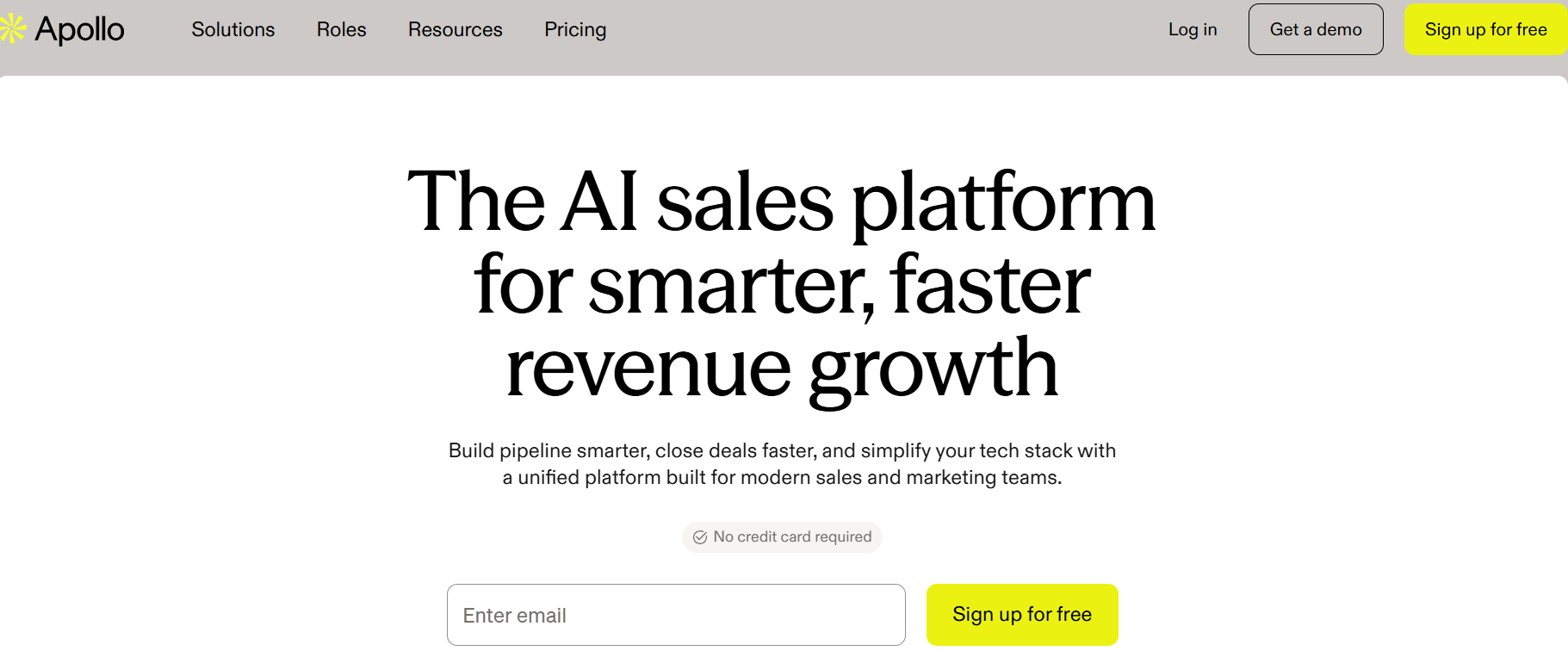
Apollo is an all-in-one sales platform that combines a large B2B contact database with built-in outreach tools. It helps teams find prospects, run email sequences, and manage outbound sales from a single platform. It's ideal for startups, SMBs, and lean sales teams looking for an affordable solution.
2. ZoomInfo: Best for Enterprise Teams
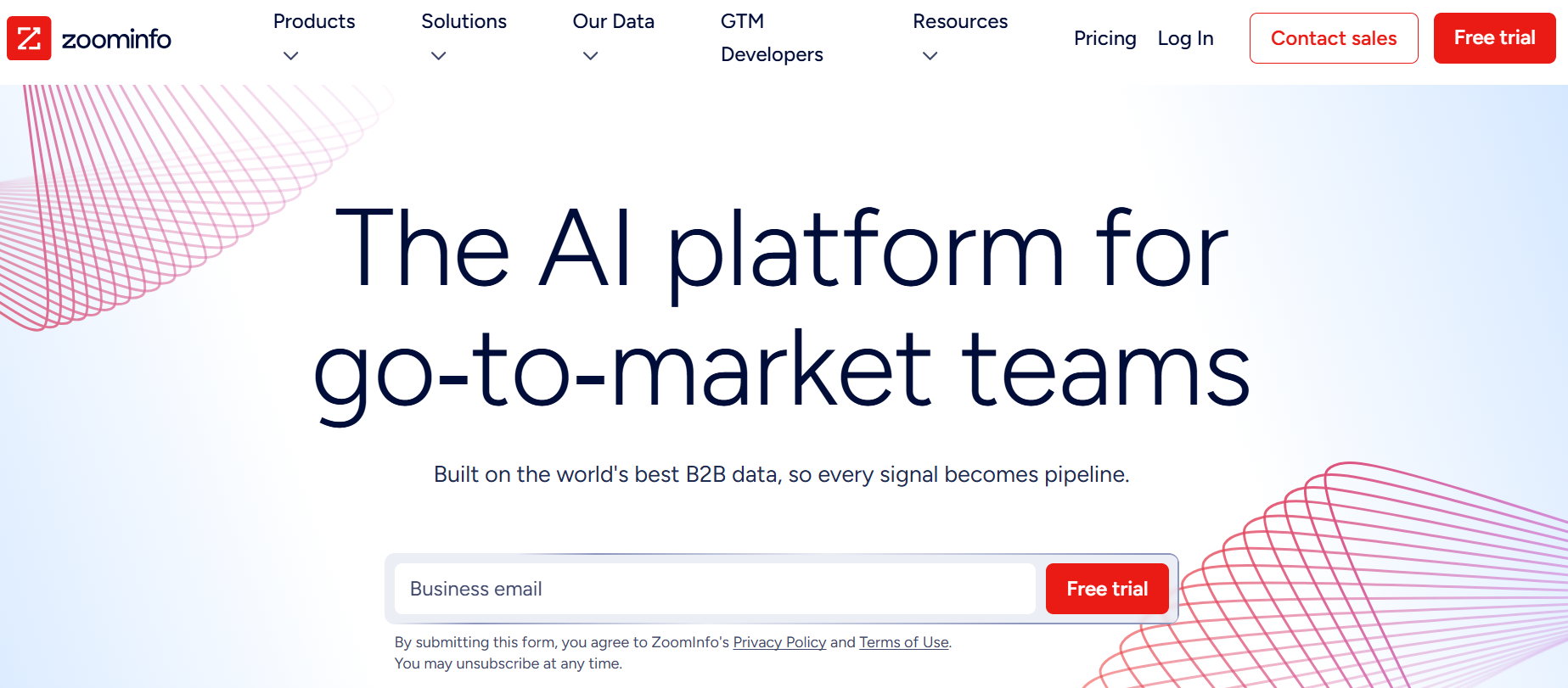
ZoomInfo is a B2B sales intelligence platform known for its extensive verified database, account intelligence, and real-time intent data. It is designed for mid-sized and enterprise businesses that need highly accurate data and advanced sales capabilities at scale.
Apollo vs ZoomInfo: Head-to-Head Comparison
Both Apollo and ZoomInfo promise access to millions of B2B contacts, but the quality of that data can vary significantly. Let's compare them across the areas that matter most:
1. Data Coverage and Accuracy: Apollo vs ZoomInfo
The quality of your lead data directly impacts prospecting success, email deliverability, and conversion rates. While both Apollo and ZoomInfo provide large B2B databases, they differ in coverage, accuracy, and data verification.
Database Coverage
Apollo offers a large B2B contact database with strong coverage across startups, SMBs, and growing businesses. It is well suited for companies running outbound campaigns at scale, although data depth can be limited in niche industries and some international markets.
ZoomInfo is known for one of the largest verified B2B databases in the industry. Its coverage is particularly strong for mid-market and enterprise organizations, making it a preferred choice for account-based sales teams.
Data Accuracy
Apollo continuously refreshes its database using user activity and real-time email verification. While the platform delivers reliable data for most prospecting campaigns, some records may become outdated over time, especially for inactive contacts.
ZoomInfo combines machine learning with dedicated human researchers to verify contact information. This additional verification improves data accuracy, reduces bounced emails, and provides more reliable contact records for enterprise sales teams.
Phone Data
Apollo includes direct dials and mobile numbers for many contacts. Its phone coverage is sufficient for most outbound teams, but it may not be comprehensive enough for organizations that rely heavily on cold calling.
ZoomInfo is widely recognized for its extensive collection of verified direct phone numbers and mobile contacts. Businesses with phone-first sales strategies often benefit from its broader phone data.
Data Freshness
Apollo updates its database continuously as users interact with the platform. Frequently accessed contacts remain current, although less active records may take longer to refresh.
ZoomInfo follows a structured verification process that combines automated systems with ongoing human validation. This approach helps maintain consistently fresh and accurate business data.
Global Coverage
Apollo provides broad international coverage and performs well for startups and SMBs targeting multiple countries.
ZoomInfo delivers excellent coverage in North America and enterprise markets. While it supports international prospecting, its strongest database remains focused on the US market.
Verdict
Apollo provides excellent value with broad database coverage and reliable contact information for growing businesses. ZoomInfo delivers higher data accuracy, deeper enterprise coverage, and stronger phone data, making it the better choice for organizations where data quality is the highest priority.
Also Read: 15 Best B2B Website Visitor Identification Tools
2. Lead Search and Prospect Management
Finding leads is only the beginning. An effective sales platform should also make it easy to search, organize, enrich, and manage prospects throughout the sales process.
Prospect Search
Apollo makes prospecting simple and fast. Users can search for contacts, create lead lists, and launch outreach campaigns from a single platform, making it ideal for fast-moving sales teams.
ZoomInfo focuses on account-based prospecting by helping teams identify companies, decision-makers, and complete buying committees. It is designed for more strategic and complex sales processes.
Search Filters
Apollo provides a wide range of filters, including job title, location, company size, industry, revenue, hiring status, and technologies used. Most users can learn the filtering system quickly.
ZoomInfo offers more advanced filtering with firmographics, technographics, organizational charts, intent signals, and department-level insights. These filters provide greater precision but require more experience to use effectively.
CRM and Workflow Management
Apollo includes built-in CRM functionality and a Chrome extension, allowing sales reps to manage prospecting and outreach without switching between multiple tools.
ZoomInfo integrates deeply with enterprise CRM systems and sales workflows. It is built for organizations that already have mature sales operations and dedicated RevOps support.
List Management and Data Enrichment
Apollo makes it easy to build prospect lists and launch campaigns quickly. While this improves speed, larger teams may occasionally encounter duplicate contacts during high-volume prospecting.
ZoomInfo places greater emphasis on data enrichment, contact matching, and deduplication, helping organizations maintain cleaner CRM records at scale.
Ease of Use
Apollo has a clean interface and a relatively short learning curve. New users can typically become productive within a few hours.
ZoomInfo offers significantly more functionality, but its broader feature set makes onboarding slower, particularly for teams without dedicated sales operations support.
Verdict
Apollo is the better choice for businesses that prioritize speed, simplicity, and ease of use. ZoomInfo is ideal for organizations that need advanced prospecting capabilities and detailed account intelligence.
3. Outreach and Sales Engagement
Quality data only creates value when it turns into conversations. Here's how Apollo and ZoomInfo compare when it comes to outreach and sales engagement.
Email Outreach
Apollo includes built-in multichannel sequences, allowing users to automate personalized email campaigns directly from the platform. Everything from prospecting to outreach can be managed in one place.
ZoomInfo supports email engagement through its Engage platform and integrations with tools like SalesLoft and Outreach. This provides greater flexibility for enterprise teams that already use specialized sales engagement software.
Calling Features
Apollo includes built-in Power Dialer and Parallel Dialer capabilities, enabling sales reps to make outbound calls without purchasing additional software.
ZoomInfo typically relies on third-party calling platforms. While this adds flexibility, it also requires additional tools and licenses for complete calling workflows.
Email Deliverability
Apollo includes email warm-up, sender authentication, and deliverability monitoring features that help improve inbox placement and maintain sender reputation.
ZoomInfo primarily focuses on data quality rather than email delivery. Organizations generally rely on integrated sales engagement platforms to manage deliverability.
Reply Management
Apollo keeps emails, replies, campaign performance, and prospect activity together in a single dashboard, making it easy for individual sales reps to manage conversations.
ZoomInfo offers more advanced routing and collaboration capabilities that support larger sales teams with multiple stakeholders and handoff processes.
Overall Sales Workflow
Apollo combines prospecting, outreach, calling, and campaign management into a single platform. This all-in-one approach reduces software costs and simplifies daily workflows.
ZoomInfo focuses on delivering enterprise-grade sales intelligence that integrates with existing sales technology stacks rather than replacing them.
Verdict
Apollo provides a complete sales engagement platform for startups and growing sales teams. ZoomInfo is better suited for enterprises that already use dedicated sales engagement tools and want richer intelligence to support them.
4. Intent Data and Buying Signals
Intent data helps sales teams identify prospects who are actively researching solutions. While both platforms offer buying signals, they differ in how they collect, update, and prioritize intent data.
Intent Data Sources
Apollo includes intent data through third-party providers, giving businesses an affordable way to identify prospects showing buying interest without investing in a separate intent platform.
ZoomInfo combines proprietary intent data with third-party signals to provide a more complete view of buyer behavior. This helps sales teams identify high-intent accounts with greater confidence.
Signal Freshness
Apollo refreshes intent data periodically, making it useful for prioritizing prospects. However, the signals may not always reflect the most recent buying activity.
ZoomInfo continuously updates intent signals in near real time, allowing sales teams to engage prospects while purchase intent is still strong.
For a primer, our guide on lead generation versus prospecting breaks the workflow down.
Intent Coverage
Apollo tracks a wide range of intent topics, making it suitable for broad prospecting and list prioritization.
ZoomInfo goes beyond topic tracking by ranking accounts based on buying behavior, helping sales teams focus on opportunities with the highest conversion potential.
Verdict
Apollo offers solid intent data at an affordable price, while ZoomInfo provides fresher and more actionable buying signals for organizations with faster sales cycles.
Also Read: How To Identify Who Visits Your Website: Complete Guide
5. AI, Automation, and Conversation Intelligence
AI has become a core feature of modern sales platforms, but Apollo vs ZoomInfo use it in different ways. Apollo focuses on improving individual productivity, while ZoomInfo helps teams make better sales decisions.
AI Productivity
Apollo uses AI to generate emails, build prospect lists, summarize calls, and automate repetitive sales tasks. It helps individual sales reps work faster throughout the day.
ZoomInfo uses AI to analyze CRM records, buyer behavior, and engagement signals, helping sales teams identify the next best action instead of simply automating routine work.
Workflow Automation
Apollo automates prospecting and outreach workflows, reducing manual effort for startups and growing sales teams.
ZoomInfo automates lead routing, enrichment, account prioritization, and enterprise sales workflows across multiple platforms.
Conversation Intelligence
Apollo provides AI-generated call summaries and meeting notes that help sales reps quickly review conversations.
ZoomInfo includes Chorus, a dedicated conversation intelligence solution that analyzes calls, identifies coaching opportunities, and uncovers buyer insights.
Verdict
Apollo's AI focuses on improving day-to-day productivity, while ZoomInfo delivers more advanced intelligence for enterprise sales organizations.
6. Website Visitor Identification
Website visitor identification helps businesses understand who is visiting their website before a lead submits a form. This is one area where Apollo and ZoomInfo share the same limitation.
Visitor Identification
Apollo identifies companies visiting your website, allowing sales teams to prioritize interested accounts.
ZoomInfo WebSights also identifies visiting companies and provides account-level insights that support account-based sales strategies.
Person-Level Identification
Apollo does not identify the individual visitor. Sales teams still need to research the right decision-maker manually.
ZoomInfo also stops at company-level identification, leaving users to identify individual buyers themselves.
Best Use Case
Apollo's visitor tracking is useful for account-based prospecting and outbound follow-up.
ZoomInfo helps enterprise teams prioritize interested companies but still requires manual prospect research to identify decision-makers.
Verdict
Both Apollo and ZoomInfo identify companies rather than individual visitors. Businesses looking for person-level visitor identification will need a dedicated solution beyond either platform.
7. Integrations, API, and Data Operations
A sales intelligence platform should integrate seamlessly with your existing technology stack. While both platforms offer strong integrations, they are built for different levels of operational complexity.
CRM Integrations
Apollo integrates with popular CRM platforms like Salesforce and HubSpot, making setup quick and straightforward for most growing businesses.
ZoomInfo offers deeper integrations across CRM, marketing automation, and RevOps platforms, making it better suited for enterprise environments.
API Access
Apollo provides API access on higher-tier plans, allowing businesses to build custom integrations and automate workflows.
ZoomInfo offers more extensive API capabilities for organizations managing large-scale sales and data operations.
Data Enrichment
Apollo supports contact enrichment and CRM updates, making it suitable for everyday prospecting and database management.
ZoomInfo delivers advanced enrichment, contact matching, and deduplication capabilities that help maintain clean enterprise databases.
Verdict
Apollo provides the integrations most SMBs need, while ZoomInfo offers greater flexibility and deeper connectivity for enterprise sales operations.
8. Security and Compliance
Businesses trust sales intelligence platforms with valuable customer data, making security and compliance essential considerations.
Compliance Standards
Apollo supports widely recognized standards, including SOC 2, ISO 27001, GDPR, and CCPA, providing the security most growing businesses require.
ZoomInfo maintains a broader compliance portfolio and additional privacy certifications designed to meet enterprise and regulated industry requirements.
Our guide to GDPR compliant visitor identification tools explores this in depth.
Enterprise Security
Apollo provides strong security controls suitable for startups, SMBs, and mid-market organizations.
ZoomInfo includes advanced governance, privacy controls, and enterprise-grade security features for larger organizations.
Verdict
Both platforms offer strong security and compliance, but ZoomInfo provides more comprehensive capabilities for enterprise customers.
9. Pricing, Contracts, and Hidden Costs: Apollo vs ZoomInfo
Pricing often becomes the deciding factor when selecting a sales intelligence platform. Apollo focuses on affordability and flexibility, while ZoomInfo offers enterprise capabilities through custom pricing and long-term contracts.
Pricing Model
Apollo offers transparent pricing with multiple subscription tiers, including a free plan. Businesses can start small and upgrade as their prospecting needs grow without contacting a sales representative.
ZoomInfo follows a custom pricing model based on business requirements. Pricing isn't publicly available, and most organizations need to request a personalized quote.
Contract Flexibility
Apollo supports both monthly and annual subscriptions, giving businesses greater flexibility and lower upfront commitment.
ZoomInfo generally requires annual or multi-year agreements, making it better suited for established organizations with long-term sales strategies.
Hidden Costs
Apollo uses a credit system for exports, phone numbers, and enrichment. Heavy users may need additional credits or higher-tier plans, increasing the total subscription cost.
ZoomInfo's overall investment may increase through premium modules, additional user licenses, expanded datasets, and contract renewals.
Total Cost of Ownership
Apollo combines prospecting, outreach, calling, and basic CRM features into a single platform, reducing the need for additional software.
ZoomInfo provides advanced enterprise intelligence but is often used alongside other sales engagement tools, increasing the overall technology investment.
Verdict
Apollo is the better option for businesses seeking transparent pricing, affordability, and flexibility. ZoomInfo is better suited for enterprises that can justify a larger investment with advanced sales intelligence capabilities.
10. Apollo vs ZoomInfo: User Reviews and Ratings
User reviews provide valuable insight into how each platform performs beyond marketing claims. Apollo is consistently praised for its ease of use and affordability, while ZoomInfo earns recognition for its enterprise-grade data and advanced capabilities.
Ease of Use
Users frequently highlight Apollo's intuitive interface, simple onboarding, and all-in-one workflow. Many sales teams report becoming productive within a short time.
ZoomInfo offers a wider range of features, but many reviewers note that it requires more training and is better suited for organizations with dedicated sales operations teams.
Data Quality
Most users consider Apollo's contact database reliable for everyday prospecting, although some reviews mention occasional inaccuracies for smaller companies and international contacts.
ZoomInfo consistently receives positive feedback for its data accuracy, verified contact information, and strong enterprise account coverage.
Value for Money
Apollo is widely recognized for delivering excellent value by combining prospecting, outreach, and sales engagement tools into one affordable platform.
Users acknowledge ZoomInfo's premium capabilities but often note that its pricing makes the platform more suitable for larger organizations.
Common Complaints
The most common criticisms include credit limitations, occasional outdated records, and restricted access to advanced features on lower-tier plans.
Users most frequently mention expensive pricing, long-term contracts, and occasional stale contact records, particularly outside North America.
Verdict
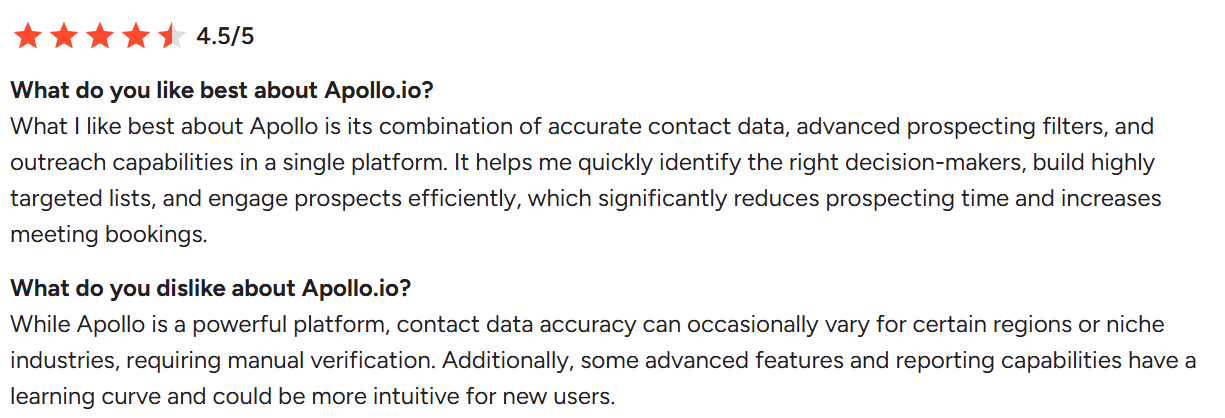
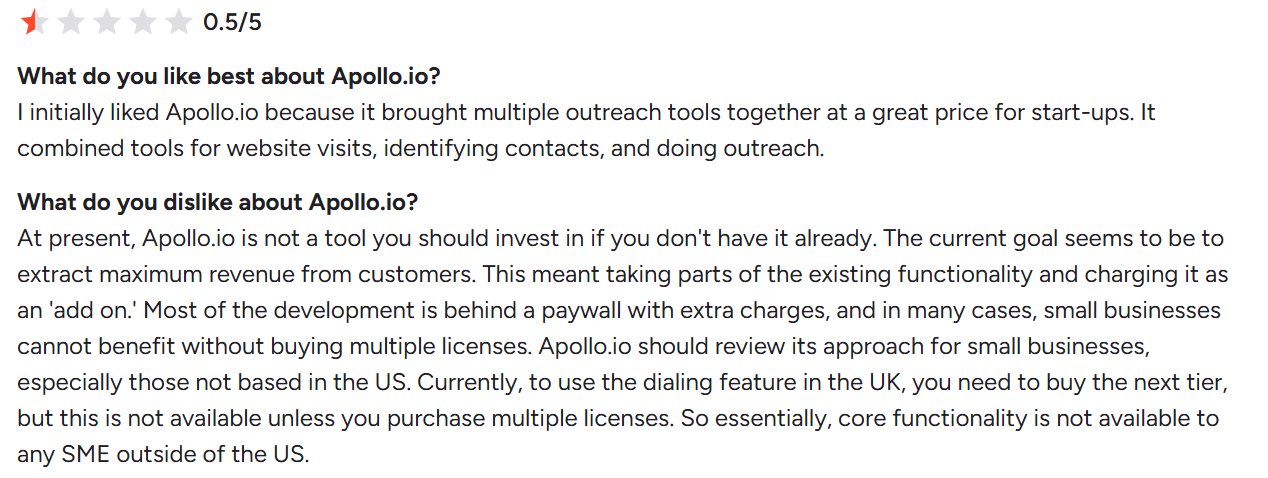
On G2, Apollo earns strong marks for value and ease of use, with reviewers praising fast onboarding and the all-in-one workflow. The recurring complaint is data accuracy for smaller or lesser-known companies, plus credit limits that pinch on lower tiers.
On G2, ZoomInfo also rates well for data depth and coverage, and reviewers value its intent and account intelligence. The steady criticisms are cost, contract rigidity, and the odd stale record, especially outside North America.
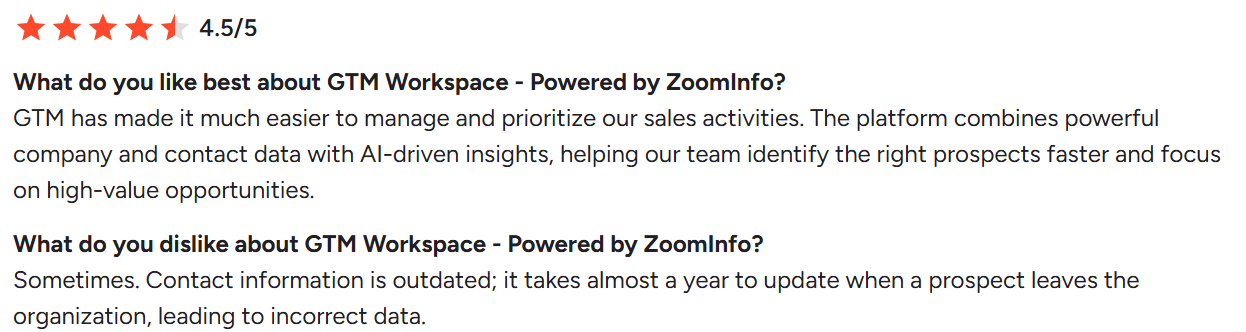
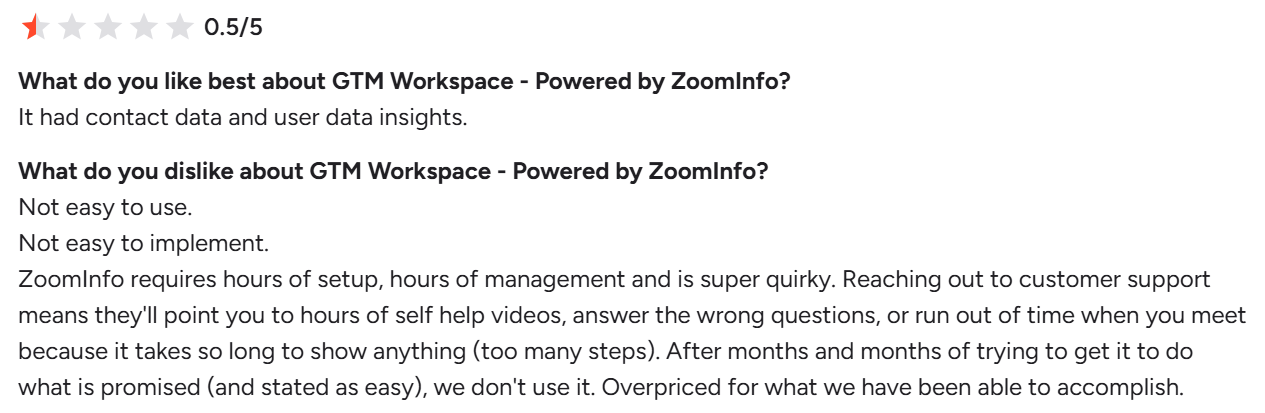
Put together, the reviews echo the spec sheet. Apollo earns loyalty on price and simplicity, while ZoomInfo earns it on depth, and both leave the same person-level gap wide open.
Apollo vs ZoomInfo: Pros and Cons
Here is the balanced scorecard, with the honest strengths and cracks on each side laid out plainly.
Apollo: Pros and Cons
Pros
- Transparent, budget-friendly pricing with a real free tier
- Built-in sequences, dialer, and CRM inside one platform
- Fast onboarding and a genuinely low learning curve
- Real-time email verification for cleaner sends
Cons
- Data depth thins out in niche and international segments
- Credit limits and add-ons raise the effective cost at scale
- Company-level only visitor tracking, never the person
Also Read: Kwin vs Apollo.io
ZoomInfo: Pros and Cons
Pros
- Deep, verified database with strong account intelligence
- Real-time proprietary intent signals built into the platform
- Enterprise-grade integrations and a wide compliance stack
Cons
- Opaque, premium pricing with annual or multi-year lock-in
- Steeper learning curve and heavier setup
- Company-level only website identification, same blind spot
Also Read: Kwin vs ZoomInfo
Now that you have weighed both sides, let us name the gap that neither Apollo nor ZoomInfo closes for lead generation.
Where Both Apollo and ZoomInfo Fall Short for Lead Generation
Apollo and ZoomInfo are excellent sales intelligence platforms, but they don't solve every lead generation challenge. While both help you find prospects and build outreach lists, they still leave much of the sales process to your team.
1. They Only Provide Data
Both platforms help you discover companies and contacts, but they don't automatically engage prospects. Your sales team still needs to research leads, write emails, send follow-ups, and manage conversations manually.
2. They Identify Companies, Not People
Apollo and ZoomInfo can tell you which company visited your website, but they don't identify the actual person behind the visit. Your team still has to figure out who the decision-maker is before starting outreach.
3. Costs Increase as You Scale
Apollo's credit-based system and ZoomInfo's premium pricing can become expensive as your prospecting volume grows. The more contacts you need, the higher your overall costs can become.
4. Limited for Global and Inbound Lead Generation
Both platforms are primarily designed for outbound prospecting and perform best in North American markets. If your goal is to identify global website visitors or convert anonymous inbound traffic into leads, their capabilities are more limited.
5. They Don't Automate the Entire Sales Process
Both tools provide valuable data and buying signals, but they stop there. Your sales team is still responsible for reaching out, following up, responding to prospects, and booking meetings.
In short,
If your goal is simply to build prospect lists, Apollo and ZoomInfo are both strong options.
However, if you want to identify anonymous website visitors, automatically engage qualified prospects, and turn existing website traffic into booked meetings, you'll need a solution built specifically for that purpose, such as Kwin.
Apollo vs ZoomInfo vs Kwin: How the Three Compare
Here is how all three stack up for turning visitors into pipelines. Kwin leads on the metric that matters most, the person.
Meet Kwin: The AI Business Developer That Turns Anonymous Traffic Into Pipeline
Apollo and ZoomInfo help you go find cold prospects. Kwin does the opposite, working the warm ones already on your site.
She is the AI Business Developer from Vison AI, and she identifies, qualifies, nurtures, and hands off your visitors without a rep lifting a finger.
Here’s how Kwin works:
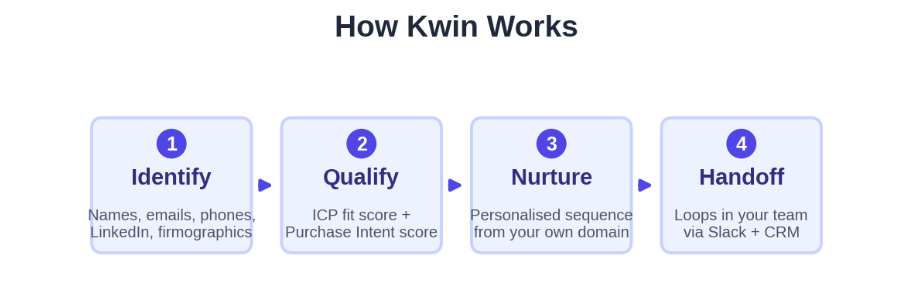
Step 1. Identify
Kwin starts with a five-minute pixel on your site, installed through your header or Google Tag Manager. Kwin then captures each visit's signals and resolves them against proprietary and third-party data to reveal the person.
You get a name, work email, phone, and LinkedIn profile, plus company, revenue, industry, and location. She identifies 60 to 70% of visitors at both company and person level, across 175+ countries.
Under the hood, that identification is layered work. Kwin captures each visit's signals, then resolves them across hundreds of data points using identity graphs and confidence scoring. Only high-confidence matches the surface, so reps chase real people, not guesses.
Step 2. Qualify
Next, Kwin scores every visitor on two axes. The ICP fit score rates how well they match your ideal customer, and the Purchase Intent score rates how ready they are to buy. You set the threshold she acts on.
Step 3. Nurture
When a high-fit visitor crosses that bar, Kwin adds them to a personalized email sequence sent from your own domain, not a shared one. If they reply with interest, she forwards the full thread plus a summary to your inbox.
Step 4. Handoff
Finally, Kwin loops your team in where you already work, pushing sales-ready leads into Slack and your CRM. Country and page-level filters keep the flow clean, and you can even screen out public sector and government traffic.
So reps only ever see fits worth their time. Whether that traffic arrives from SEO, ads, or account-based campaigns, Kwin identifies the real person behind it.
How Kwin Beats Apollo and ZoomInfo
So where does that leave the Apollo vs ZoomInfo choice? For turning traffic into pipeline, Kwin closes every gap the other two leave open.
- Person, not just company: where Apollo and ZoomInfo name the account, Kwin names the human, with contact details ready to use.
- An agent, not a database: Kwin does not wait to be queried. She identifies, scores, emails, and books, then hands off, on autopilot.
- Free forever, not five figures: the Lead Watcher plan is free forever, with 100 leads a month and no credit card. A Win+ trial waits when you want more.
- Global by default: coverage spans 175+ countries rather than a North American core, so your worldwide traffic finally counts.
- Built on defensible data: Kwin works from publicly available business data, backed by SOC 2 Type II, GDPR, CCPA, ISO 9001:2015, and ISO 27001:2022.
Speed to lead is the quiet advantage. Because Kwin acts the moment a fit visitor clears your threshold, outreach lands while intent is fresh. Apollo and ZoomInfo leave that first move, and its timing, to you.
This is not a theory. One team, infiniticube, generated 2.5x more qualified leads in 45 days with Kwin. And 35% of their meetings came from visitors who never filled in a form.
Also Read: Global Visitor Identification Across 175+ Countries
How to Choose the Right Tool for B2B Lead Generation
Still weighing it up? Use this quick framework to match the right B2B lead generation software to your team and your goal.
- Choose Apollo if you are a startup or lean team that wants affordable data and built-in outreach in one place. You can also live with company-level visitor data.
- Choose ZoomInfo if you are an enterprise with the budget and RevOps support for deep verified data, account intelligence, and real-time intent at scale.
- Choose Kwin if your priority is turning the traffic you already have into booked meetings, at the person level, without a five-figure contract.
Conclusion
So, Apollo vs ZoomInfo, which is better for B2B lead generation? Apollo is the smart pick for lean teams that want affordable, all-in-one prospecting. ZoomInfo is the enterprise choice when data depth and account intelligence justify the spend.
But there is a bigger takeaway hiding in this whole debate. Both are databases you have to work with, and both stop at the company, so most of your warm, in-market traffic still slips away unnamed.
We hope this guide clarified the real trade-offs behind the Apollo vs ZoomInfo decision. Person-level identification changes the game entirely.
Now it is your turn. Want to stop guessing and start naming the buyers already on your site? Connect with our experts to turn your anonymous traffic into booked meetings.