
TL;DR
The Core Problem: Clearbit (now Breeze Intelligence) is a "B2B Data Enrichment" tool, not a sales agent. It excels at telling you which company visited your site, but it charges you "Credits" for every piece of data you reveal. You still have to manually hunt for contacts and write emails yourself.
The Direct Answer: If you need to clean up your existing HubSpot database, Clearbit is great. If you want to Identify Specific People visiting your site and Autonomously Email them to book meetings, switch to Kwin by Vison AI.
The Verdict: Kwin removes the "Credit Anxiety" and the manual labor.
Fast Facts:
The Cost Trap: Clearbit = Pay-per-credit (Enrichment, Form Fills, etc.). Kwin = Flat Fee (Outreach included).
The Output: Clearbit = A CSV of companies (Passive). Kwin = Booked Meetings (Active).
Global Reach: Clearbit = US-Centric Data. Kwin = 175+ Countries Person-Level ID.
It is 2026. The search landscape has fundamentally changed. "AI Discovery"—powered by engines like ChatGPT, Perplexity, and Gemini—now answers most user questions directly in the search results.
This means website traffic across the board is down. But here is the critical insight: the intent of the remaining traffic has skyrocketed.
If someone clicks through to your site today, they aren't just browsing; they are researching a solution. Yet, the old statistic remains stubbornly true: 98% of these high-intent visitors do not fill out a form.
For years, revenue teams relied on Clearbit to shed light on this anonymous traffic. But following its absorption into the HubSpot ecosystem (rebranded largely as Breeze Intelligence), many users are finding themselves priced out, locked in, or limited by data that stops at the company level.
The modern B2B growth stack requires more than just firmographics. You need to identify who visits your website at the person level and, more importantly, act on it instantly. This guide reviews the top Clearbit alternatives that help you capture this hidden demand.
The State of Clearbit in 2026: A Deep Dive
Once the darling of the API economy, Clearbit’s acquisition by HubSpot has shifted its focus. While still a powerful tool for enrichment within the HubSpot CRM, it has become less viable as a standalone solution for agile teams.
Deep research into G2, TrustRadius and Capterra reviews from late 2024 through 2026 highlights a growing frustration among users who feel the "HubSpot tax" is too high for the value provided.
Key Points:
- Strengths: Strong integration with HubSpot, generally accurate firmographic data, useful for form shortening and lead enrichment.
- Limitations: Data can be outdated or skewed, especially for contacts; pricing often leads to unexpected overages.
- User Sentiment: Positive for ease of use in established stacks, but frequent complaints about support delays and value for money.
Pros
- Seamless CRM integration, particularly with HubSpot, enabling real-time data enrichment.
- High accuracy for company-level data like industry and size, outperforming in firmographics.
- Reduces form friction by autofilling details, improving conversion rates.
- Good for identifying website visitors through IP revelation, though at a credit cost.
Cons
- Data inaccuracies, including outdated contacts and skewed information, leading to unreliable leads.
- Poor mobile number and direct dial quality compared to competitors like ZoomInfo.
- Unpredictable credit-based pricing with monthly resets and automatic overages, causing surprise bills.
- Slow customer support, especially for non-enterprise users, with response times up to two weeks.
- Reduced standalone functionality post-HubSpot acquisition, with some features discontinued or limited.
Verified Customer Feedback
Accuracy Concerns
The data can sometimes be outdated and inaccurate. While it does provide a bit of inconvenience, the way it discovers emails makes it easy to locate the new contact in position and reach out."
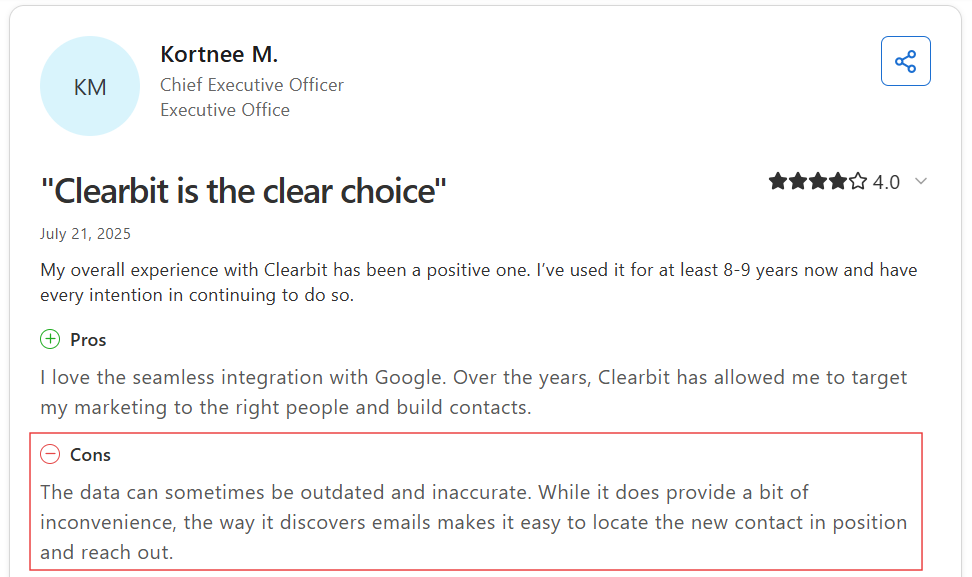
— Kortnee M., Chief Executive Officer, Executive Office (Source: Capterra Review)
Source: Reddit Thread
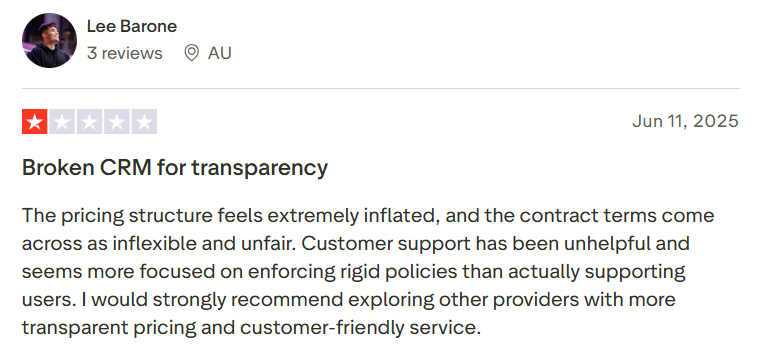
Pricing,Contract & Customer Support issue
Source: Trustpilot
Source: Capterra
The Ultimate Comparison: Top 11 Website Visitor Identification Tools (2026)

The following table compares the top website visitor identification software, focusing on their ability to identify specific stakeholders and automate the sales process.
Top 11 Clearbit Alternatives: The Deep Dive
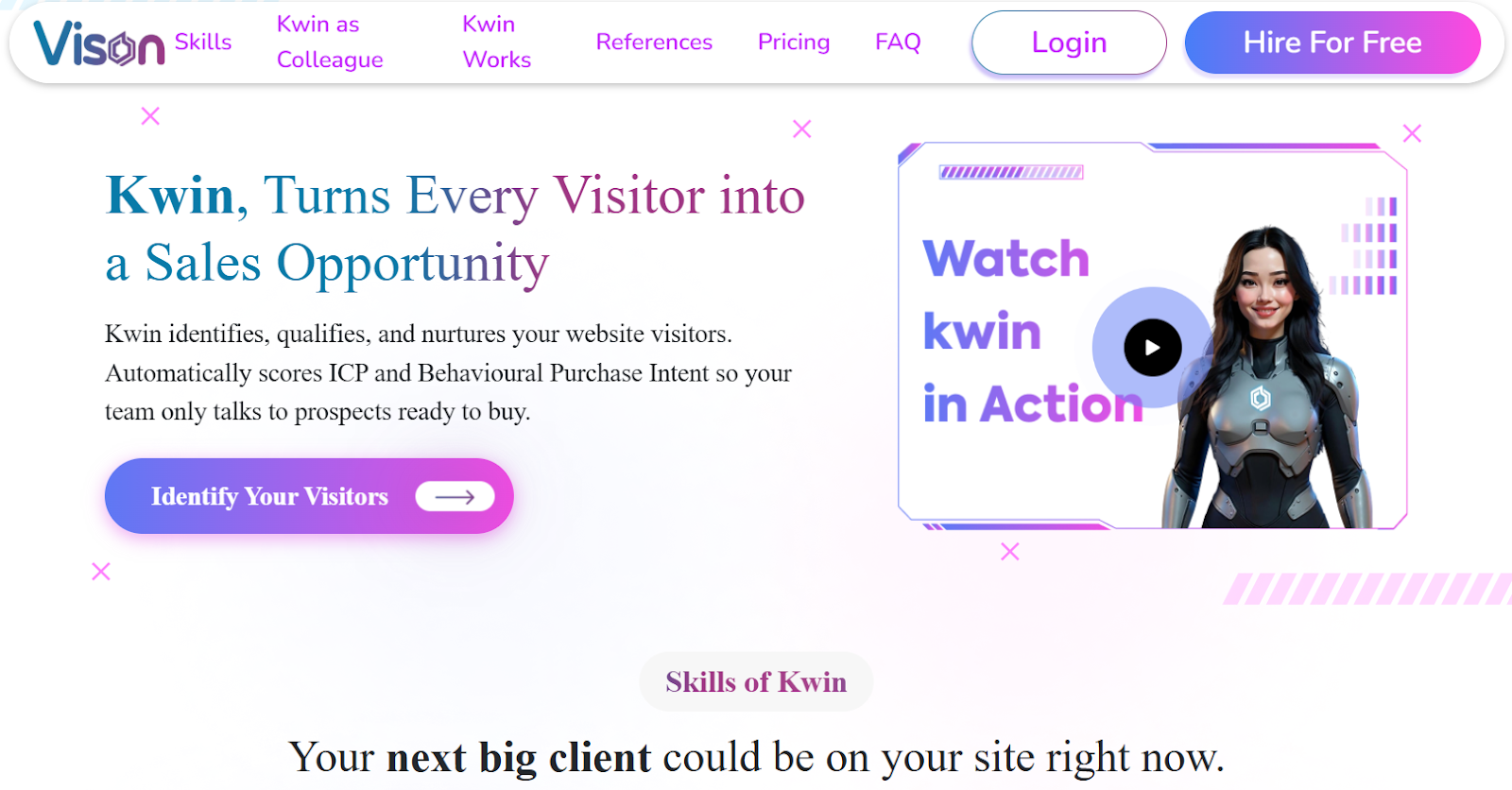
1. Kwin by Vison AI – The AI Employee for Revenue
Kwin is not just a data tool; it is an AI employee designed to multiply your revenue. In a world where AI discovery reduces traffic volume but increases intent, Kwin ensures you capture every single opportunity.
Most tools stop at telling you "Company X visited." Kwin goes further. It installs a pixel on your site to identify anonymous website visitors at the person level across 175+ countries. It then calculates a Purchase Intent Score (PIS) based on their behavior (e.g., did they view pricing? did they read case studies?).
If the visitor matches your Ideal Customer Profile (ICP) and the PIS threshold, Kwin automatically drafts and sends a hyper-personalized email or LinkedIn message. It does the work of an SDR, 24/7, without human intervention.
Feature | Kwin (AI Employee) | Clearbit (Breeze Intelligence) |
|---|---|---|
Primary Goal | Book Meetings (Active Action) | Clean Data (Passive Enrichment) |
Visitor Identity | Specific People (Name, Email, LinkedIn) | Company Level (IP-to-Company) |
Pricing Model | Unlimited Outreach (1 Credit = 1 Lead) | Pay-Per-Attribute (Burn credits for everything) |
Speed | Real-Time (Instant Outreach) | Delayed (Weekly Reports / Batch Sync) |
Free Plan | 100 Leads/Month Forever | None (Paid HubSpot Add-on) |
Pros:
- Global Person-Level ID: Identifies specific decision-makers in 175+ countries, not just the US. Kwin is fully GDPR and CCPA compliant.
- Autonomous Action: It doesn't just alert you; it starts the conversation.
- Intent Scoring: Filters out "tire kickers" using the proprietary Purchase Intent Score. Kwin gives you intent data and take actions based on the identified visitor's intent.
- Free Forever Plan: Generous free tier (100 leads/month) makes it risk-free to test.
Cons:
- Paradigm Shift: Requires trusting AI to handle initial outreach.
- Inbound Focus: Best used for capturing website traffic rather than cold outbound.
Best For: B2B companies of all sizes that want to turn anonymous traffic into booked meetings without hiring more staff.
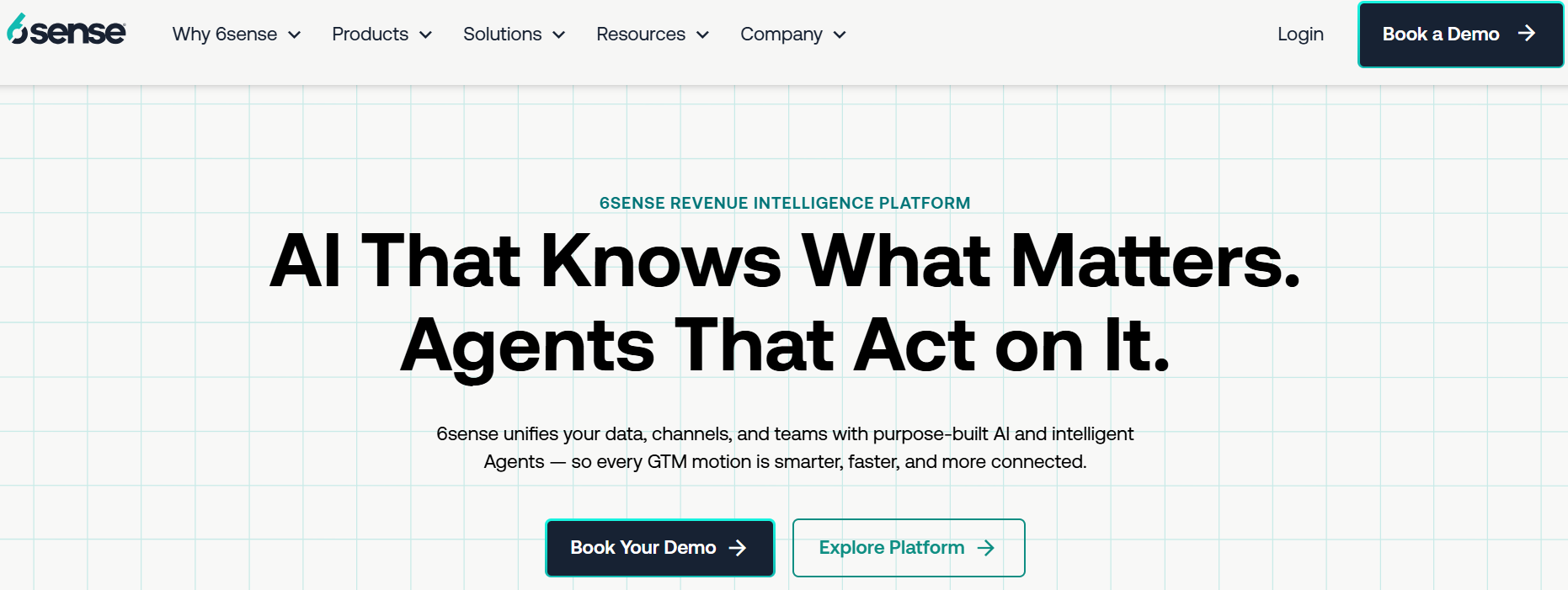
2. 6sense
6sense is less of a direct Clearbit alternative and more of a total platform replacement. It focuses on "The Dark Funnel"—identifying demand before a prospect even lands on your site. For large enterprises, it provides a comprehensive view of account intent across the web.
Source:6sense
Pros:
- Deep Intent Data: Aggregates signals from third-party sites to predict buying stages.
- Buying Groups: Maps out the entire decision-making unit, not just one contact.
- Ad Orchestration: Can automatically trigger display ads to target accounts.
Cons:
- Expensive: Pricing often starts north of $30k/year.
- Complex Setup: Requires a dedicated Ops person to manage effectively.
Best For: Enterprise organizations with large budgets running complex Account-Based Marketing (ABM) campaigns.
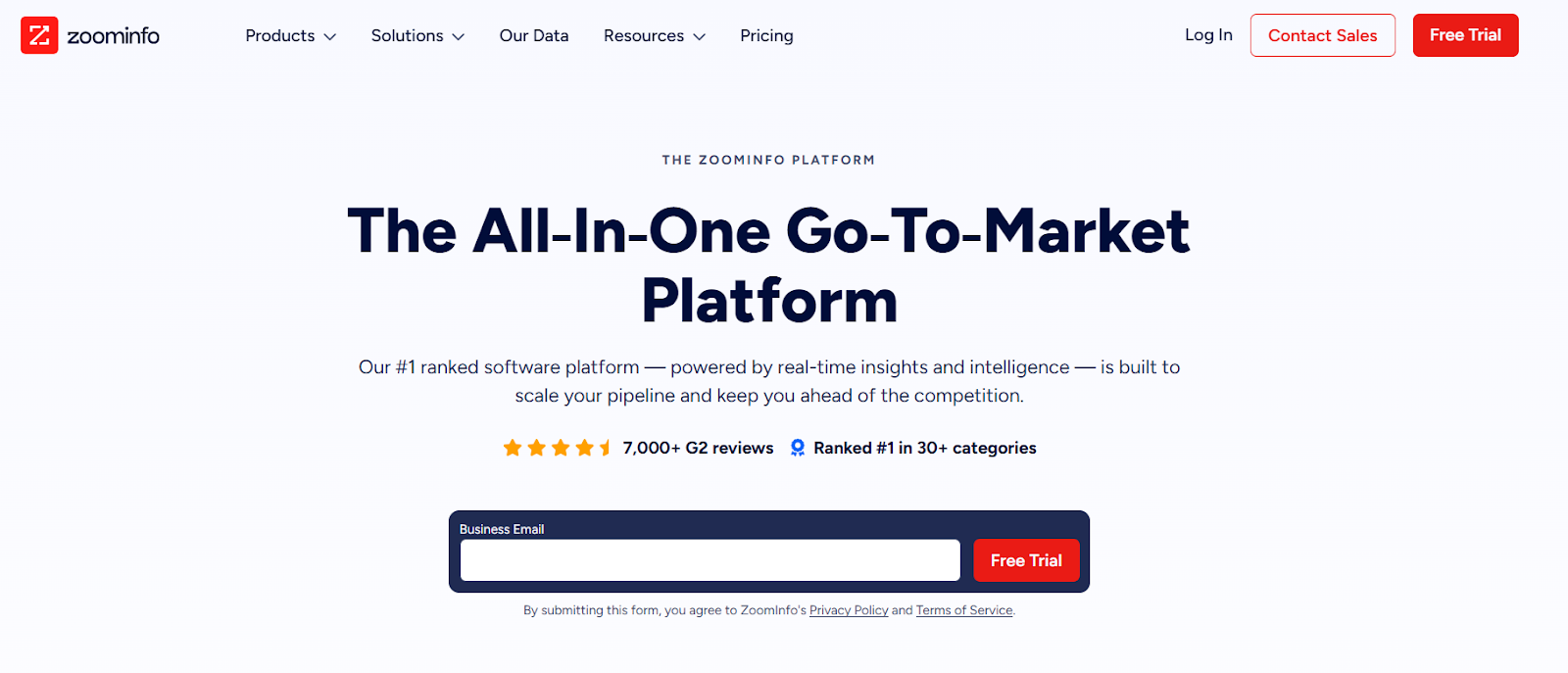
3. ZoomInfo
ZoomInfo remains the gorilla in the room. Its "WebSights" feature competes directly with Clearbit’s "Reveal." While powerful, it suffers from the same issues as Clearbit: it’s primarily a static database that struggles to track website visitors at the individual level without a form fill.
Source:Zoominfo
Pros:
- Data Volume: The largest contact database for North American companies.
- Salesforce Integration: Robust (if expensive) integration for enterprise CRMs.
- Intent Data: "Streaming Intent" shows which companies are researching your topics.
Cons:
- Aggressive Contracts: Notorious for auto-renewals and iron-clad lock-ins.
- Noise: Often flags "ISP" traffic or generic company hits that are inactionable.
Best For: Large outbound sales teams that need a massive phone book for cold calling.
4. Leadfeeder (Dealfront)
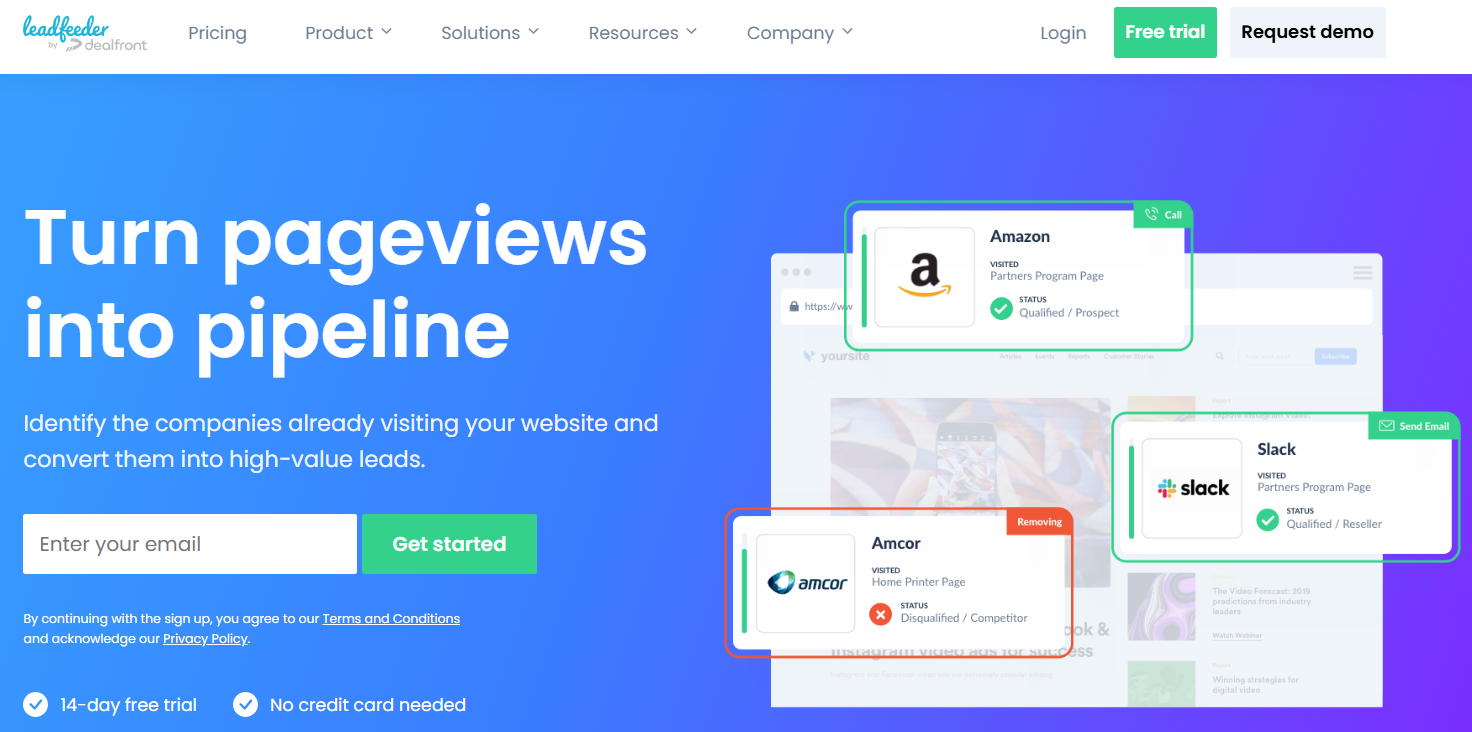
Leadfeeder is now part of Dealfront, Leadfeeder is excellent for marketers who want to visualize company traffic. It integrates seamlessly with Google Analytics to show you how to track website visitors and attribute them to specific marketing campaigns.
Source:Leadfeeder
Pros:
- UI/UX: Beautiful, easy-to-read dashboards that sales reps actually like.
- GDPR Compliance: Strong focus on European data privacy laws.
- Content Insights: Shows exactly which blog posts or pages a company viewed.
Cons:
- Company Only: Doesn't tell you who visited, just the company.
- Manual Export: You generally have to manually push leads to the CRM or setup automation.
Best For: Marketing teams in Europe or those needing strict GDPR compliance.
5. RB2B
RB2B has exploded in popularity among founders and small teams. It pushes website visitor data directly to Slack. Specifically, it tries to identify the LinkedIn profile of the visitor, allowing for a quick connection request.
Source:RB2B
Pros:
- Slack Native: Delivers alerts where you already work.
- Person-Level: distinct focus on showing you the human, not just the logo.
- Simple Pricing: Has a functional free tier for small volumes.
Cons:
- Manual Workflow: It gives you the profile, but you still have to type the message.
- US Centric: Doesn’t Identify person-level outside the US.
Best For: Founders and small SDR teams who live in Slack and handle outreach manually.
6. Apollo.io
Apollo.io is the Swiss Army Knife of sales. It combines a database, a sequencer, and visitor tracking into one low-cost package. If Clearbit is too expensive, Apollo is usually the first stop for budget-conscious teams.
Source:Apollo
Pros:
- Cost: Unbeatable value for the number of features provided.
- Sequencing: Built-in email automation (though not as "smart" as Kwin's AI).
- Database: Huge database of contacts to enrich the company data you find.
Cons:
- Data Decay: Contact data is often less accurate than premium providers.
- Generic Tracking: Visitor identification is limited to company level.
Best For: Startups and high-volume outbound teams on a tight budget.
7. Koala
Koala is a modern tool built for Product-Led Growth (PLG) companies. It combines website visitor identification with product usage data. If you have a SaaS app and want to know when a "whale" is testing your free tier, Koala is the tool.
Source:Koala
Pros:
- Modern Interface: Slick, Notion-style interface that feels very 2026.
- Product Signals: Merges website visits with app login activity.
- Buying Intent: Highlights "intent signals" like viewing the pricing page 3x.
Cons:
- SaaS Only: Really only useful for software companies.
- Low Match Rates: Visitor identification limited to company deanonymization and can be lower than data-heavy competitors.
Best For: B2B SaaS companies with a "Free Trial" or PLG motion.
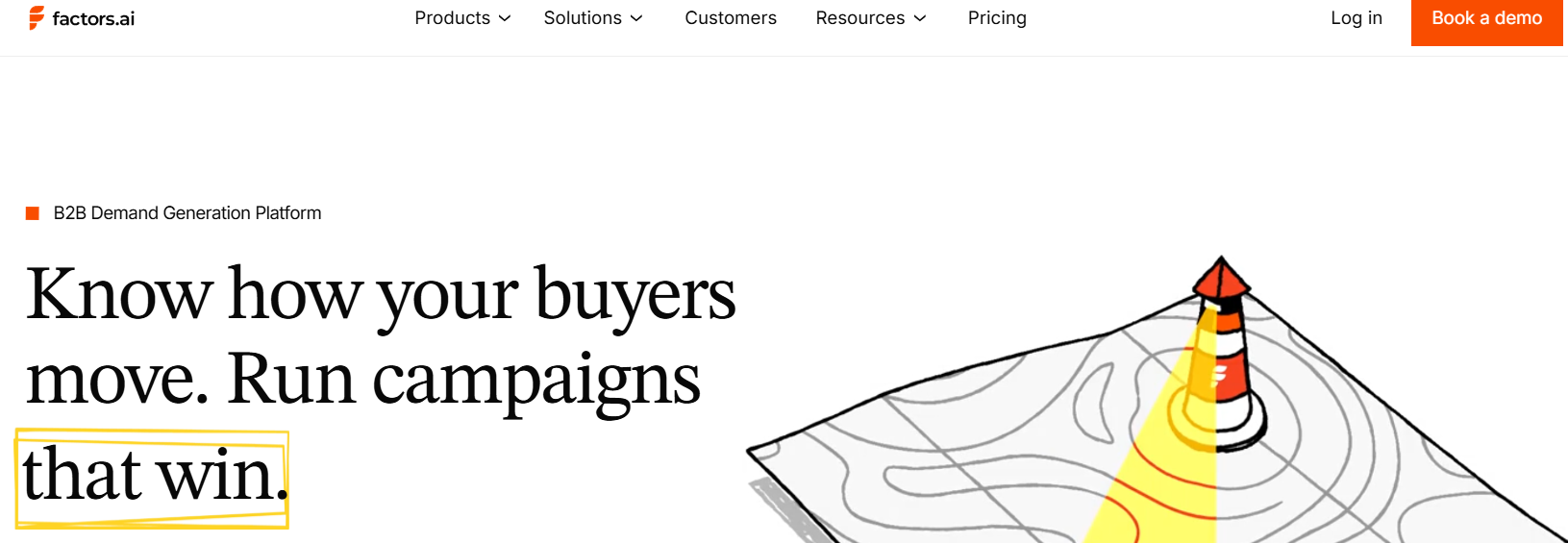
8. Factors.ai
Factors.ai goes deep on analytics. It is less about "sales alerts" and more about understanding the entire customer journey. It helps marketing ops teams answer: "Did the visitor from LinkedIn Ads eventually read the case study?"
Source:Factors AI
Pros:
- Journey Mapping: Visualizes the entire path from anonymous click to closed deal.
- Deanonymization: Good at revealing account-level data for varied traffic sources.
- Attribution: Solves the "which ad worked?" problem.
Cons:
- Steep Learning Curve: Data-heavy interface can be overwhelming for sales reps.
- Not a Sales Tool: Primary user is the marketing analyst, not the SDR.
Best For: Performance marketing teams and RevOps professionals.
9. Snitcher
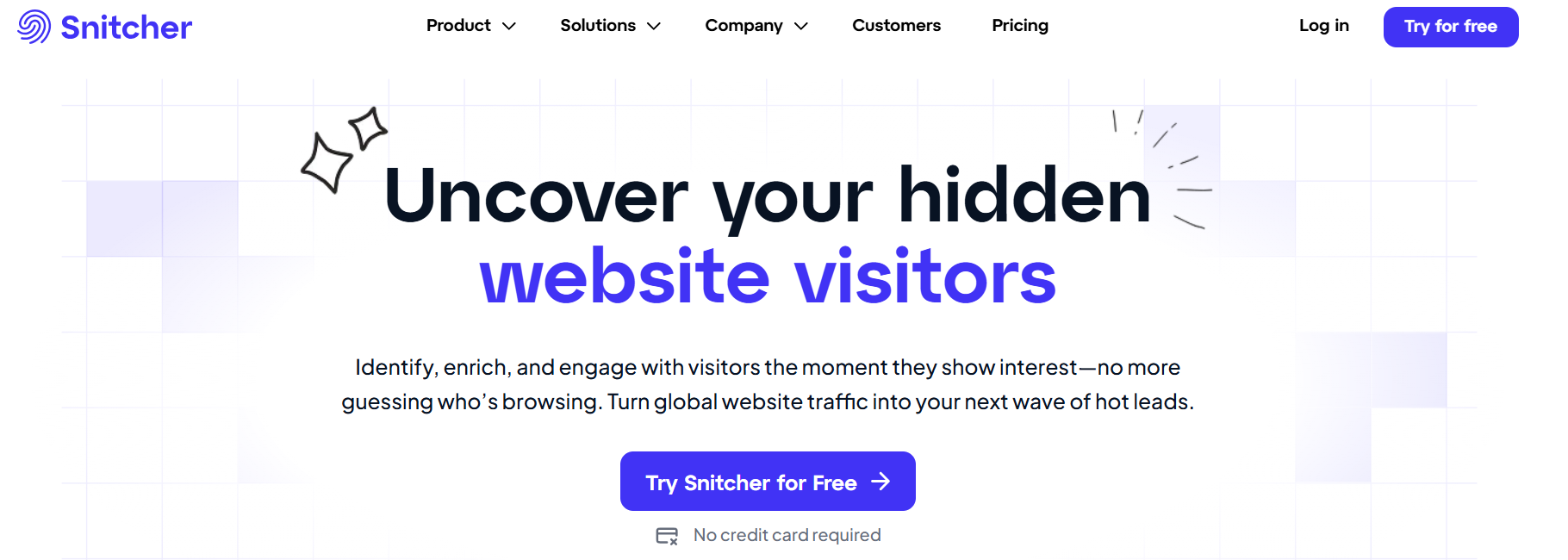
Snitcher is a simple, no-frills alternative. It identifies companies on your site and sends a daily report. It doesn't try to be an AI employee or an ABM platform; it just tells you who visits your website.
Source:Snitcher
Pros:
- Simplicity: You can set it up in 2 minutes.
- Price: Very affordable for small agencies.
- Google Analytics Sync: Pushes company data into GA4 effectively.
Cons:
- Limited Features: No outreach, no person-level ID, no complex scoring.
- Data Depth: Provides basic firmographics only.
Best For: Small local businesses or agencies needing basic reporting.
10. Leadinfo
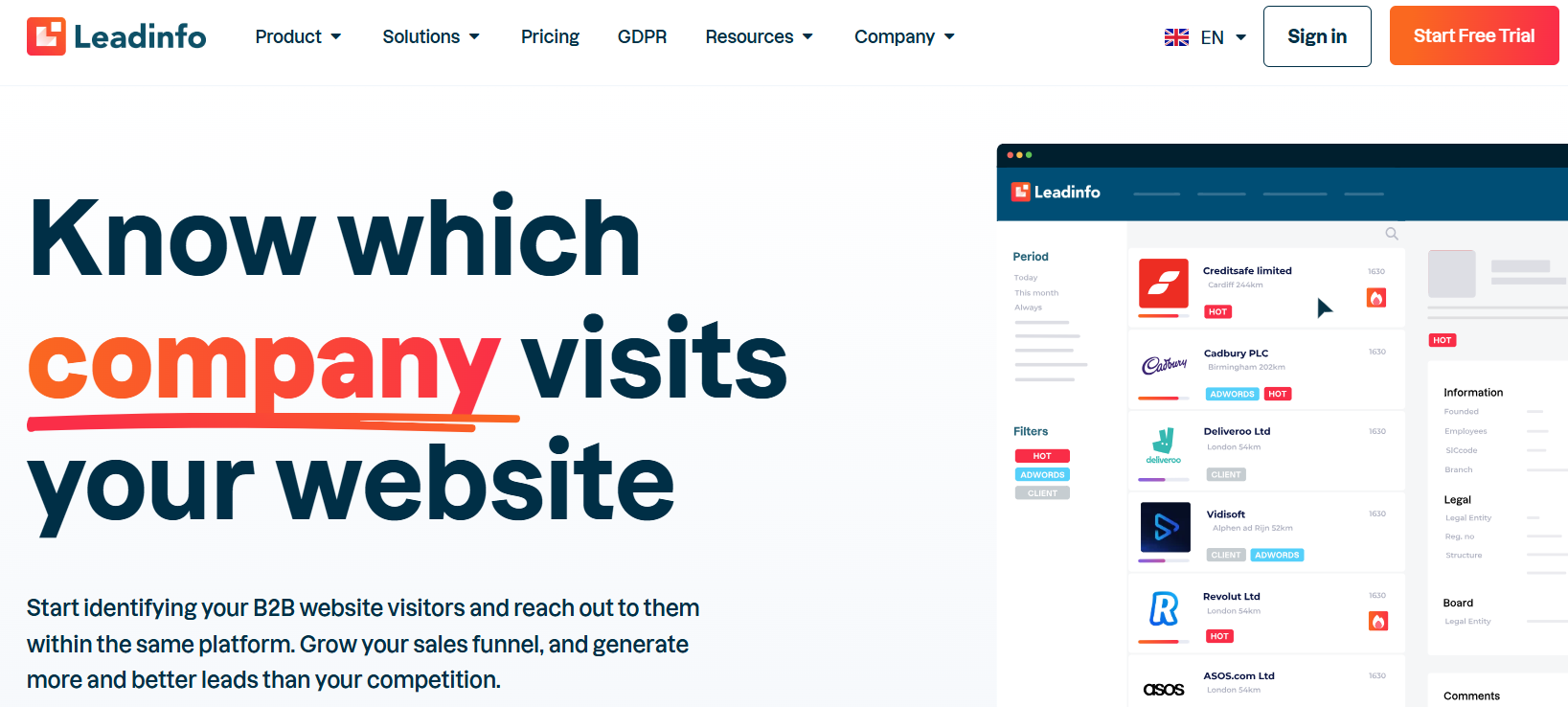
Leadinfo is designed for B2B lead generation. It identifies the companies visiting your website and provides a list of key contacts at those companies (though not necessarily the exact visitor).
Source:Leadinfo
Pros:
- Agency White-Labeling: Allows agencies to brand the dashboard for their clients.
- Lead Queues: Organizes traffic into "queues" for different sales reps.
- Integrations: Connects with Zapier to push data elsewhere.
Cons:
- Company Level: Still relies on you guessing who the contact was.
- US/Canada Focus: Data is strongest in North America.
Best For: Digital marketing agencies managing lead gen for clients.
11. Albacross
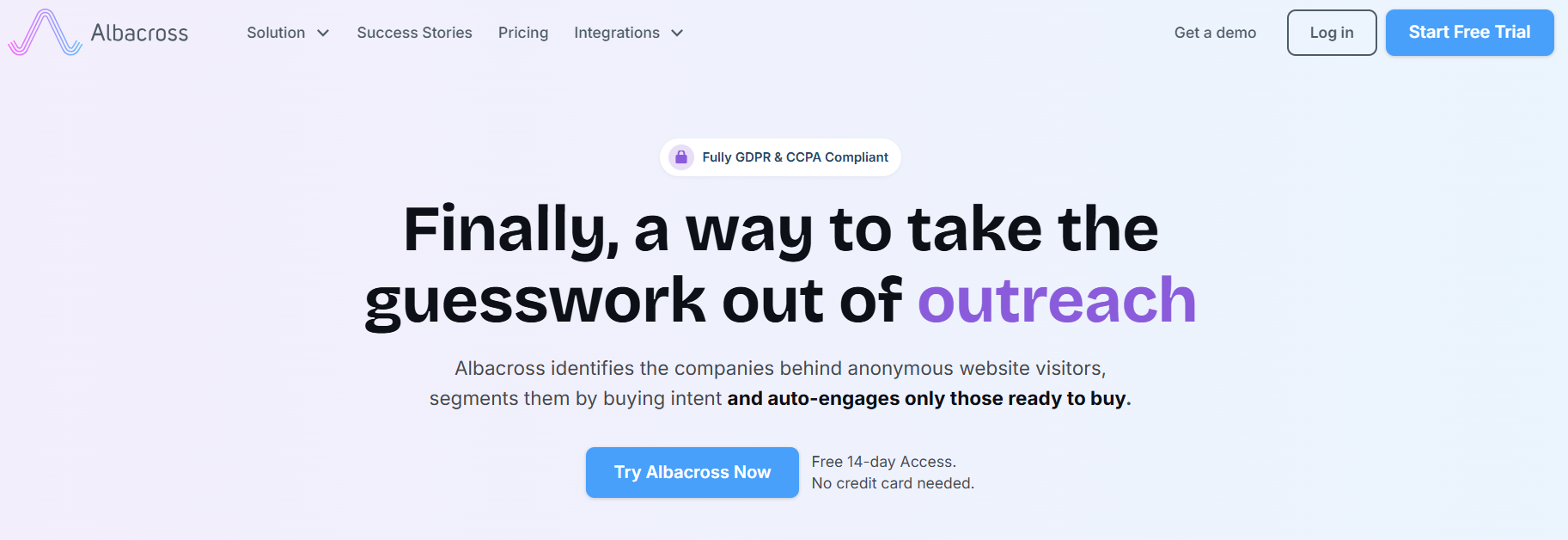
If your traffic is primarily from the EU, Albacross is a top contender. It focuses heavily on compliance and building a database of European companies, which American tools often miss.
Source:Albacross
Pros:
- EU Data: Superior match rates for traffic from Germany, Sweden, UK, etc.
- Intent Data: "Known to Buy" workflow highlights high-value accounts.
- Seamless Integration: Good native integrations with European CRMs.
Cons:
- Price: Has moved upmarket and is no longer a "cheap" option.
- Niche: Less effective if your market is global or US-based.
Best For: B2B teams selling specifically to the European market.
The True Cost of Clearbit: The 'Credit Burn' Trap
The Hidden Costs of Clearbit (Breeze Intelligence) Since being acquired by HubSpot, Clearbit's pricing has become even more complex. While entry-level "Starter" packs might look cheap (~$100/mo), the "Credit Consumption" model means your bill scales aggressively:
- You Pay for Everything: You burn credits to Reveal a visitor. You burn more credits to Enrich that contact. You burn even more credits to check Intent.
- The "Batch" Shock: If you run a batch update on your database, you can wipe out your entire monthly credit limit in 10 minutes, forcing you to buy expensive "Top-Ups."
- The Real B2B Cost: To get sufficient credits for a growing SaaS company, you are often looking at $2,000 - $4,500 per month in data fees alone.
The Vison AI Advantage: Kwin eliminates "Credit Anxiety."
- Simple Math: You use 1 credit to identify a visitor. That’s it.
- Free Action: The AI research, the email writing, and the multi-channel sending are included. You don't pay extra to "act" on your data.
Why AI Discovery Changes the Game
In 2026, the volume game is over.
When a user asks Google or Perplexity a question, the AI gives them the answer without them needing to click on your website. This means "top of funnel" traffic is shrinking for everyone.
However, the users who do click through are no longer just browsing—they are fact-checking, pricing, or validating a decision. Their intent is 10x higher than the traffic of 2023.
Using a tool like Kwin by Vison AI is not just about getting more leads; it's about respecting the new reality of the internet. You cannot afford to let a single one of these high-intent researchers leave your site without engagement. Old tools like Clearbit wait for a form fill. Modern tools like Kwin initiate the handshake.
Conclusion: The Clear Winner
If you are an enterprise using HubSpot for everything, Clearbit (Breeze) might still make sense despite the cost.
But if your goal is to identify anonymous website visitors and turn them into revenue efficiently, the legacy tools are failing you. They are too expensive, too manual, and too focused on company logos rather than human buyers.
Kwin by Vison AI is the only tool on this list that closes the loop. It combines:
- Person-Level Identification (Who is it?)
- Purchase Intent Scoring (Are they buying?)
- Autonomous Outreach (Let's book a meeting.)
Don't just watch your traffic. Capture it.
Start multiplying your leads with Kwin. Get 100 free leads/month forever.