
Executive Summary: Key Takeaways
- The Core Problem: Factors.ai is great for analyzing traffic, but it leaves the hard work of outreach to you. It tells you which company visited, but doesn't identify the exact person or help you close them.
- The Direct Answer: If you want dashboard analytics, stick with Factors.ai. If you want autonomous meetings, switch to Kwin by Vison AI.
- The Verdict: Kwin is the superior alternative because it acts as an "AI Business Developer," automatically emailing the leads she identifies.
- Fast Facts:
- Factors.ai Price: Lite from $199/mo after a free trial, with annual plans from $6K.
- Kwin Price: Free forever on Lead Watcher (100 leads/month, no credit card required), plus a 7-day free trial on the paid Win+ plan.
- Key Difference: Factors.ai is a Tool, while Kwin is an Employee.
The B2B buying journey has gone dark. It’s a frustrating reality for modern marketers and sales leaders. Most of the traffic you drive through ads, SEO, and content will never fill out a form. They browse, they research, they compare, and then they vanish.
If you are reading this, you likely already know that "identifying" this silent traffic is the key to unlocking massive revenue potential. You might be using a tool like Factors AI, or perhaps you are researching the category for the first time, asking the crucial questions: who visits my website, and how to identify website visitors before they raise their hands?
The challenge today isn't just about knowing which companies are on your site. It’s about deeper granularity. To truly move the needle, you need to identify anonymous website visitors at the person-level and, crucially, act on that data instantly.
While Factors AI is a recognized player in this space, the landscape of website visitor identification is evolving rapidly toward autonomous action. The market is shifting from passive "analytics dashboards" to proactive "AI Revenue Teammates."
In this comprehensive guide, we will explore the top alternatives to Factors AI in 2026, focusing on tools that don't just track website visitors, but help you close them. We will dive into solutions that allow you to identify who visits your website with precision and convert that insight into pipeline.
The Evolution of B2B Lead Gen: Why Basic "Tracking" Isn't Enough
Before diving into the tools, it is vital to understand why the category of website visitor tracking is undergoing a massive disruption.
A few years ago, it was revolutionary just to know that "IBM" visited your pricing page. This "account-level" data allowed marketing teams to run targeted ABM campaigns.
But today, account-level data is table stakes. Knowing that a 10,000-person company visited your site isn't actionable for a sales rep. Who do they call? The CEO? The janitor?
The Shift to Person-Level Intelligence
Modern B2B sales require knowing who within that account is researching you. Is it the VP of Marketing or a junior analyst?
The best website visitor tracking tools today use sophisticated identity graphs and AI to deanonymize traffic down to individual stakeholders. This allows for hyper-personalized outreach that addresses the specific context of the prospect’s visit.
Enter the "AI Employee"
The second major shift is actionable speed. Traditional website visitor analytics provide you with a CSV file of leads every morning. By the time your human BDRs research these leads and craft an email, 24 hours have passed. In the digital world, that lead is already cold.
The new generation of tools—led by solutions like Kwin—act as "AI Employees." They don't just track website visitors; they identify them, qualify them against your ICP (Ideal Customer Profile), and immediately launch personalized outreach sequences, 24/7.
If you are looking for Factors AI alternatives, you should be looking for tools that bridge this gap between raw website visitor data and autonomous revenue generation.
Criteria for Choosing the Best Website Visitor Identification Software
When evaluating website visitor identification software, especially if you are moving off an existing platform, you need to rate them against four critical criteria:
- Data Accuracy & Geographies Coverage: What percentage of your traffic can the tool successfully deanonymize? More importantly, is the contact data (emails, LinkedIn profiles) accurate? How many countries' exact visitors can be identified?
- Person-Level vs. Account-Level: Does the tool only tell you the company name, or can it probabilistically identify the key decision-makers browsing your site?
- Intent Signals: Does it track behavioral data? Knowing someone visited is good; knowing they spent 5 minutes on your "Enterprise Pricing" page and read two case studies is exponentially better.
- Actionability: This is the game-changer. Does the tool force you to manually export data, or does it integrate with your CRM and, crucially, can it autonomously start the sales conversation?
The Ultimate Comparison: Top 10 Website Visitor Identification Tools (2026)
Why Businesses are Looking for Factors AI Alternatives
Based on a deep analysis of user sentiment across G2, TrustRadius, and SoftwareReviews as of early 2026, Factors AI is viewed as a powerhouse for B2B account-level analytics but faces significant friction in the areas of user experience and lead granularity.
Pros:
- Unified Account Visibility: Excellent at merging signals from G2 buyer intent, LinkedIn ads, and your own website into one timeline.
- Multi-Touch Attribution: Provides granular data on which specific campaigns (organic vs. paid) are actually driving pipeline conversion.
- Monthly Feature Velocity: Users frequently praise the dev team for releasing new features every 4–6 weeks, keeping the tool at the cutting edge of ABM.
- Responsive Support: Unlike larger "legacy" competitors, Factors is noted for its high-touch customer success team during the onboarding phase.
Cons:
- No Person-Level ID: The tool natively identifies companies, not individuals. Sales teams are often left guessing who at the company actually visited the site.
- Steep Learning Curve: Reviews consistently mention a complex UI that requires a "1-month minimum" implementation and training period.
- Rigid Dashboards: Users report difficulty in customizing reports or sharing live dashboards with team members outside the platform.
- Scaling Costs: Costs for "Interest Groups" (+$750/mo) and "AdPilot" (+$1,000/mo) can significantly inflate the $399 base price.
Verified Customer Feedback on Factors AI

"Valuable insights, but limited individual data." "While Factors.AI provides valuable insights, one limitation is that if a user's personal data is not available, it cannot identify the exact prospect. In such cases, it only provides organizational details like the company name... having more granular data on individual prospects would make the tool even stronger." — Deepak S., G2 Verified Review (October 2025) View Full Review on G2
"Interface can be a bit overwhelming." "The learning curve is relatively steep... sometimes the dashboards feel rigid and lack flexibility. We appreciate the data, but sharing insights across the team is surprisingly difficult." — Verified Marketing Manager, TrustRadius (2025) View TrustRadius Sentiment Summary
Top 10 Factors AI Alternatives for 2026
We have analyzed the leading platforms based on the criteria above to bring you the best tools to identify website visitors for lead generation.
1. Kwin by Vison.ai (The AI Revenue Employee)
If you are looking for an alternative because you want more than just data—if you want results—Kwin is the paradigm shift in this category.
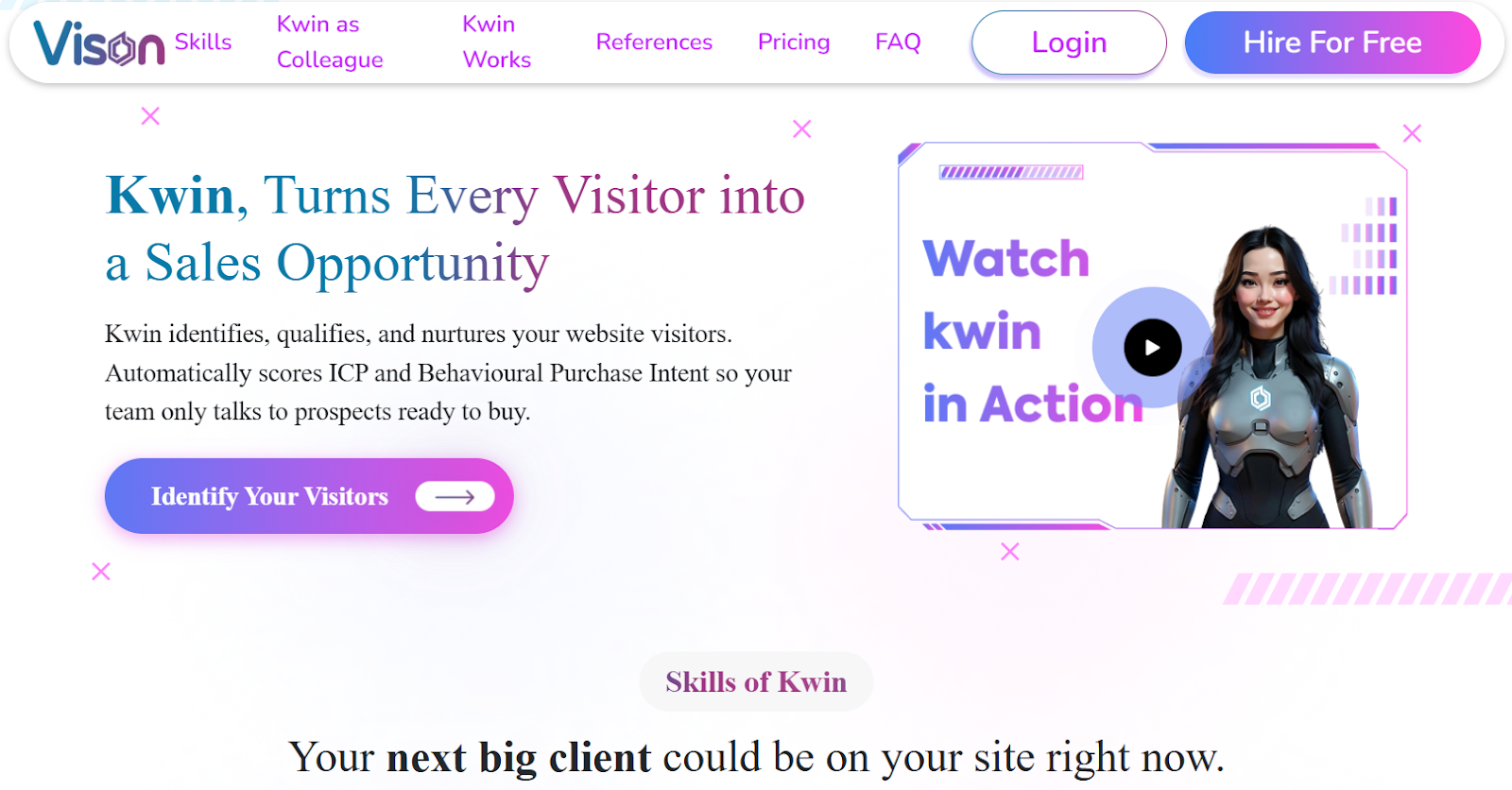
Kwin is not just a passive tracking script; she is an AI Business Developer that lives on your website.
While traditional tools focus on populating dashboards, Kwin focuses on populating your sales officer's calendar. She addresses the biggest bottleneck in using visitor data: the human delay in follow-up.
How Kwin is Different:
- Person-Level Precision: Kwin utilizes advanced proprietary identity resolution to go beyond company IP matching, identifying key stakeholders and their valid contact information.
- Instant ICP Qualification: Kwin filters out the noise. She is trained on your Ideal Customer Profile, so she only engages with prospects who are actually qualified to buy, ignoring students, competitors, or bad fits.
- Autonomous Outreach: This is Kwin's superpower. When a high-intent visitor is identified, Kwin doesn't just notify you. She instantly crafts and sends personalized emails or LinkedIn connection requests based on the specific content the visitor consumed.
- Zero Friction: Kwin requires zero manual effort once set up. She works 24/7, ensuring that a prospect researching you at 11 PM gets an immediate, context-aware follow-up, long before your human team logs on.
Best For: B2B SaaS companies and agencies that want to automate the top-of-funnel and turn their website into an active sales channel without hiring more human BDRs.
👉 See Kwin in Action and Start Identifying Leads Today
2. Clearbit (by HubSpot)
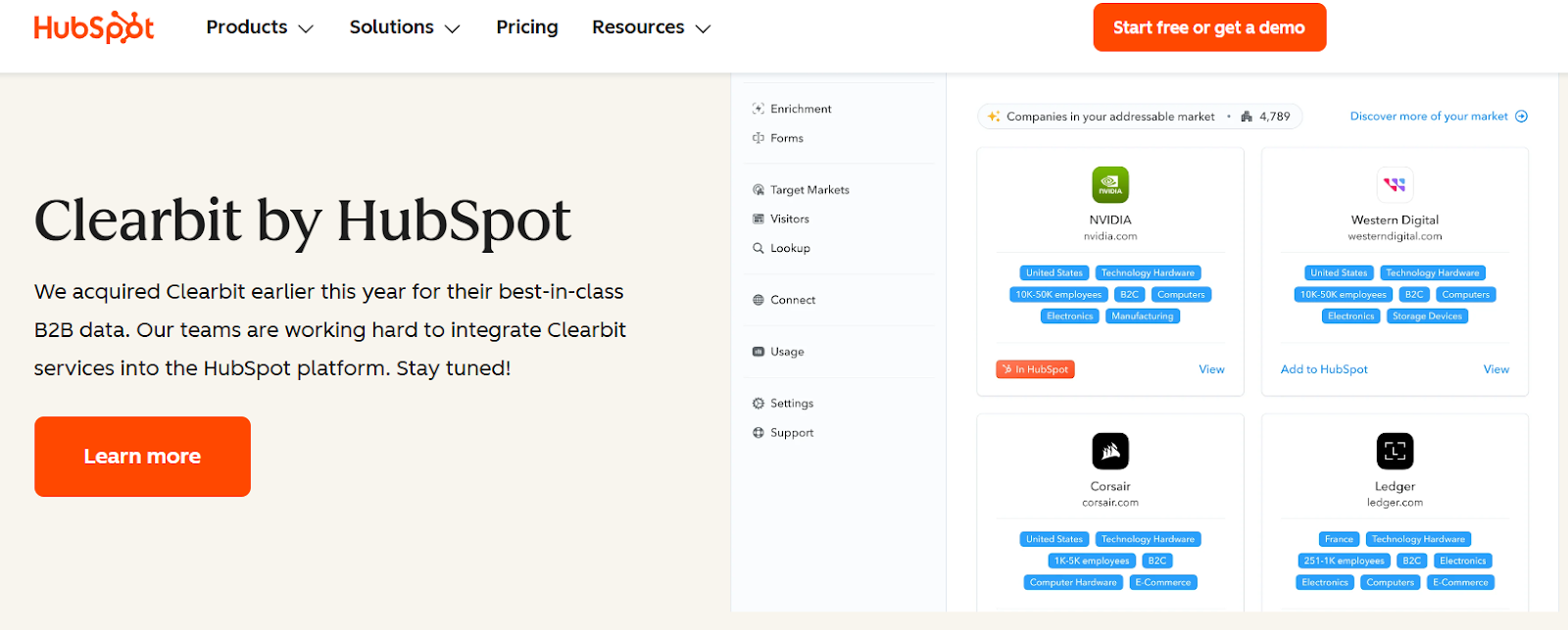
Clearbit (now Breeze Intelligence) has long been the gold standard for B2B data enrichment. Recently acquired by HubSpot, its capabilities are even more tightly integrated into inbound marketing workflows.
Clearbit’s "Reveal" product handles visitor identification. Its greatest strength is the sheer size and accuracy of its dataset. Because it powers so many other platforms, its identity graph is immensely powerful, particularly for identifying U.S.-based mid-market and enterprise companies.
Source:Hubspot
Pros:
- Excellent data accuracy and match rates, especially in North America.
- Seamless integration if you are already in the HubSpot ecosystem.
- Real-time enrichment of inbound forms (shortening forms while still gathering data).
Cons:
- It is primarily a data provider, not an autonomous action platform. You still need human BDRs or complex automation workflows to act on the data.
- Clearbit's credit-based pricing model can drain your budget, as mentioned by many users on feedback platforms like G2, Trustpilot and Capterra.
- Premium pricing structure that can be prohibitive for smaller startups.
Best For: Companies already heavily invested in HubSpot needing top-tier data enrichment.
3. 6sense
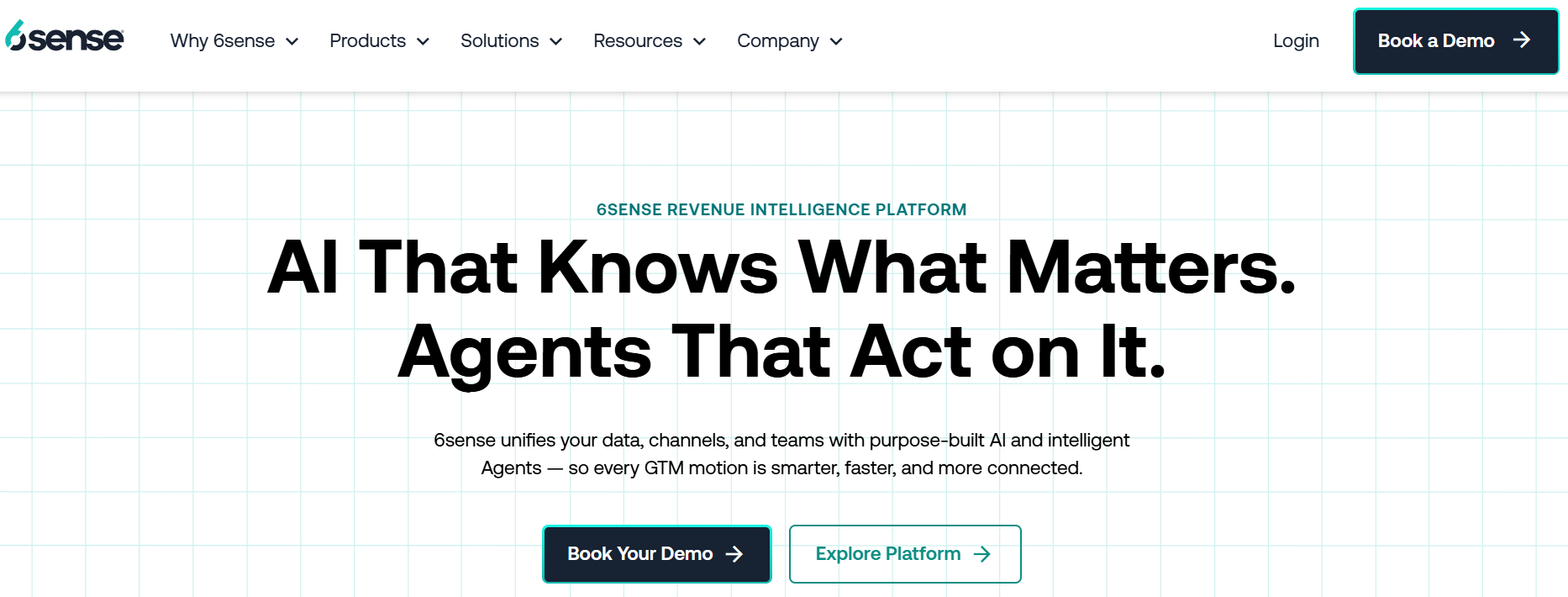
6sense is a heavyweight in the Account-Based Marketing (ABM) space. It is less of a simple "visitor identification" tool and more of a comprehensive platform for predicting market demand.
6sense uses AI to analyze "Dark Funnel" signals—intent behaviors happening across the web, not just on your site—to tell you which accounts are "in-market" to buy. When those accounts hit your website, 6sense flags them highly.
Source:6sense
Pros:
- Incredibly powerful predictive modeling to identify accounts before they visit your site.
- Deep focus on buying committees and multi-threading large accounts.
- Excellent for aligning large sales and marketing teams around target accounts.
Cons:
- Significant implementation time and cost. It is an enterprise solution.
- Overkill if you simply want to know how to identify website visitors and send them a quick email.
Best For: Enterprise B2B companies with dedicated ABM teams and significant budgets.
4. Leadfeeder (by Dealfront)
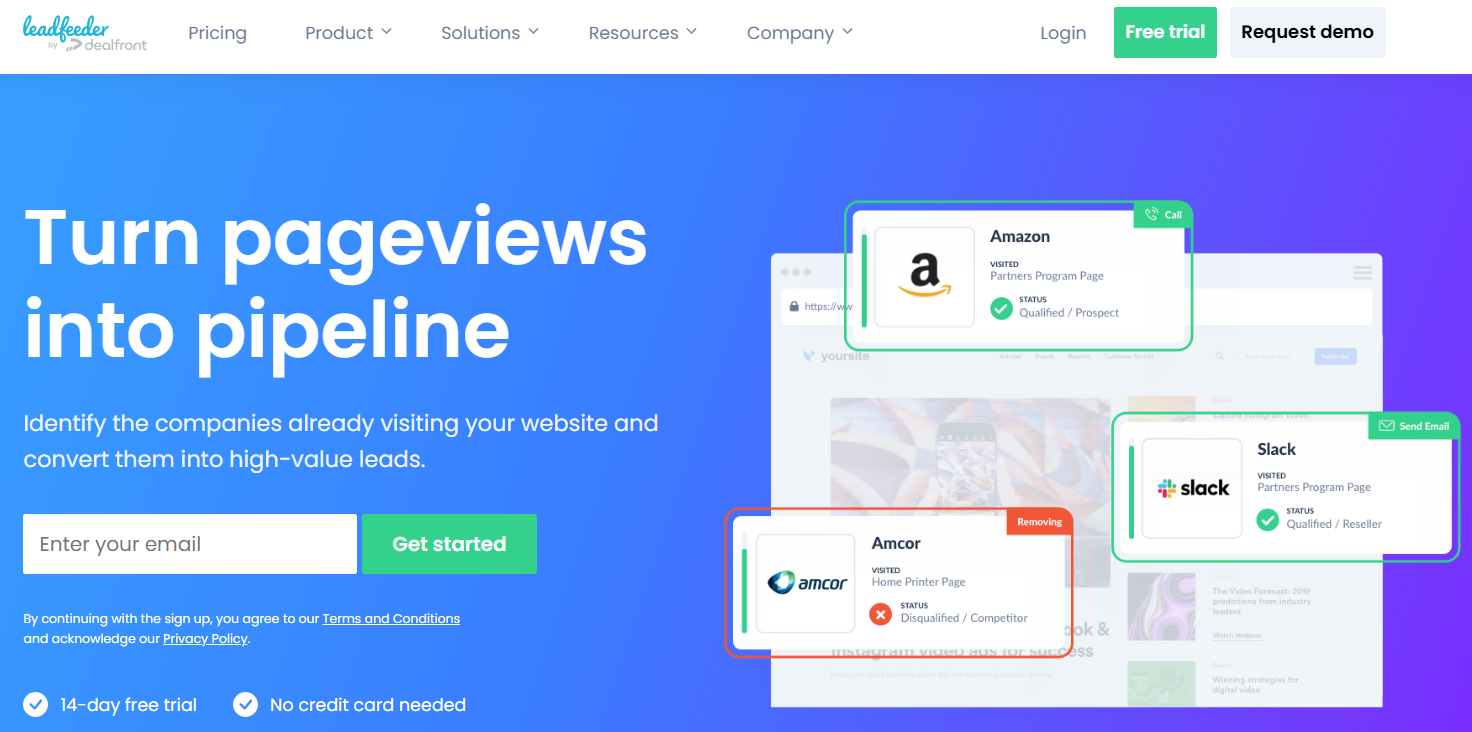
Leadfeeder is often the first tool companies try when they begin website visitor tracking. It is known for its simplicity, ease of setup, and clean user interface.
It does an excellent job of identifying the companies visiting your site and showing you what pages they looked at. It integrates well with tools like Pipedrive and Salesforce to push these company leads to your sales team.
Source:Leadfeeder
Pros:
- Very easy to install and understand (you can be running in minutes).
- Good balance of features and cost for small to mid-sized businesses.
- Clear reporting on visitor behavior paths.
Cons:
- Focuses primarily on account-level data. While it provides contacts at that company, it doesn't always pinpoint who the specific visitor was with high accuracy.
- Lacks native autonomous outreach capabilities.
Best For: SMBs looking for a straightforward, budget-friendly entry point into visitor identification.
5. ZoomInfo
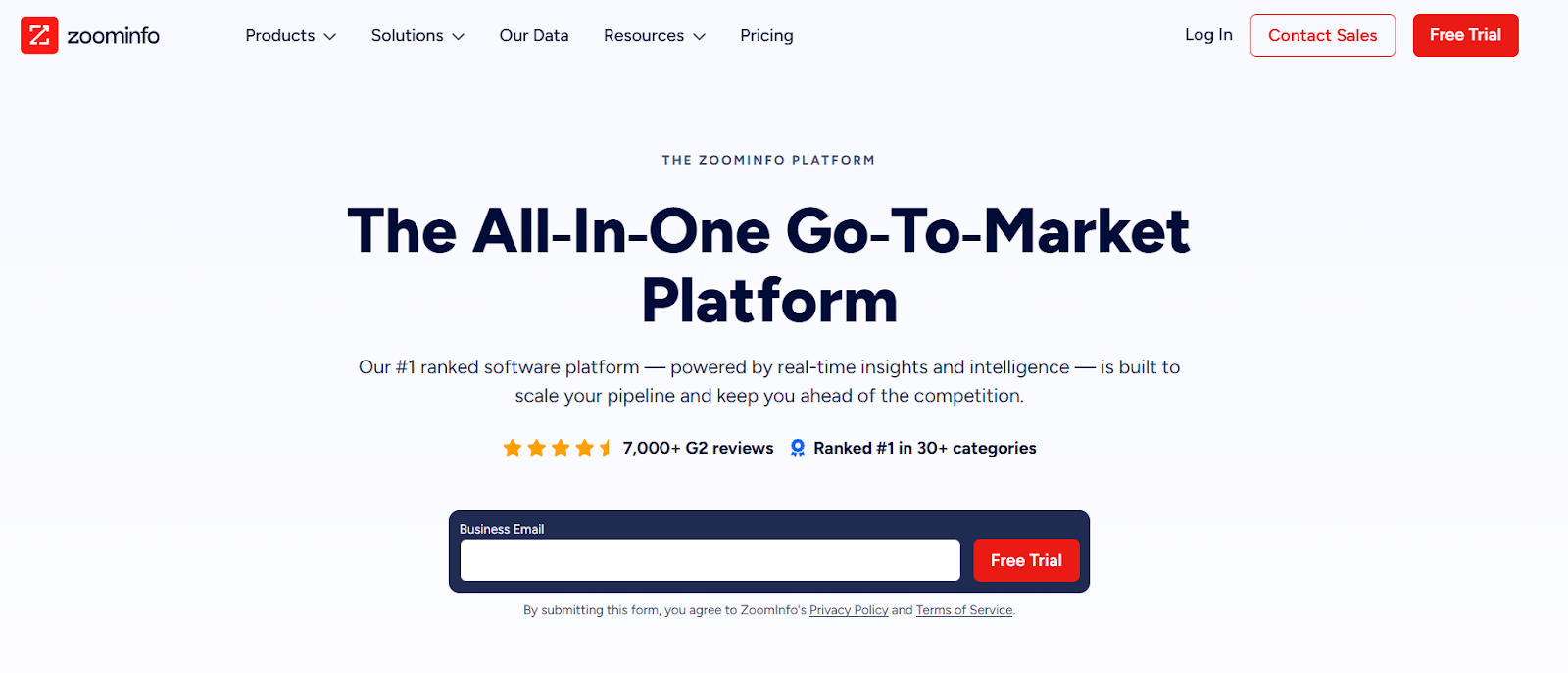
ZoomInfo is the undisputed behemoth of B2B contact databases. Their MarketingOS platform leverages this massive database to provide website visitor de-anonymization.
When ZoomInfo identifies a company on your site, it gives you immediate access to its vast repository of contacts within that organization, org charts, and direct dial numbers.
Source:Zoominfo
Pros:
- Unrivaled access to contact data once an account is identified.
- Strong intent signal overlays (showing companies researching relevant topics across the web).
- Highly reliable for targeting U.S. enterprises.
Cons:
- One of the most expensive options on the market.
- Like Clearbit, it provides the fuel (data) but requires your team to build the engine (outreach mechanisms) to act on it.
Best For: Sales-led organizations where access to direct phone numbers and massive contact lists is paramount.
6. Demandbase
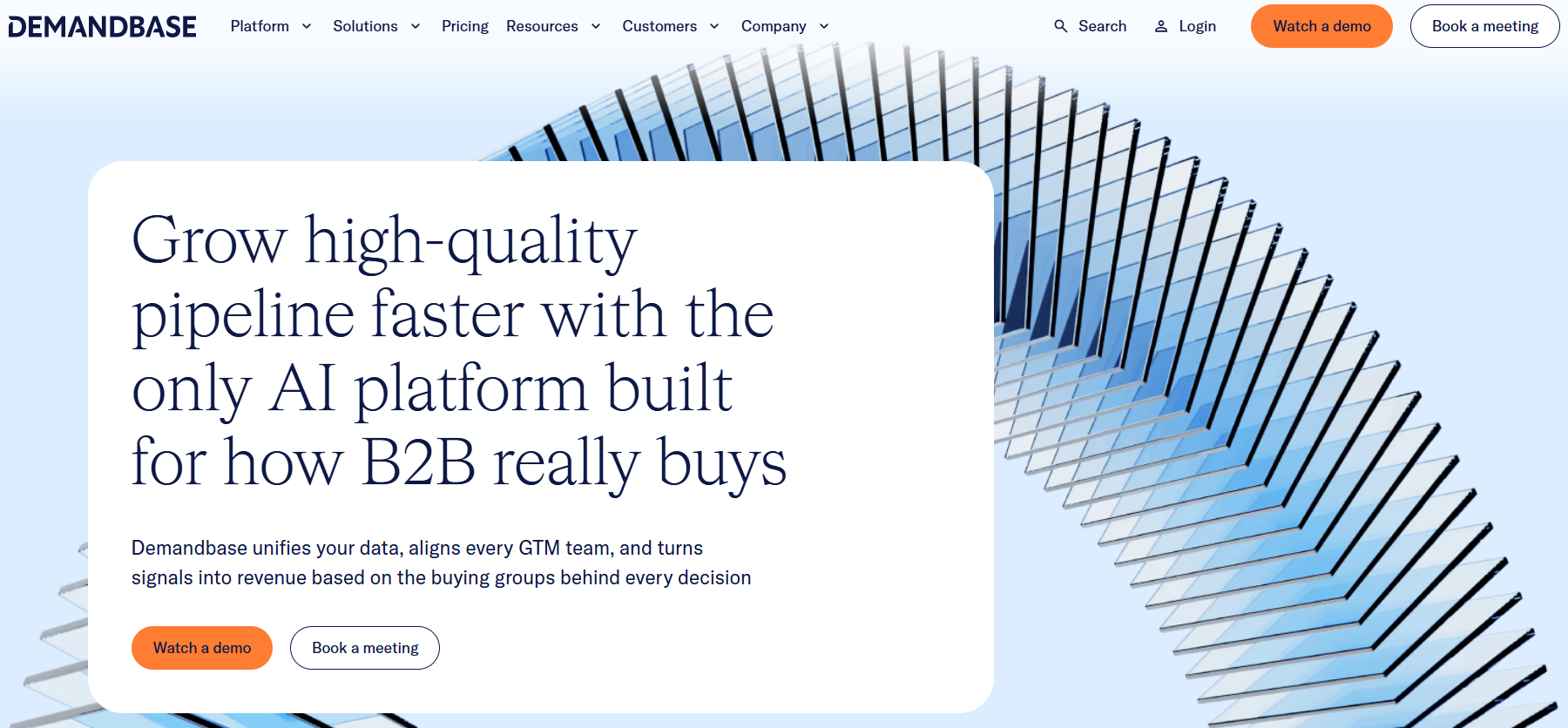
Similar to 6sense, Demandbase is a leader in the ABM and Go-To-Market (GTM) platform space.
Demandbase excels at providing a unified view of accounts across advertising, website activity, and sales interactions. Its "Account Identification" feature is robust, using a proprietary IP graph combined with third-party data partnerships.
Source:Demandbase
Pros:
- Comprehensive suite for managing end-to-end ABM campaigns.
- Strong focus on account personalization and targeted advertising capabilities based on visitor data.
- High-quality enterprise data.
Cons:
- Complex platform that requires dedicated resources to manage effectively.
- Not designed for quick, person-level transactional sales outreach.
Best For: Mid-market to Enterprise companies executing complex, multi-channel ABM strategies.
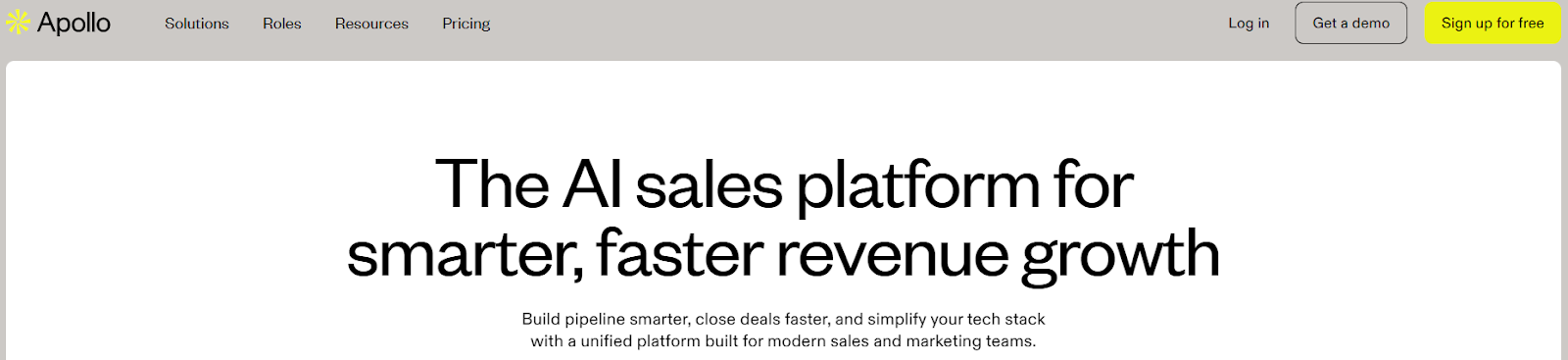
7. Apollo.io
Apollo has rapidly become a favorite for high-growth startups because it combines a massive contact database with a built-in sales engagement platform (sequencing, dialing, etc.).
Apollo’s website visitor tracking feature identifies companies and immediately allows you to filter for your ICP contacts within those companies and add them directly into Apollo sales sequences.
Source:Apollo
Pros:
- Excellent "all-in-one" value proposition (Data + Engagement + Visitor Tracking).
- Very competitive pricing model.
- Seamless workflow from identifying a visiting company to enrolling contacts in a sequence.
Cons:
- The visitor identification resolution can sometimes be lower compared to specialized players like Clearbit or Kwin.
- Outreach is still "semi-automated" (triggered sequences) rather than fully autonomous AI engagement.
Best For: Growth-stage companies that want a consolidated sales stack on a budget.
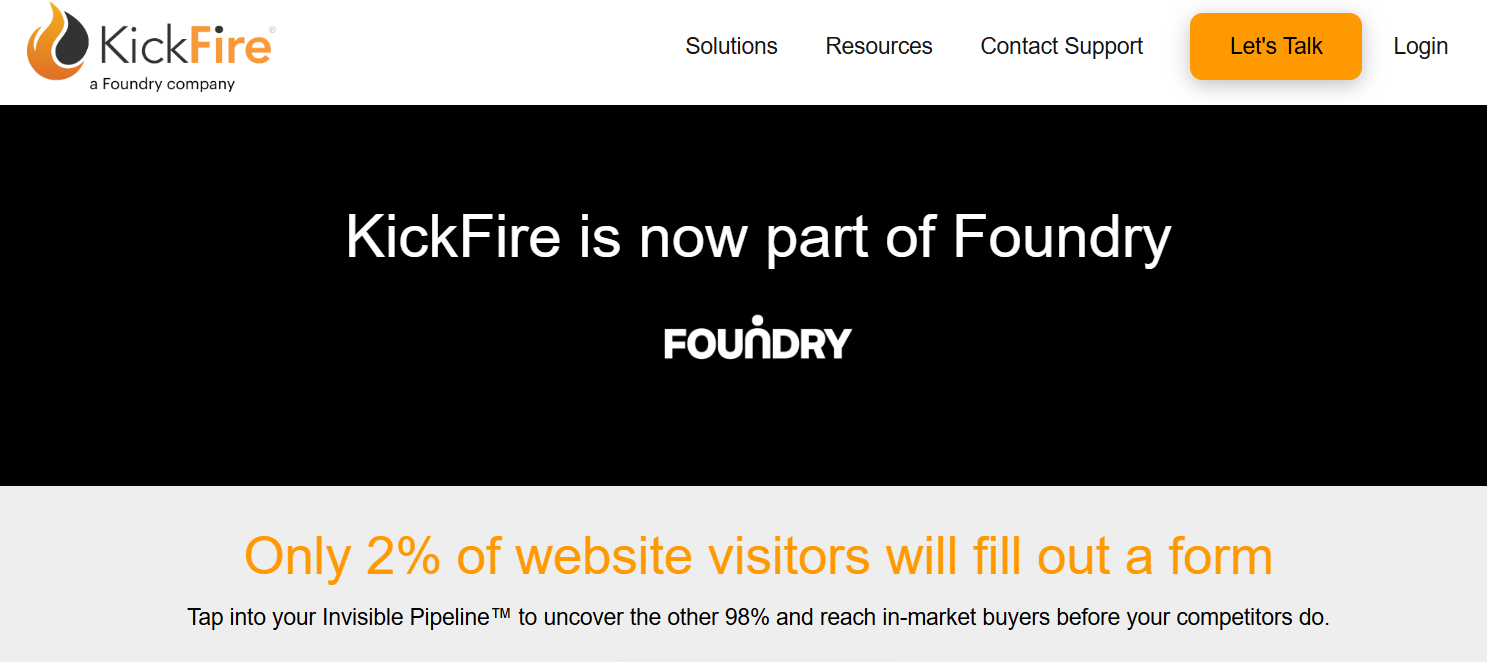
8. KickFire
KickFire (now part of Foundry) specializes heavily in IP address intelligence. They focus on the foundational technology of accurately mapping IP addresses to businesses.
Many other marketing technology platforms actually use KickFire's API under the hood to power their own identification features. They offer high-fidelity data for companies that want to build custom applications or require deeply integrated data feeds.
Source:Kickfire
Pros:
- Extremely accurate IP-to-company matching technology.
- Powerful API for custom integrations and data enrichment.
- Focuses on data quality over platform bells and whistles.
Cons:
- Less user-friendly for sales teams who just want a dashboard of leads; it's more geared towards operations and developers.
- Lacks built-in outreach tools.
Best For: Operations teams or tech-savvy companies that need raw, high-quality identification data via API.
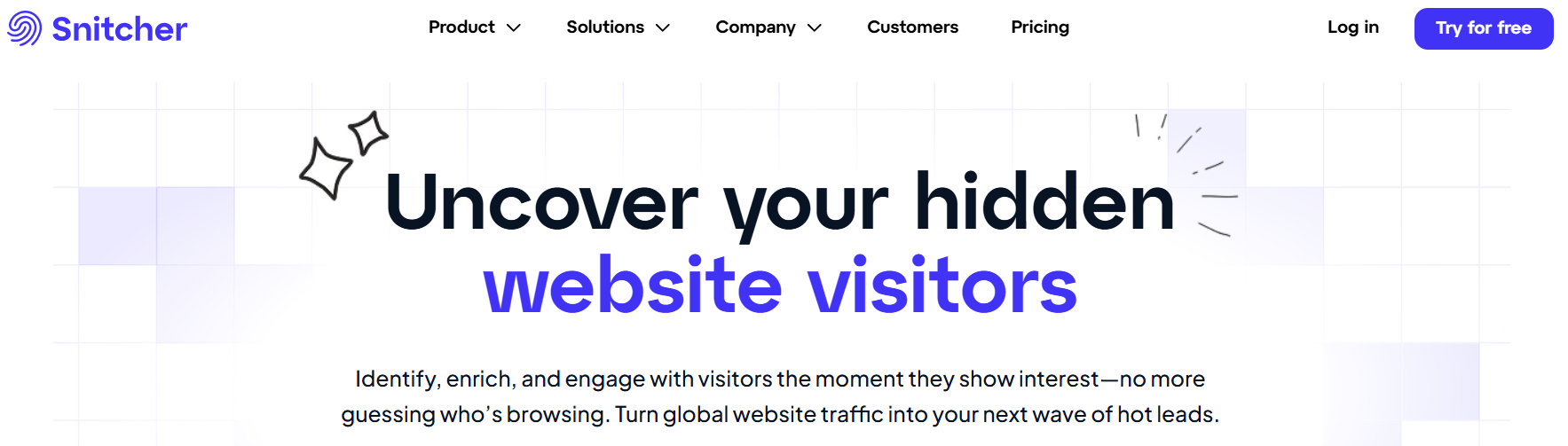
9. Snitcher
Snitcher is a strong contender in the "value" category, competing closely with Leadfeeder. It offers a clean, no-nonsense approach to identifying company visitors and integrating that data into your CRM or Slack.
It focuses on providing clear insights into what companies are doing on your site and making it easy to filter for high-intent behavior.
Source:Snitcher
Pros:
- Affordable pricing structure suitable for startups.
- Intuitive interface that is easy for non-technical users to navigate.
- Good integrations with Google Analytics to enhance existing reporting.
Cons:
- Primarily account-level identification.
- Limited feature set compared to larger platforms; focuses strictly on identification and segmentation.
Best For: Early-stage startups or small businesses needing budget-friendly visibility into their B2B traffic.
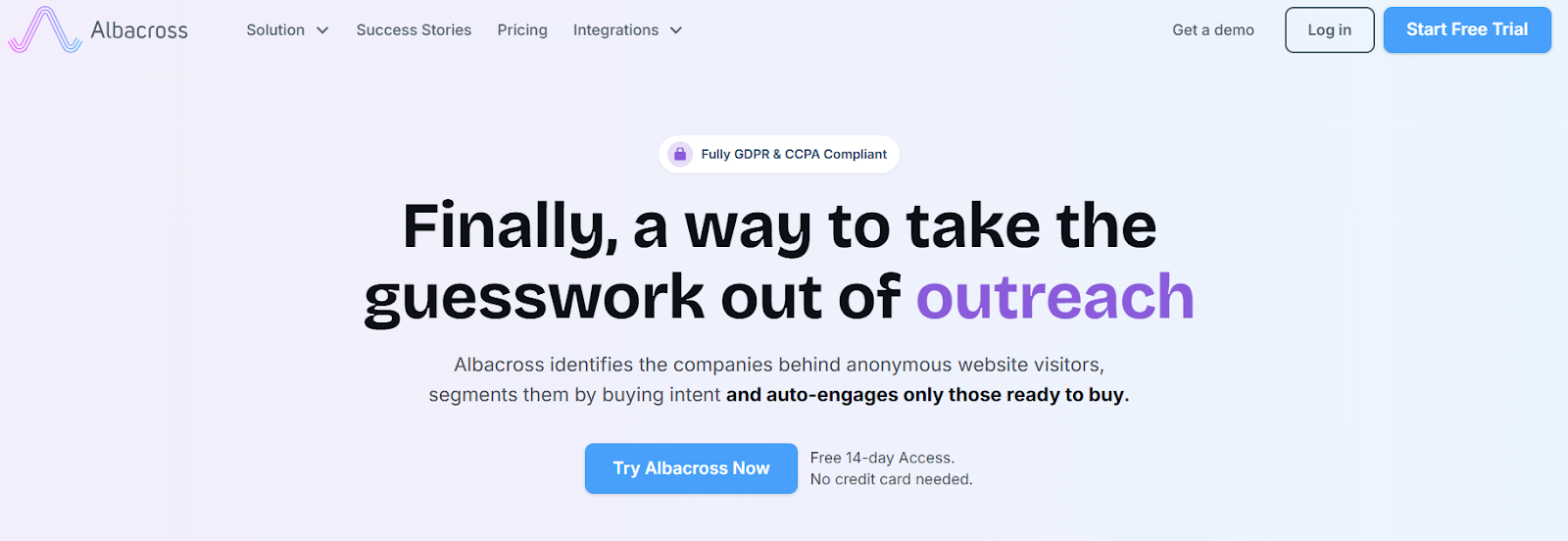
10. Albacross
Albacross is a European-based player that has gained significant traction due to its strong focus on GDPR compliance and data privacy, which is a major concern in website visitor tracking.
It provides solid company identification, revenue data, and contact information, coupled with features geared towards account-based marketing efforts.
Source:Albacross
Pros:
- Strong emphasis on EU data compliance (GDPR).
- Good quality data for European markets.
- Includes features for targeted ad displays to identified accounts (LinkedIn and display).
Cons:
- Data match rates for North American traffic may be lower than US-centric competitors like Clearbit or ZoomInfo.
- Reporting can sometimes feel a bit rigid compared to more modern interfaces.
Best For: B2B companies with a significant presence within the European Union or a strong need for GDPR-compliant tools.
Pricing Showdown: Factors AI vs. The Alternatives (2026)
The True Cost of Factors.ai vs. Alternatives
While Factors.ai lists a starting price of $399/month, many users report that the "real" cost to get actionable data is much higher.
- The "Base" Trap: The $399 plan often limits you to just 200 identifications.
- The Hidden "Add-Ons": To see intent data (who is ready to buy), you often need the "Intent Add-on" (+$750/mo).
- The Ad Tax: To sync data with LinkedIn Ads, you may need "AdPilot" (+$1,000/mo).
- Realistic Total: For a complete B2B setup, you are looking at $2,100+ per month.
The Vison AI Advantage: Kwin by Vison AI includes identification, intent scoring, and autonomous email outreach in one transparent subscription. You start for Free, and paid plans start at just $56/mo—saving you over 90% compared to a fully loaded Factors.ai contract.
Comparison Table: Kwin vs. Traditional Visitor Identification
To visualize why the market is shifting toward AI-driven solutions, here is a comparison between Kwin and the traditional "data-only" Factors AI alternatives.
Conclusion: Stop Just Watching, Start Engaging
The search for "Factors AI alternatives" usually stems from a desire for better data, better pricing, or better usability.
However, in 2026, the goal shouldn't just be to build a bigger list of companies that visited your website. The goal is revenue.
While tools like Clearbit and 6sense offer incredible data warehouses for huge teams, they still leave the "last mile" of execution up to humans who are already stretched thin. They tell you who is there, but they don't help you talk to them.
The future of B2B sales belongs to companies that adopt "AI Employees" like Kwin. By shifting from passive website visitor identification software to active AI engagement, you close the gap between interest and action.
You’ve spent the money to get them to your site. Don't let 98% of them leave without a fight.
Ready to hire your first AI Business Developer?
Click here to start using Kwin for free and turn silent traffic into active pipeline.