
TL;DR
Lead scoring helps B2B teams identify which leads are worth sales attention by combining fit, behavior, and purchase intent. This guide compares 15 platforms, from CRM-based and predictive scoring tools to AI-powered visitor identification. Kwin stands out for identifying anonymous website visitors, scoring their ICP Fit and Purchase Intent, and triggering personalized outreach when they show strong buying signals.
Hundreds of leads can enter a pipeline every month. The real challenge is knowing which ones are actually ready to buy.
A prospect may visit a pricing page, explore product features, return several times, or read a case study without filling out a form. The activity is there, but without the right scoring system, sales may never know which signals matter.
That is where lead scoring software comes in. They enable B2B teams to evaluate lead fit, engagement, and buyer intent to target prospects with actual buying intent.
Modern platforms like Kwin, an AI Business Developer, take this further by identifying website visitors and acting on their scores instead of simply displaying them.
In this guide, we compare 15 leading platforms, explain how lead scoring works, break down rules-based, predictive, and AI agent scoring, and show what to consider when choosing the right platform.
By the end, you will know how different scoring models work, which features matter for B2B teams, and how to choose a platform that fits your sales process.
What Is Lead Scoring Software?
Lead scoring software ranks leads based on how likely they are to become customers. They combine lead identification with actions to create a score that sales can act upon.
The first part is fit. It looks at firmographic data such as industry, revenue, and employee count, along with role and seniority. The second is intent, which comes from actions like pricing page visits, return sessions, email replies, and demo requests.
Good B2B lead scoring keeps fit and intent separate. A perfect-fit account with no buying activity may not be ready, while an active visitor from the wrong industry may not be worth pursuing. The strongest opportunities usually show both a strong fit and clear buying intent.
The result can be a number, grade, or tier such as hot, warm, or cold. When a lead crosses a defined threshold, it can move from marketing to sales, connecting scoring directly with the lead qualification process.
Older lead scoring tools often stop at the score and leave the next step to sales reps. Modern platforms can go further by identifying anonymous visitors, updating scores in real time, and triggering routing, alerts, or outreach when a lead becomes sales-ready.
Why B2B Teams Need Lead Scoring Software
Without a scoring system, lead prioritization often comes down to rep instinct and spreadsheets. A strong lead scoring system gives sales and marketing a shared way to decide which leads deserve attention first.
1. Reps Stop Chasing Leads That Will Never Buy
Sales teams have limited time. Scoring pushes poor-fit leads down the list and helps reps focus on accounts with stronger fit and buying signals.
2. Speed-to-Lead Improves on High-Intent Accounts
Buying intent can fade quickly. When a high-score lead triggers an alert or sequence, sales can respond while the buyer is still researching instead of reaching out days later.
3. Sales and Marketing Share One Definition of “Qualified”
Lead scoring creates clear criteria for what counts as a qualified lead. Both teams can agree on the score and handoff threshold, reducing the gap between marketing leads and sales follow-up.
4. Anonymous Buying Signals Stop Going to Waste
The vast majority of website visitors do not complete any forms. Visitor ID solutions for B2B website visitor identification transform relevant behavior into identified, scored opportunities for sales.
5. Follow-Up Runs on Triggers, Not Rep Memory
When a lead crosses a scoring threshold, the system can route it, alert a rep in Slack, or start a sequence automatically. Follow-up no longer depends on someone remembering to check a dashboard.
6. Pipeline Forecasts Become More Reliable
Scoring shows how different lead segments convert over time. That history gives sales leaders more useful forecasting signals than pipeline stages and gut feel alone.
7. Marketing Spend Gets Tied to Real Revenue
Scoring helps identify which campaigns, channels, and pages generate high-fit, high-intent leads. Teams can invest more in sources that contribute to the pipeline instead of traffic alone.
8. CAC Drops as Effort Shifts to Best-Fit Accounts
Customer acquisition cost (CAC) can improve when sales teams spend less time on poor-fit opportunities. Fewer wasted calls and shorter sales cycles help each hour of sales capacity generate more value.
Also Read: Who Is Visiting My Website? How To Turn Anonymous Traffic Into Leads
How Lead Scoring Software Works
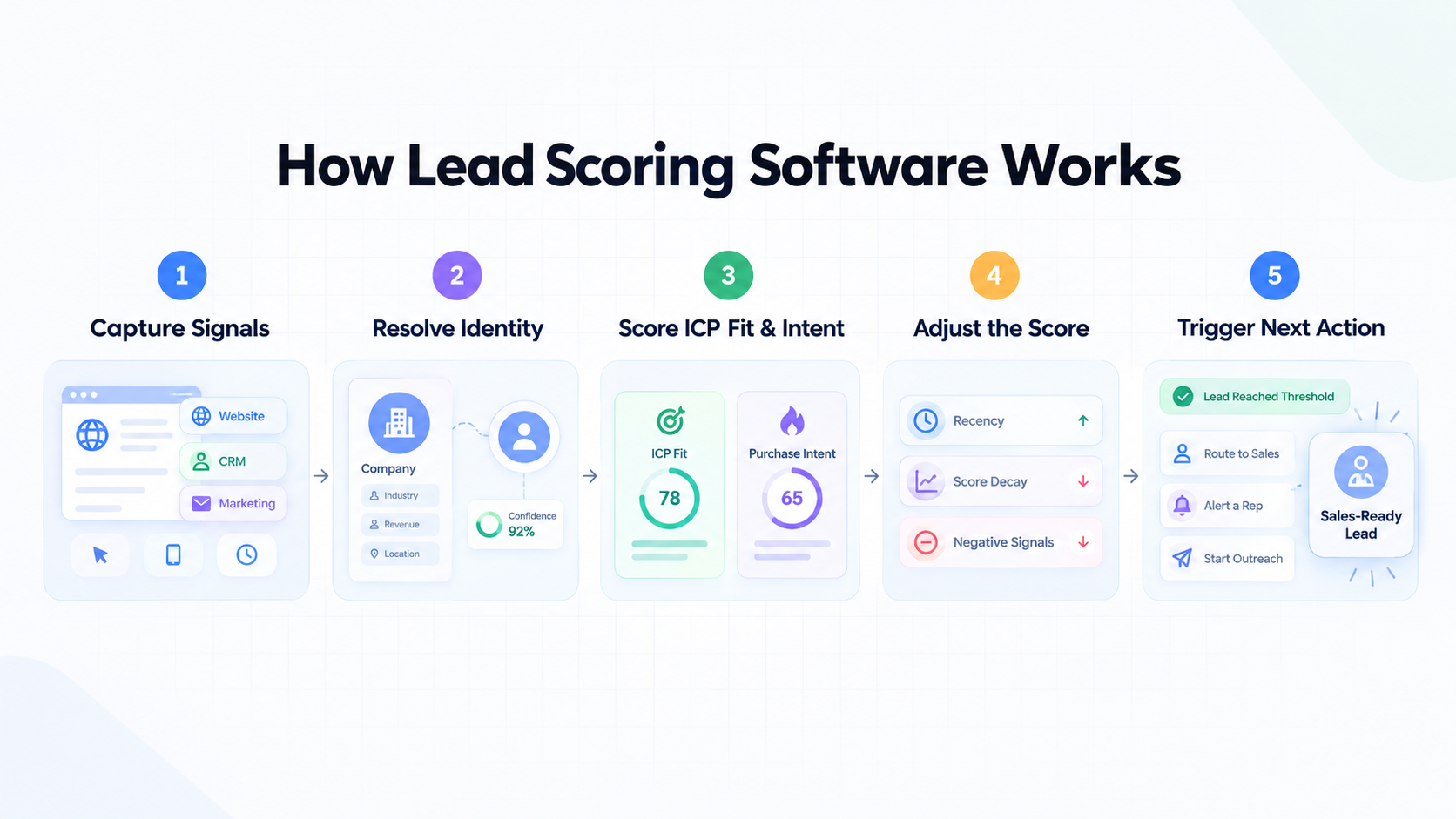
What happens between a website visit and a sales-ready lead? Most scoring platforms follow five steps: capture the signal, identify the visitor, score intent, adjust the score, and trigger the next action.
Step 1: Capture Behavioral, Engagement, and CRM Signals
It starts with data. A tracking pixel in the website header or through Google Tag Manager captures IP address, device, browser, pages viewed, referral source, session length, and on-page behavior.
Your CRM and marketing automation tools add form fills, email opens and replies, meetings, and past deal outcomes. Together, these signals create the behavioral and historical context behind each lead.
Step 2: Resolve Identity and Enrich the Record
Next comes identity resolution, or matching an anonymous visit to a company and, when possible, a person. IP intelligence and ASN mapping help identify the company and add details such as industry, revenue, and location.
Person-level matching is harder. Advanced platforms compare hundreds of data points against identity graphs and assign a confidence score. The matching ratio of a platform refers to the percentage of website visitors that it can identify. Find out how to identify website visitors.
Step 3: Score ICP Fit and Buying Intent Separately
This is where B2B lead scoring starts. An ICP Fit score measures how closely a lead matches your ideal customer based on firmographics, technographics, role, and seniority.
A Purchase Intent score measures buying signals such as pricing page visits, comparison pages, return visits, and multiple people from the same account engaging. Keeping fit and intent separate shows whether a lead is a good match, ready to buy, or both.
Step 4: Adjust for Recency, Score Decay, and Negative Signals
Not every signal should carry the same weight forever. Score decay lowers a score when activity becomes old, while recent actions such as a pricing page visit can carry more weight than an older content download.
Negative scoring removes points for signals such as student or job-seeker activity, competitor visits, unsubscribes, or public-sector traffic. This keeps poor-fit leads from reaching the sales queue.
Step 5: Trigger the Next Action Once a Lead Crosses the Threshold
A score becomes useful when it triggers an action. Once a lead crosses the threshold, the platform can route the record, alert a rep, or start a personalized outreach sequence.
Some platforms stop at the score and wait for a rep to act. AI agent platforms can take the next step themselves, then hand off when the buyer responds. Closed-won and closed-lost outcomes can also feed the lead scoring model, helping it learn which signals actually predict revenue.
Want scoring that starts before the form fills? Kwin identifies and scores your anonymous visitors, then reaches out when they cross your threshold. Identify Your Visitors with 100 free leads every month, no credit card required.
Rules-Based vs Predictive vs AI Agent Lead Scoring
Not every lead scoring model works the same way. The main difference is how scores are created, how much data the platform needs, and what happens after a lead reaches the threshold.
Also Read: Proven B2B Lead Generation Strategies
15 Best Lead Scoring Software Compared at a Glance
Here is how the top lead scoring software stacks up on identification, scoring method, automation, and pricing model.
Let's look at each tool in detail.
1. Kwin by Vison AI: Best for Scoring Anonymous Visitors and Acting on the Score
Kwin by Vison AI is an AI Business Developer that identifies website visitors, scores their fit and purchase intent, and acts on strong buying signals.
Unlike traditional lead scoring software, Kwin identifies 60-70% of website visitors at the person and company level across 175+ countries. It captures details such as name, work email, phone number, LinkedIn profile, company, revenue, industry, and employee count.
Setup takes about five minutes through a website pixel or Google Tag Manager. Kwin analyzes page depth, return visits, referral sources, and high-intent page activity to create separate ICP Fit and Purchase Intent scores.
Once a visitor crosses your chosen threshold, Kwin can send a personalized three-step email sequence through Gmail, Outlook, or SMTP. Positive replies are handed off to your inbox, Slack, or CRM.
Infiniticube generated 2.5x more qualified leads in 45 days, with more than 35% of meetings coming from visitors who never filled out a form.
Key Features
- Person and company identification: Names, work emails, phone numbers, LinkedIn profiles, company, revenue, industry, employee count, and location across 175+ countries.
- Behavioral analysis: Kwin reads page depth, return visits, referral source, and time on high-intent pages like pricing to calculate each visitor's Purchase Intent score.
- Dual scoring: An ICP Fit score and a Purchase Intent score run side by side, so fit and readiness never blur into one number.
- Threshold-based triggers: You set the minimum scores, and Kwin acts only once a lead crosses them.
- Autonomous nurture: Personalized three-step email sequences go out from your own domain through Gmail, Outlook, or SMTP.
- Positive-reply handoff: Replies arrive as the full email thread plus a summary, pushed to your inbox, Slack, and CRM.
- Four visitor filters: Country-level, page-level, data-level, and exclusion filters, including screening out public sector and government traffic.
- Five-minute setup: Install the pixel in your site header or through Google Tag Manager, and Kwin builds a knowledge base from your website.
Pros
- Identifies anonymous visitors at person and company level
- Combines identification, scoring, and outreach
- Supports detailed visitor filters
- Sends qualified conversations to inbox, Slack, and CRM
- Has measurable customer results
Cons
- Works best with meaningful B2B website traffic
- Does not replace traditional cold-list prospecting
- LinkedIn outreach is still in development
Best For: B2B revenue teams that want to identify high-intent visitors and turn buying signals into sales conversations.
Get Started With Kwin and identify the visitors already showing interest.
2. HubSpot
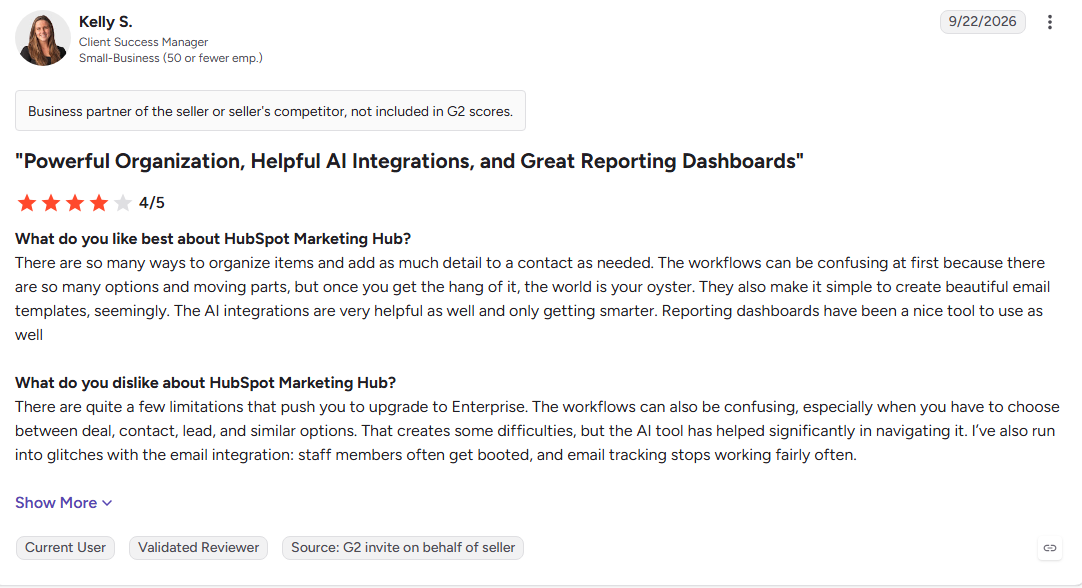
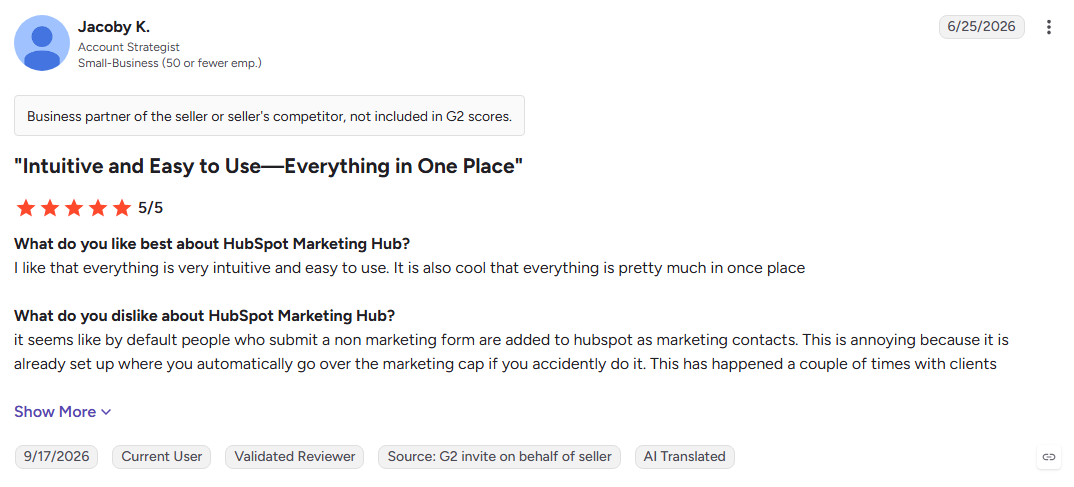
HubSpot keeps lead scoring inside its CRM, so scores work alongside contacts, lists, and workflows. Its scoring tools separate fit from engagement, support score decay, and help teams prioritize leads without adding another platform to their sales stack.
Key Features:
- Fit and engagement scoring: Separate scores measure profile fit and lead activity.
- Rules and predictive scoring: Build point-based models or use predictive scoring on eligible Enterprise plans.
- Score-based workflows: Use score changes to assign owners, update lifecycle stages, and trigger sales tasks.
Pros
- Works directly with the HubSpot CRM
- Quick setup for rules-based scoring
- Strong workflow automation
Cons
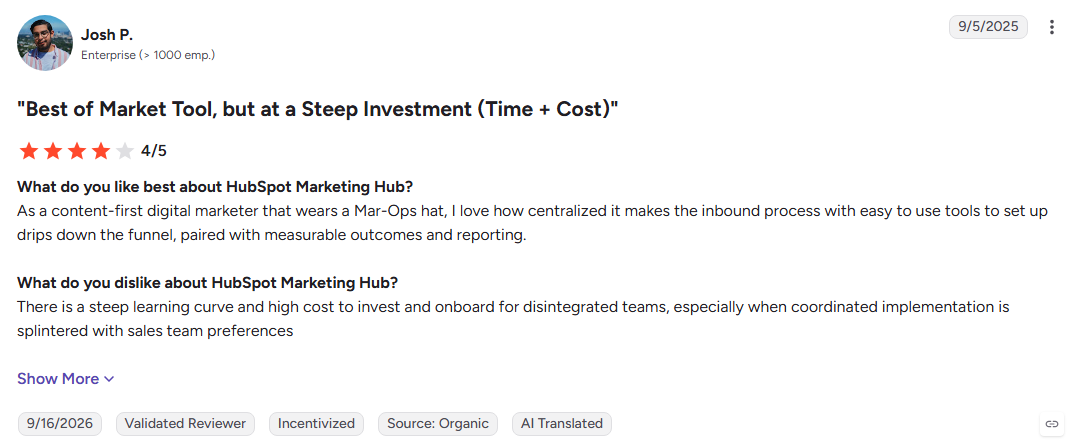
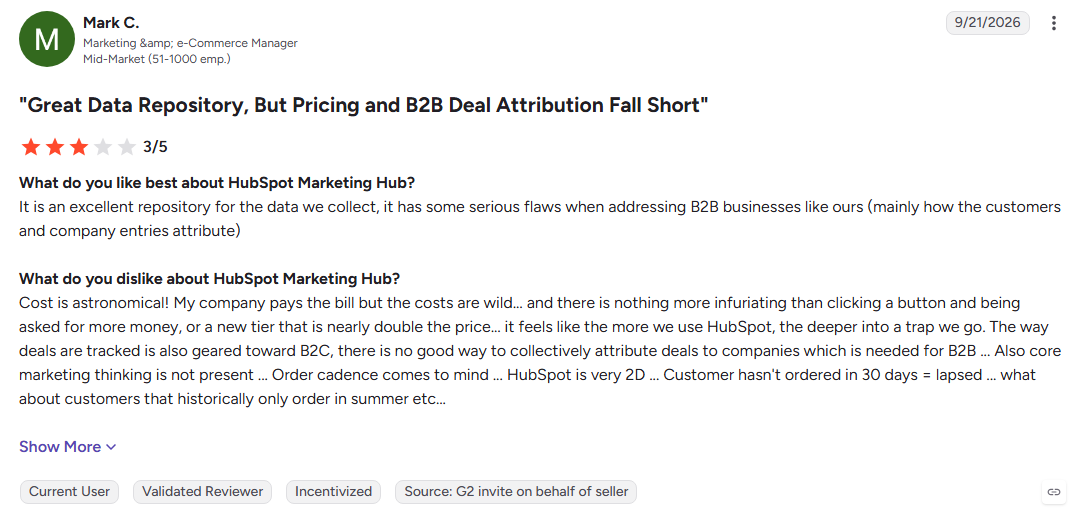
- Predictive scoring is limited to higher-tier plans
- No native third-party intent data
- Predictive scoring offers limited visibility into individual weighting
Best For: Inbound-led teams already using HubSpot for marketing and sales.
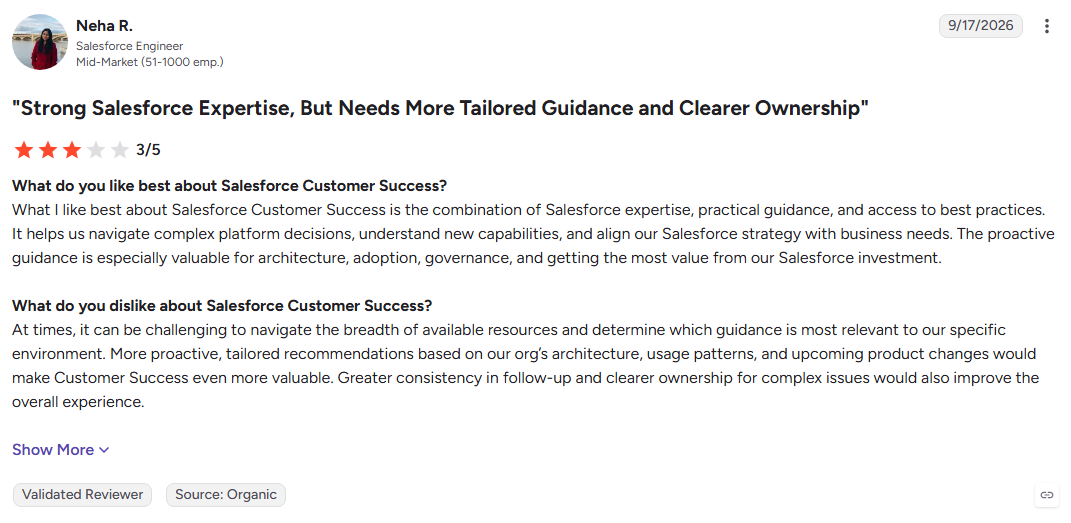
3. Salesforce Einstein Lead Scoring
Salesforce Einstein Lead Scoring uses machine learning to score new leads from historical Salesforce lead and opportunity data. It automatically builds the model, highlights the factors behind each score, and keeps scoring inside Sales Cloud, making it useful for large teams with established CRM data.
Key Features:
- Predictive scoring: Builds and refreshes scoring models from historical conversion data.
- Score explanations: Shows positive and negative factors that influence each score.
- Native CRM automation: Uses scores in lead records, reports, dashboards, and Salesforce Flow.
Pros
- Works directly inside Salesforce
- Reduces manual scoring setup
- Supports large sales organizations
Cons
- Needs enough historical conversion data
- Requires Salesforce administration skills
- Poor CRM data can reduce scoring quality
Best For: Enterprise sales teams with clean Salesforce data and an established sales history.
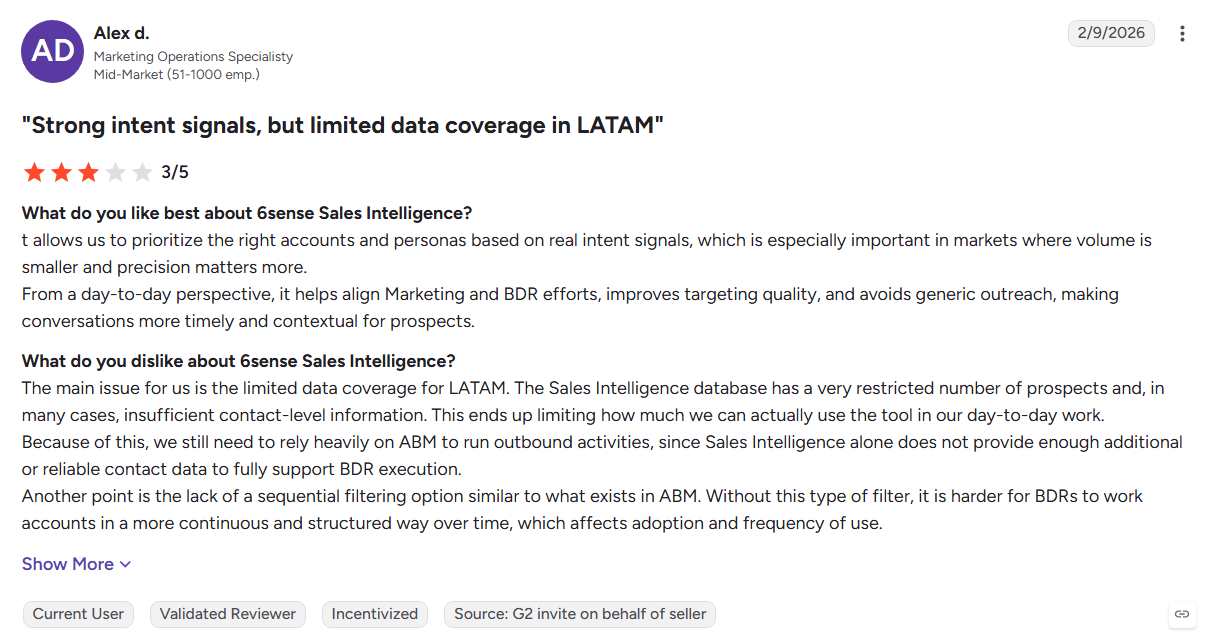
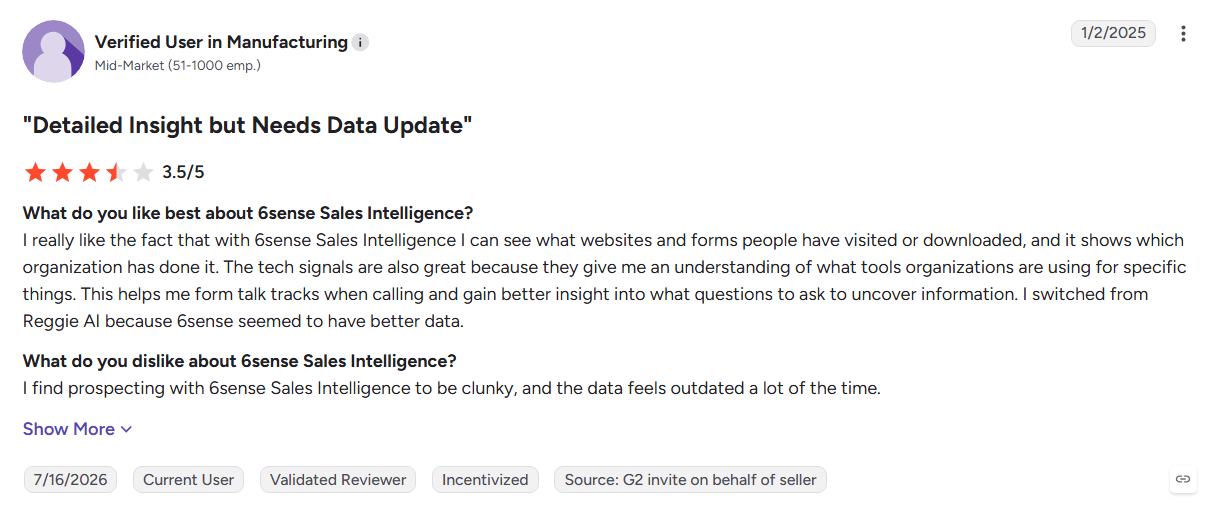
4. 6sense
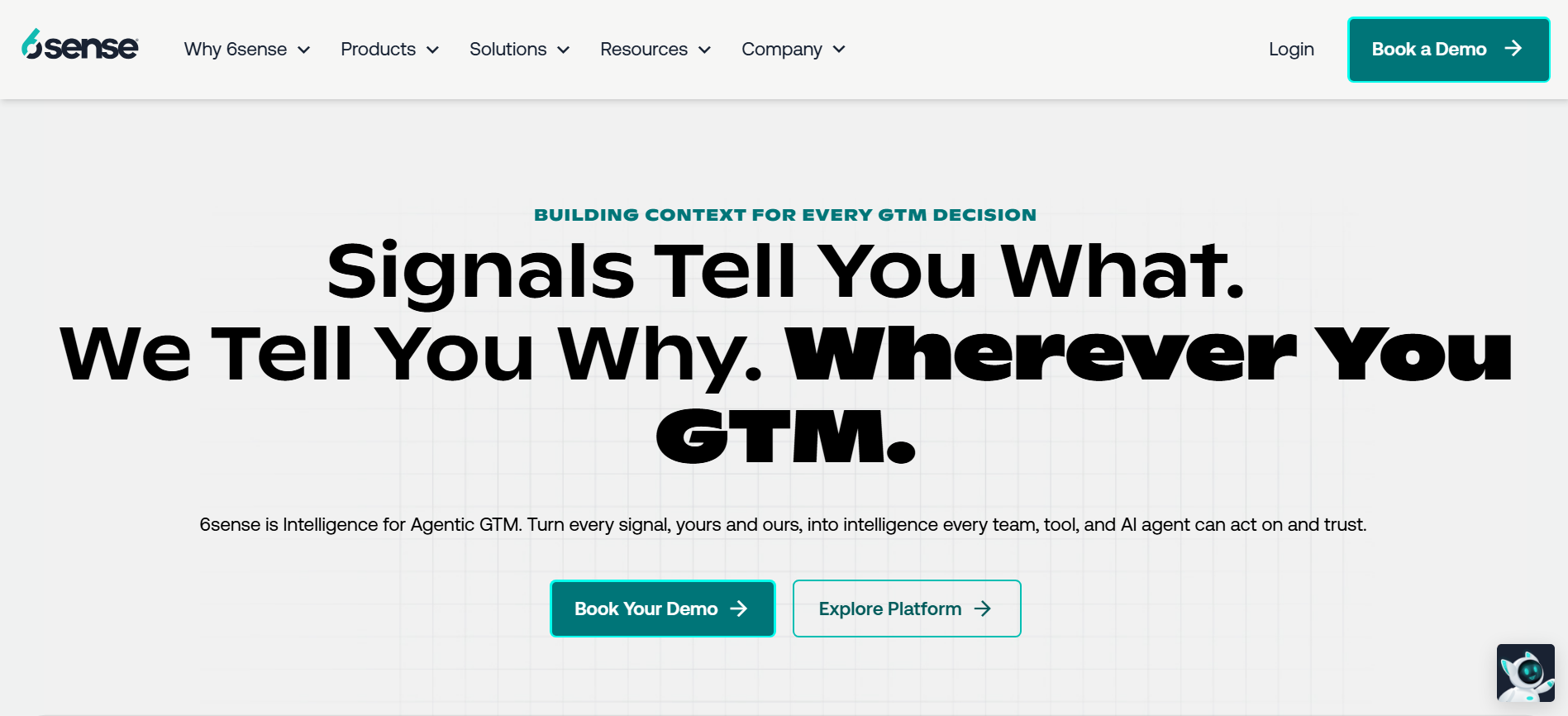
6sense focuses on accounts rather than individual leads. It combines intent, advertising engagement, and anonymous research signals to identify accounts entering the buying journey, then connects those signals with sales and marketing workflows.
Key Features:
- Account scoring: Combines fit, intent, and engagement across buying groups.
- Buying-stage predictions: Shows where an account is in its research and decision process.
- Revenue orchestration: Connects target accounts with advertising, CRM, and marketing workflows.
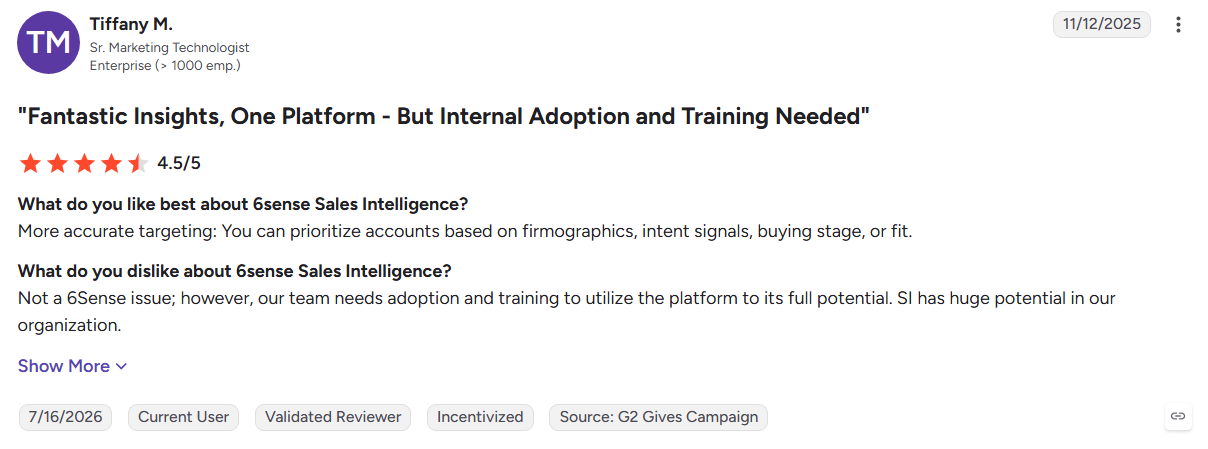
Pros
- Strong account-level intent signals
- Built for enterprise ABM programs
- Broad enterprise integrations
Cons
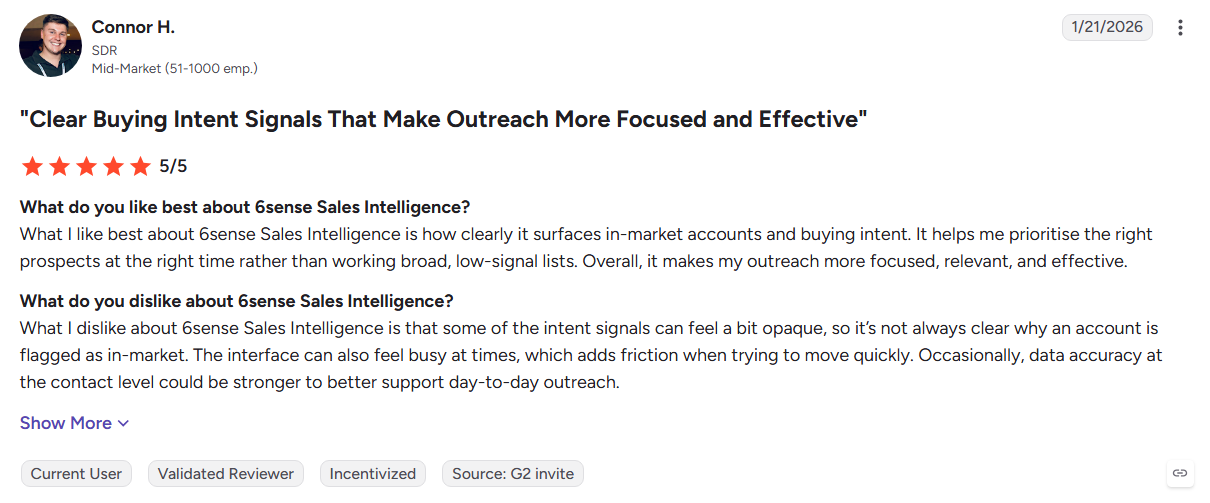
- Focuses on accounts rather than individual buyers
- Pricing is custom and sales-led
- Intent signals can vary across connected data sources
See the full Kwin vs 6sense comparison or explore more 6sense alternatives.
Best For: Enterprise ABM teams targeting defined, high-value accounts.
5. MadKudu
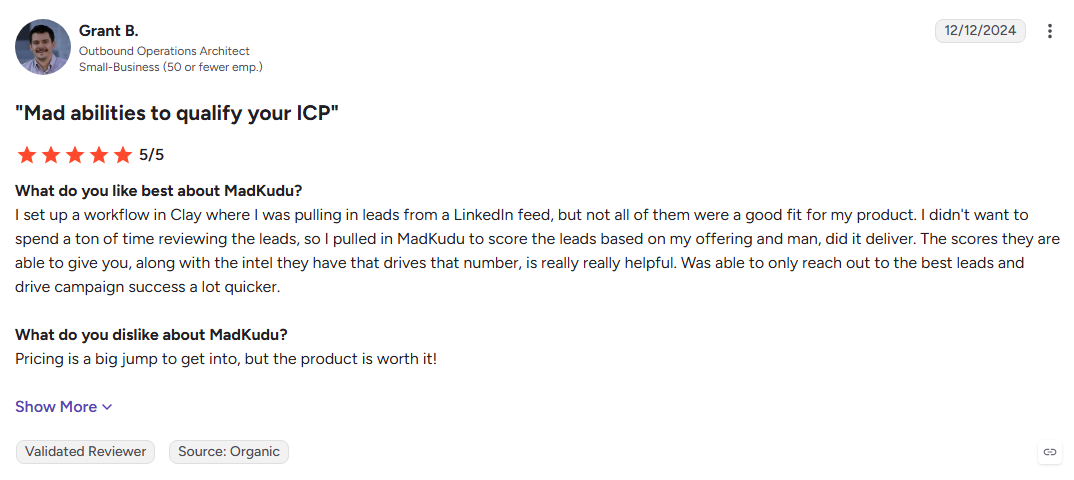
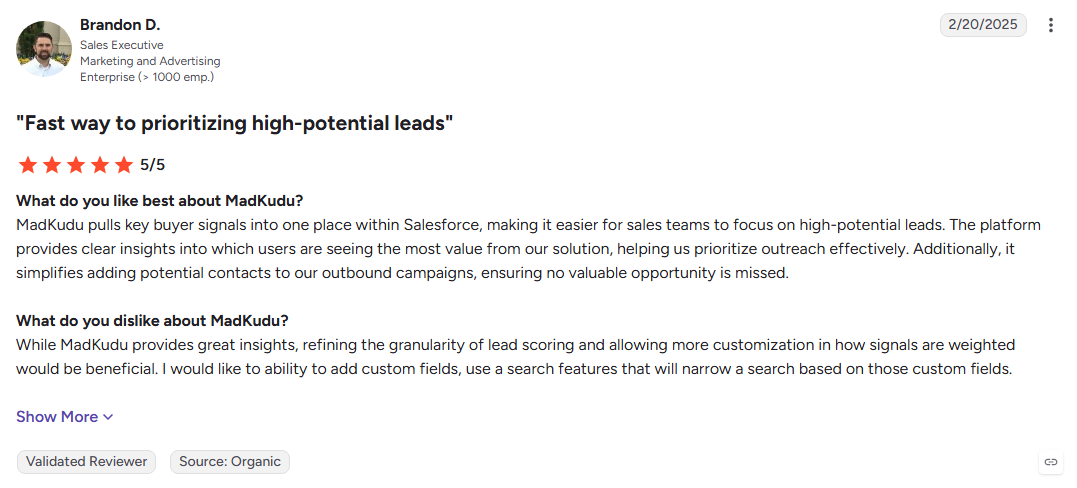
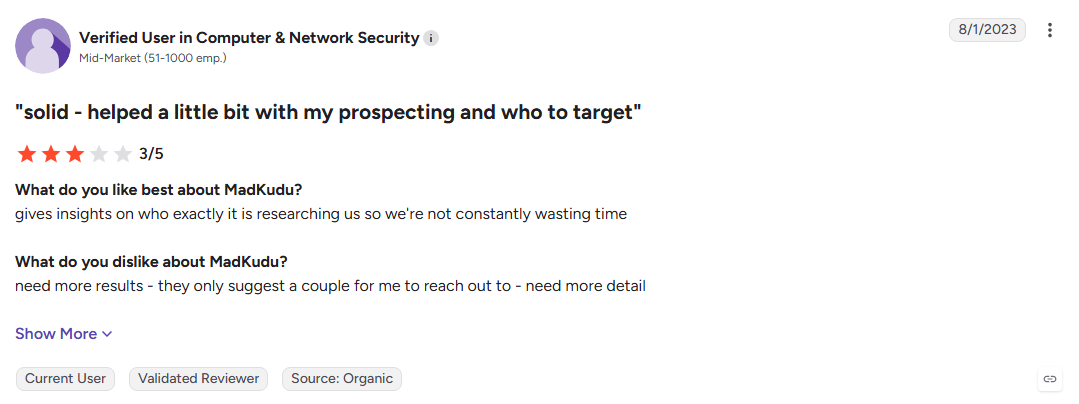
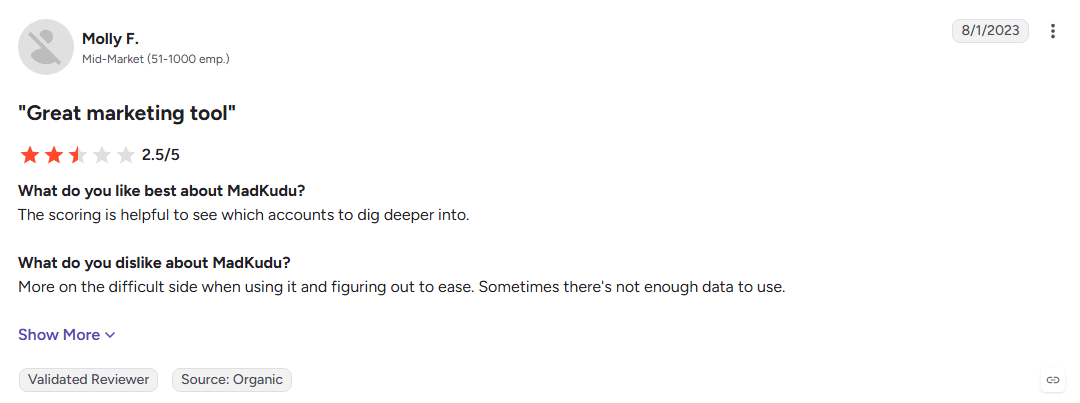
MadKudu builds predictive models around your own customer and conversion data. It combines firmographic fit, marketing activity, and product usage to identify leads most likely to convert, making it particularly useful for product-led SaaS teams.
Key Features:
- Customer Fit scoring: Measures firmographic, technographic, and demographic fit.
- Likelihood to Buy: Uses web, email, and demo activity to estimate buying potential.
- Product usage signals: Incorporates activation and feature-adoption data from product analytics.
Pros
- Uses your own conversion data
- Strong for product-led growth
- Provides explainable scoring signals
Cons
- Needs mature CRM and product data
- No free plan for testing
- Does not identify new website visitors
Best For: Product-led SaaS companies with strong product usage and conversion data.
6. Apollo.io
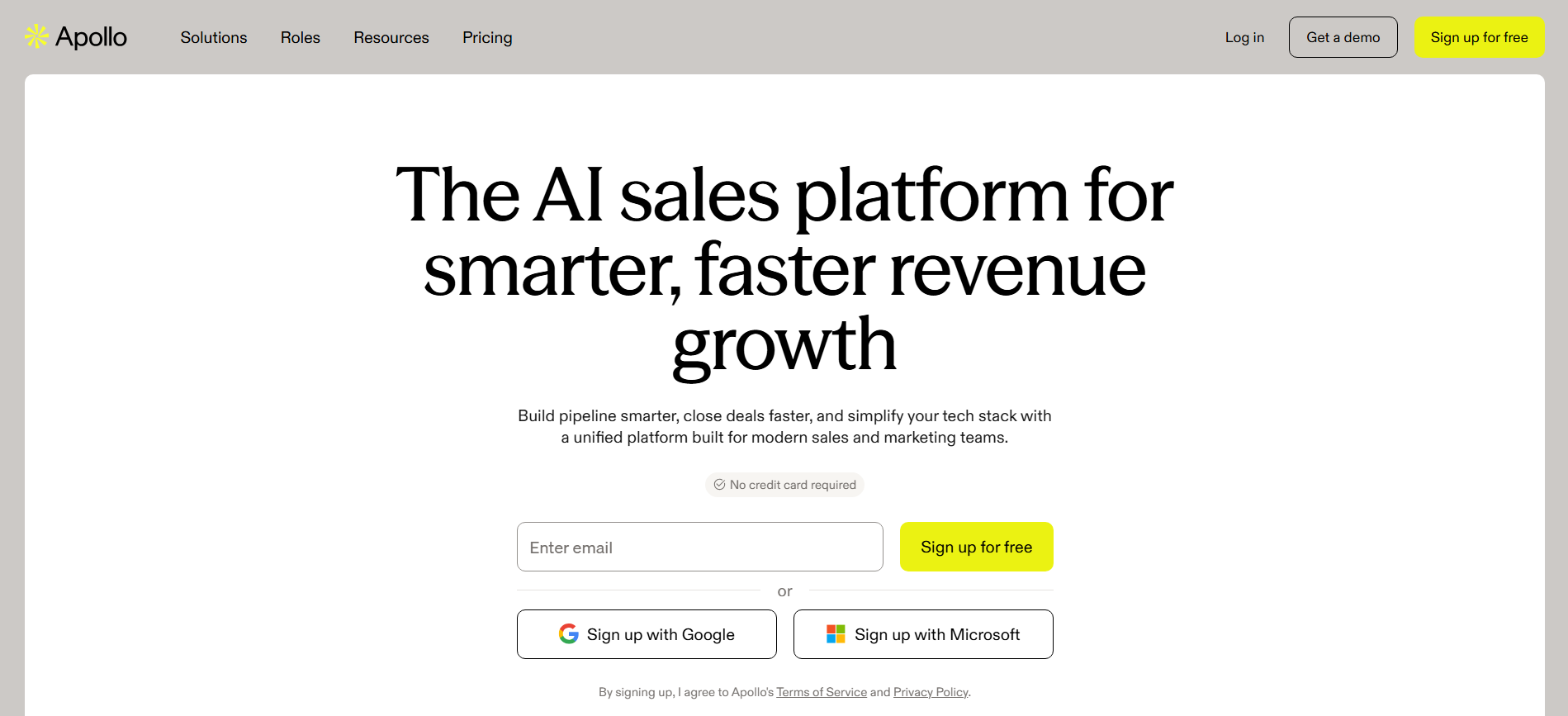
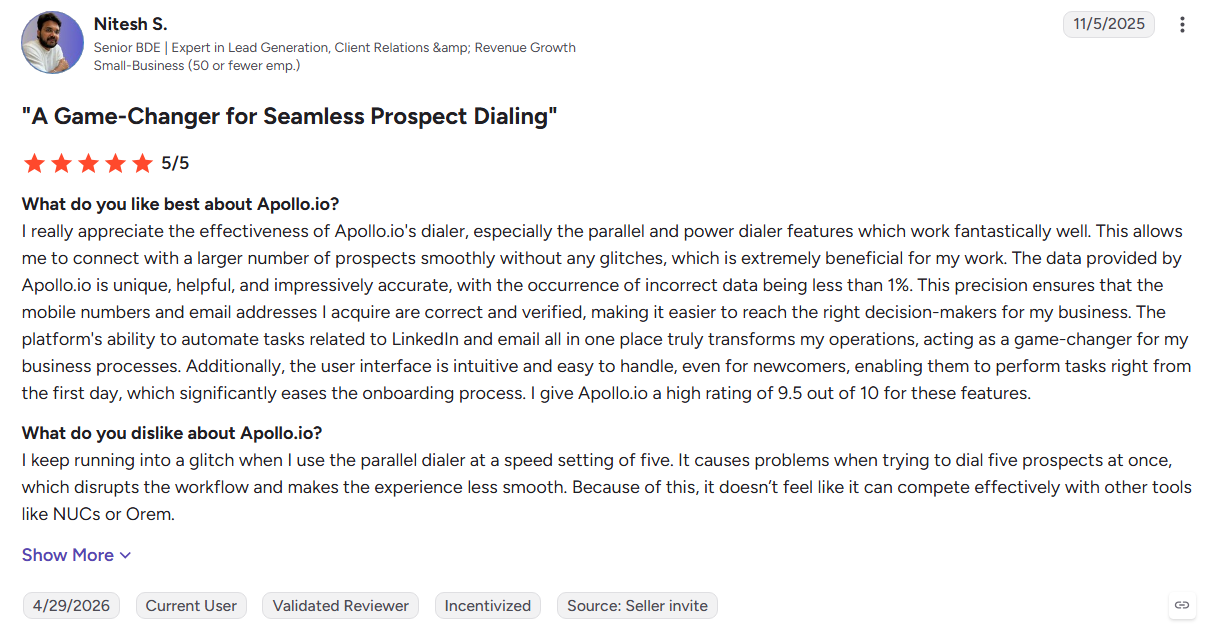
Apollo combines prospecting, lead scoring, and sales engagement in one platform. Its AI scoring can use CRM and Apollo activity to evaluate customer and behavioral fit, while reps can search, filter, and contact prospects from the same workspace.
Key Features:
- AI and custom scoring: Use Apollo's model or create scoring rules around your own criteria.
- Score breakdowns: Shows the fit and behavior signals contributing to a score.
- Native engagement: Connects scoring with email sequences, calling, and prospecting.
Pros
- Combines prospecting and outreach
- Clear scoring breakdowns
- Self-serve plans available
Cons
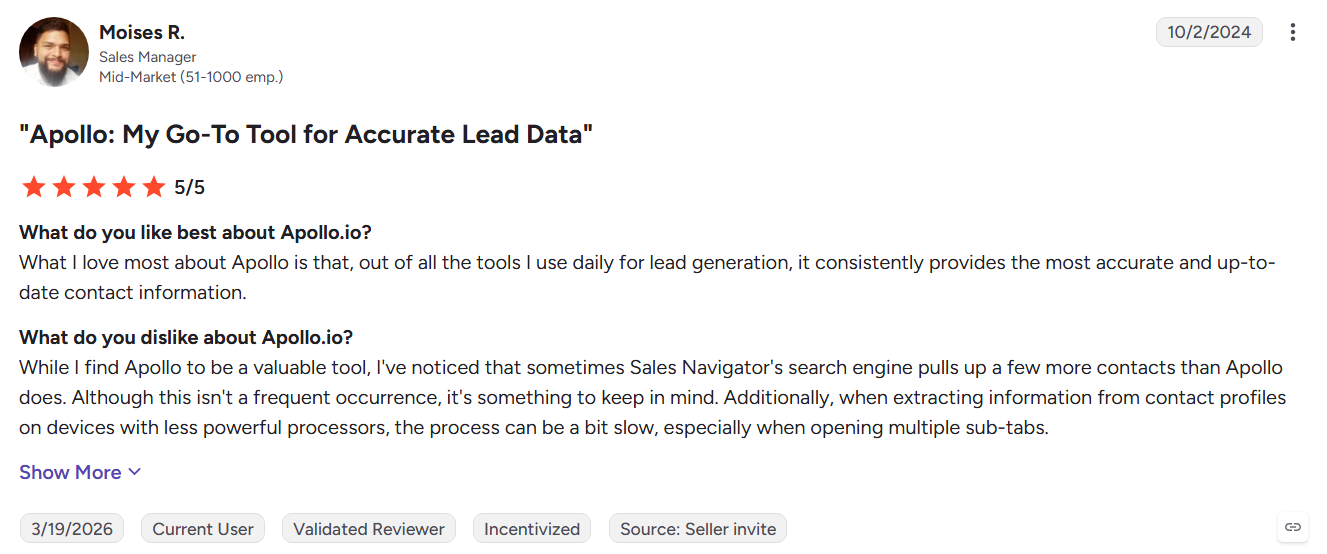
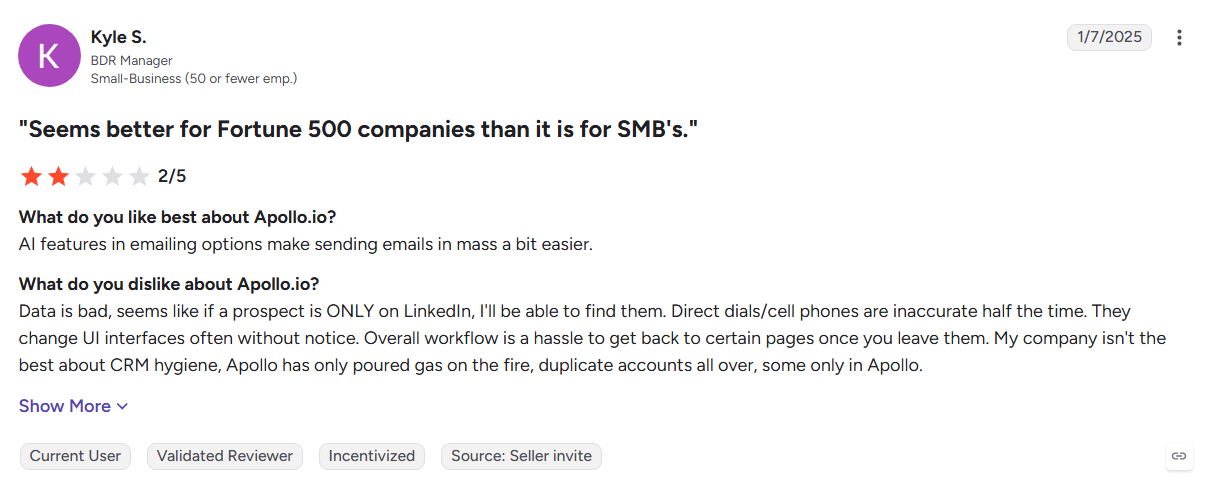
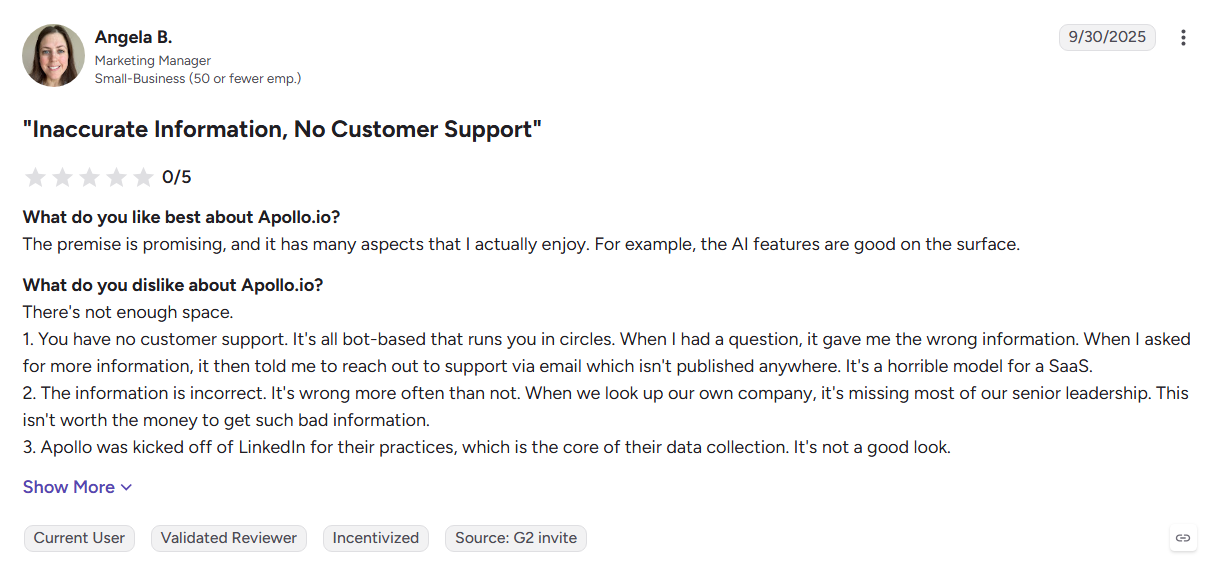
- Contact data can require verification
- Advanced capabilities depend on higher tiers
- Visitor identification is primarily company-level
Best For: Outbound teams that want prospecting, scoring, and sales engagement in one platform.
7. ZoomInfo
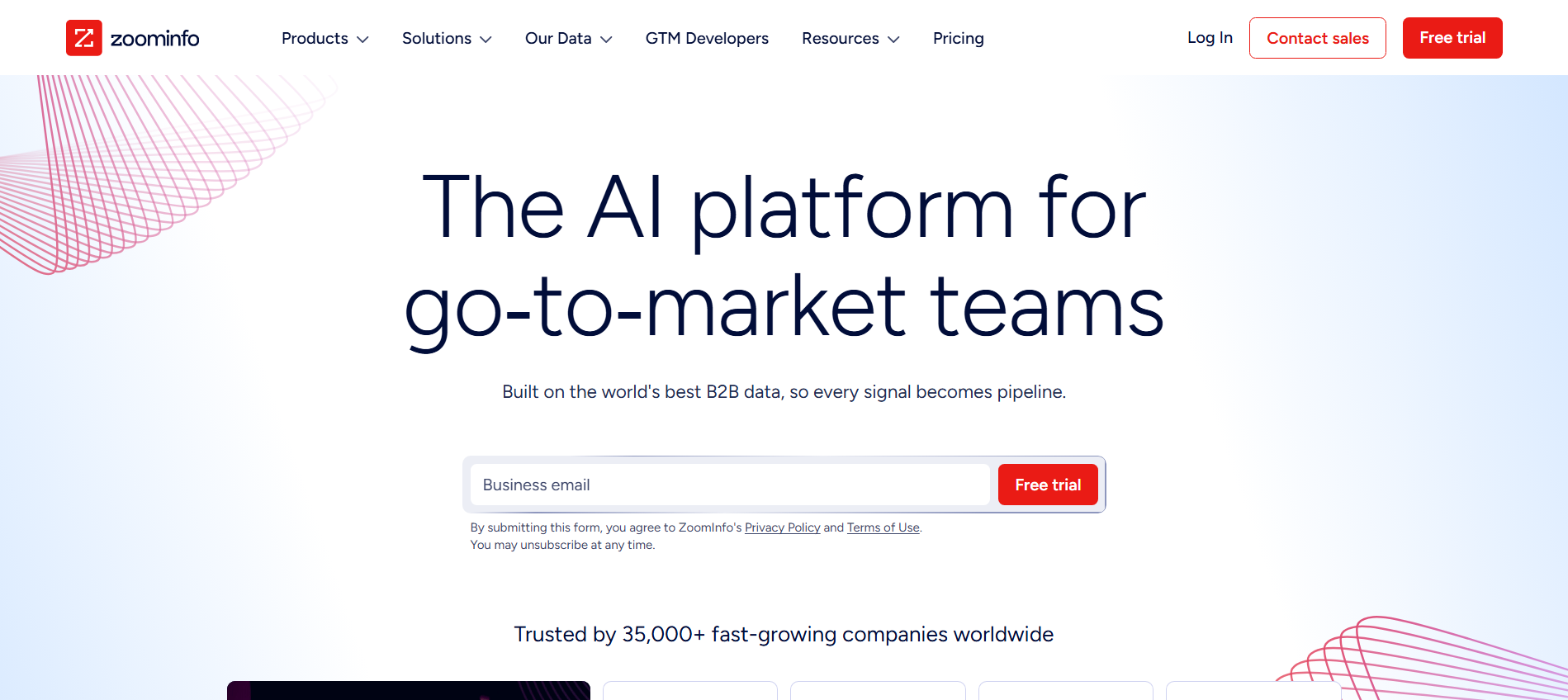
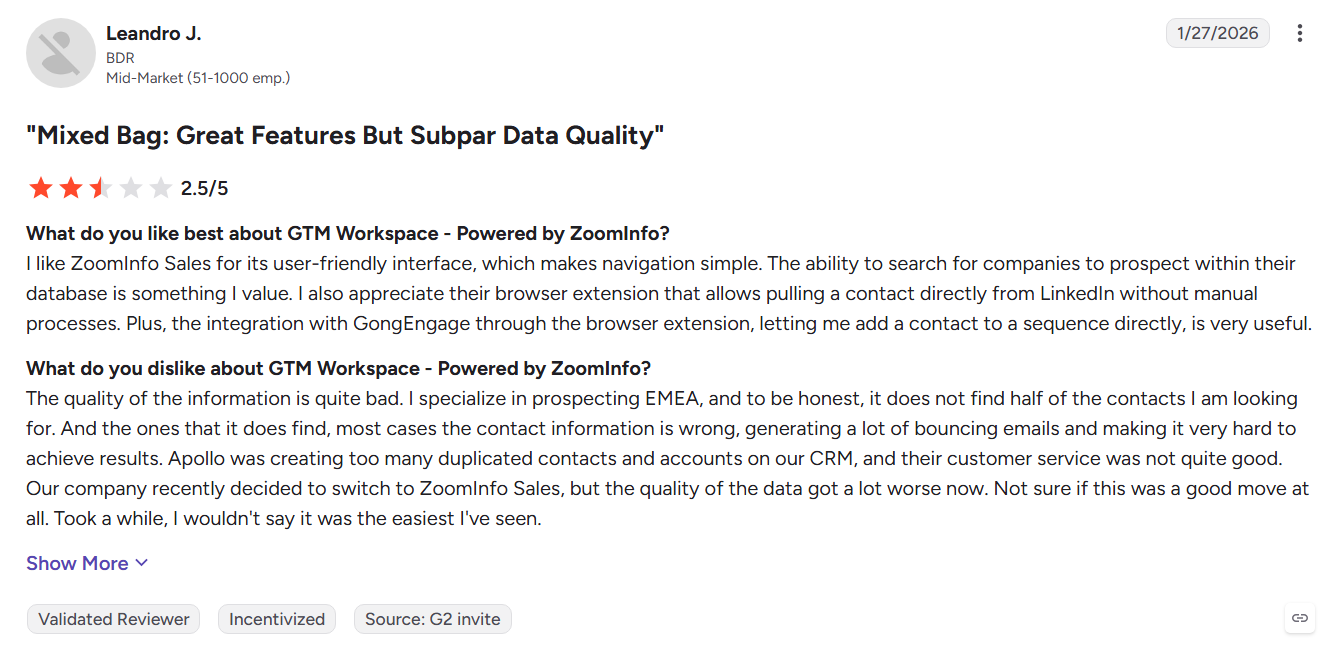
ZoomInfo combines fit, intent, and engagement signals with a massive B2B data set to help teams prioritize accounts and contacts. Its Copilot surfaces high-priority prospects, while Custom Signals track buying behaviors that matter to a specific sales motion. Web visitor identification adds company-level context, and ZoomInfo uses its database to suggest relevant contacts.
Key Features:
- Multi-signal scoring: Combines firmographic fit, intent topics, and engagement.
- Copilot prioritization: Uses AI to surface high-priority accounts and contacts.
- Custom Signals: Tracks buying behaviors tied to your sales process.
Pros
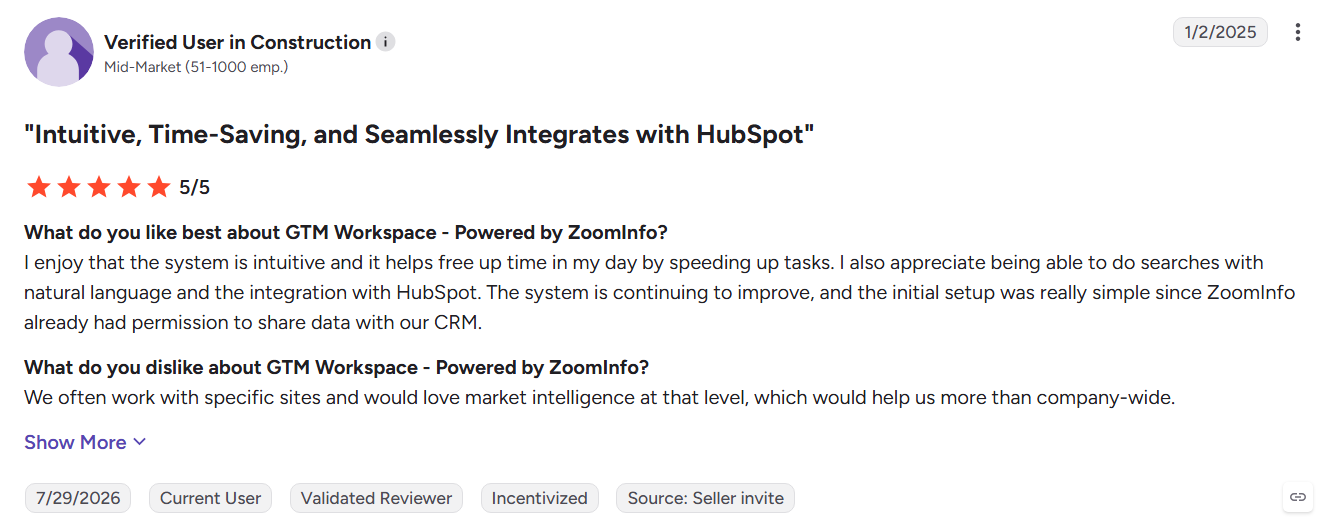
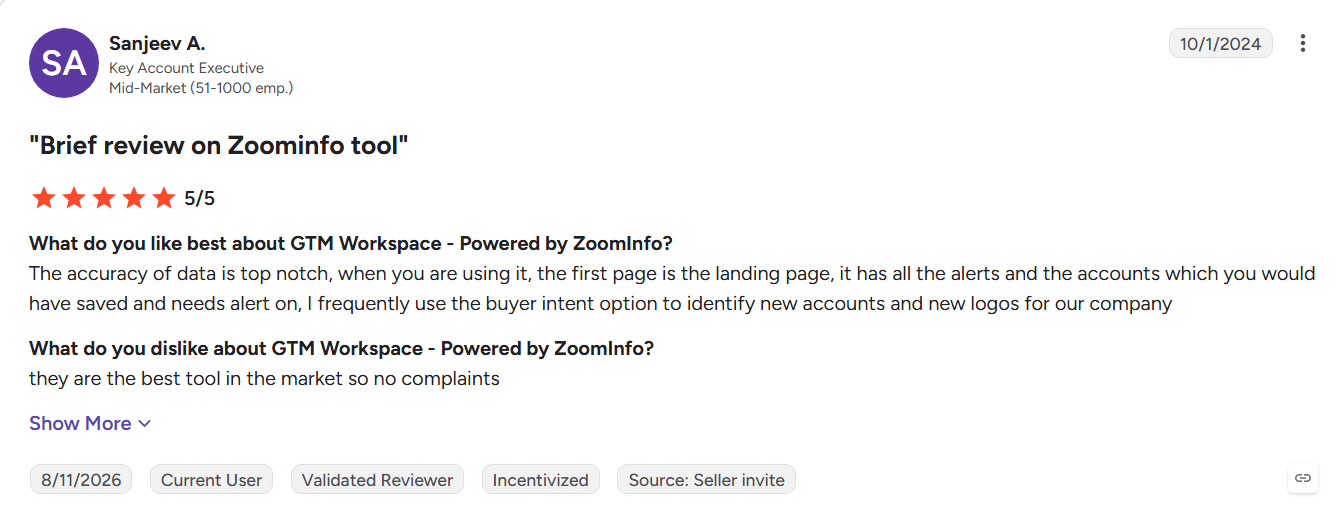
- Deep data helps fill gaps in lead records
- Strong intent signals for timing outreach
- Mature enterprise security and compliance
Cons
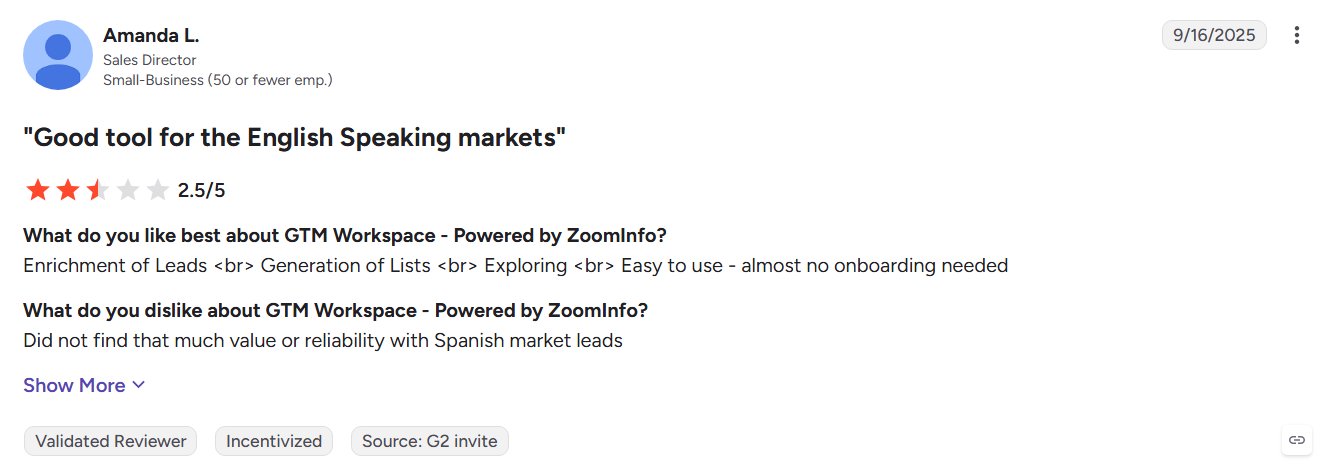
- Can be expensive and complex for smaller teams
- Annual contracts reduce flexibility
- Scoring sits behind its broader data platform
Best For: Mid-market and enterprise teams where better data is central to improving lead scoring.
For more options, see our guide to ZoomInfo alternatives.
8. Warmly
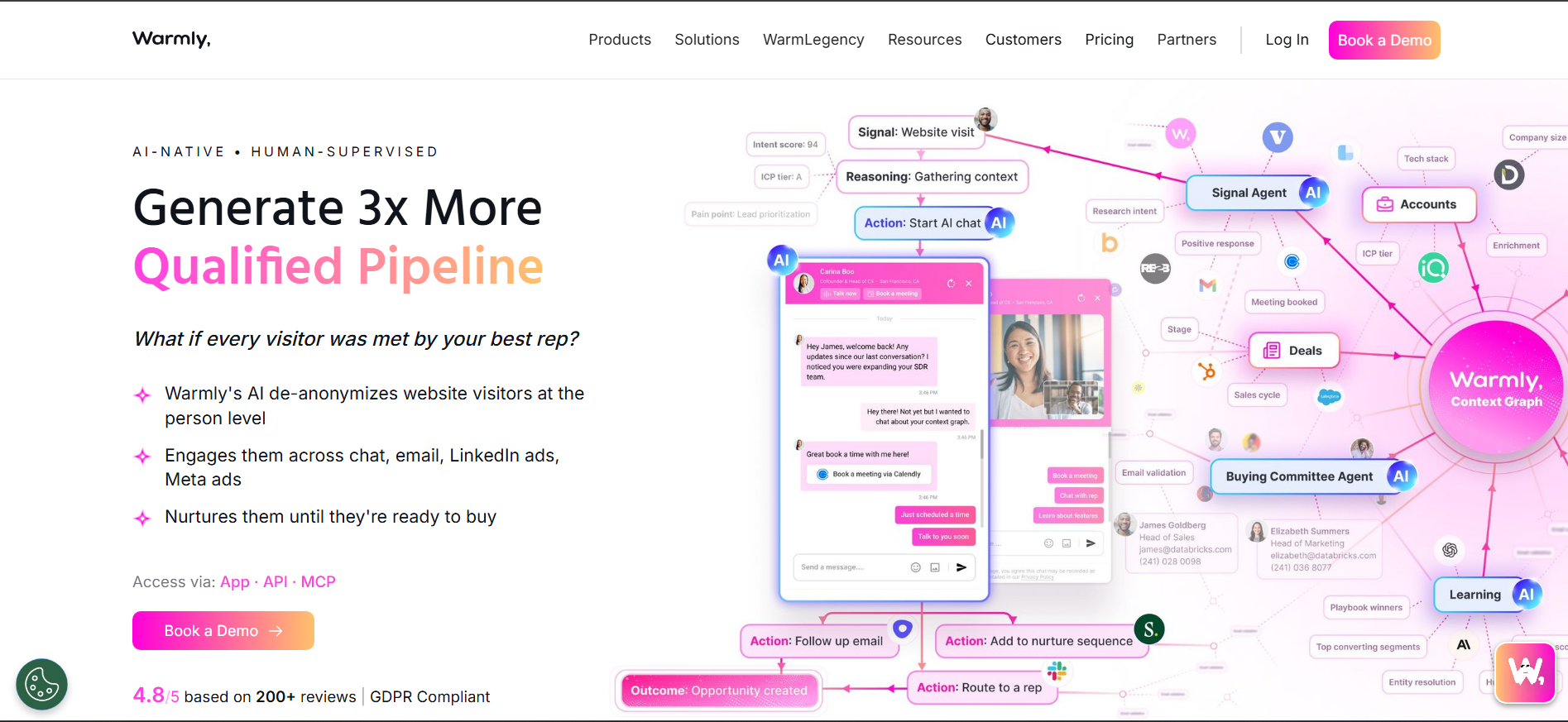
Warmly is built around live website activity. It identifies visiting companies and, in some regions, people, then scores their current behavior so sales reps can act while interest is fresh. Slack alerts and warm outreach workflows make response speed a central part of the platform.
Key Features:
- Real-time visitor identification: Reveals visiting companies and some person-level visitors.
- Live intent scoring: Prioritizes visitors based on current website behavior.
- Slack alerts: Notifies reps when target accounts show buying activity.
Pros
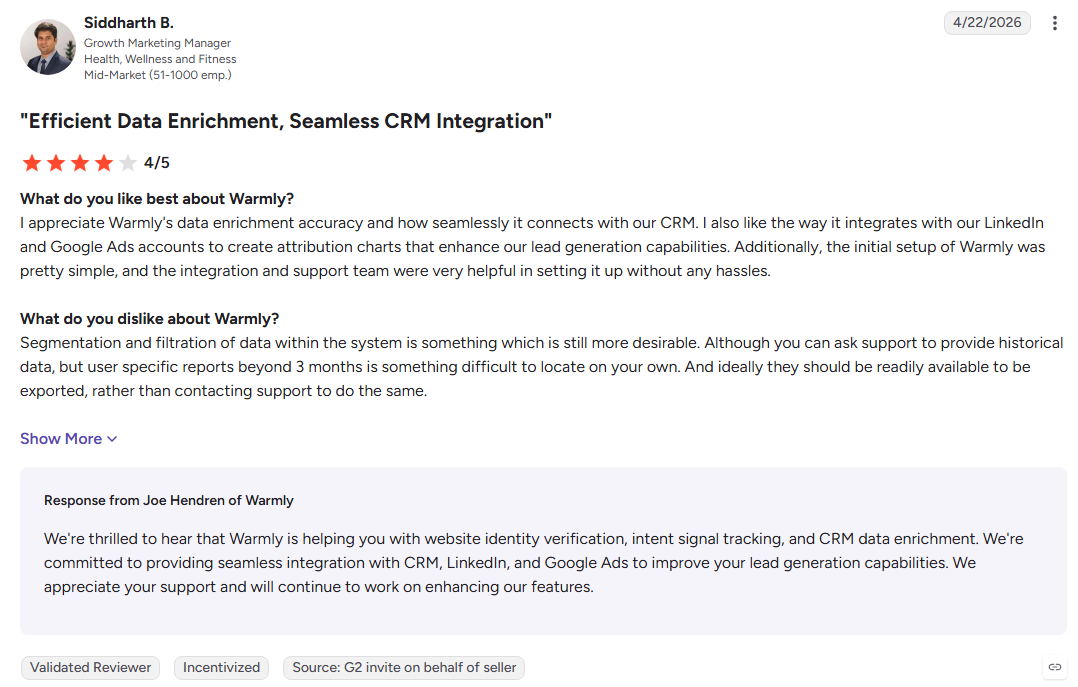
- Fast time to value for inbound teams
- Strong focus on response speed
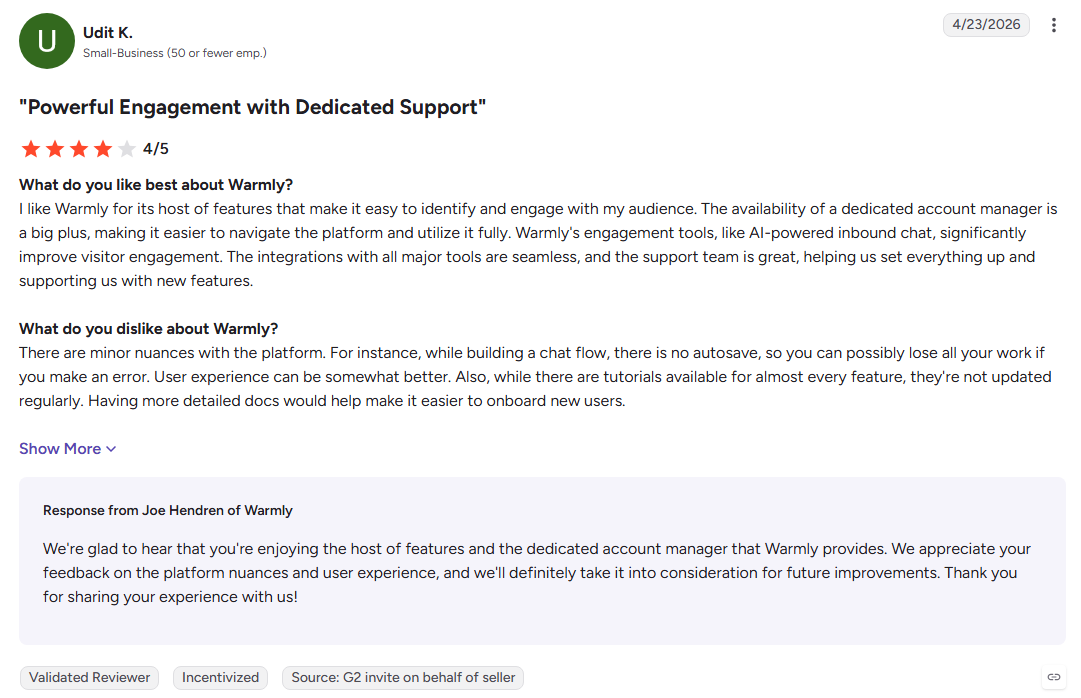
- Simple alerting workflow for sales reps
Cons
- Not designed as a full predictive scoring platform
- Person-level coverage varies by region
- Annual contracts increase the entry commitment
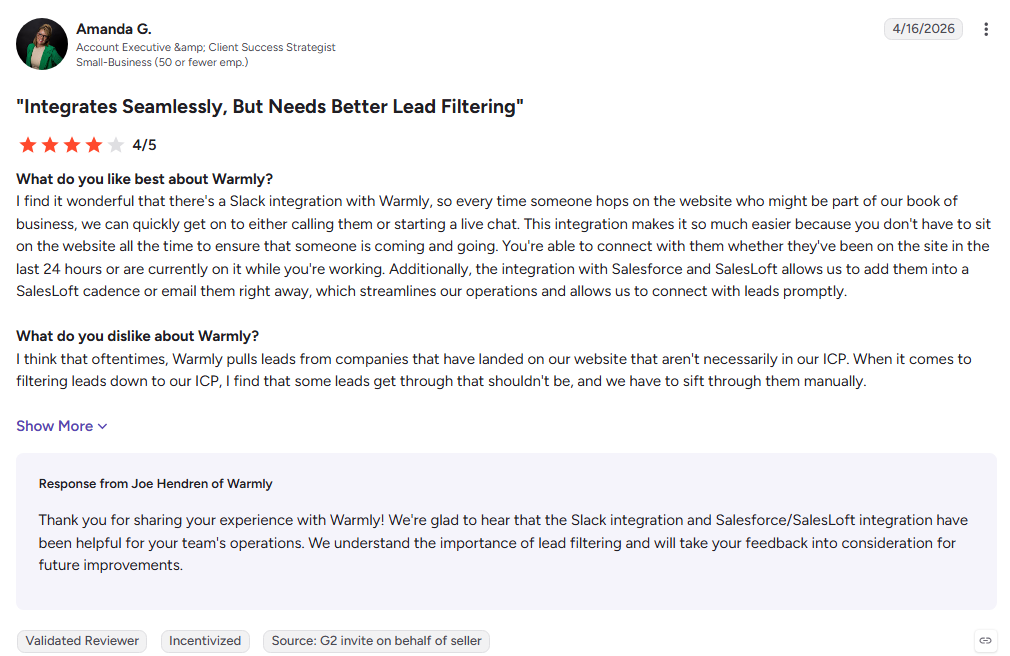
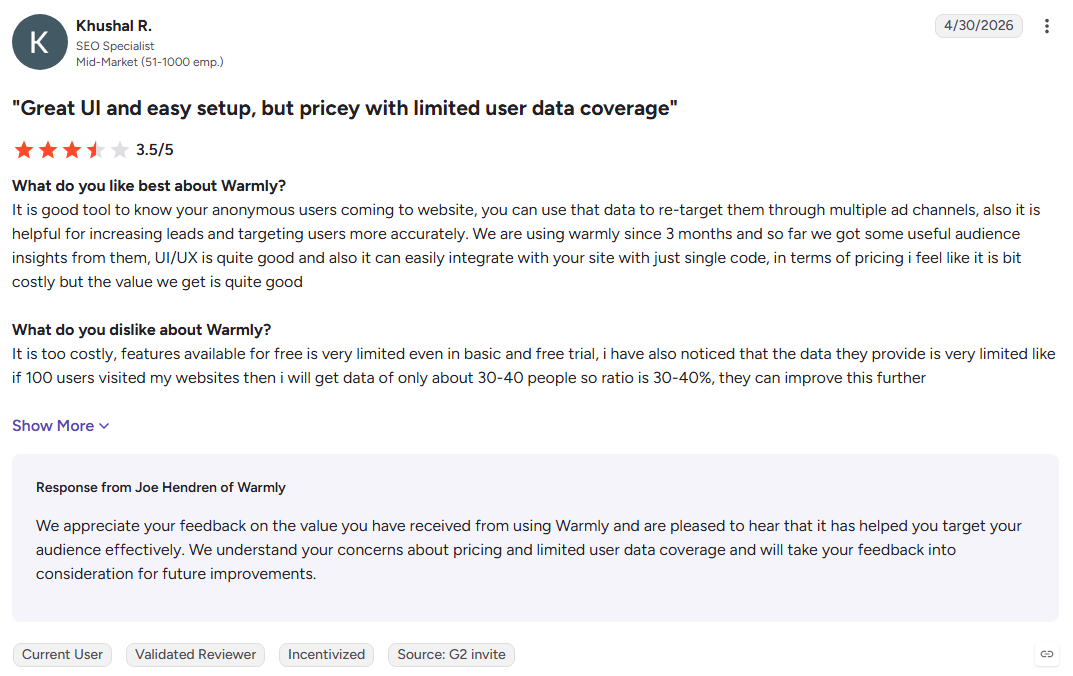
Best For: Inbound sales teams are acting quickly on website intent and can influence conversions.
See how it compares with Kwin vs Warmly or explore these Warmly alternatives.
9. Clay
Clay gives RevOps teams the building blocks to create their own scoring system instead of using a fixed model. Its waterfall enrichment pulls data from 100+ providers, while custom formulas combine different signals inside a spreadsheet-style workspace. An AI research agent can also evaluate harder-to-measure companies and contact fit.
Key Features:
- Waterfall enrichment: Uses multiple data providers to fill gaps in records.
- Custom scoring formulas: Combines conditions, weights, and labels around your ICP.
- AI research agent: Researches companies and contacts to evaluate deeper fit.
Pros
- Highly flexible for unusual ICPs
- Multiple data sources strengthen scoring inputs
- Gives RevOps teams control over scoring logic
Cons
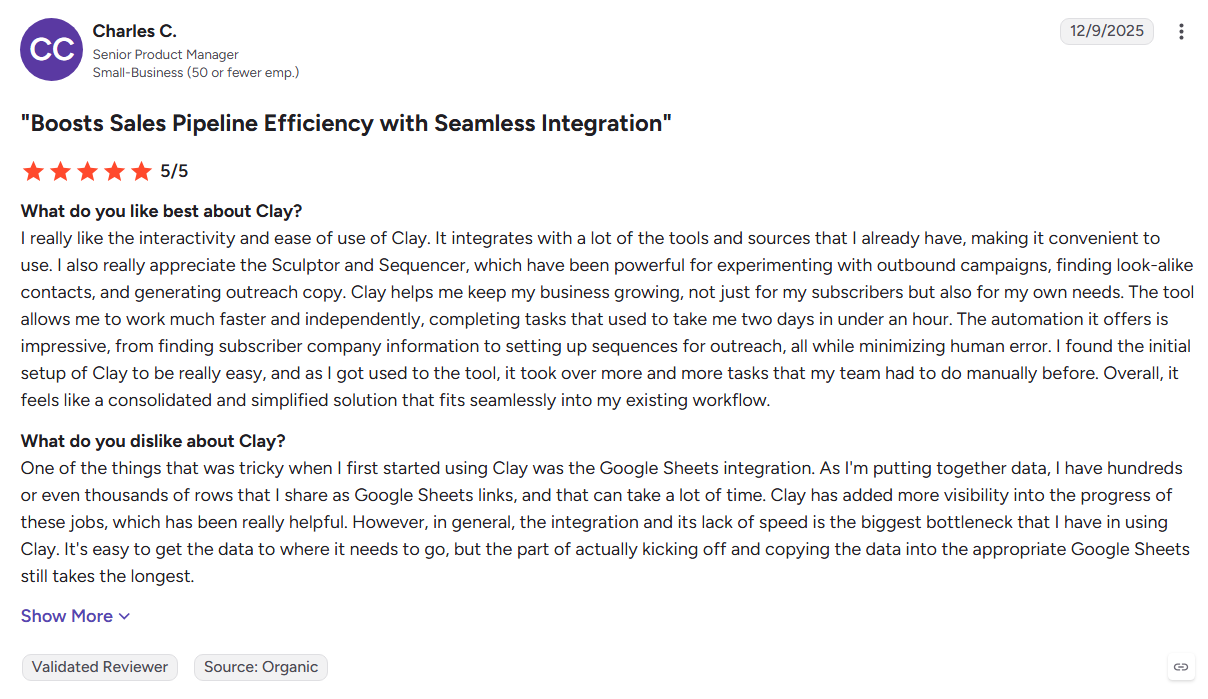
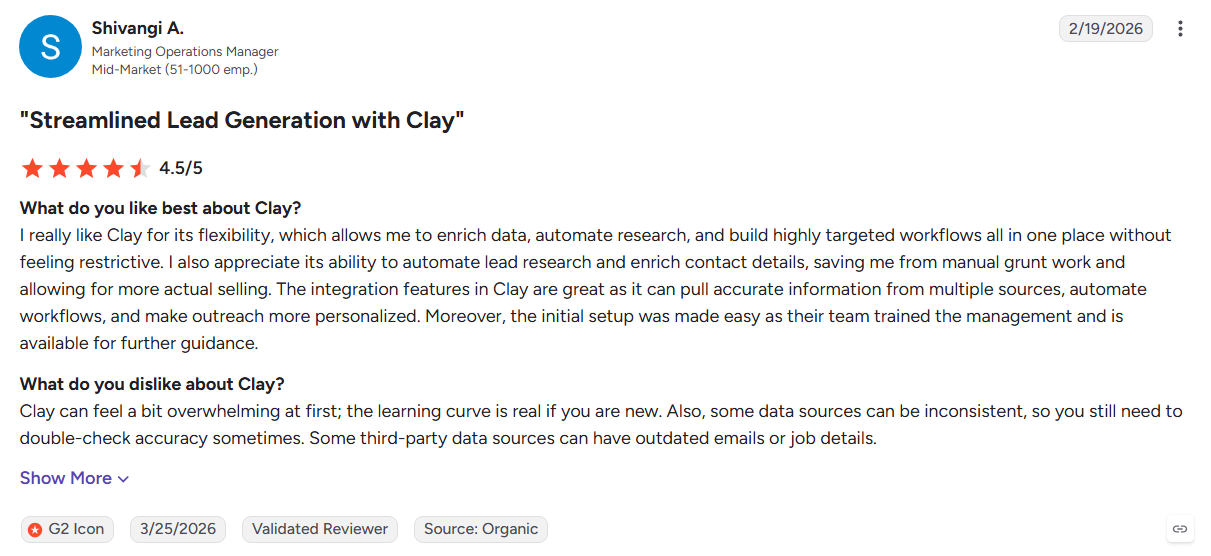
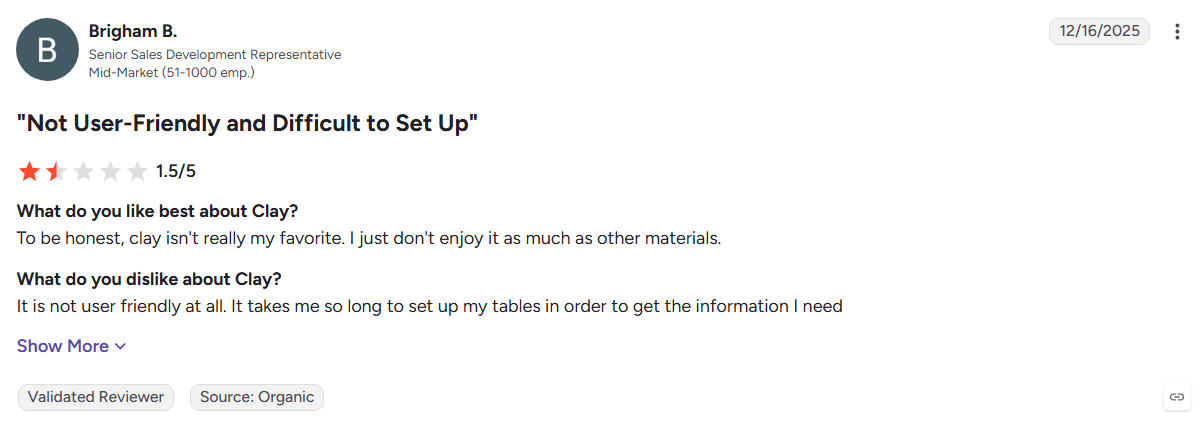
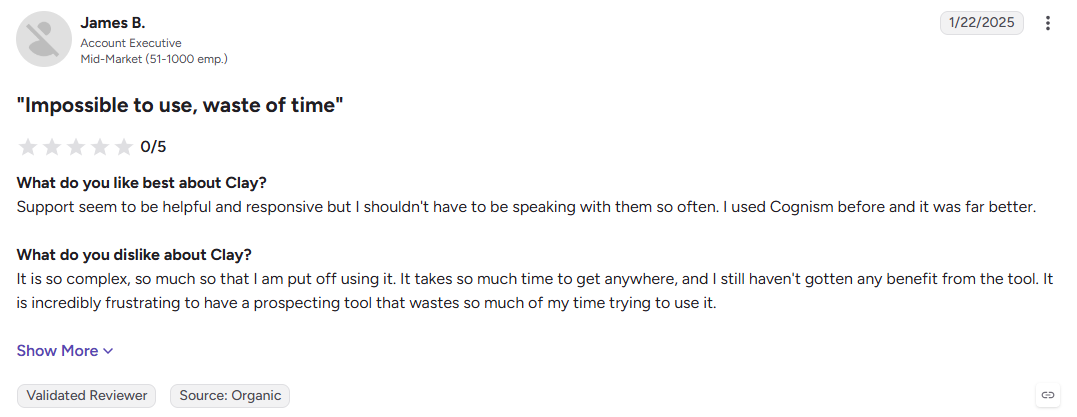
- Has a learning curve for new users
- Credit usage can increase quickly
- Scoring quality depends on how the workflow is built
Best For: RevOps teams and GTM engineers that want complete control over enrichment and scoring logic.
10. Adobe Marketo Engage
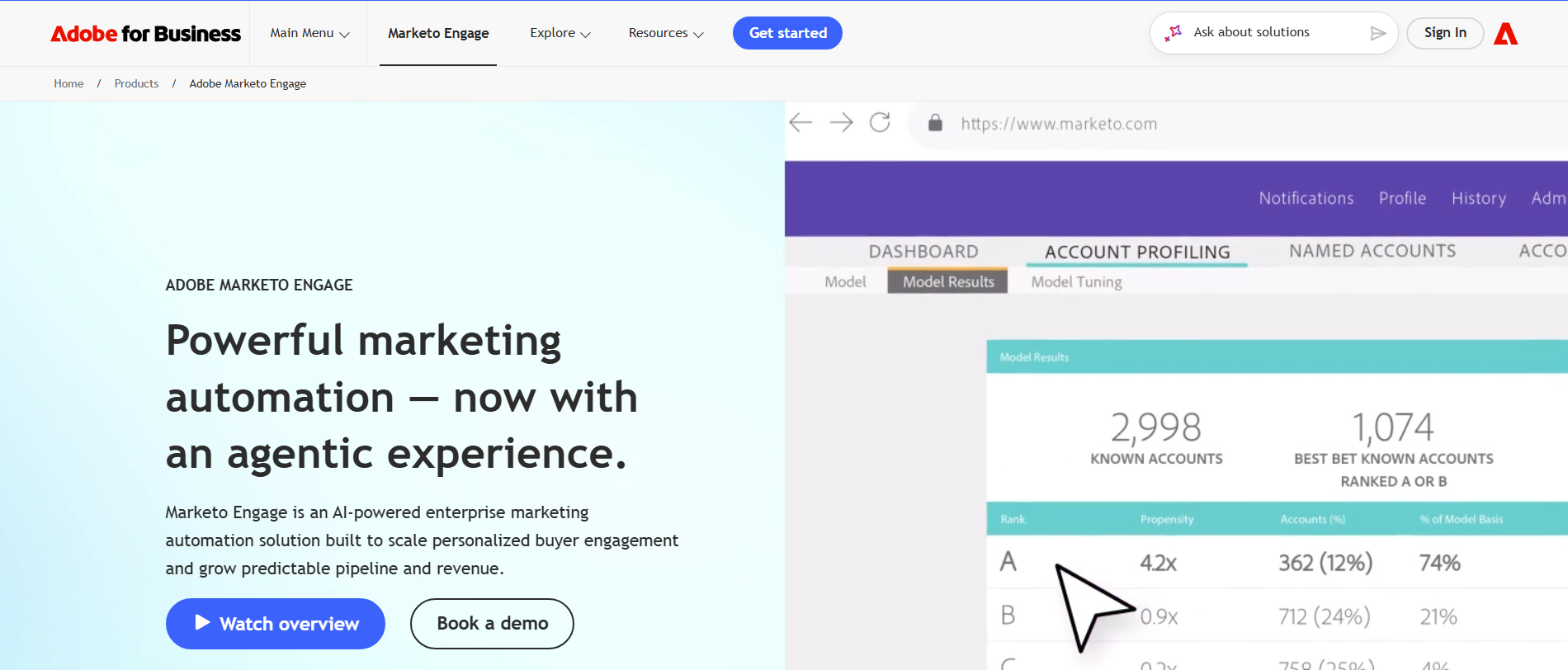
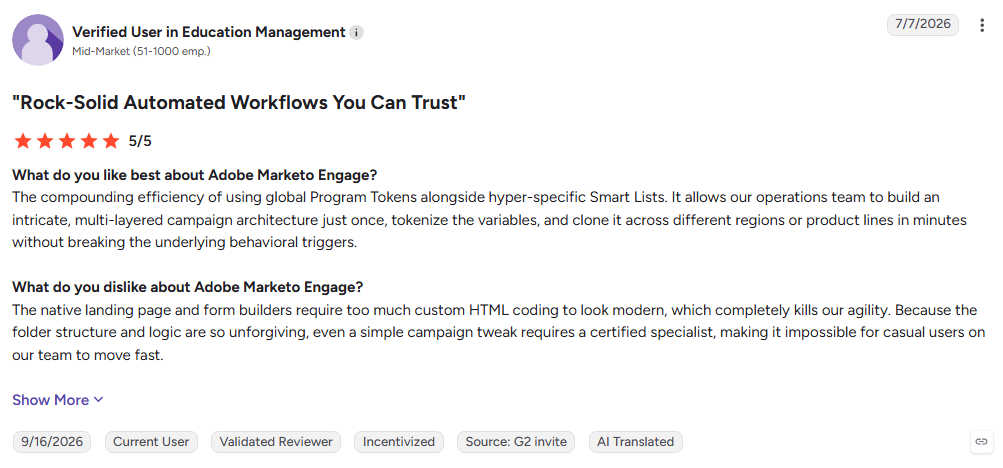
Adobe Marketo Engage is built for complex B2B marketing workflows where scoring needs to follow different rules across programs, regions, and products. Teams can separate behavioral engagement from demographic fit, apply score decay, and trigger campaigns as scores change. Its enterprise CRM integrations also support long, multi-stage nurture programs.
Key Features:
- Multi-dimensional scoring: Separates behavioral and demographic scores.
- Score decay: Automatically reduces scores as engagement becomes inactive.
- Smart Campaigns: Triggers automated actions when scoring conditions change.
Pros
- Highly flexible scoring logic
- Mature workflows for complex B2B funnels
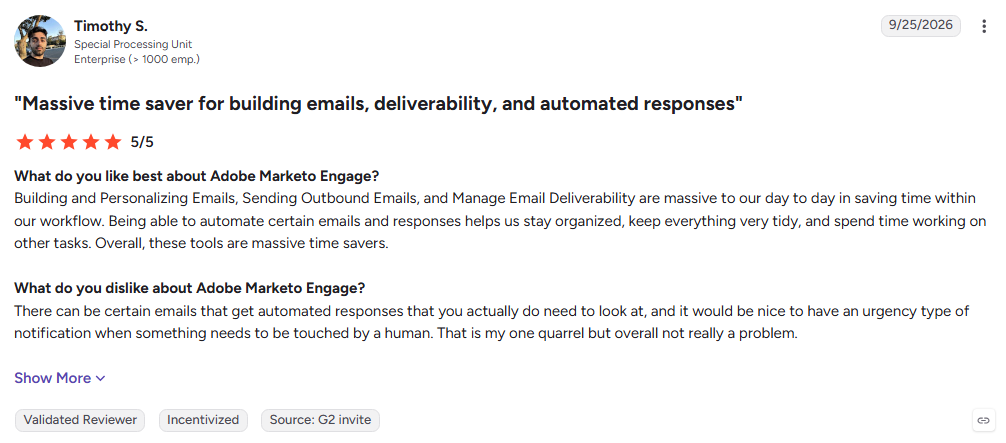
- Detailed reporting around scoring activity
Cons
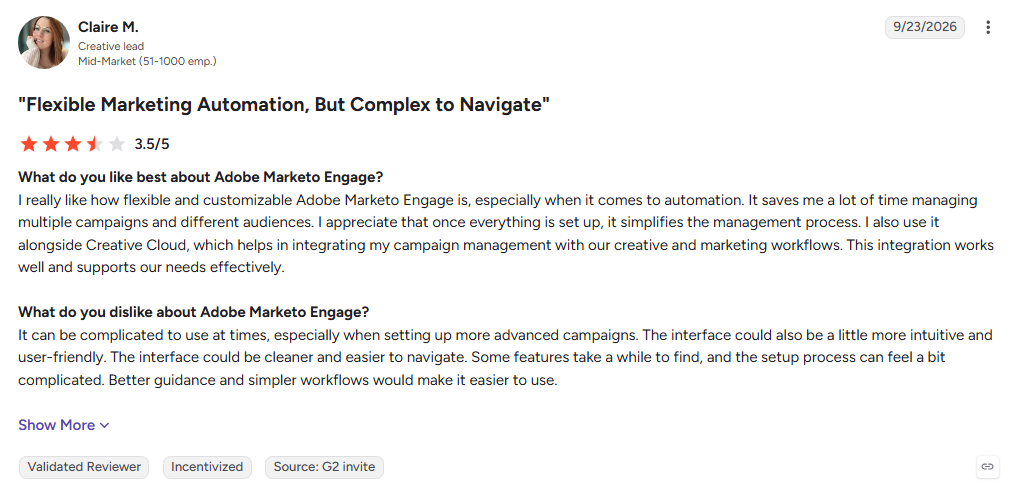
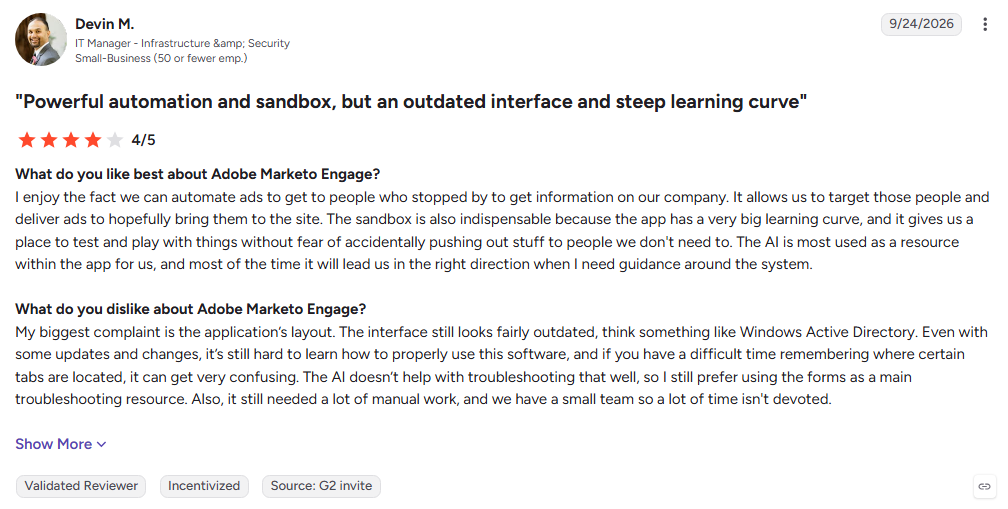
- Steep learning curve for new teams
- High total cost for smaller businesses
- Often requires dedicated marketing operations support
Best For: Enterprises managing complex funnels with dedicated marketing operations teams.
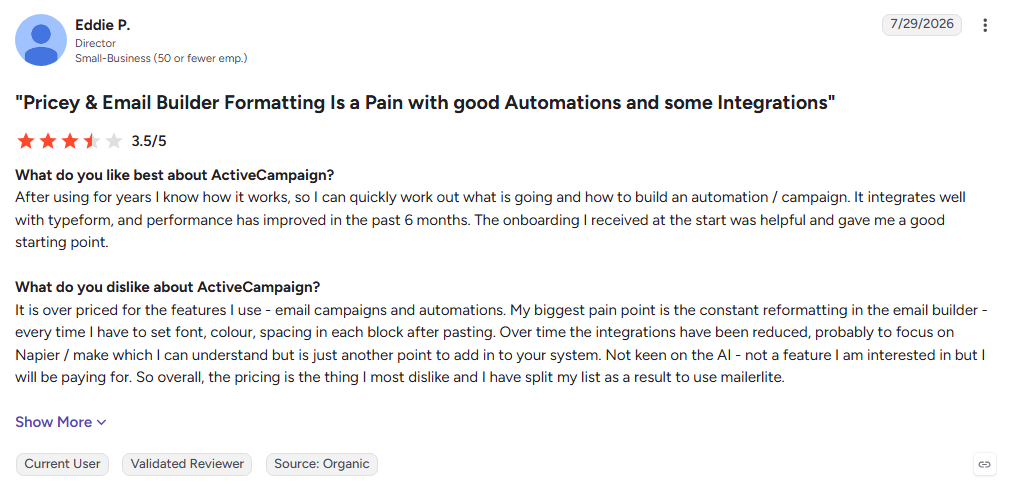
11. ActiveCampaign
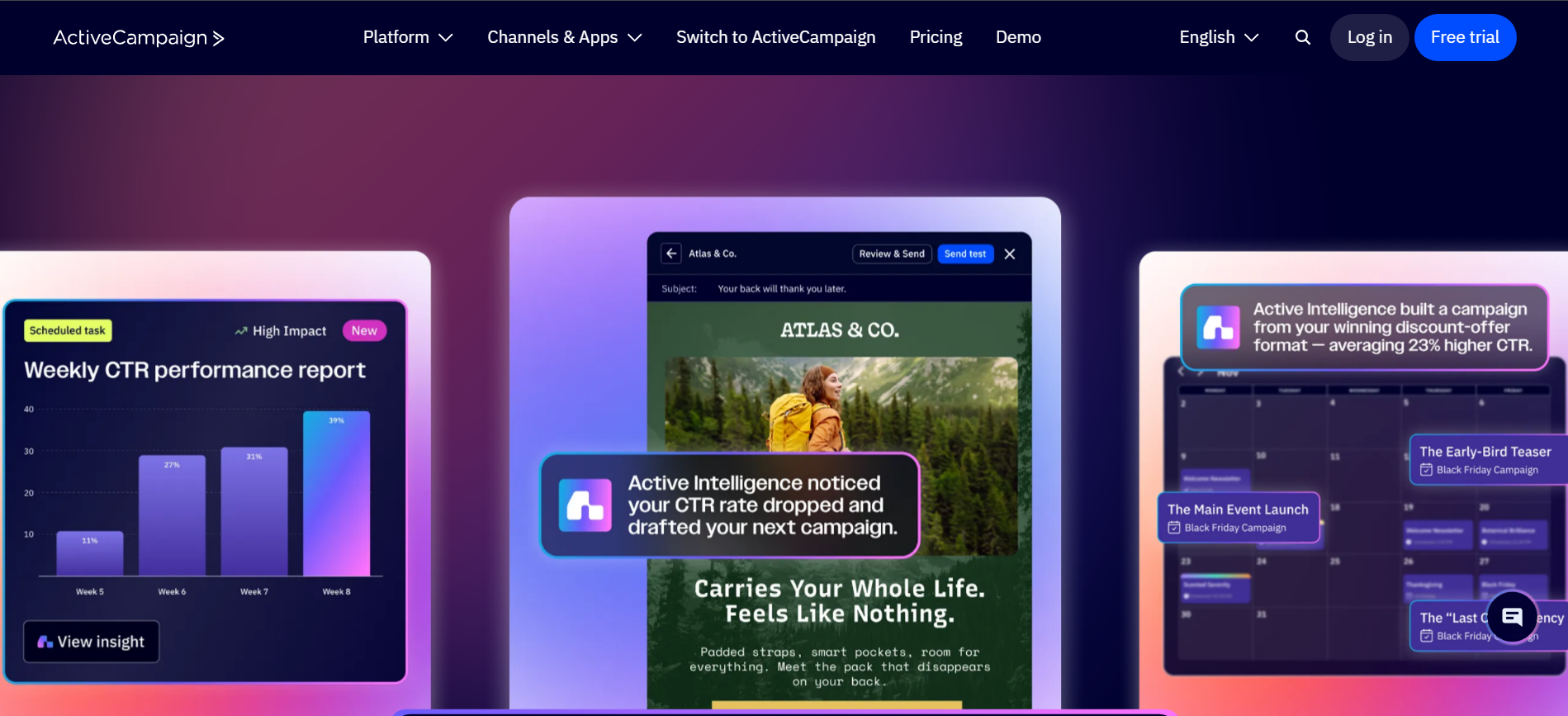
ActiveCampaign combines email marketing, automation, CRM, and contact scoring in one platform. Teams can create multiple scoring models for different products or interests and trigger automations when contacts cross specific thresholds. It works particularly well when email engagement is the main signal used to prioritize leads.
Key Features:
- Contact and deal scoring: Scores individual interest and overall deal quality.
- Multiple scoring models: Tracks interest across different products or segments.
- Score-triggered automations: Starts workflows, alerts, or sequences when scores change.
Pros
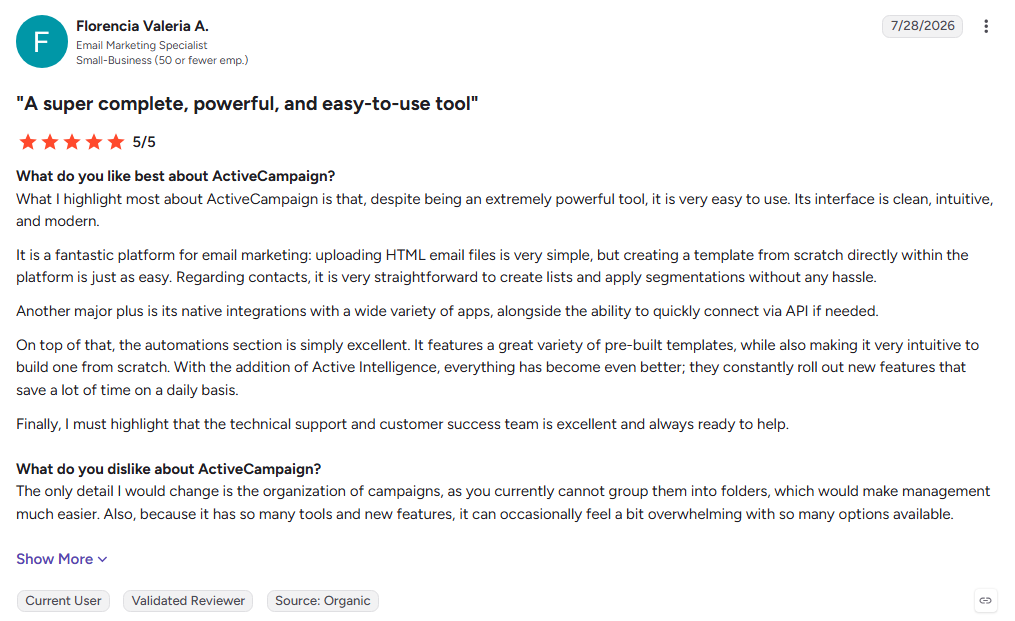
- Easy for non-technical marketers to manage
- Strong email automation capabilities
- Accessible for small and mid-size teams
Cons
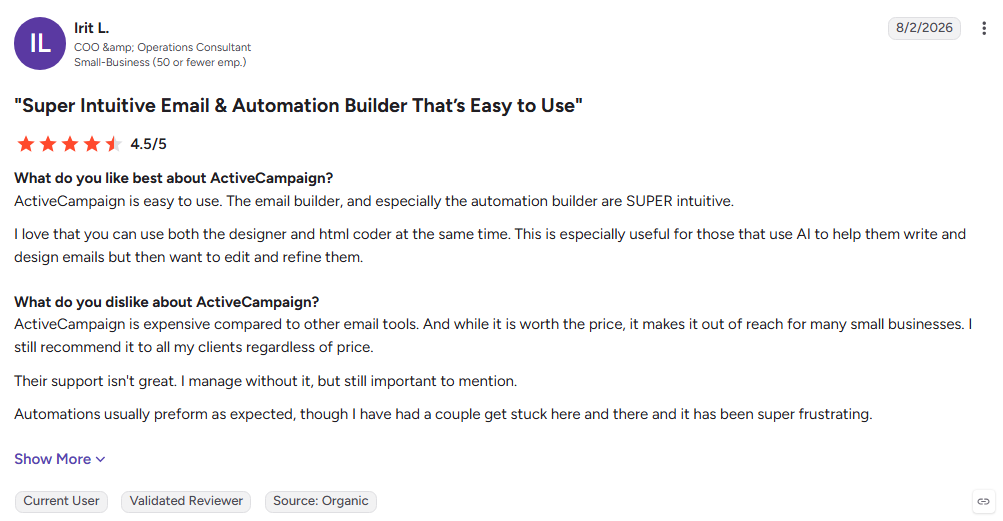
- Uses rules-based scoring rather than predictive AI
- Scoring is unavailable on the lowest tier
- CRM capabilities are lighter than dedicated sales platforms
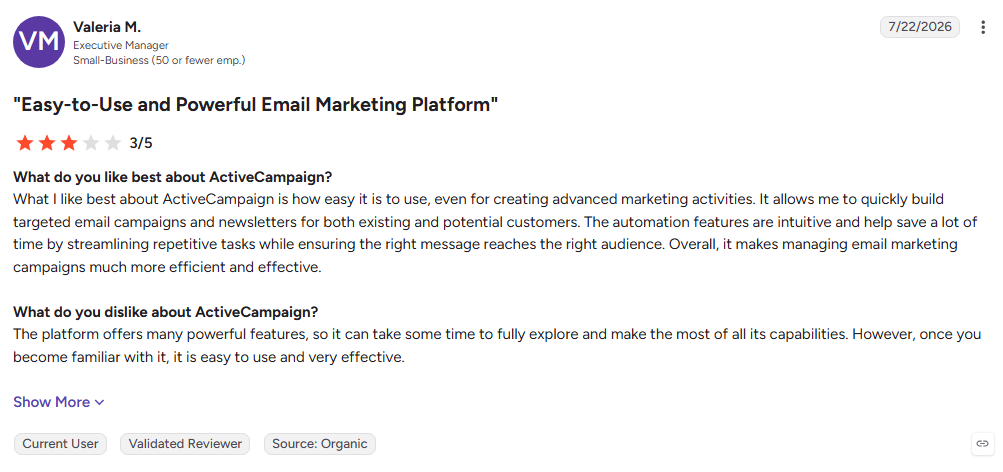
Best For: Small and mid-size teams where email is the primary engagement channel.
12. Freshsales (Freddy AI)
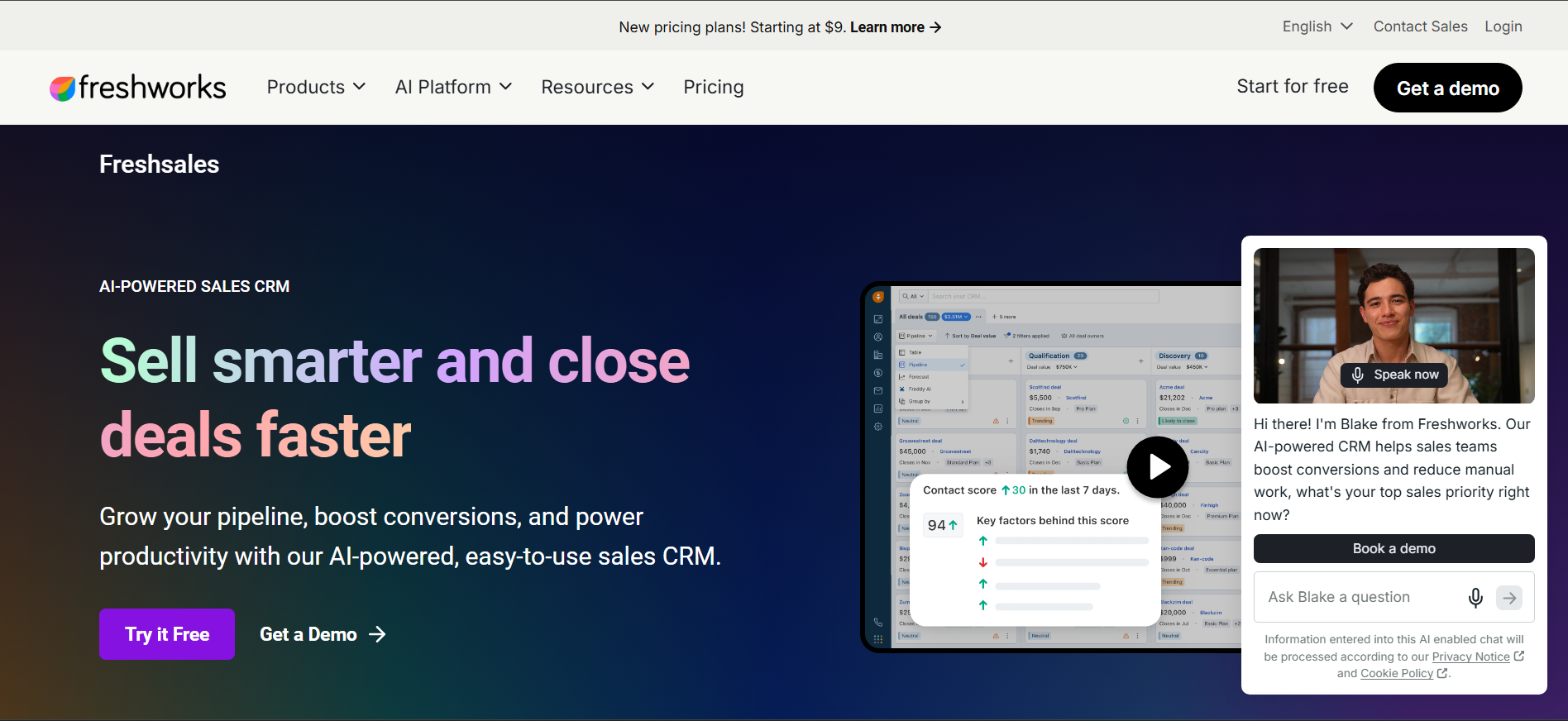
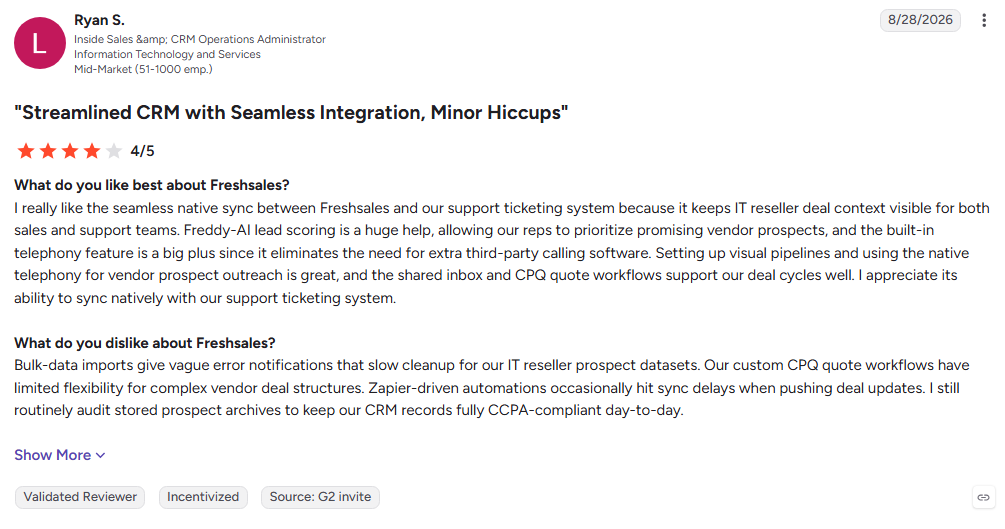
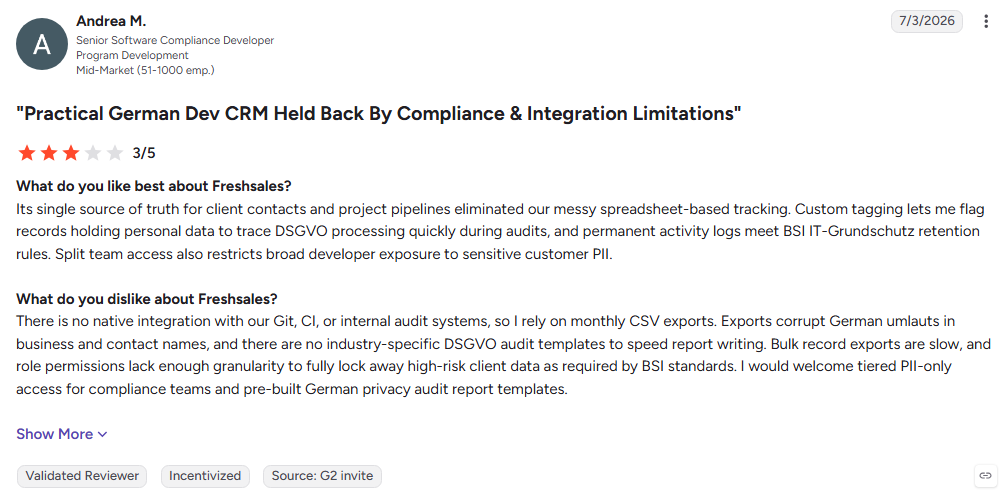
Freshsales uses Freddy AI to score contacts from 0 to 99 based on fit and engagement signals. It also flags deals as likely, at risk, or gone cold, while built-in phone and email let reps act on those signals without leaving the CRM.
Key Features:
- AI contact scoring: Generates automatic scores with minimal manual setup.
- Deal insights: Flags deals with health and suggests relevant next steps.
- Built-in calling and email: Lets reps follow up from the same workspace.
Pros
- AI scoring without an enterprise-level setup
- Quick to configure for lean sales teams
- Scoring and outreach work in one CRM
Cons
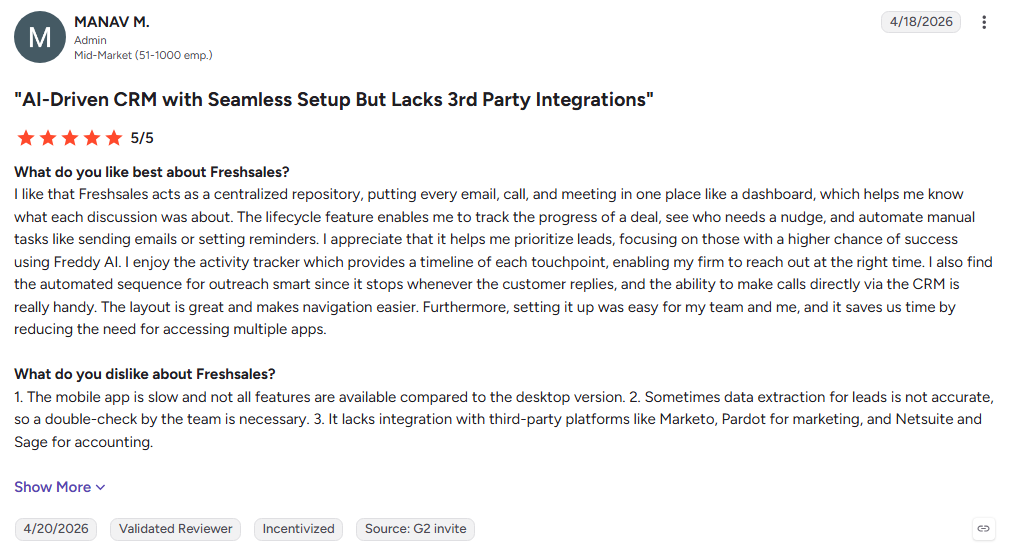
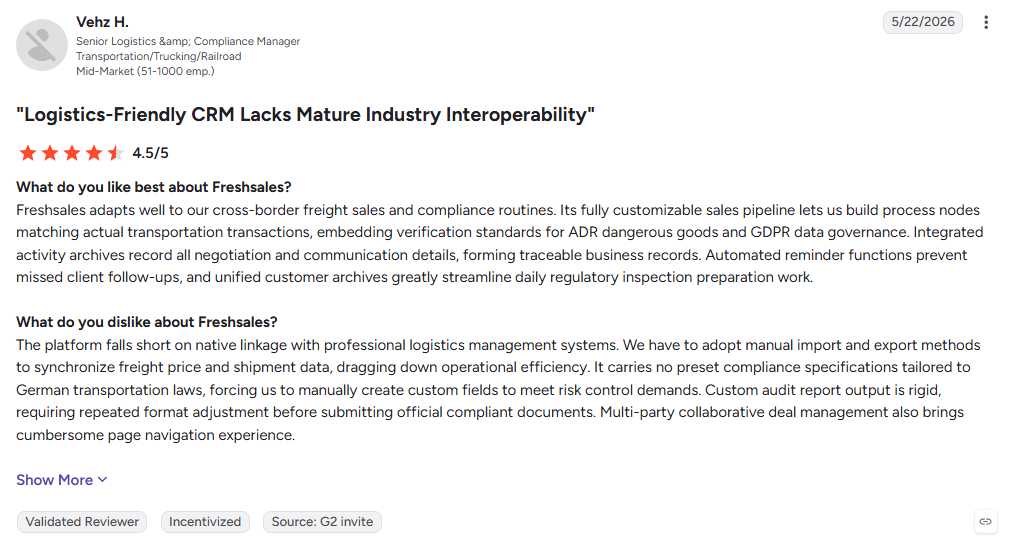
- Lighter scoring model than specialist platforms
- No third-party intent data integration
- Accuracy depends on clean CRM data
Best For: Small sales teams that want AI scoring, communication, and CRM workflows in one place.
13. Zoho CRM (Zia)
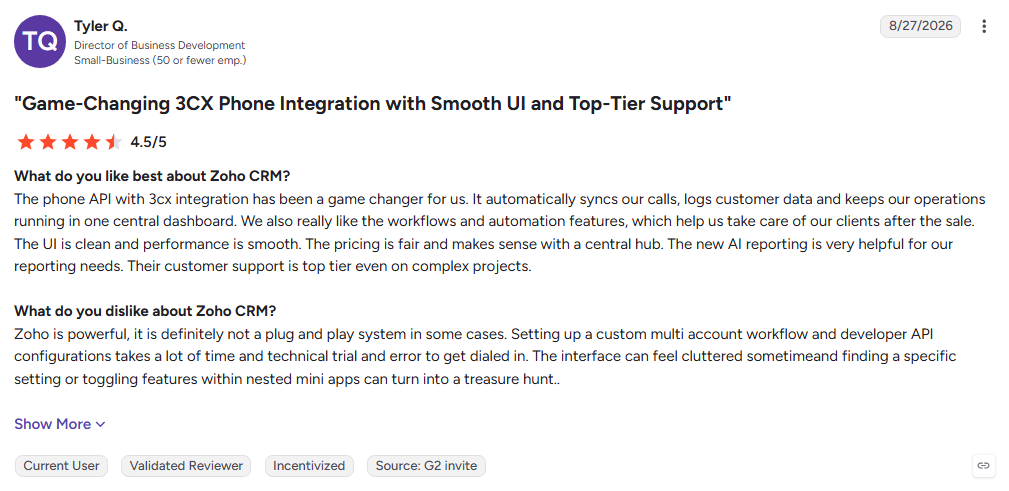
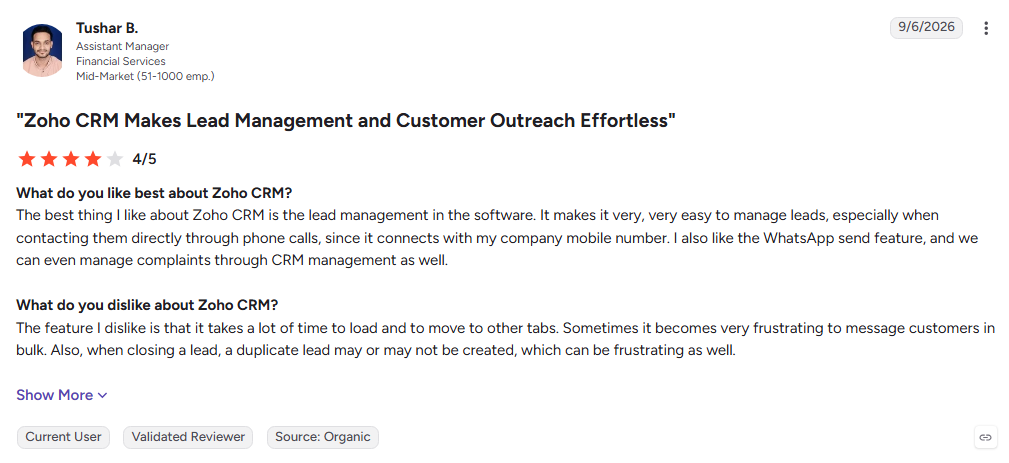
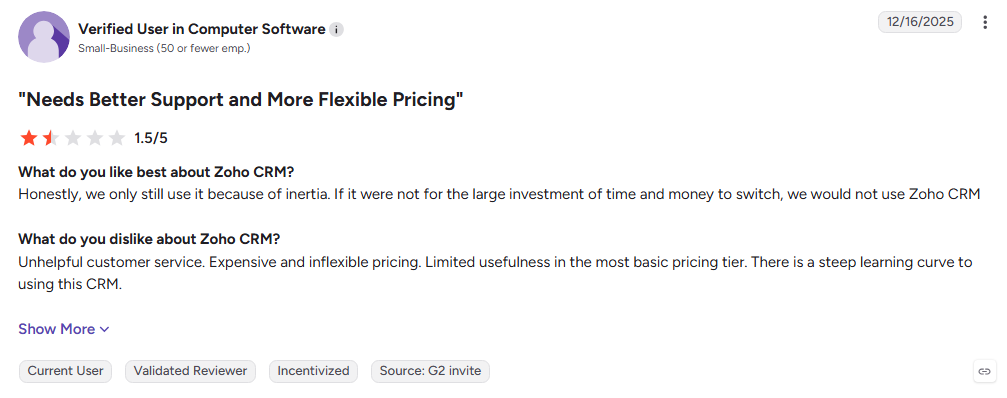
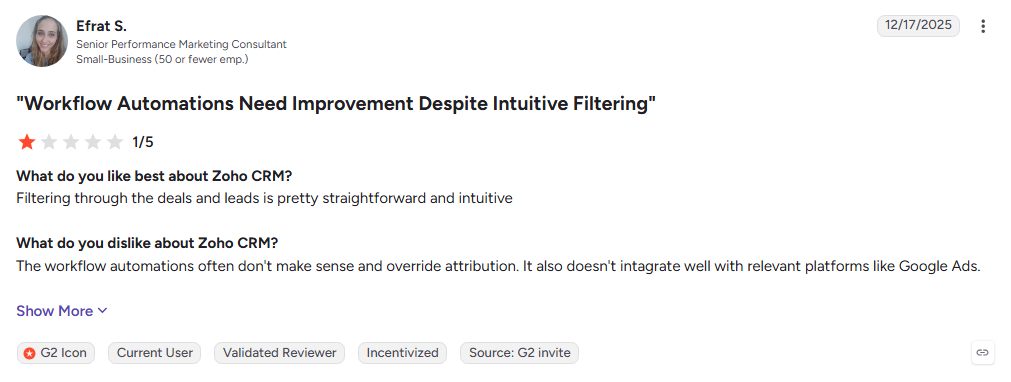
Zoho CRM combines flexible scoring rules with Zia's predictive capabilities. Teams can assign positive or negative points to CRM fields, while Zia estimates conversion likelihood and explains the signals behind its predictions. Zoho SalesIQ can also bring website activity into the scoring workflow.
Key Features:
- Custom scoring rules: Score fields such as job title, activity, and email engagement.
- Zia predictions: Estimates conversion likelihood with contributing factors.
- Suite integrations: Connects scoring with Zoho Campaigns and Zoho SalesIQ.
Pros
- Predictive scoring within a broad CRM ecosystem
- Flexible rules across different CRM fields
- Works with relatively modest data history
Cons
- Shallower model than specialist predictive platforms
- No native third-party intent data
- Most useful when the wider Zoho suite is already in place
Best For: Budget-conscious sales teams already using Zoho CRM and its surrounding tools.
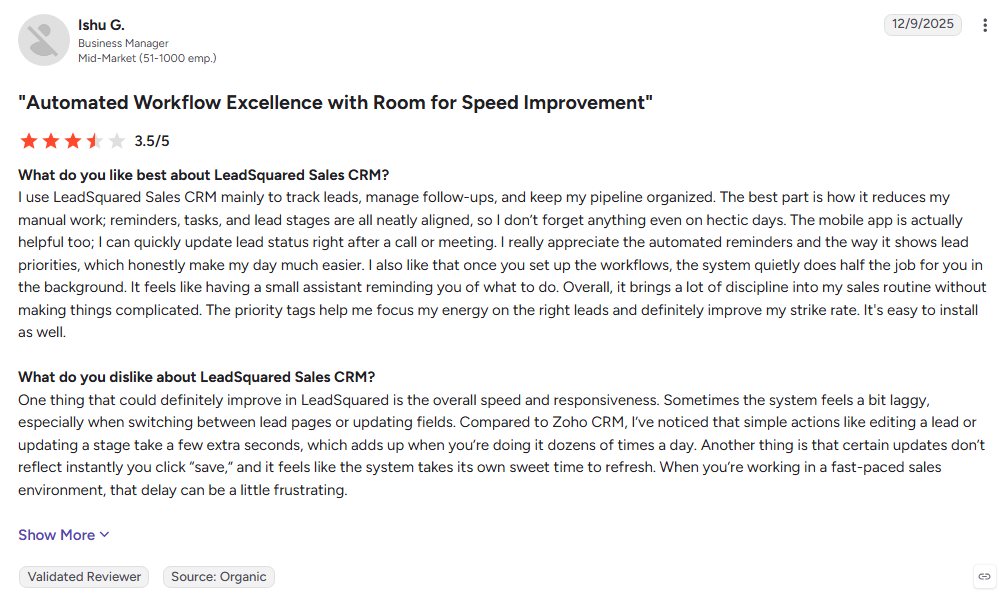
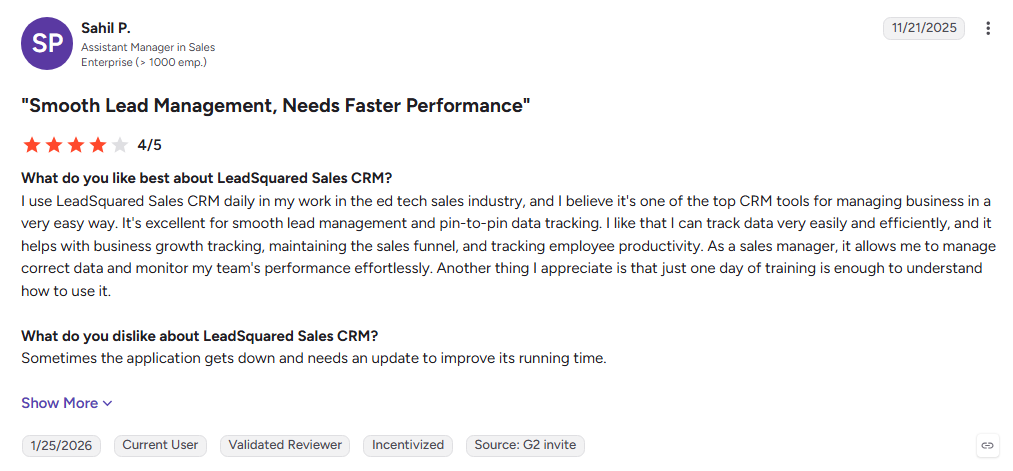
14. LeadSquared
LeadSquared is designed for teams processing large volumes of inbound leads. It separates lead, engagement, and quality scores, then uses those signals to distribute leads based on score, location, and custom routing rules. That makes it useful when speed and consistent follow-up matter as much as scoring itself.
Key Features:
- Three scoring metrics: Separates lifetime engagement, recent engagement, and ICP quality.
- Automated lead distribution: Routes leads using scores, location, and custom rules.
- Custom activities: Adds offline and industry-specific actions to scoring.
Pros
- Strong for high-volume inbound routing
- Score decay keeps lead queues fresh
- Includes a broader sales execution toolkit
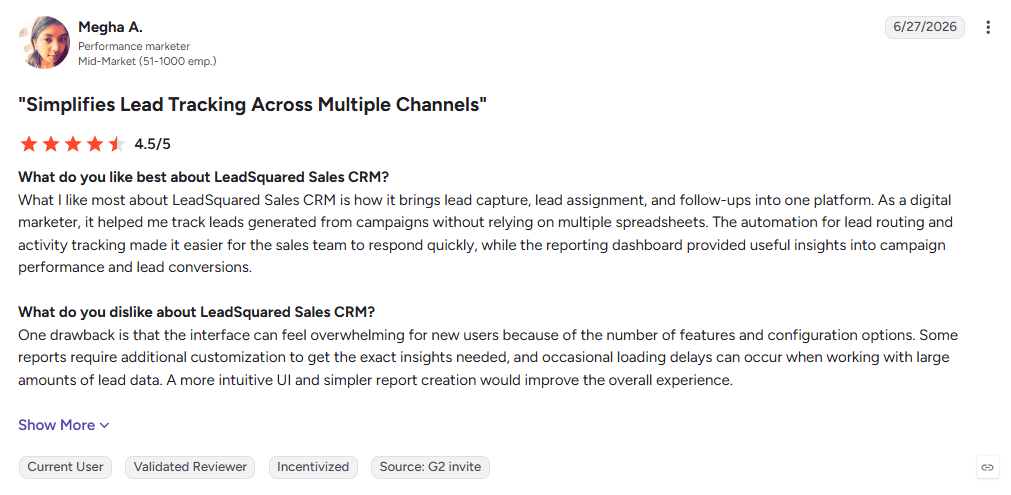
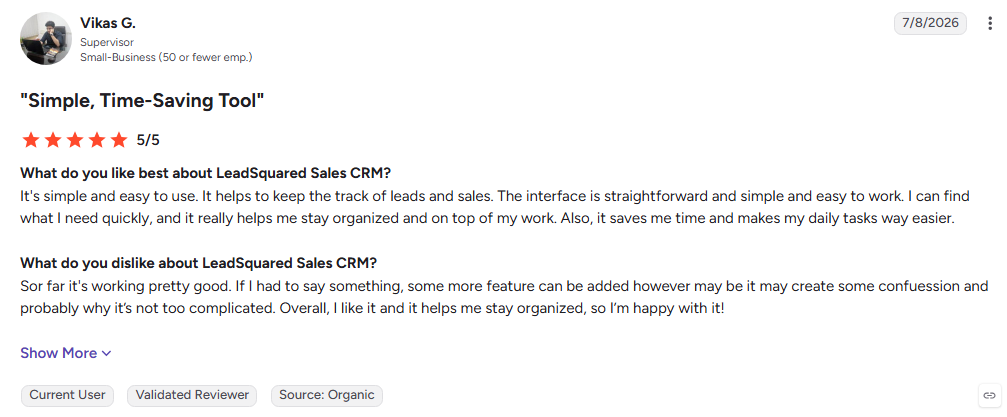
Cons
- Primarily rules-based scoring
- Stronger fit for specific high-volume verticals
- Less suited to complex account-based B2B motions
Best For: High-velocity sales teams that need fast, score-based lead distribution.
15. Pipedrive
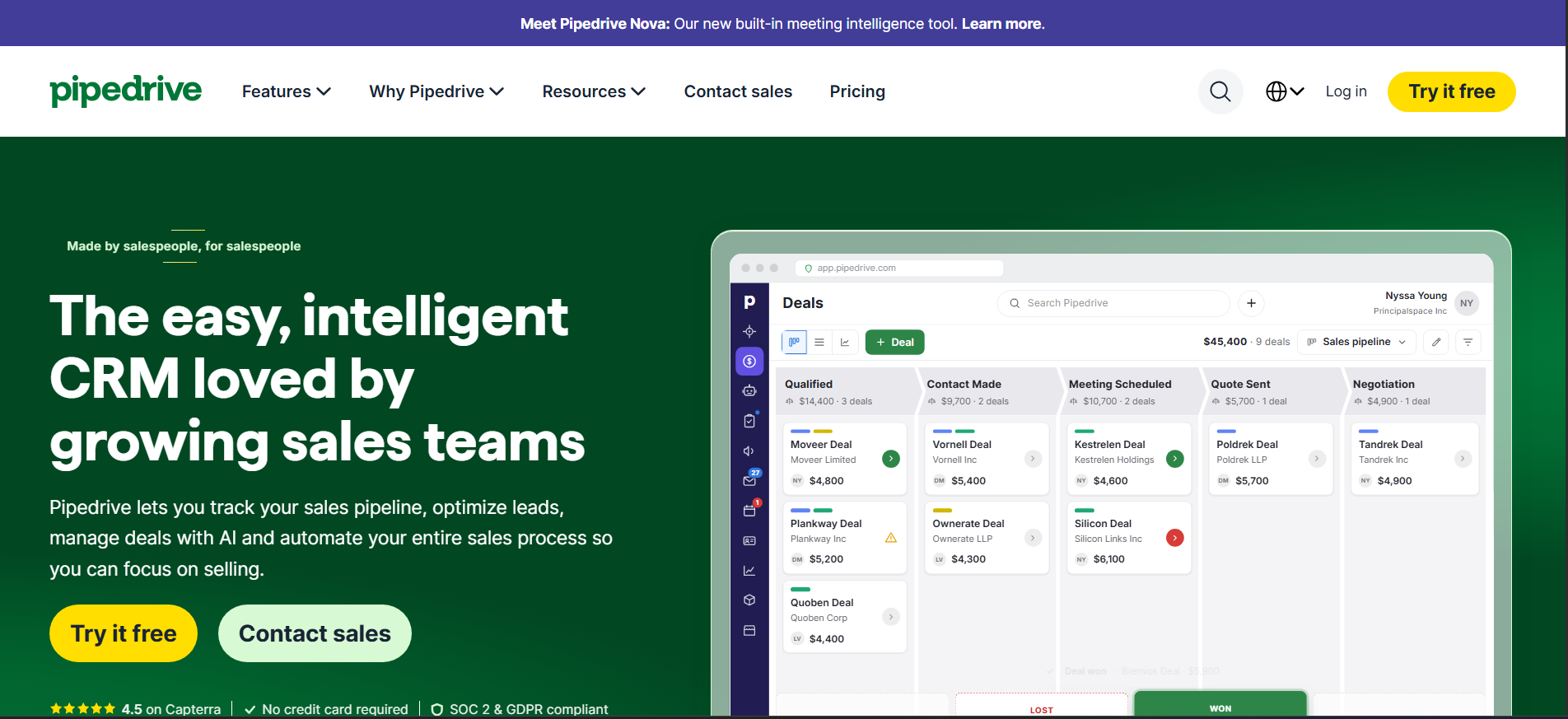
Pipedrive brings rules-based scoring directly into its visual sales pipeline. Teams can assign points to activities such as demo requests and pricing-page visits, subtract points for poor-fit profiles, and automate score changes when leads go inactive. Reps can then see those signals where they already manage deals.
Key Features:
- Point-based criteria: Adds or subtracts points based on fields and activities.
- Time decay: Uses automations to reduce scores after periods of inactivity.
- Pipeline-native display: Keeps scores visible alongside the deals reps manage.
Pros
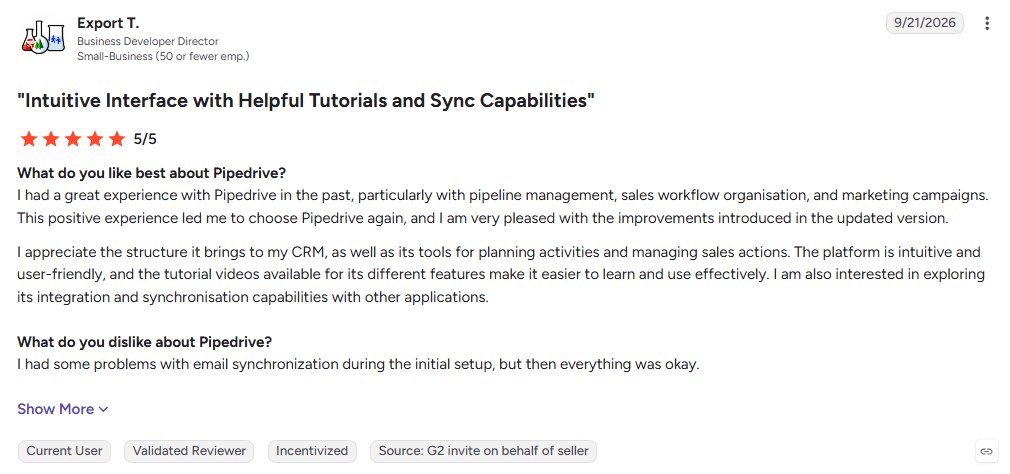
- Simple setup without a separate scoring platform
- Transparent rules that are easy to audit
- No-code workflow automation
Cons
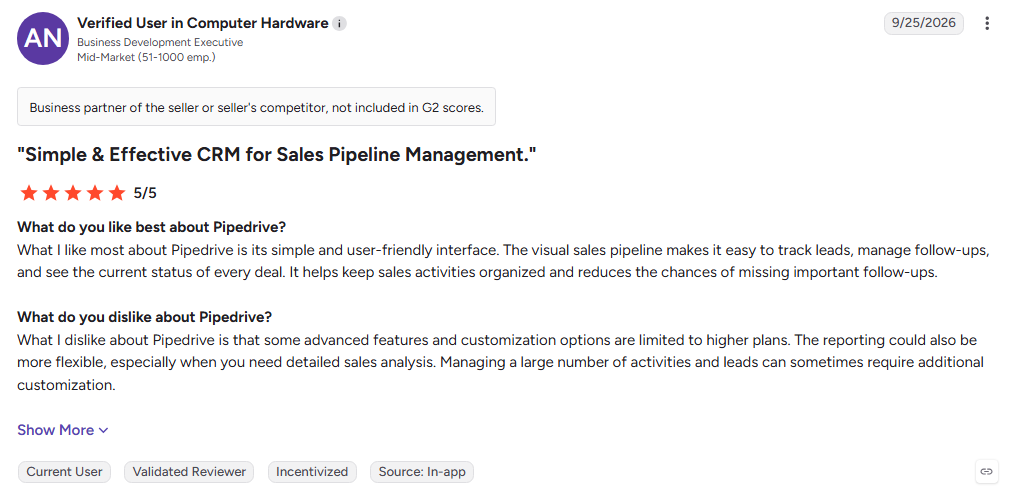
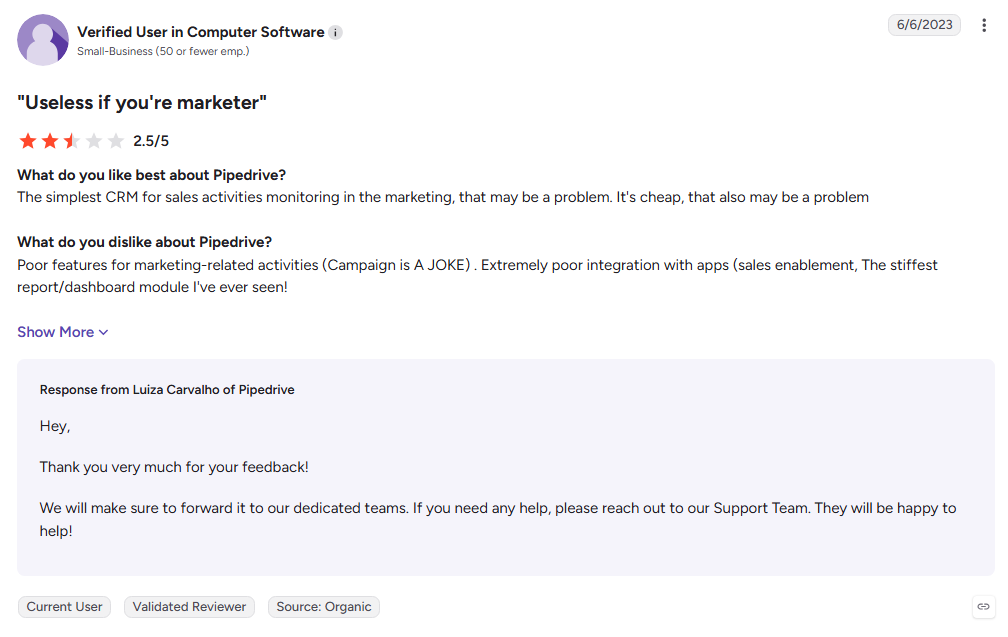
- Rules-based rather than predictive
- Advanced scoring requires higher-tier plans
- Manual scoring weights need regular maintenance
Best For: Small B2B sales teams that want straightforward scoring inside their visual pipeline.
Now that you have seen what each platform does best, let's look at how to choose the right one for your team.
How to Choose the Right Lead Scoring Software
Don’t start with the longest feature list. Start with the gap in your pipeline, then choose the platform that can close it.
1. Start With Where Your Leads Come From
If most leads come through forms, a CRM-native scoring tool may be enough. If buyers research quietly and leave, you need a platform that can identify and score anonymous visitors before they enter your CRM.
2. Match the Scoring Model to Your Data
Predictive lead scoring works best with months of clean conversion data. If your data is limited, start with rules-based scoring or an AI agent that learns from live behavior and your ICP. As your history grows, you can move toward predictive models.
3. Choose Person-Level or Account-Level Scoring
Account-level scoring works well for ABM teams targeting a fixed list of companies. Person-level scoring is better when sales needs to know which specific buyer to contact. Check exactly what each platform identifies and where that coverage is available.
4. Make Sure Scores Trigger Action
A score nobody acts on is just another report. During a trial, test what happens when a lead crosses your threshold. Look for automatic routing, alerts, or outreach instead of requiring reps to check scores manually.
5. Look for Explainable Scores
Reps are more likely to trust scores when they can see why a lead ranked highly. For example, three pricing-page visits from an ICP-fit company provide useful context. That visibility turns lead prioritization from a number into a clear sales signal.
6. Check CRM, Slack, and Workflow Integrations
Scoring only helps when the right teams receive it. Check for two-way CRM sync, real-time Slack alerts, and clean handoffs to sales engagement tools. Avoid platforms that only export scores without triggering the next step.
7. Verify Compliance and Data Sources
Check how the platform collects and uses business data. Ask about GDPR and CCPA compliance, along with SOC 2 Type II and ISO certifications where relevant. Our guide to GDPR compliant visitor identification tools covers this in more depth.
Also Read: 15 Best Anonymous Website Visitor Identification Tools
Why Kwin Is the Lead Scoring Software That Books Meetings
Most lead scoring software tells sales who to contact next. Kwin goes one step further by identifying interested visitors and starting the conversation.
- Identify buyers: Reveal names, work emails, phone numbers, LinkedIn profiles, company details, revenue, industry, and location.
- Score intent: Combine ICP Fit and Purchase Intent to find visitors showing real buying signals.
- Track behavior: Use page views, repeat visits, and engagement to understand interest.
- Automate outreach: Send personalized three-step sequences from your own domain when visitors meet your criteria.
- Hand off conversations: Send positive replies with the full thread and summary to your inbox, Slack, or CRM.
- Filter traffic: Exclude unwanted countries, pages, data, and public-sector traffic.
- Built for trust: Supports SOC 2 Type II, GDPR, CCPA, ISO 9001:2015, and ISO 27001:2022 while using publicly available business data.
- Proven results: Infiniticube generated 2.5x more qualified leads in 45 days, with 35%+ of meetings coming from visitors who never filled out a form.
Hire Kwin For Free with 100 leads per month and no credit card required.
Conclusion
Lead scoring works best when it moves beyond a number and helps sales take action. The right platform should separate fit and intent, explain why a lead is ready, and trigger the next step before interest fades.
CRM-native tools work well for teams already managing leads inside their CRM. Other platforms focus more on predictive scoring, intent data, or custom scoring workflows. If buyers visit your website without filling out a form, visitor identification can also become an important part of the process.
We hope this guide helped you understand how Lead Scoring Software works and what to look for when choosing one.
Ready to turn anonymous website traffic into sales conversations? Hire Kwin For Free or connect with our experts to build a scoring approach around your pipeline.