

TL;DR
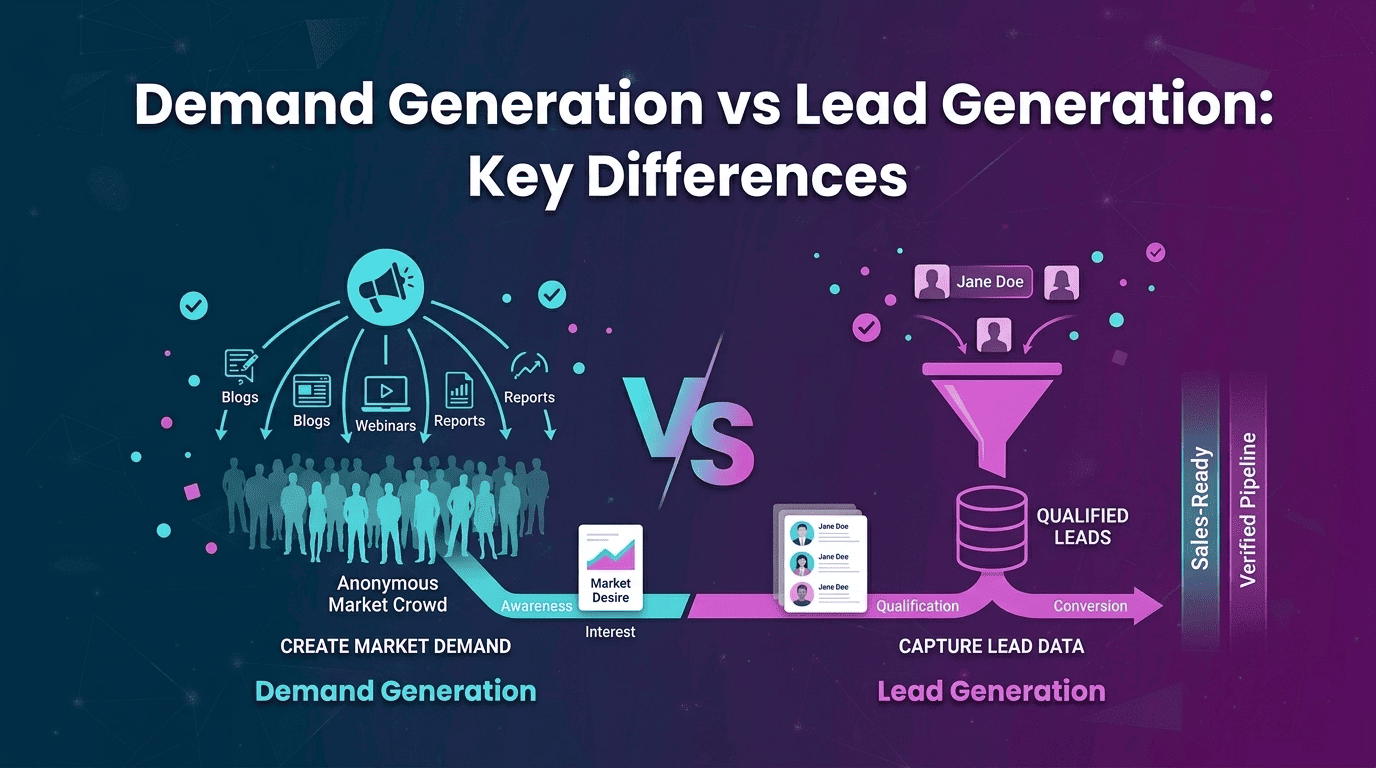
Demand generation builds awareness and interest among future buyers, while lead generation captures that interest and turns it into sales opportunities. The strongest B2B strategy connects both by combining educational content, high-intent lead capture, and website visitor identification to turn anonymous demand into qualified pipeline. Kwin helps bridge this gap by identifying and engaging qualified website visitors who may never fill out a form.
Your content is getting traffic, your LinkedIn posts are getting shared, and your webinars are filling up. So why does the pipeline still feel thin?
The problem may be confusing demand generation vs lead generation as the same motion.
Demand generation builds awareness and interest before buyers are ready to talk. Lead generation captures that interest and turns it into sales opportunities.
But there’s a gap most teams miss: the buyers engaging with your content may never fill out a form. They visit your site, read your content, check your pricing, and leave as anonymous website visitors.
That means marketing sees engagement, sales sees too few leads, and valuable buying intent stays hidden.
In this guide, you’ll learn:
- What demand generation and lead generation actually do
- The key differences between both motions
- The tactics and KPIs that matter for each
- When to prioritize one over the other
- How to connect anonymous demand to your sales pipeline
By the end, you’ll know where your pipeline is leaking and how to turn more of your existing demand into sales-ready conversations.
What Is Demand Generation?
Demand generation creates awareness and interest around a problem before buyers are ready to purchase. It helps your brand build trust early, so you are already on their radar when they start comparing solutions.
The key word is future. Most of your ICP (ideal customer profile) may not be ready to buy today. Demand generation reaches these potential buyers early and keeps your brand relevant when their need becomes urgent.
B2B demand generation typically uses ungated content, thought leadership, SEO, podcasts, communities, and brand-led paid media. Success shows through stronger branded search, higher engagement, and more inbound pipeline over time.
What Is Lead Generation?
Lead generation turns existing interest into identified buyers your sales team can contact and qualify. It mainly works in the middle and bottom of the funnel, where buyers already understand their problem and are comparing solutions.
B2B lead generation commonly uses gated content, demo requests, free trials, webinar sign-ups, and paid search for high-intent keywords. In return, businesses collect details such as a name, work email, and other information needed to understand whether the buyer is a good fit.
If demand generation builds interest, lead generation answers the next question: Which interested buyers are ready to talk to sales?
Demand Generation vs Lead Generation: Key Differences
The biggest difference between demand generation vs lead generation is timing and buyer intent. Demand generation builds awareness before buyers are ready to buy, while lead generation captures interest when they are closer to making a decision.
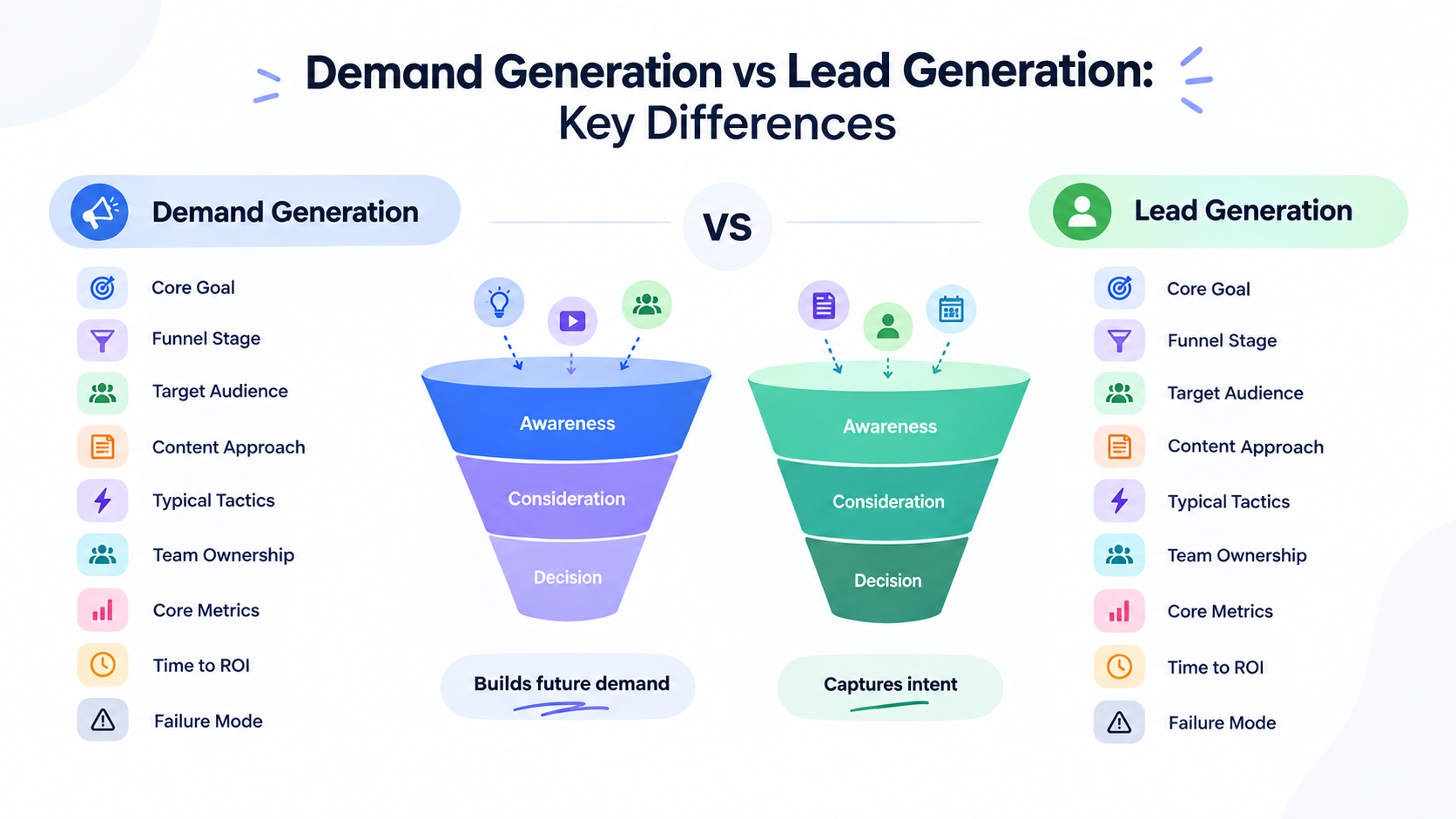
Here’s how the two approaches differ across the areas that matter most:
1. Core Goal
Demand generation builds future demand. It helps buyers understand a problem, see the value of solving it, and remember your brand before they have a buying need. The goal is to become a trusted option when that need becomes urgent.
Lead generation focuses on conversion. It turns existing interest into contactable buyers, meetings, and opportunities. If marketing creates interest but does not capture buyers who are ready to engage, the lead generation process has a gap.
2. Funnel Stage
Demand generation works at the top of the funnel, where buyers are still learning about their problems and possible solutions. They may read blogs, watch videos, or follow industry discussions without ever sharing their contact details.
Lead generation works further down the funnel, where buyers are researching vendors, comparing solutions, or checking pricing. At this stage, they are more willing to exchange their information for something that helps them make a decision.
3. Target Audience and Buyer Readiness
Demand generation reaches the broader ICP, including accounts that may not be ready to buy this quarter. The goal is to stay relevant until their needs, priorities, or budgets change.
Lead generation focuses on buyers already showing stronger intent. Repeat visits, pricing-page views, demo requests, and product evaluations can signal that a buyer is closer to a sales conversation.
4. Content Approach: Ungated vs Gated
Demand generation usually keeps educational content ungated. Blogs, reports, videos, podcasts, and thought leadership can reach more buyers when there is no form blocking access.
Lead generation uses gated content when the offer has enough value to justify sharing contact details. Pricing guides, ROI calculators, demos, and high-intent resources can work well, but unnecessary forms can create leads that are interested in content, not your product.
5. Team Ownership
Demand generation is usually driven by brand, content, and social teams. Their work builds awareness and shapes how buyers understand the problem before sales enters the conversation.
Lead generation requires closer coordination across marketing and sales. Demand gen marketers create capture points, SDRs qualify and follow up, and account executives work qualified opportunities. Everyone needs the same definition of a qualified lead.
6. Time to ROI
Demand generation takes patience because awareness and brand demand build over time. Its impact can compound across quarters, making it harder to connect every result to a single campaign or channel.
Lead generation can produce visible results faster. A targeted campaign, demo offer, or outbound sequence may generate conversations and pipeline within weeks, making it useful when teams need near-term opportunities.
7. How Each One Fails
Demand generation often fails when teams judge it only by immediate leads. Content may build awareness and engagement, but if those signals are ignored, the program can be cut before its impact reaches the pipeline.
Lead generation fails when lead volume replaces lead quality. Forms may fill quickly, but sales can reject those contacts if they downloaded an asset without real buying intent. The goal is not more leads. It is a more qualified opportunity.
Demand Generation and Lead Generation Tactics
Both demand generation and lead generation use content, email, and paid media. The difference is what they want from the buyer. Demand gen builds interest, while lead gen turns that interest into leads.
1. Demand Generation Tactics
- Ungated content: Blogs, guides, and research answer questions without asking for contact details.
- SEO and answer engine optimization: Help your content appear in search results and AI-generated answers.
- LinkedIn thought leadership: Founder and employee posts build trust with potential buyers.
- Podcasts and video: Share useful ideas and give buyers more time to learn about your expertise.
- Communities and dark social: Share ideas through Slack groups, private communities, and direct conversations.
- Brand-led paid media: Use ads to educate buyers and keep your brand visible before they are ready to buy.
- Events and webinars: Reach new audiences and help buyers learn about your solution.
If content is your main demand engine, use content marketing visitor identification to see which accounts and people your content attracts.
2. Lead Generation Tactics
- Gated high-intent content: Pricing guides, ROI calculators, and checklists give serious buyers a reason to share their details.
- Demos and trials: Capture buyers who are ready to explore your product.
- Targeted webinars: Focused sessions around a specific use case can bring in interested buyers.
- Paid search: Target comparison, alternative, and pricing keywords used by buyers evaluating solutions.
- Website visitor identification: Match anonymous website visits with real companies and people, including visitors who never fill out a form.
- Outbound sequences: SDRs use email, calls, and social outreach to reach ICP-fit accounts.
- Lead scoring and nurture: Score leads based on fit and interest, then keep them engaged until they are ready for sales.
Also Read: Proven B2B Lead Generation Strategies
When to Prioritize Demand Generation vs Lead Generation
There is no single winner between demand generation and lead generation. Most B2B teams need both, but the focus should change based on your market, sales cycle, and pipeline. Use these signals to decide where to put your next budget.
1. Prioritize Demand Generation When
- You're creating a new category: Buyers may not know the problem exists yet, so there is little demand to capture.
- Brand awareness is low: Buyers may not consider your brand even when they are ready to buy.
- Sales cycles are long: Buying teams need time to learn, compare, and build internal agreement.
- Lead quality is poor: You are getting many leads, but few become qualified sales opportunities.
- Top-of-funnel traffic is weak: Branded search and direct traffic remain low, limiting future demand.
2. Prioritize Lead Generation When
- Your pipeline is low: You need qualified conversations in the near term.
- Awareness is strong, but conversion is weak: Buyers know your brand and visit your site, but few become opportunities.
- Your category is established: Buyers are already searching for solutions, so you can capture existing intent.
- Sales has capacity: Your team can follow up quickly while new leads are still interested.
- You need faster ROI: You need measurable pipeline results before investing more in longer-term programs.
3. Diagnose Your Funnel Before You Shift Budget
Before changing your budget, compare engagement and conversion across the last two quarters.
If engagement is high but conversion is low, improve lead generation. Strengthen your offers, speed up follow-up, and identify high-intent visitors who never fill out a form.
If engagement is low, focus on demand generation first. More forms will not solve a lack of awareness.
If you have plenty of leads but few opportunities, look upstream. Improve your targeting and buyer education before adding more lead capture.
How to Measure Demand Generation and Lead Generation Success
Demand generation and lead generation need different metrics. Demand gen focuses on awareness and engagement, while lead gen focuses on conversions and pipeline.
1. Demand Generation KPIs
- Branded search volume: Shows whether more people are searching for your brand.
- Share of voice: Tracks your visibility across industry conversations and AI answers.
- Engagement depth: Measures time on page, return visits, and content engagement.
- Target-account traffic: Shows whether your ICP accounts are visiting your site.
- Pipeline influence: Tracks opportunities that interacted with your content before converting.
2. Lead Generation KPIs
- MQL-to-SQL rate: Shows how many marketing leads become sales-qualified leads.
- Cost per lead: Measures the cost of generating each lead alongside its quality.
- Speed-to-lead: Tracks how quickly sales follows up with interested buyers.
- Lead-to-opportunity rate: Shows how many leads become real opportunities.
- Pipeline sourced: Measures the pipeline created by lead generation.
3. Closing the Attribution Gap
Demand generation often influences buyers before they fill out a form. This makes its impact harder to see in last-touch reports.
Visitor identification helps show which accounts and people interacted with your content before becoming leads. This is one of the key benefits of identifying website visitors.
Use one shared dashboard so marketing and sales can track the same accounts, signals, and pipeline.
Also Read: How To Identify Anonymous Website Visitors: Meet Kwin, Your AI Business Developer
How to Build an Integrated Demand and Lead Generation Strategy
Demand generation and lead generation work best when they run as one system. The goal is simple: create interest, identify the right buyers, and move them toward a sales conversation.
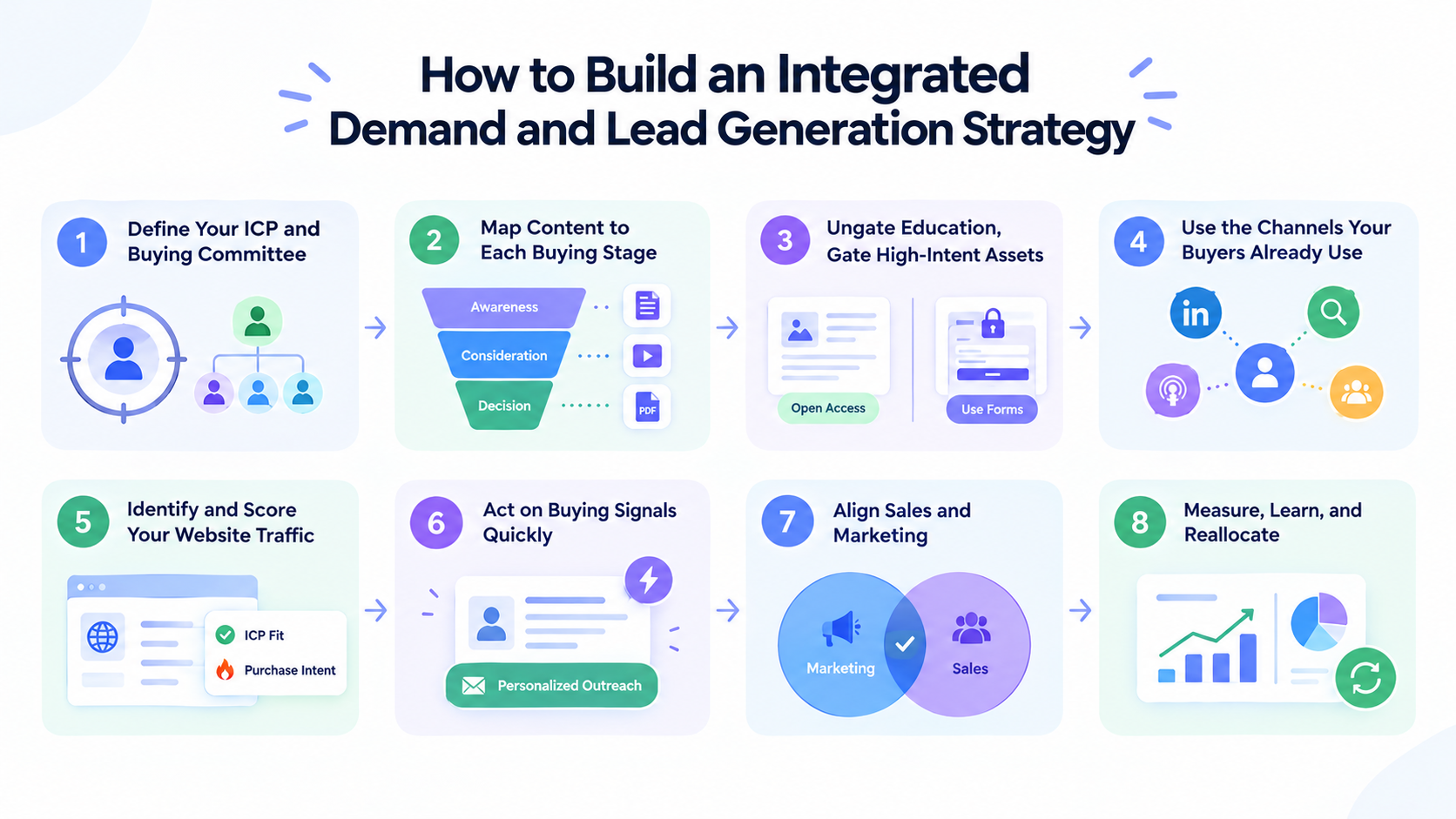
Step 1: Define Your ICP and Buying Committee
Start with the buyers you want to reach. Define the industries, company sizes, regions, and revenue ranges where your business performs best.
Then map the buying committee in those accounts. Identify the decision-makers, influencers, and users, along with what matters to each role. This helps guide both your content and lead scoring.
Step 2: Map Content to Each Buying Stage
Match your content to the buyer journey. Use educational content for awareness, comparison content for consideration, and product or proof-focused content for the decision stage.
Look for gaps as you map it out. If you only have product pages but little educational content, you may be missing buyers early in their research.
Step 3: Ungate Education, Gate High-Intent Assets
Keep educational content open so more buyers can find and learn from it. Adding a form too early can limit its reach and reduce engagement.
Use forms for high-intent assets such as pricing guides, ROI calculators, and demos. Ask for contact details when the buyer is ready to take the next step.
Step 4: Use the Channels Your Buyers Already Use
Good content only works when the right buyers see it. Focus on two or three channels where your ICP is already active, such as LinkedIn, search, podcasts, or niche communities.
Stay consistent instead of trying to be everywhere. Plan distribution over several months so your demand generation efforts have time to build.
Step 5: Identify and Score Your Website Traffic
Do not stop at traffic numbers. Install a visitor identification pixel to see which companies and people your content attracts.
Then score visitors based on ICP fit and Purchase Intent. Use filters for factors such as country, public sector, or other markets outside your ICP so sales can focus on the right buyers.
Step 6: Act on Buying Signals Quickly
Buying signals become less useful when follow-up is slow. When a high-fit visitor shows strong intent, reach out while their interest is still fresh.
Make the message relevant to what they viewed. For example, someone reading your integrations page should receive a message about integrations. AI Employees can send personalized emails from your own domain within minutes.
Step 7: Align Sales and Marketing
Both teams need the same definition of a qualified lead. Agree on the criteria and make sure marketing and sales use the same pipeline goals.
Set a simple service level agreement for lead quality, volume, and follow-up speed. When both teams focus on pipeline instead of separate metrics, the handoff becomes smoother.
Step 8: Measure, Learn, and Reallocate
Review demand generation engagement and lead generation conversion together each month. Track which topics, channels, and buying signals lead to real opportunities.
Move the budget toward what works, but give demand generation enough time to show its impact. Review the results regularly and adjust as your market and buyers change.
Also Read: B2B Lead Qualification Checklist
Best Tools to Connect Demand Generation and Lead Generation
The right tools connect the traffic demand generation creates with the pipeline lead generation needs. The biggest difference is how deeply they identify visitors and what happens after a high-intent buyer is found.
Most tools stop at telling you who or which company visited. Account-level platforms such as 6sense and ZoomInfo can reveal the company, but sales teams may still need to find the right contact.
Kwin goes further by identifying visitors at the person level and helping start the conversation. That connects website intent with outreach instead of leaving the sales team to do the entire handoff manually.
You can see the difference in the Kwin vs 6sense breakdown. If you're comparing account-based platforms, our 6sense alternatives guide covers other options.
For teams focused on attribution, the Factors AI alternatives guide compares other visitor identification and account intelligence options.
Meet Kwin: The AI Business Developer That Turns Demand Into Pipeline
The biggest gap in demand generation vs lead generation often appears after the right buyer reaches your website. Demand generation brings visitors in, but many leave without filling out a form.
Kwin is built to identify and act on that anonymous demand before the opportunity disappears.
Vison AI built Kwin as an AI Business Developer and AI Employee that identifies, qualifies, nurtures, and hands off website visitors automatically. Instead of adding another dashboard, Kwin works like an extra team member for the anonymous part of your funnel, around the clock.
Kwin can also work alongside Mark, Vison AI's AI Content Marketer, which drives demand through SEO content and is currently on the waitlist.
Here's what Kwin brings to the demand-to-pipeline handoff:
- Person and company-level identification: Kwin identifies 60 to 70% of website visitors across 175+ countries, showing both the person and company behind the visit.
- Complete contact profiles: Profiles can include name, work email, phone number, LinkedIn profile, company, revenue, industry, and location data.
- Behavioral analysis: Kwin analyzes page views, repeat visits, and session behavior to understand what each visitor cares about.
- Dual scoring: Each visitor receives an ICP Fit score and a Purchase Intent score, helping teams judge both fit and buying timing.
- Threshold-based triggers: Set minimum ICP Fit and Purchase Intent scores so Kwin acts only when a visitor meets your criteria.
- Personalized nurture from your domain: Qualified leads receive personalized email sequences through Gmail, Outlook, or SMTP/IMAP, sent from your own domain.
- Positive-reply handling: When a prospect shows interest, Kwin forwards the full email thread with a summary to your inbox.
- Instant handoff: Hot leads can flow into Slack, your CRM, and existing tools so sales can respond while intent is high.
- Precision filters: Country-level and page-level filters help keep leads on-ICP, with options to exclude public sector and government traffic.
- Fast setup: Install the pixel in about five minutes through your site header or Google Tag Manager. Kwin then builds its knowledge base from your website.
- Enterprise-grade trust: Kwin works with publicly available business data and holds SOC 2 Type II, GDPR, CCPA, ISO 9001:2015, and ISO 27001:2022.
Book a Free Demo and turn the anonymous demand your content creates into sales-ready conversations.
Conclusion
Demand generation creates interest, while lead generation captures it. The real pipeline impact comes when both work together instead of operating as separate strategies.
The biggest opportunity is the gap between them. Many buyers visit your website, explore your content, and leave without filling out a form. Identifying and engaging those visitors can turn hidden interest into real sales conversations.
We hope this guide helped you understand demand generation vs lead generation and how to connect both motions without losing valuable buyers along the way. Now, audit your funnel and find where your demand is leaking.
Ready to turn anonymous website traffic into sales opportunities? Connect with our experts and see how you can turn more website intent into booked meetings.

